Mandatory seismic retrofit requirements now apply to specific building categories in 6 US states — California, Oregon, Washington, Utah, Alaska, and South Carolina — creating a cumulative construction opportunity estimated at $12 billion over the next decade. The expansion reflects updated seismic hazard maps, improved understanding of structural vulnerability from recent earthquakes globally, and state and local political willingness to impose mandatory retrofit requirements that were previously considered too costly or politically difficult.
The numbers tell a different story than the assumption that seismic retrofit is a California-only concern. While California has the most comprehensive mandatory retrofit programs — affecting an estimated 17,000+ buildings — the Pacific Northwest states of Oregon and Washington have adopted aggressive retrofit mandates for unreinforced masonry (URM) and non-ductile concrete buildings in the wake of Cascadia Subduction Zone risk assessments that predict a magnitude 9.0+ earthquake in the coming decades.
State Programs and Affected Building Inventories
California: $6.8 billion. California's seismic retrofit landscape is the most complex and well-established in the country, with mandatory programs operating at both state and local levels. The City of Los Angeles alone has two landmark ordinances: Ordinance 183893 requiring retrofit of approximately 13,500 soft-story wood-frame buildings (completed or in progress), and Ordinance 184081 requiring retrofit of approximately 1,500 non-ductile concrete buildings over a 25-year timeline. San Francisco has retrofitted approximately 6,000 soft-story buildings under its Mandatory Soft Story Retrofit Program. Statewide, approximately 17,000 buildings are subject to mandatory or triggered retrofit requirements.
Retrofit costs in California vary by building type: soft-story wood-frame retrofit costs $20,000 to $150,000 per building ($15 to $40 per SF of ground floor area), non-ductile concrete frame retrofit costs $50 to $150 per SF of building area (total project costs of $500,000 to $50 million+), unreinforced masonry retrofit costs $30 to $100 per SF, and steel moment frame retrofit (welded connection upgrades per FEMA 351) costs $20 to $60 per SF.
Oregon: $2.2 billion. Oregon adopted mandatory seismic evaluation and retrofit requirements for critical facilities (hospitals, emergency service buildings, schools) in 2022, with compliance timelines extending to 2032. The state's inventory of vulnerable buildings includes approximately 1,100 unreinforced masonry buildings, 650 non-ductile concrete buildings, and over 1,000 school buildings requiring seismic evaluation. Oregon's particular vulnerability to Cascadia Subduction Zone earthquakes has driven political support for mandatory retrofit despite the costs.
Washington: $1.8 billion. Washington State and the City of Seattle have adopted mandatory retrofit requirements for URM buildings, with Seattle's ordinance affecting approximately 1,100 buildings citywide. The state's seismic rehabilitation program for state-owned buildings has a backlog of approximately $800 million, including critical facilities like the state Capitol campus in Olympia and state university buildings.
Utah: $680 million. Utah's seismic retrofit focus is concentrated along the Wasatch Front, where the Wasatch Fault presents significant urban earthquake risk. The state has mandatory seismic evaluation requirements for public school buildings, with approximately 500 schools identified for retrofit or replacement. The Utah Capitol ($280 million retrofit completed in 2008) demonstrated the state's commitment to seismic safety for critical facilities.
Alaska: $340 million. Alaska's seismic retrofit programs focus on critical infrastructure — hospitals, emergency communications facilities, and state buildings — in the most seismically active state in the country. The 2018 Anchorage earthquake (M7.1) damaged numerous buildings and accelerated retrofit program adoption.
South Carolina: $180 million. South Carolina is the newest entrant to mandatory seismic retrofit, driven by updated seismic hazard assessments for the Charleston area (site of the devastating 1886 earthquake). The state has adopted seismic evaluation requirements for critical public buildings, with retrofit mandates for buildings found deficient.
Retrofit Construction Methods
Seismic retrofit construction involves several specialized techniques:
Steel Moment Frame Addition involves installing new structural steel frames within or adjacent to existing buildings to provide lateral force resistance. This method is common for non-ductile concrete buildings and involves cutting into existing floor slabs, installing new steel columns on new foundations (typically drilled shafts or micro-piles), welding or bolting steel beams to columns with Special Moment Frame (SMF) connections, and connecting the new frame to the existing structure through collector elements.
Shotcrete Shear Wall Installation involves applying reinforced concrete to existing walls or constructing new concrete walls within existing buildings to provide lateral resistance. Workers apply reinforcing steel mesh or doweled rebar to wall surfaces, then pneumatically apply concrete (shotcrete) in lifts of 4 to 12 inches. This method is widely used for URM building retrofit.
Base Isolation involves installing seismic isolator bearings between a building's foundation and superstructure, allowing the building to "float" during an earthquake while the ground moves beneath it. This premium approach costs $40 to $80 per SF but provides the highest performance level. It has been used for critical facilities including hospitals (Martin Luther King Jr. Community Hospital in LA), museums (Getty Center), and government buildings.
Carbon Fiber Reinforced Polymer (CFRP) Wrapping involves applying layers of high-strength carbon fiber fabric with epoxy resin to concrete columns, beams, and joints to increase ductility and shear capacity. This relatively non-invasive method costs $20 to $50 per SF of treated surface area and can be applied without evacuating buildings.
Foundation Strengthening is required when existing foundations cannot resist the forces generated by the new lateral system. Methods include micro-pile underpinning, jet grouting, and drilled shaft addition. Foundation work is typically the most expensive and disruptive component of seismic retrofit, often requiring temporary building evacuation.
Contractor Landscape
Seismic retrofit construction is performed by specialized structural contractors with experience in occupied building renovation, structural engineering coordination, and working within tight architectural constraints. Leading retrofit contractors in California include firms like Swinerton, Degenkolb-affiliated builders, Nabholz, and numerous regional concrete and structural steel contractors.
The workforce includes structural steel ironworkers, concrete workers with shotcrete application experience, specialty foundation contractors, and structural engineers providing construction observation and testing. Active seismic retrofit construction across all 6 states employs approximately 15,000 to 20,000 workers.
Market Outlook
The seismic retrofit market is poised for growth as additional cities adopt mandatory programs (Portland and Salt Lake City are both advancing URM retrofit ordinances), updated seismic hazard maps expand the geographic scope of vulnerability, and insurance market changes increase financial pressure on building owners to complete retrofits. The $12 billion 10-year opportunity represents a stable, regulation-driven market that is largely recession-resistant — mandatory retrofit deadlines do not change with economic conditions.
For construction firms, seismic retrofit offers high-value specialty work with barriers to entry (demonstrated structural construction experience, relationship with structural engineering firms, ability to work in occupied buildings) that support premium pricing. Firms that invest in retrofit-specific capabilities — shotcrete application, CFRP installation, micro-pile foundation strengthening — will be well-positioned in a market that is expanding both geographically and in terms of building categories subject to mandatory upgrade requirements.
The Soft-Story Challenge: A National Perspective
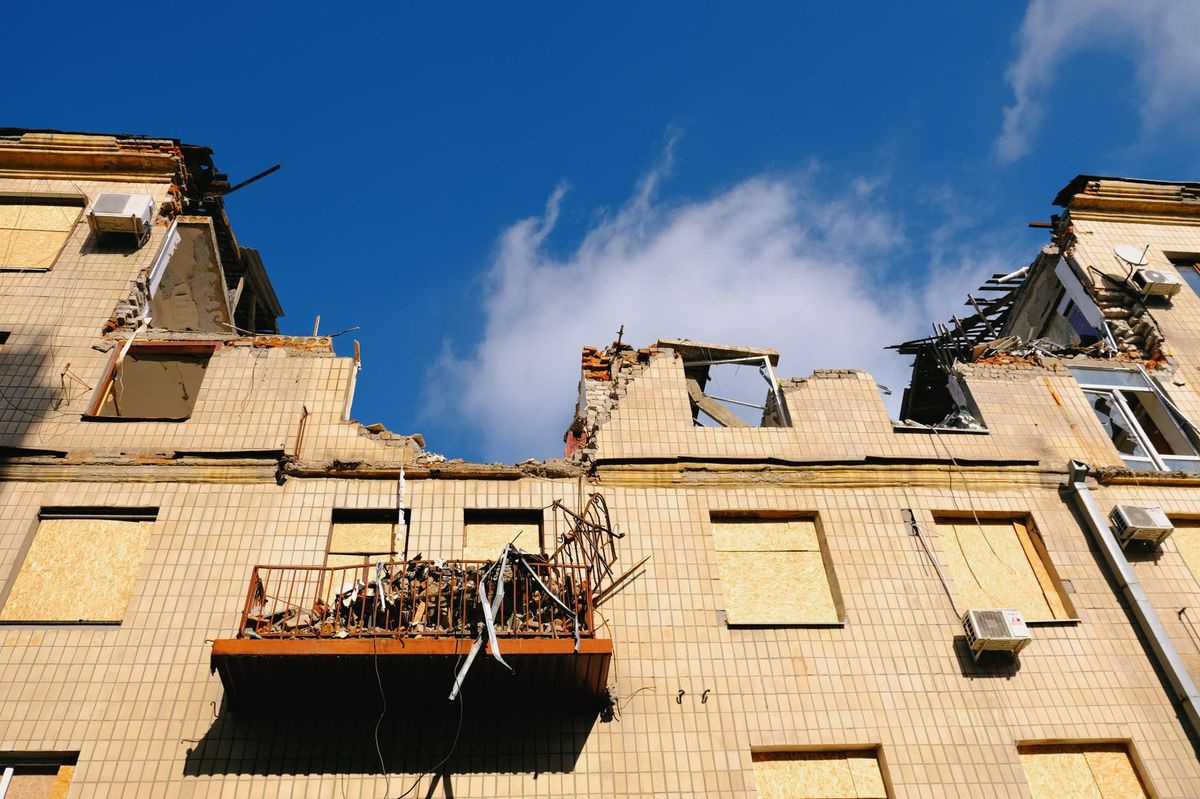
While California has led mandatory soft-story retrofit programs, the building vulnerability extends far beyond the West Coast. Soft-story buildings — typically wood-frame apartment buildings with open parking or commercial space on the ground floor and residential units above — exist in every earthquake-prone region of the country. The ground floor's large openings and lack of structural walls create a "soft story" that collapses during seismic shaking, pancaking the upper floors onto the ground level.
Portland, Oregon has identified approximately 1,600 unreinforced masonry buildings requiring seismic evaluation, many in the popular Pearl District, Old Town, and close-in neighborhoods. Salt Lake City has cataloged over 1,000 URM buildings along the Wasatch Front, where the Wasatch Fault poses a significant risk of a M7.0+ earthquake. Memphis, Tennessee — situated in the New Madrid Seismic Zone — has an estimated 2,500 URM and soft-story buildings that would be vulnerable to the type of M7.5+ earthquakes that struck the region in 1811-1812.
As these cities adopt mandatory retrofit programs modeled on California and Portland precedents, the total addressable market for seismic retrofit construction will expand significantly beyond the current $12 billion estimate.
Insurance and Financial Incentives
The insurance market is increasingly recognizing seismic retrofit status in commercial property underwriting. California Earthquake Authority (CEA) policies offer premium discounts of 5 to 20% for retrofitted buildings. Commercial earthquake insurance underwriters in all seismic zones are beginning to differentiate pricing based on building vulnerability assessments, creating financial incentives for retrofit beyond regulatory mandates.
Federal tax incentives also support seismic retrofit investment. The federal rehabilitation tax credit (20% of qualified rehabilitation expenditures for certified historic structures) can be applied to seismic retrofit costs when the building is listed on or eligible for the National Register of Historic Places. Several states offer additional tax credits or property tax exemptions for completed seismic retrofits, further improving the financial calculus for building owners considering voluntary retrofit.
These financial incentives, combined with mandatory compliance deadlines, create a dual market: mandatory retrofit work driven by ordinance compliance (the larger segment) and voluntary retrofit work driven by insurance savings, property value protection, and tax incentives. Both segments contribute to the $12 billion market opportunity and offer distinct procurement dynamics for contractors.
The Non-Ductile Concrete Challenge
Non-ductile concrete (NDC) buildings represent the most expensive and technically challenging category of seismic retrofit. These buildings — typically constructed between 1950 and 1975 using reinforced concrete frames with inadequate shear reinforcement and poor detailing for ductile behavior — are prone to catastrophic collapse during moderate to strong earthquakes.
The construction complexity of NDC retrofit stems from several factors. The existing concrete structures are heavy and stiff, generating large seismic forces that must be resisted by the retrofit system. Strengthening interventions must be substantial — adding new concrete shear walls, steel braced frames, or base isolation systems that fundamentally change the building's structural behavior. Construction within occupied NDC buildings requires careful shoring and temporary support to maintain structural stability during retrofit construction.
Los Angeles' mandatory NDC retrofit ordinance (Ordinance 184081) provides a 25-year compliance timeline, reflecting the complexity and cost of these retrofits. The ordinance affects approximately 1,500 buildings with a total estimated construction cost of $3 to $5 billion. Individual building retrofit costs range from $500,000 for small commercial buildings to $50 million or more for large multi-story structures.
The NDC retrofit market requires contractors with demonstrated concrete and structural steel construction capability, experience working in occupied buildings while maintaining structural stability, ability to coordinate with structural engineering firms on complex retrofit designs, and familiarity with historic preservation requirements (many NDC buildings are in historic districts or are individually designated landmarks, requiring retrofit designs that preserve architectural character).
Retrofit Technology Innovation
Several emerging technologies are expanding the toolkit available for seismic retrofit construction. Shape Memory Alloy (SMA) connectors use nickel-titanium alloys that can return to their original shape after being deformed during an earthquake, providing re-centering capability that reduces permanent building damage. SMA technology is currently being piloted in bridge column retrofits and may be extended to building applications.
Friction Dampers installed at beam-column connections or within braced frame assemblies dissipate seismic energy through controlled sliding friction, reducing the forces transmitted to the building structure. Friction damper retrofits are less invasive than traditional retrofit methods because the dampers can be installed within the building frame without major structural modifications.
Viscous Fluid Dampers — hydraulic cylinders filled with silicone fluid that resist motion through viscous resistance — are used for high-performance seismic retrofits of essential facilities. Damper installation requires steel connection hardware and foundation upgrades but avoids the need for new structural walls or frames that consume usable floor area. The construction cost premium for damper-based retrofits is 20 to 40% above conventional methods, but the performance benefit and minimal architectural impact make them attractive for high-value commercial and institutional buildings.
Workforce Training and Certification
Seismic retrofit construction requires workers with specific skills beyond standard construction trades. Shotcrete application — spraying concrete at high velocity onto vertical and overhead surfaces — requires certified nozzlemen trained in proper application technique, material proportioning, and quality control. The American Concrete Institute (ACI) offers nozzlemen certification, and most seismic retrofit specifications require ACI-certified operators.
CFRP installation requires workers trained by the composite material manufacturer in surface preparation, primer application, saturant mixing, fabric application, and curing verification. Improper installation — including insufficient surface preparation, incorrect saturant mixing ratios, or trapped air voids — can reduce the structural capacity of the CFRP system by 50% or more.
Structural steel welding for seismic retrofit must comply with AWS D1.8 (Structural Welding Code — Seismic Supplement), which imposes requirements beyond standard structural welding including Charpy V-notch toughness testing, restricted heat input ranges, and mandatory ultrasonic examination of complete joint penetration welds. Welders certified to AWS D1.8 command premium wages of $40 to $65 per hour in California and Pacific Northwest markets.
These specialized skill requirements create barriers to entry that limit the pool of qualified seismic retrofit contractors, supporting healthy profit margins for firms that invest in workforce training and maintain necessary certifications.
Frequently Asked Questions
How much federal funding goes to seismic retrofit construction?
According to the latest industry data, seismic retrofit construction is showing notable trends in 2026. Current figures indicate $12 billion, which represents a significant benchmark for contractors and developers planning projects this year. Regional variations apply, so checking local market conditions remains essential for accurate budgeting.
Which states benefit most from seismic retrofit construction?
Market research on seismic retrofit construction shows that geographic concentration matters significantly. With figures reaching 17,000 in key markets, the opportunities are substantial but location-dependent. States with strong population growth and infrastructure investment tend to see the highest activity levels.
What is the timeline for seismic retrofit construction projects?
Year-over-year comparisons for seismic retrofit construction show meaningful change. The figure of $6.8 billion from current data represents a shift that contractors need to account for in their planning and bidding strategies. Historical trend analysis suggests this trajectory may continue through the end of the year.