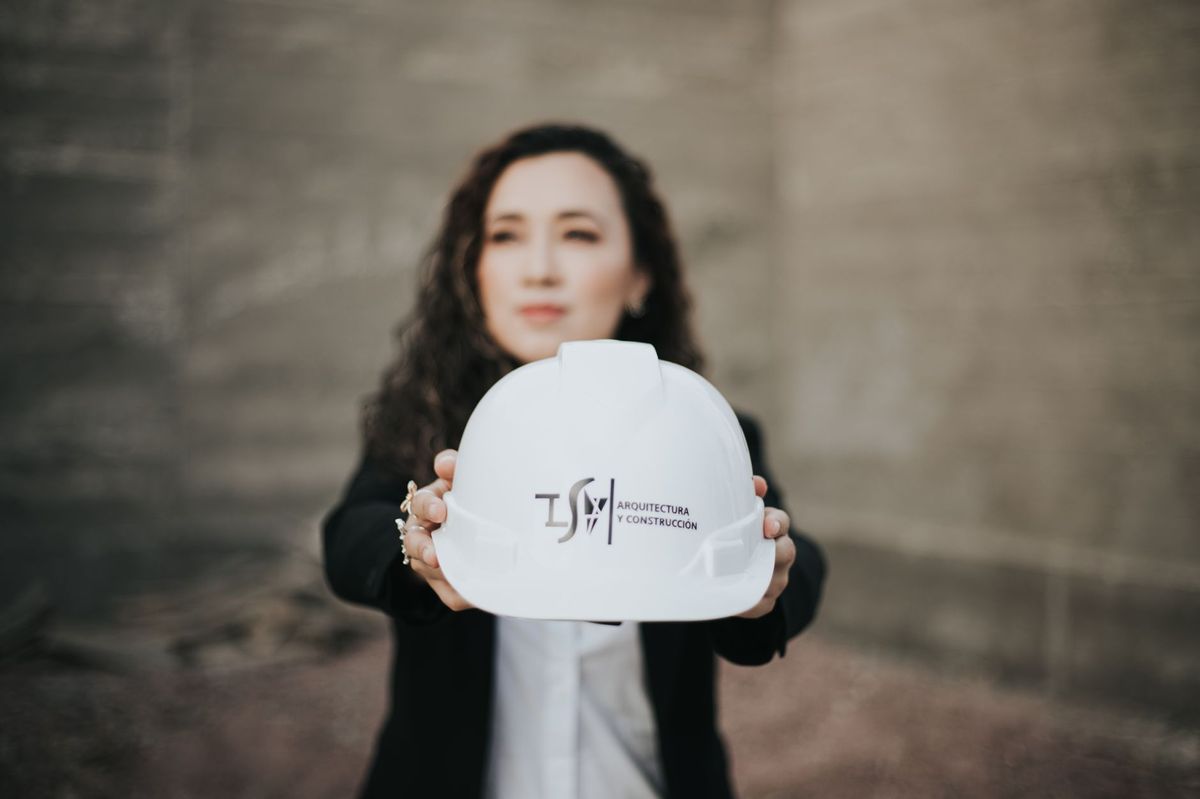
The U.S. Census Bureau's Annual Business Survey reports that women-owned construction firms now represent 14.7% of all construction businesses in the United States — approximately 124,000 firms generating combined annual revenue of $82.4 billion. While this represents meaningful growth from 9.8% a decade ago, women-owned firms remain dramatically underrepresented relative to women's 51% share of the U.S. population and their growing presence as construction workers (now at approximately 14.3% of the total workforce).
The growth trajectory has been significantly influenced by federal procurement programs, particularly the Small Business Administration's Women-Owned Small Business (WOSB) Federal Contracting Program, which sets aside certain federal contracts for eligible women-owned firms. The data is clear — set-aside programs have been a catalyst for growth, but significant barriers remain.
The Market Position: By the Numbers
Women-owned construction firms — size and revenue profile:
| Metric | Women-Owned | All Construction Firms |
|---|---|---|
| Total firms | 124,000 (14.7%) | 843,000 |
| Average annual revenue | $664,000 | $1,840,000 |
| Median annual revenue | $285,000 | $520,000 |
| Firms with 20+ employees | 6.2% | 14.8% |
| Firms with $5M+ revenue | 3.8% | 11.2% |
The revenue gap is striking: the average women-owned construction firm generates only 36% of the revenue of the average construction firm overall. This reflects concentration in smaller specialty trades and residential work, though the gap is narrowing.
Growth trajectory:
- 2015: 9.8% of construction firms, $41 billion revenue
- 2018: 11.2% of construction firms, $52 billion revenue
- 2021: 13.1% of construction firms, $68 billion revenue
- 2025: 14.7% of construction firms, $82.4 billion revenue
Revenue has grown at a compound annual rate of 7.2% over the past decade — outpacing the 4.8% growth rate for all construction firms. Women-owned firms are not just becoming more numerous; they are growing faster in economic terms.
Specialty concentration: Women-owned construction firms are concentrated in certain sectors:
- Residential remodeling: 22% of firms are women-owned
- Interior finishing (painting, flooring, tile): 19%
- Landscape construction: 18%
- Electrical contracting: 12%
- Plumbing and HVAC: 9%
- General contracting (commercial): 8%
- Heavy civil/infrastructure: 5%
The concentration in residential and interior specialty trades reflects both historical patterns of entry and the relatively lower capital requirements for starting businesses in these sectors.
Safety note: Women-owned construction firms have a safety record that challenges industry stereotypes. OSHA data shows that women-owned construction firms have an OSHA citation rate 22% lower than the industry average and a Total Recordable Incident Rate (TRIR) 18% lower than male-owned firms of comparable size. Research suggests this reflects more rigorous safety management — not less hazardous work. Under OSHA 29 CFR 1926.20, all construction employers must maintain safety programs, and the data indicates that women-owned firms are more likely to formalize and consistently implement these programs.
The SBA WOSB Program: How It Works
The Women-Owned Small Business Federal Contracting Program, established under the Small Business Act and codified at 13 CFR Part 127, creates procurement opportunities specifically for eligible firms.
Eligibility Requirements
To qualify as a WOSB for federal contracting:
- Ownership: The firm must be at least 51% unconditionally owned by one or more women who are U.S. citizens
- Management: One or more women must manage the daily operations and make long-term strategic decisions
- Size: The firm must qualify as a "small business" under SBA size standards for its NAICS code (for most construction categories, this means average annual revenue under $39.5 million)
- Certification: The firm must be certified through SBA's certification process or by an approved third-party certifier
Economically Disadvantaged WOSB (EDWOSB)
A subset of the program provides additional set-aside opportunities for firms where the woman owner(s) demonstrate economic disadvantage:
- Personal net worth under $750,000 (excluding primary residence and business equity)
- Adjusted gross income under $400,000 averaged over three years
- Fair market value of assets under $6.5 million
EDWOSB firms can compete for set-aside contracts in additional NAICS codes beyond those available to standard WOSBs.
How Set-Asides Work
Federal contracting officers may restrict competition on certain contracts to certified WOSB or EDWOSB firms when:
- The contract is in a NAICS code where women-owned businesses are underrepresented
- The contracting officer has a reasonable expectation that at least two WOSB/EDWOSB firms will submit competitive offers
- The contract value is at or below $7 million for manufacturing or $4.5 million for other industries (including most construction)
- Effective 2026, the dollar thresholds have been adjusted upward: $8 million for manufacturing and $5 million for other industries
Program Impact
Federal procurement data shows:
- Federal contracts awarded to women-owned small businesses in construction: $6.8 billion in the most recent fiscal year
- This represents approximately 4.2% of total federal construction spending — below the government-wide 5% WOSB goal
- Number of WOSB construction contracts awarded: approximately 18,400
- Average contract value: $370,000
- The program has grown federal construction spending with women-owned firms by approximately 180% over the past decade
State and Local Programs
Beyond the federal WOSB program, most states and many municipalities have their own women-owned business programs:
State programs with construction-specific WOSB provisions:
- California: 3% goal for state construction contracts awarded to women-owned firms; CalTrans DBE program includes gender-specific goals
- New York: 6% utilization goal for state-funded construction; Empire State Development provides capacity-building grants
- Texas: 2.7% HUB (Historically Underutilized Business) goal including women-owned firms
- Illinois: Business Enterprise Program with 10% goal for women-owned firms across all state procurement
- Florida: Office of Supplier Diversity certifies women-owned firms for state procurement preferences
Municipal programs: Many major cities have separate women-owned business programs with construction-specific goals:
- New York City: 10% MWBE goal on city construction contracts
- Los Angeles: 5% WBE goal
- Chicago: 8% WBE goal (with separate MBE goals)
- Houston: 5% WBE goal
- Atlanta: 7% WBE goal
These programs create significant contract opportunities for certified women-owned construction firms, particularly in public building, infrastructure, and facility maintenance work.
Barriers to Growth
Despite positive trends, women-owned construction firms face specific barriers:
1. Bonding and Insurance Access
Surety bonding — required for virtually all public construction contracts — is the most frequently cited barrier for women-owned construction firms:
- 62% of women-owned construction firms report difficulty obtaining surety bonds
- Average bonding capacity for women-owned firms: $1.2 million vs. $3.8 million for all small construction firms
- Surety companies assess bonding capacity based on working capital, experience, and track record — all areas where newer, smaller firms (disproportionately women-owned) face disadvantages
Solutions:
- SBA Surety Bond Guarantee Program: Guarantees up to 90% of a surety's loss on bonds up to $6.5 million for small businesses that cannot obtain bonding through regular channels
- Mentor-protégé arrangements: Joint ventures with established firms that can provide bonding capacity
- Contract bundling avoidance: Federal policy encourages breaking large contracts into smaller packages accessible to smaller firms
2. Capital Access
Women-owned construction firms report more difficulty accessing working capital:
- Average commercial loan approval rate: 67% for women-owned construction firms vs. 78% for male-owned
- Average loan amount: $186,000 for women-owned vs. $342,000 for male-owned
- 42% of women-owned construction firms report using personal credit cards for business financing vs. 28% of male-owned
Solutions:
- SBA 7(a) and 504 loan programs with lender incentives for WOSB lending
- Community Development Financial Institutions (CDFIs) with construction-focused lending
- State-specific access-to-capital programs for certified women-owned businesses
3. Industry Network Access
Construction is a relationship-driven industry, and networking patterns have historically excluded women:
- 78% of construction business development occurs through informal networking (golf outings, after-work socializing, trade association events)
- Women-owned firm owners report 34% fewer industry networking contacts than male-owned firm owners
- Subcontractor opportunities are often distributed through established relationships rather than competitive processes
Solutions:
- Women-focused construction networking organizations (National Association of Women in Construction — NAWIC, Women Construction Owners & Executives — WCOE)
- Industry association mentorship programs pairing established firms with emerging women-owned businesses
- Formal subcontractor prequalification processes that ensure opportunity access beyond informal networks
4. Workforce Recruitment
Women-owned firms face the same labor shortage as all construction firms, compounded by:
- The general construction workforce is 89% male — women owners must recruit from the same constrained pool
- Some women-owned firms report that male workers are initially skeptical of women leadership, requiring additional effort to establish credibility
- Bilingual workforce recruitment challenges apply equally to women-owned firms
Success Strategies from High-Growth Women-Owned Firms
Analysis of women-owned construction firms that have achieved $5 million+ revenue reveals common success factors:
1. Niche specialization:
- High-growth women-owned firms typically specialize in areas with strong demand and limited competition
- Examples: environmental remediation, solar installation, historic preservation, medical facility construction
- Specialization builds expertise that supports premium pricing and reduces direct competition
2. Certification stacking:
- Successful firms often hold multiple certifications (WOSB + DBE + 8(a) + state WBE + municipal WBE)
- Each certification opens additional procurement channels
- The administrative burden of maintaining multiple certifications is significant but creates a competitive moat
3. Mentor-protégé relationships:
- SBA's All Small Mentor-Protégé Program allows women-owned firms to joint venture with larger established firms
- Joint ventures enable access to larger contracts, bonding capacity, and technical resources
- 48% of women-owned firms that participated in mentor-protégé programs achieved revenue growth exceeding 40% within three years
4. Technology adoption:
- Women-owned firms adopt construction technology at higher rates than industry average
- Technology platforms (estimating, project management, BIM) enable smaller firms to compete with larger ones on quality and efficiency
- Digital marketing and online presence are more prevalent among women-owned firms
5. Safety excellence:
- Women-owned firms frequently leverage their superior safety records as a competitive differentiator
- Low EMR (Experience Modification Rate) provides insurance cost advantages and prequalification advantages
- Safety performance is increasingly weighted in public procurement evaluation criteria
Safety note: Under OSHA 29 CFR 1926.16, employers on multi-employer worksites must coordinate safety efforts. Women-owned firms working as subcontractors on larger projects must ensure their safety programs integrate with the general contractor's site-specific safety plan. The best women-owned firms I have observed treat safety integration as a selling point — demonstrating to general contractors that hiring them reduces, rather than increases, the GC's safety management burden.
The Outlook
Several trends support continued growth of women-owned construction firms:
Federal commitment: The Biden-Harris administration increased WOSB procurement goals and expanded certification pathways. These policies are expected to remain in place regardless of administration, as they have bipartisan legislative support.
Infrastructure spending: The Infrastructure Investment and Jobs Act includes DBE provisions that benefit women-owned firms. With approximately $180 billion in construction funding still to be disbursed, the federal contract pipeline is robust.
Generational change: Younger women are entering construction in greater numbers, and those who develop into business owners will expand the women-owned firm count. Women under 35 entering construction ownership are more likely to pursue commercial and heavy civil work rather than concentrating in residential trades.
Industry recognition: Major construction companies increasingly include women-owned firm utilization in their sustainability and diversity reporting, creating private-sector demand that complements public procurement programs.
The data is clear — women-owned construction firms at 14.7% are growing but remain well below proportional representation. The combination of set-aside programs, improving access to capital and bonding, and the industry's general need for more contractors of every type creates favorable conditions for continued growth. The firms that combine certification advantages with genuine operational excellence are positioned to grow fastest — and the $82.4 billion they already generate proves that women-owned construction firms are not a niche category but a significant and growing force in the industry.
Related Reading
Frequently Asked Questions
What is the average salary for women owned construction firms?
Federal and state data confirm that women owned construction firms continues to be a major factor in 2026 construction planning. The latest available figure of 14.7% provides a useful baseline, though actual costs vary by region, project scope, and market conditions. Contractors should request updated quotes from suppliers and subcontractors before finalizing bids.
How has women owned construction firms changed in the last 5 years?
The geographic landscape for women owned construction firms is shifting in 2026. Data indicating 124,000 underscores the importance of market selection for contractors seeking growth. Western and southeastern states continue to attract disproportionate investment relative to their population share.
What states have the highest women owned construction firms?
Year-over-year comparisons for women owned construction firms show meaningful change. The figure of $82.4 billion from current data represents a shift that contractors need to account for in their planning and bidding strategies. Historical trend analysis suggests this trajectory may continue through the end of the year.