When Power Becomes the Bottleneck
The data center industry has hit a wall, and that wall is made of electrons. Total U.S. data center power demand has surged to approximately 35 gigawatts in 2026 — up from roughly 17 gigawatts just three years ago — and the electrical grid simply cannot keep up. This gap between power demand and power supply is fundamentally reshaping how data centers are designed, sited, and constructed, creating both enormous challenges and unexpected opportunities for the construction industry.
The scale of the problem is difficult to overstate. According to the U.S. Energy Information Administration, data centers now consume roughly 6 percent of total U.S. electricity generation, up from 2.5 percent in 2022. By some estimates, that figure could reach 10 to 12 percent by 2030, driven almost entirely by the computational demands of artificial intelligence training and inference.
For construction professionals, the implications are profound. The traditional model of building a data center and connecting it to the local utility grid is breaking down in market after market. What is replacing it is a much more complex construction paradigm that often includes on-site power generation, dedicated transmission infrastructure, and novel energy sources ranging from natural gas turbines to small modular nuclear reactors.
The Grid Cannot Keep Up
The fundamental problem is straightforward: the U.S. electrical grid was not designed to accommodate the kind of concentrated, baseload power demand that modern data centers require, and upgrading it takes far longer than building a data center.
Virginia's Power Crisis
Nowhere is this mismatch more visible than in Northern Virginia, the country's largest data center market. Dominion Energy, the utility serving most of the region's data centers, has publicly stated that it faces a 3 to 7 year timeline for major transmission and generation upgrades needed to serve the growing data center load.
The numbers tell the story. Dominion's current interconnection queue includes over 40 gigawatts of requests — more than the utility's total current generating capacity. While not all of these requests will materialize, even a fraction would require massive investment in new transmission lines, substations, and generating plants.
For data center construction projects in Virginia, the practical impact is that power availability — not zoning, not permitting, not construction capacity — has become the binding constraint on new development. Projects that secured utility interconnection agreements two or three years ago are proceeding, but new entrants face wait times that make the market increasingly unattractive relative to alternatives.
Texas and ERCOT
Texas presents a different but equally challenging power dynamic. The state's independent grid operator, ERCOT, has been grappling with reliability concerns since the devastating winter storm of 2021, and the addition of gigawatts of data center load raises questions about grid stability during peak demand periods.
ERCOT has implemented new interconnection procedures that require data centers to demonstrate flexibility in their power consumption — essentially, the ability to reduce load during grid emergencies. This requirement has implications for data center design and construction, as facilities must incorporate load-shedding capabilities, on-site backup generation, and potentially on-site energy storage systems.
The Broader Pattern
The power constraint is not limited to Virginia and Texas. Grid interconnection timelines have lengthened significantly in virtually every major data center market, including Georgia, Ohio, Indiana, Arizona, and Oregon. A 2025 study by the Lawrence Berkeley National Laboratory found that the average timeline from interconnection request to energized service for large commercial loads had increased from 18 months in 2020 to over 36 months in 2025, with some markets exceeding 60 months.
On-Site Power Generation — The New Normal
In response to grid constraints, data center operators are increasingly building their own power generation, turning construction projects that were already complex into something closer to independent power plant developments.
Natural Gas Turbines
The most common on-site generation approach is the installation of natural gas-fired turbines, typically simple-cycle or combined-cycle units ranging from 25 to 200 megawatts. These systems can be permitted and built in 18 to 24 months — significantly faster than utility-scale transmission upgrades — and they provide firm, dispatchable power that does not depend on grid availability.
For construction firms, on-site gas turbine installations add significant scope and complexity to data center projects. These installations require specialized civil work (turbine foundations, fuel storage, exhaust stacks), mechanical systems (gas piping, heat recovery systems), and electrical systems (generator step-up transformers, dedicated switchgear). The contractors who can self-perform or manage this work are in extremely high demand.
Amazon has been particularly aggressive in pursuing on-site generation, with several data center campuses incorporating dedicated natural gas plants. Microsoft and Google have also explored this approach, though both companies face tensions between on-site fossil fuel generation and their corporate sustainability commitments.
Behind-the-Meter Solar and Storage
Many data center operators are supplementing grid power with on-site solar arrays and battery energy storage systems (BESS). While solar alone cannot provide the firm, baseload power that data centers require, the combination of solar generation and battery storage can reduce grid dependence and provide backup capacity during outages.
The construction implications are significant. Large-scale solar arrays require extensive site work — grading, racking installation, DC wiring, and inverter systems — while BESS installations introduce lithium-ion battery systems that require specialized containment structures, fire suppression systems, and thermal management. These are not trivial additions to a data center construction program.
For contractors with experience in EV charging infrastructure, the skill sets transfer well. The electrical systems, battery storage integration, and utility interconnection work involved in EV charging stations share many characteristics with data center power systems.
Fuel Cells
Fuel cell technology is emerging as a potential power source for data centers, with several operators evaluating or deploying fuel cell systems as either primary or backup power. Bloom Energy has installed fuel cell systems at data centers operated by Equinix, Digital Realty, and several other operators, with individual installations ranging from 5 to 40 megawatts.
Fuel cell installations require specialized construction work including fuel processing equipment, thermal management systems, and DC-to-AC power conversion infrastructure. The contractor base for fuel cell installation is relatively small, creating opportunities for firms willing to develop expertise in this technology.
How Power Demands Are Changing Building Design
The surge in power demand is not just changing how data centers get their electricity — it is changing how the buildings themselves are designed and built.
Higher Power Densities
The shift toward AI workloads has dramatically increased the power density of data center computing environments. Traditional cloud computing workloads operate at 6 to 10 kilowatts per rack. AI training clusters routinely operate at 40 to 100 kilowatts per rack, with some cutting-edge deployments exceeding 120 kilowatts per rack.
This density increase has cascading effects on construction. Higher power density means more heat per square foot, which requires more cooling capacity — larger chillers, more cooling towers, and in many cases, a transition from air cooling to liquid cooling. It means heavier electrical distribution systems with more copper, larger busway, and more robust power distribution units. And it means stronger structural systems to support the weight of denser computing equipment.
Larger Electrical Rooms
The electrical infrastructure required for a modern high-density data center consumes significantly more floor space than it did five years ago. Switchgear rooms, UPS rooms, and battery rooms that might have occupied 15 to 20 percent of a building's footprint in a traditional data center now consume 25 to 30 percent in a high-density facility designed for AI workloads.
This has implications for building design and structural engineering. Electrical rooms require heavy floor loads (often 300 to 500 pounds per square foot), specialized ventilation for battery off-gassing, and complex cable routing that requires careful coordination between electrical and structural trades.
Backup Generation Scaling
As IT load density increases, so does the capacity of backup diesel generators required to maintain operations during utility outages. A 100-megawatt data center might require 20 to 30 large diesel generators, each weighing 30,000 to 50,000 pounds, arranged on a generator yard that can cover several acres.
The construction of these generator yards involves substantial civil work — deep foundations to support the weight and manage vibration, fuel storage systems with environmental containment, exhaust stacks with noise attenuation, and massive paralleling switchgear to synchronize multiple generators. This work represents a significant portion of total project cost and timeline.
The Nuclear Option
Perhaps the most dramatic response to data center power constraints is the emerging interest in nuclear energy, including both existing nuclear plants and new small modular reactor (SMR) technology. This topic warrants a full treatment — see our detailed analysis of nuclear-powered data center construction projects for the complete picture.
The short version: Microsoft has signed an agreement to purchase power from the restarted Three Mile Island Unit 1 nuclear plant. Google has signed a power purchase agreement with Kairos Power for its Hermes SMR technology. And Amazon has made strategic investments in nuclear power through its relationship with Talen Energy. If even a fraction of these nuclear initiatives materialize, they will create an entirely new category of construction work at the intersection of nuclear engineering and data center development.
Transmission Infrastructure — A Construction Opportunity
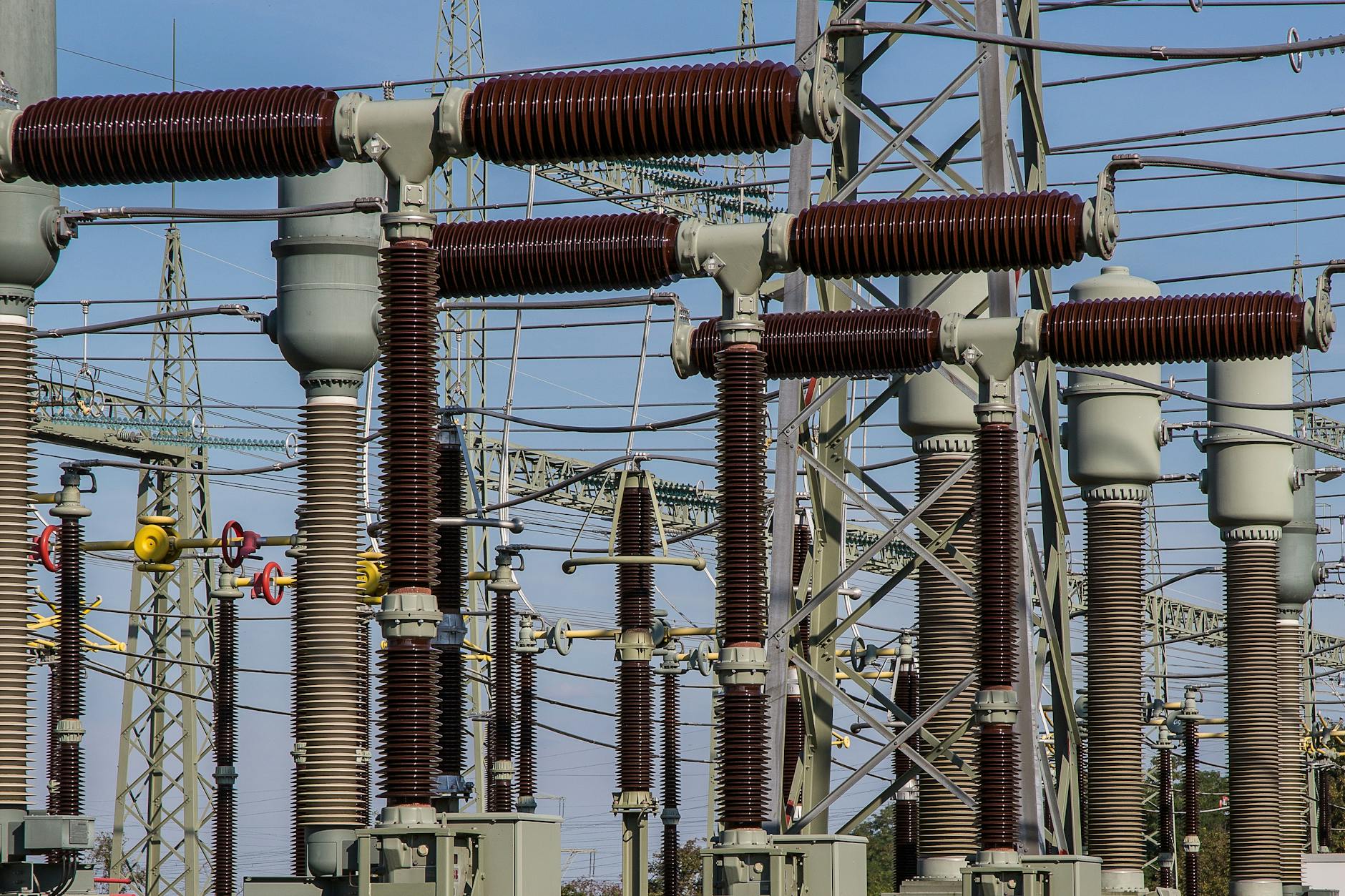
While data center operators pursue on-site generation solutions, utilities and transmission operators are also investing heavily in grid upgrades to serve data center load. These transmission construction projects represent an enormous opportunity for electrical contractors, civil firms, and specialty construction companies.
Dominion Energy alone has proposed over $10 billion in transmission upgrades to serve Northern Virginia's data center market, including new 500-kV transmission lines, substation expansions, and distribution system reinforcements. Similar, if smaller, programs are underway in Texas, Georgia, Ohio, and other major data center markets.
Transmission construction involves a distinct set of capabilities — tower erection, conductor stringing, substation construction, and right-of-way management — that differs significantly from data center building construction. But for firms that can work across both segments, the combination of data center and transmission work represents a remarkable pipeline.
Implications for Construction Firms
The power dimension of data center construction creates several strategic implications for construction firms looking to participate in this market.
Electrical expertise is the most valuable capability. The premium placed on electrical contractors who can work with medium-voltage and high-voltage systems continues to grow. Firms with experience in switchgear installation, transformer placement, and generator paralleling are in the strongest competitive position.
Mechanical complexity is increasing. The shift toward liquid cooling and higher heat rejection requirements means that mechanical contractors need to be comfortable with chilled water systems operating at scales typically associated with central utility plants, not individual buildings.
Multi-discipline integration is critical. The interplay between electrical, mechanical, structural, and civil systems in a modern data center is far more complex than in most commercial construction projects. Firms that can self-perform multiple disciplines or effectively manage highly integrated subcontractor teams have a significant advantage.
On-site generation adds scope. As more data centers incorporate their own power generation, the line between "data center construction" and "power plant construction" is blurring. Firms with experience in both domains will find themselves uniquely positioned.
As our construction spending forecast details, the power infrastructure supporting data centers is becoming one of the fastest-growing segments of the broader construction market. The firms that position themselves at this intersection now will benefit from a pipeline that shows no signs of slowing.
The Bottom Line
Power has become the single most important variable in data center construction. It determines where projects can be built, how long they take, how much they cost, and what skills contractors need. The 35-gigawatt demand level — and the trajectory toward 50 gigawatts or more by 2030 — means that every aspect of data center construction, from site selection to building design to workforce planning, must be viewed through the lens of power availability and power infrastructure. The construction playbook is being rewritten in real time, and the firms that adapt fastest will capture disproportionate value in what has become the most capital-intensive segment of U.S. commercial construction.
READ NEXT: How Data Center Construction Differs From Every Other Commercial Project
FAQ
Q: Dominion Energy's interconnection queue has over 40 GW of requests against its current generating capacity — how does a contractor use that information when evaluating whether to pursue a Virginia data center project? A: Projects that already hold executed interconnection agreements are the only ones with a firm construction timeline. Before committing bid resources to a Virginia project, confirm the owner has a signed interconnection agreement and a scheduled energization date from Dominion. Projects still in the queue face 3-7 year wait times and carry a real risk of scope delay or cancellation, which affects your payment security, bonding exposure, and workforce planning.
Q: On-site natural gas turbines in the 25-200MW range add "significant scope and complexity" — what specialized capabilities does a GC actually need to self-perform or manage that work? A: Gas turbine installations require civil contractors with heavy industrial foundation experience (turbine pads at 200-400 PSF), mechanical contractors with gas piping and heat recovery system credentials, and electrical contractors qualified on generator step-up transformers and dedicated switchgear. Most regional GCs don't self-perform all three, so plan to bring in a specialty power plant subcontractor for the turbine scope. Budget the turbine installation at $800K-$1.5M per MW of installed capacity, separate from the core data center budget.
Q: ERCOT's demand response requirements mean Texas data centers must be able to curtail load during grid emergencies — how does that requirement change a contractor's building systems design and commissioning scope? A: Demand response capability requires load management systems integrated into the facility's BMS and power monitoring infrastructure. During construction, this adds a controls integration scope that includes programmable load-shedding sequences, automated generator paralleling, and communication interfaces with ERCOT's settlement systems. Plan for an additional 4-8 weeks of commissioning time to test demand response sequences end-to-end before occupancy, and confirm the controls contractor has experience with ERCOT's specific telemetry and reporting protocols.
Q: Battery energy storage systems (BESS) are becoming part of data center construction scope — what fire suppression and containment requirements apply to a lithium-ion BESS installation? A: Lithium-ion BESS installations fall under NFPA 855 (Standard for the Installation of Stationary Energy Storage Systems), which requires thermal runaway containment, smoke and gas detection, automatic suppression, and minimum separation distances between battery modules. Most AHJs are still interpreting NFPA 855 for large-scale data center applications, so engage the fire marshal early in design. Containment structures and suppression systems for a 10-20 MW BESS installation typically add $2-4M to the construction budget.