Part of "How It Gets Built" — Buildermuse's series on the machinery behind modern construction.
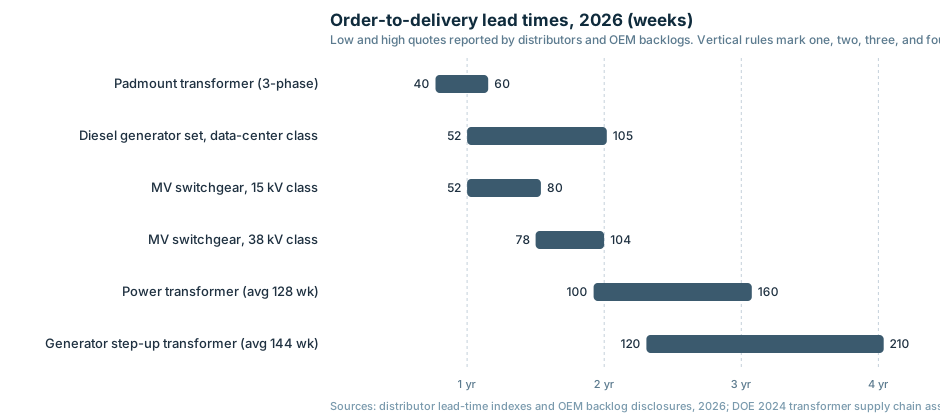
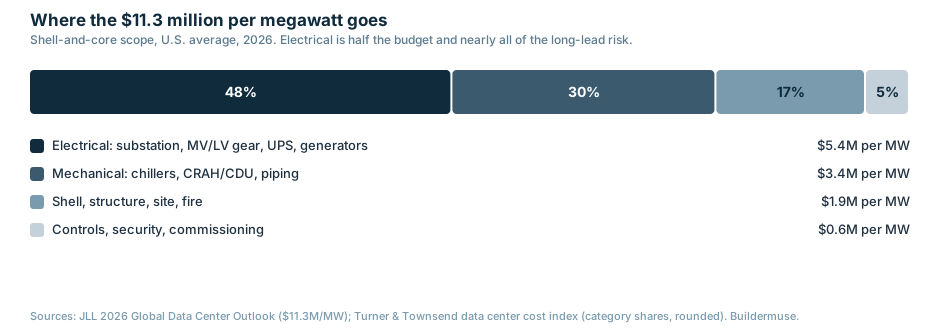
A 100-megawatt data center is, by budget, an electrical project with a building wrapped around it. Roughly half of the $11.3 million per megawatt that JLL's 2026 Global Data Center Outlook puts on an average shell-and-core build goes to the power train: the utility substation, the medium-voltage switchgear, the transformers that step voltage down three times before it reaches a server, the uninterruptible power supplies, and the diesel generators that back all of it up. Almost none of that equipment can be bought in less than a year. Medium-voltage switchgear in the 15 kV class is quoting 52 to 80 weeks. Data-center-class generator sets run past 105 weeks in the Americas, with OEM backlogs stretching into 2028. Power transformers average 128 weeks, and generator step-up units average 144, per distributor lead-time indexes published this year. The DOE's 2024 supply chain assessment, which this series covered in its substation teardown, put large power transformers at 120 to 210 weeks.
The practical effect is that the schedule for a data center no longer starts with a shovel. It starts with a purchase order, often signed before the land closes and sometimes before the general contractor is selected. This article walks through what the power gear is, the order it gets bought and installed, who carries the risk when it arrives late, and what the trades on site do during the long stretch when the building is finished and the switchgear is still on a factory floor in Mexico or Poland.
What "Power Gear" Means on a 100 MW Campus
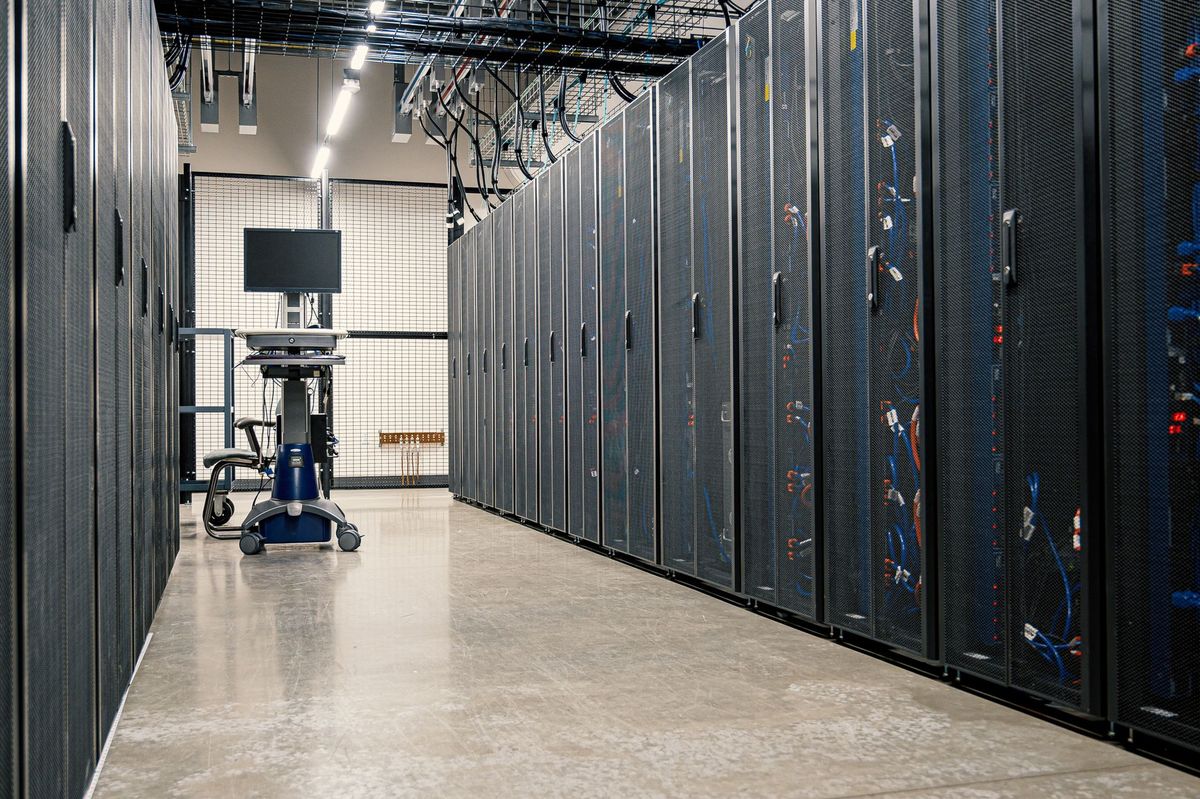
The electrical scope on a hyperscale or large colocation campus follows one path from the utility fence to the server rack. Each step has its own equipment, its own lead time, and its own trade.
The utility interconnection and substation
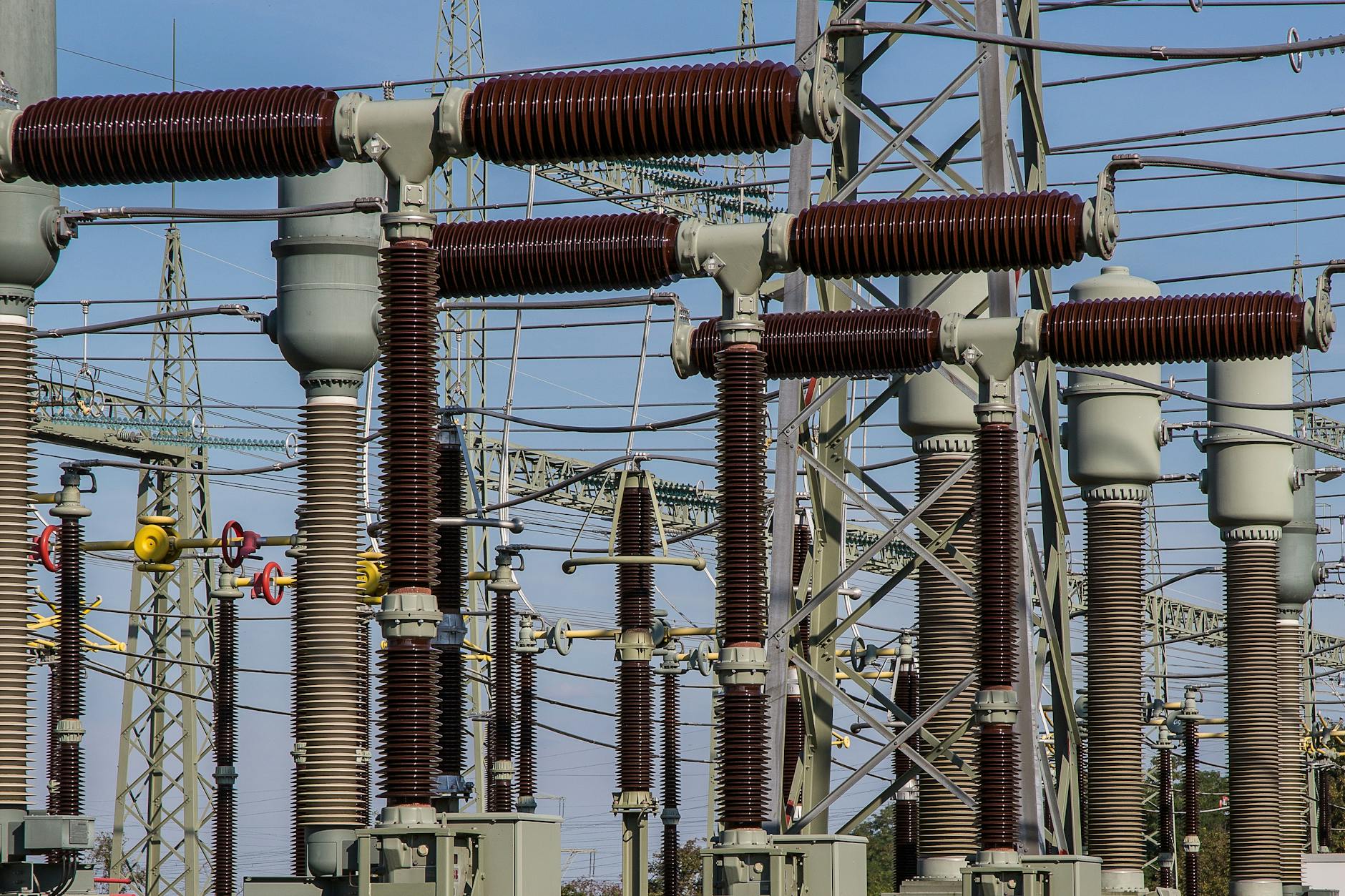
Power arrives at transmission voltage, typically 115 kV to 345 kV, and the first stop is a substation that the owner increasingly builds and pays for itself. A dedicated 100 MW substation carries two or more large power transformers, high-voltage breakers, and a control house, and it is the single longest-lead item on the campus. The interconnection itself is slower than the equipment. PJM's queue is averaging about 40 months, and active projects in data center load zones are waiting 36 to 48 months, per the regional transmission organization's own reporting. FERC's June 2026 order directing six grid operators to justify or reform their large-load interconnection timelines was a response to exactly this problem.
Medium-voltage distribution
From the substation, power moves at 13.8 kV to 34.5 kV through medium-voltage switchgear into the building's electrical rooms. This is where the shortage bites hardest. A 100 MW facility needs dozens of MV switchgear lineups, each a factory-assembled, steel-clad assembly of breakers, bus, relays, and metering. Lead times by voltage class, per the distributor indexes cited above, run 52 to 80 weeks at 15 kV and 78 to 104 weeks at 38 kV. Several manufacturers' MV channels are reported sold out through 2028.
Transformers, three times over
Voltage steps down from transmission to medium voltage at the substation, from medium to low voltage at unit substations inside or beside the building, and in some designs once more at the row level. Three-phase padmount and dry-type units for the low-voltage step are quoting 40-plus weeks. A 100 MW campus can need 60 to 120 of them.
UPS, batteries, and generators
Every critical load sits behind an uninterruptible power supply, usually in 1 to 3 MW blocks with lithium-ion or valve-regulated lead-acid batteries sized for minutes of runtime, long enough for the generators to start and synchronize. The generators themselves, 2.5 to 3.25 MW diesel units in weatherproof enclosures with belly tanks, are the second-longest lead item after the substation transformers. Data-center-class gensets are quoting 52 to 105-plus weeks, and OEM backlogs for the largest engines extend into 2028. A 100 MW campus at N+1 redundancy carries 40 to 50 of them.
The Procurement Sequence: Buy Before You Design
On a conventional commercial project, the general contractor buys equipment after the design is complete and the subcontracts are let. Data center owners abandoned that sequence around 2022. The current order of operations looks like this.
Step 1: Reserve manufacturing slots (month 0)
Hyperscalers and the larger developers now hold framework agreements with switchgear, UPS, and generator manufacturers that reserve production capacity years out, in some cases before specific sites exist. A slot reservation can carry a 10 to 30 percent deposit and a premium over list. Owners who lack those agreements buy from distributor stock, from brokers, or from other owners' cancelled orders, and they pay for it. Reported premiums for near-term delivery on MV gear and gensets run 20 to 40 percent above standard pricing.
Step 2: Owner-furnished, contractor-installed (months 0 to 6)
Because the equipment is bought before the contractor is on board, most data center electrical scope is now owner-furnished, contractor-installed, or OFCI. The owner carries the purchase order, the schedule risk, and the warranty. The electrical contractor receives, sets, terminates, and commissions. This shifts a large share of the project's dollar value off the contractor's books and changes how the job is bid: an electrical sub pricing a 100 MW campus may carry $80 million of labor and material on a scope whose equipment alone is worth $300 million.
Step 3: Design to the equipment you have (months 3 to 12)
Engineers used to size switchgear to the load. They now size the design to the switchgear that is actually available. If a manufacturer can deliver 15 kV gear in 60 weeks and 38 kV gear in 100, the distribution voltage follows the shorter line. If 3 MW gensets are sold out and 2.5 MW units can ship, the generator yard gets bigger. Submittals and shop drawings run in parallel with civil permitting instead of after it.
Step 4: Build the shell to receive the gear (months 6 to 18)
The building, the electrical rooms, the generator yard, the fuel system, and the underground duct bank all proceed while the equipment is in production. On a typical schedule the shell and the mechanical rough-in finish months before the switchgear arrives, and crews demobilize or shift to the next building on the campus.
Step 5: Set, terminate, and commission (months 18 to 30)
When the gear lands, it sets fast. Switchgear lineups arrive on flatbeds in shipping splits, roll into position on their pads, and get bolted together. Generators crane onto their pads in a day each. The slow part is terminations: a 100 MW campus has tens of thousands of medium- and low-voltage cable terminations, each torqued, labeled, and tested. Commissioning then runs through five levels, from factory witness testing to the integrated systems test where the whole campus is pulled off utility power at full load to prove the generators and UPS carry it.
Where the Money Goes
JLL's $11.3 million per megawatt is a shell-and-core number: structure, foundations, and base power and cooling distribution. Tenant fit-out, which includes the racks, the row-level power distribution, and for AI halls the liquid cooling loops, adds more, and for GPU-dense facilities the all-in figure reported in 2026 runs $20 million to $37 million per megawatt. Within the shell-and-core budget, Turner & Townsend's cost index data shows electrical at roughly 48 percent of facility cost and mechanical rising toward a third as liquid cooling spreads.
| Scope | Share of shell and core | Approx. $ per MW | Lead-time exposure |
|---|---|---|---|
| Electrical (substation, MV/LV gear, UPS, generators) | 48% | $5.4M | 52 to 210 weeks |
| Mechanical (chillers, air handlers, CDUs, piping) | 30% | $3.4M | 26 to 60 weeks for chillers |
| Shell, structure, site, fire protection | 17% | $1.9M | Weeks, locally sourced |
| Controls, security, commissioning | 5% | $0.6M | Labor-paced |
Sources: JLL 2026 Global Data Center Outlook; Turner & Townsend data center cost index. Shares rounded.
The table explains why the equipment problem dominates everything else. A 10 percent swing in structural steel pricing moves the budget by about 2 percent. A 12-month slip on switchgear delivery moves the revenue date on a $1.1 billion asset by a year.
Who Carries the Risk
The owner
Under OFCI the owner holds the purchase orders and eats the delay. That is why the biggest operators have become equipment buyers first and builders second, and why the firms building for them report so much of their revenue as third-party work. EverOn Data Center Services, the Atlanta general contractor that spun out of T5 in September 2026, grew from $87 million in revenue in 2021 to $1.7 billion in 2025, and lists long-lead equipment procurement as a service alongside construction, per the company's launch announcement. The procurement desk is now part of the GC's offering because the owner's biggest risk is no longer concrete.
The general contractor
GCs on these campuses are paid to manage a schedule they do not control. The contracts reflect it. Liquidated damages clauses increasingly exclude owner-furnished equipment delays, and milestone payments are tied to "ready to receive" dates rather than energization. The GC's real leverage is in sequencing: keeping crews productive on building two while building one waits for gear, and making sure the room, the pads, the conduit stubs, and the grounding are perfect so that when a $4 million switchgear lineup shows up, it sets in days rather than weeks.
The electrical contractor
The electrical sub is where the labor constraint lives. A 100 MW campus needs 400 to 800 electricians at peak, and the work is unlike commercial wiring: medium-voltage cable splicing and termination, generator paralleling, UPS commissioning, and arc-flash coordination at scale. Georgia, which has become one of the fastest-growing data center markets, has felt this directly. The Atlanta Journal-Constitution reported in September 2026 that Ace Electric, a Valdosta electrical contractor, hired more than 500 workers in a single year to keep pace, recruiting roughly 700 candidates to net that number. Electricians need specialized upskilling before they are useful on a data center floor. Wage pressure follows. Our electrician wages by state data shows the markets where that pressure is highest.
The manufacturer
Switchgear, transformer, and generator makers are expanding, but factory additions take two to four years and the constraint underneath the constraint is grain-oriented electrical steel for transformer cores, which has a single domestic producer. Several manufacturers have responded by selling capacity rather than product: multi-year supply agreements with a handful of the largest buyers, which leaves everyone else buying from the secondary market.
What Happens While the Gear Is on the Water
The 12 to 18 months between a finished shell and delivered switchgear is where campuses either stay on budget or fall apart. Three strategies have become standard.
Phased buildings
Campuses are designed as four to eight buildings of 25 to 50 MW each so that crews roll from one to the next. Building one's equipment, ordered first, lands while building two's shell is going up. The campus reaches full capacity over three to five years, but the first revenue arrives in 18 to 24 months.
Prefabricated electrical and mechanical modules
Skid-mounted and containerized power modules, sometimes a complete electrical room on a steel frame, are built at a factory while the site is being graded, then set with a crane. The equipment lead time does not change, but the on-site labor to install it falls, and the module can be built at a plant in a lower-wage market. EverOn's list of services includes prefabrication, and the larger electrical subs now run their own modular shops.
Bridging power
Where the utility interconnection, not the equipment, is the pacing item, owners are installing temporary generation: natural gas reciprocating engines, gas turbines, or large battery systems that carry the first phase until the substation energizes. This adds $1 million to $3 million per megawatt for the temporary plant but can pull revenue forward by two or more years in queue-constrained markets. It also creates a second power-gear procurement, with its own lead times.
Frequently Asked Questions
How long does it take to get switchgear for a data center in 2026?
Medium-voltage switchgear is quoting 52 to 80 weeks in the 15 kV class and 78 to 104 weeks at 38 kV, per 2026 distributor lead-time indexes. Several manufacturers' MV channels are reported sold out through 2028. Owners with framework agreements get earlier slots; everyone else pays a premium on the secondary market.
What is the longest-lead item on a data center project?
The large power transformers at the utility substation, at 120 to 210 weeks per the DOE's supply chain assessment, with generator step-up units averaging 144 weeks. The utility interconnection approval itself can take longer than any single piece of equipment, averaging around 40 months in PJM.
How much of a data center's cost is electrical?
About 48 percent of shell-and-core cost, per Turner & Townsend's data center cost index, or roughly $5.4 million of JLL's $11.3 million per megawatt average for 2026. Mechanical is about 30 percent and rising as liquid cooling spreads.
What does owner-furnished, contractor-installed mean on a data center?
The owner buys the switchgear, UPS, generators, and transformers directly, often years before construction, and the electrical contractor installs and commissions them. The owner carries the delivery risk and the warranty; the contractor prices labor, cable, conduit, and commissioning.
How many generators does a 100 MW data center have?
At N+1 redundancy with 2.5 to 3.25 MW diesel units, 40 to 50 generators is typical, each in a weatherproof enclosure with a belly fuel tank. Data-center-class gensets are quoting 52 to 105-plus weeks for delivery in the Americas.
Why are data center owners building their own substations?
Because the utility's own schedule to build one is longer than the owner's schedule to build the campus. A dedicated substation lets the owner order the transformers, hire the EPC, and control the sequence, with the utility providing the interconnection point. It also makes the owner a buyer in the same transformer market that utilities are already struggling in.
Your Action Item for This Week
If you are an electrical, mechanical, or civil contractor within a hundred miles of a data center cluster, pull the published lead times for the equipment on your next bid before you price labor, and write your schedule around equipment delivery dates rather than notice to proceed. Then check the top 20 data center construction contractors for the general contractors active in your state and find out which ones run OFCI scopes, because those are the jobs where your bid is labor and know-how, not equipment markup. The campuses being awarded this quarter will be setting switchgear in 2028. The subs who understand the sequence now will be the ones on site when it arrives.
More from the How It Gets Built desk
Edited by Ray Kowalski, Methods & Machines desk. New teardowns weekly.