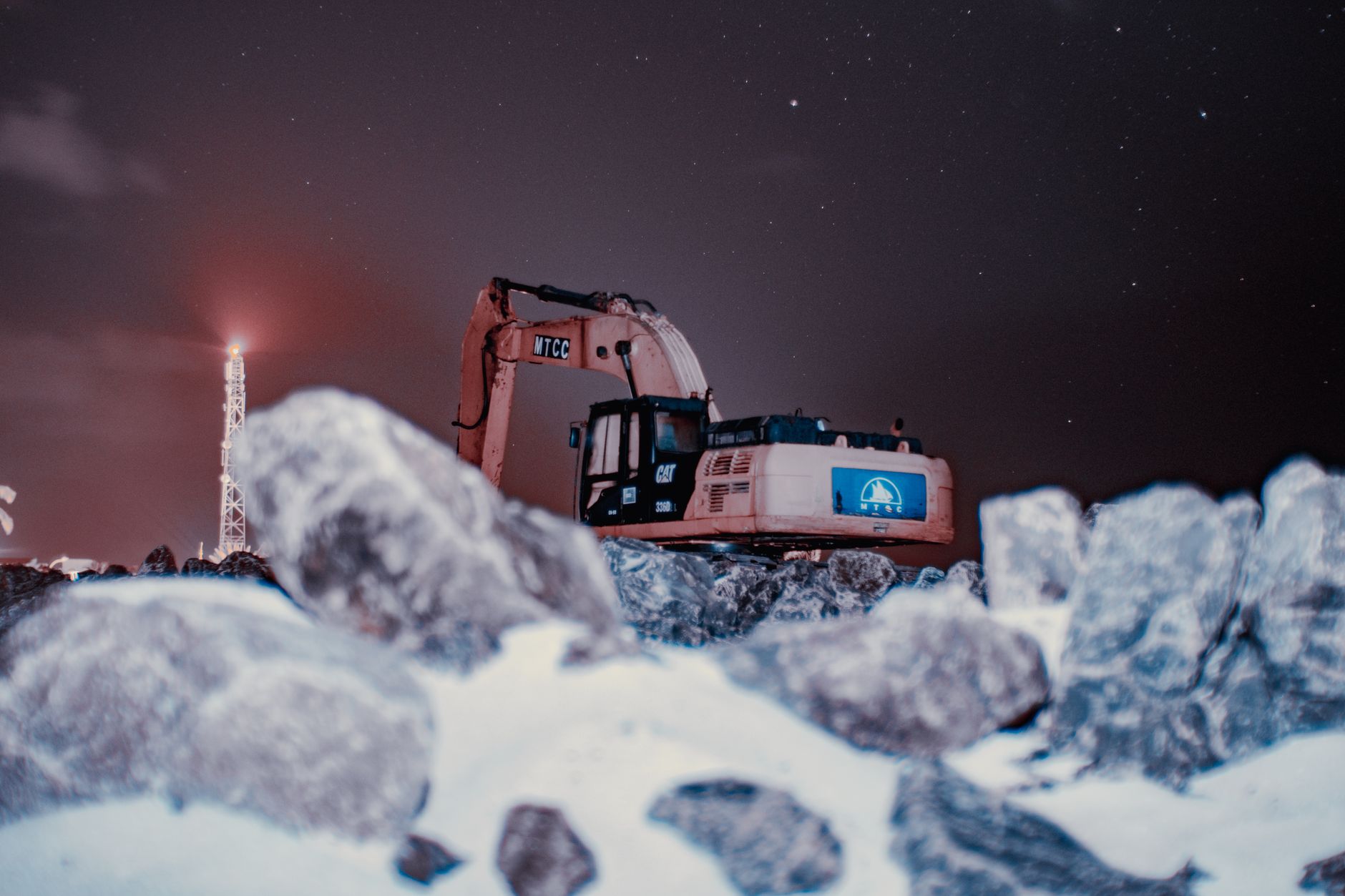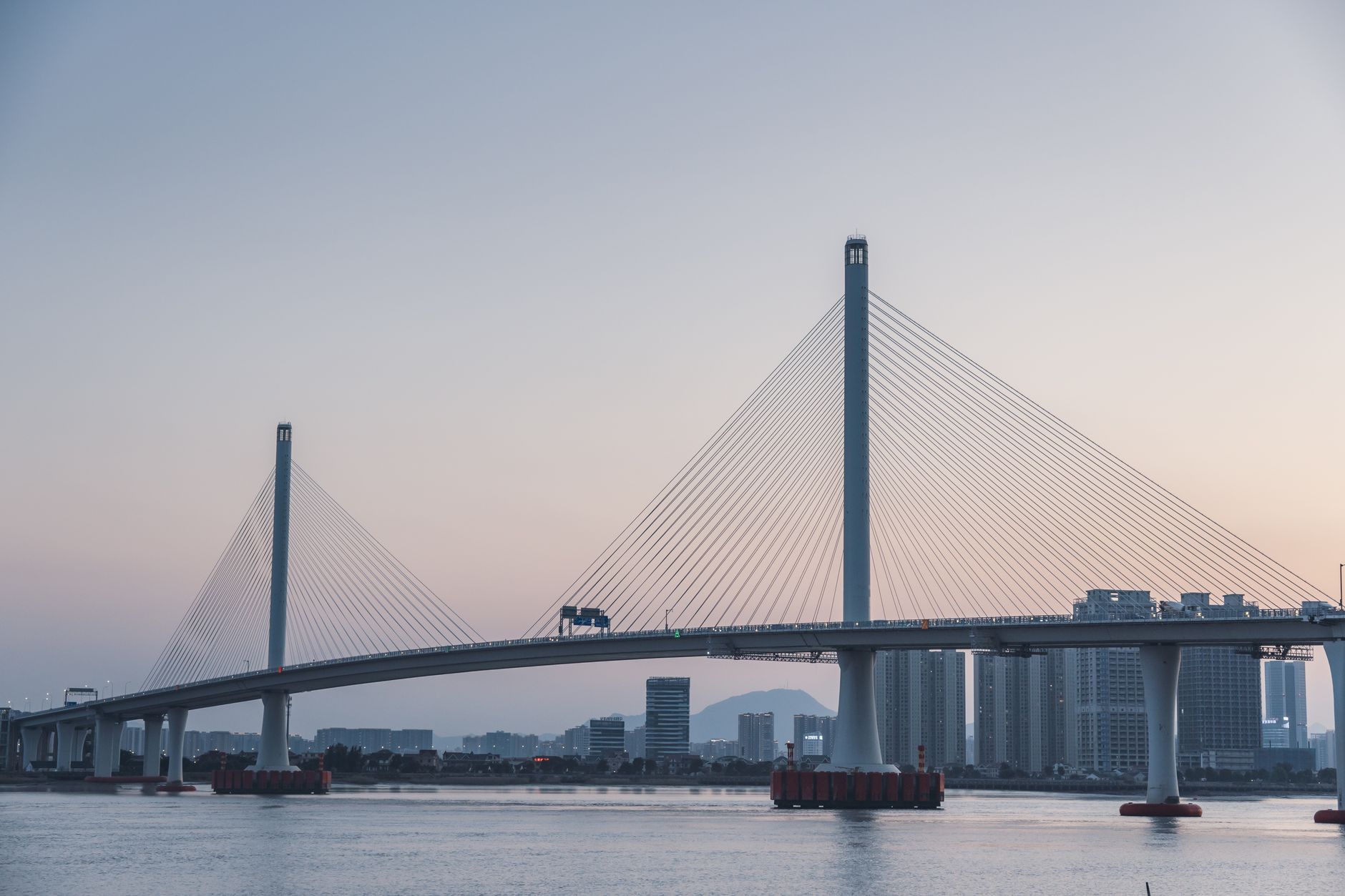
Before ACCIONA and Sacyr could finish designing the approaches for the new I-10 bridge at Lake Charles, they needed to know what the ground under them would do. So the team built trial embankments, test fills in Westlake and in Lake Charles, to measure how the soil settles under the weight. The project's public information officer, Johnathan Hill, described that work to the American Press on October 30, 2025, along with the relocation of a common duct bank that consolidates Calcasieu Parish utilities in one place.
That early dirt work says a lot about the job. The new bridge is lower than the one it replaces, which means shorter main spans and longer earth approaches. Long, heavy fills on soft Gulf Coast soil are a settlement problem, and the time to solve a settlement problem is before you build, especially when the same team has to maintain the road for decades afterward.
Louisiana DOTD puts the project at $2.3 billion. Governor Jeff Landry called it "the largest transportation infrastructure investment in Louisiana history" at the April 29, 2026 groundbreaking, according to Plenary's release that day. You will also see other numbers attached to this job, and they measure different things. That is covered in the deal section below.
What is being built
The scope is a corridor, not only a river crossing. According to DOTD's August 15, 2024 announcement and the project website (i10calcasieubridge.com, checked October 2026), the work covers about 5.5 miles of I-10 from near Ryan Street in Lake Charles to the I-210/I-10 interchange in Westlake. It includes:
- A new bridge north of the existing one, with three 12-foot travel lanes and one auxiliary lane in each direction, plus 12-foot shoulders, lighting and electronic tolling
- A new elevated Sampson Street interchange that takes traffic over the railroad tracks
- An eastbound service road system between PPG Drive and Sampson Street
- Reconstruction of the I-210 westbound ramp
- Interchange work at PPG Drive, Sampson Street and North Lakeshore/Ryan Street
- A $10 million allowance for pedestrian and bicycle facilities (Plenary, April 29, 2026)
The existing bridge opened in 1952 as part of US 90 and was folded into I-10 in the 1960s, per the project website. The Advocate reported on June 19, 2026 that the 1.25-mile structure peaks 143 feet above the river, climbs at a 5% grade, and carries a 3 out of 9 condition rating from FHWA, the kind of rating that used to be called structurally deficient. DOTD told the paper that 60,000 to 65,000 vehicles cross it each day and that there were 432 crashes on it from 2018 through 2024. Nationally, FHWA's 2026 bridge table lists 41,148 bridges in poor condition; our breakdown of poor-condition bridges by state has the details, and Louisiana accounts for 1,304 of them.
The project website describes the new profile as dropping from 152 feet to 75 to 95 feet. The American Press reported that the design includes four towers with arch-shaped lighting that echoes the old truss, and that replicas of the old bridge's cast-iron crossed pistols will be set into the towers. An earlier version of this article said the existing bridge climbs at a 4.1% grade. We could not find that figure in any project or DOTD material, and The Advocate reports 5%, so it has been corrected.
The deal: who owns what and what it costs
The owner is Louisiana DOTD. The developer is Calcasieu Bridge Partners (CBP), and the timeline of the deal runs like this:
- July 25, 2023: DOTD announced it had selected CBP for negotiations after receiving two proposals in June. At that point DOTD described a $2.1 billion project and listed about $800 million in public money, including a $150 million federal discretionary grant, $150 million in American Rescue Plan Act funds, $240 million in Motor Vehicle Sales Tax transfers, $100 million from the state general fund, $85 million in state general obligation bonds and $75 million in federal Highway Priority Program funds.
- October 2023: legislators rejected the first deal, according to Roads & Bridges.
- January 30, 2024: the Joint Transportation, Highways and Public Works Committee approved a renegotiated agreement with lower truck tolls, paid for with more public money (Roads & Bridges, February 1, 2024). Plenary lists commercial close as January 31, 2024.
- July 24, 2024: the State Bond Commission approved the private activity bond sale.
- August 15, 2024: DOTD announced financial close and the notice to proceed.
At financial close, DOTD said state and federal funding covers $1.2 billion of the cost and toll revenue covers the rest. Sacyr's August 16, 2024 release gives the financing details: $1.33 billion in tax-exempt private activity bonds in four tranches maturing between 2054 and 2066, with J.P. Morgan Securities and Wells Fargo named on the issue, rated Baa3 by Moody's, with the state's roughly $1.2 billion paid out against construction milestones and the balance from the partners' equity.
Ownership of CBP is Plenary Americas 40%, ACCIONA 30% and Sacyr 30%, per Sacyr. The design-build joint venture is a 50/50 ACCIONA-Sacyr split. Kapsch is the tolling operator.
Now the different price tags. DOTD and Plenary use $2.3 billion. Sacyr reported a construction budget of $2.27 billion and a total capital expenditure of $3.37 billion, and ACCIONA used $3.37 billion as the total concession investment in its April 30, 2026 release. Plenary's project page lists a value of $2.4 billion on a net present value basis. These are not contradictions so much as different measures: construction cost, the cost of the deal including financing over its life, and a discounted value. If you are quoting a number, say which one.
Tolls and the state's share
Tolls will not start until the new bridge opens. DOTD set the rates in 2023 dollars, indexed to the Consumer Price Index. Under the January 2024 renegotiation, the 25-cent local toll was extended to all noncommercial vehicles registered in the five-parish area (Calcasieu, Cameron, Allen, Jefferson Davis and Beauregard) with a toll tag. Large trucks with a transponder pay $8.25, down from $12.50 in the first deal, and $12.36 without one, down from $18.73, according to Roads & Bridges. Plenary's project page also lists a 50% discounted HOV rate during peak hours for vehicles with three or more occupants. DOTD's 2023 announcement said toll tags are free.
After construction, maintenance and debt service are paid, the state keeps nearly 15% of toll revenue, according to DOTD's financial close announcement. DOTD said that money may be used to lower tolls, shorten the toll's 50-year term, or fund highway projects in the five-parish area. CBP will operate and maintain the bridge for up to 50 years after construction.
An earlier version of this article said final toll rates had not been published. The truck and local rates above were set by DOTD and approved by the legislative committee in January 2024. What has not been published is a full current rate table in today's dollars.
Four segments at once, with I-10 open
The project is being built in four segments at the same time, and I-10 stays open throughout, per Hill's comments to the American Press. Drivers stay on the 1952 bridge until traffic moves to the new one. Until then, CBP maintains the 5.5-mile corridor and DOTD keeps maintaining the old bridge. The Advocate reported a $1.71 million maintenance project on the existing bridge expected to start in June 2026 and run more than a year.
Lane and ramp closures are under way. As of October 2026, the project website lists a lane closure on the I-210 West flyover ramp to I-10 West from September 25, 2026 through October 2027, and a closure of the PPG Drive eastbound entrance ramp from October 8 through November 20, 2026. DOTD held an open house public hearing on July 21, 2026 to cover the project schedule, preliminary drawings of roundabouts on Lakeshore Drive, traffic mitigation during construction and an updated traffic noise analysis, with written comments due August 4.
Running four fronts at once means four crews drawing on the same craft labor, the same batch plants and the same precast and aggregate supply at the same time. It compresses the schedule, and it multiplies the places where a late delivery hurts.
What is happening on site now
Construction began in March 2026 and the formal groundbreaking was April 29, 2026. Construction Equipment Guide reported in May 2026 that the early phases focus on utility coordination, earthwork, foundation installation and framing for major bridge components. The trial embankments and duct bank relocation came first.
Foundations here mean deep piling, with marine work in the Calcasieu Ship Channel adding barge-mounted equipment and coordination with commercial traffic. Superstructure work follows once the foundations are in.
The labor numbers
The figures announced at the groundbreaking are economic impact estimates: more than 16,000 jobs over the project lifecycle, $1.9 billion in labor income and $3.29 billion in regional economic impact (Plenary, April 29, 2026). They are modeled totals that include indirect and induced jobs over many years, not a count of people on site. A peak craft headcount has not been published.
For a sense of the trades involved, the BLS Occupational Employment and Wage Statistics survey for May 2025 puts the national median wage for structural iron and steel workers at $30.18 an hour and for pile driver operators at $35.24 an hour. Pile driver operators are a small trade, with about 2,310 employed nationally in that survey, which matters on a job with this much piling. Local rates on this project will be set by the contract, not by these national medians. The American Press reported that the design-build team has been recruiting through information sessions in Sulphur and a careers page.
Materials and the price risk
The $2.3 billion figure is a financing number. Underneath it, the job is mostly concrete, reinforcing steel, piling and aggregate. Input prices have moved fast. The BLS Producer Price Index for rebar was up 30.0% from September 2025 to September 2026, while ready-mix concrete was up only 2.3% (PPI index changes, not dollar prices). Under a fixed-price design-build contract, those swings land on the design-builder and its subs, not on DOTD. Anyone pricing packages here should watch concrete pricing and steel more closely than the headline total. For other big bridge jobs competing for the same subs and materials, see our tracker of major US bridge projects.
What happens next
Foundations and earthwork continue through 2026 and into 2027, followed by superstructure erection. Traffic is scheduled to shift to the new bridge in February 2030, then the old bridge comes down. Electronic tolling starts in August 2031 and final acceptance is set for December 2031, per the American Press. Sacyr's financial close release projects about 90,000 vehicles a day by 2040.
Frequently Asked Questions
How much does the I-10 Calcasieu River Bridge cost?
Louisiana DOTD puts it at $2.3 billion. Sacyr reported a construction budget of $2.27 billion and total capital expenditure of $3.37 billion at financial close in August 2024, and Plenary lists $2.4 billion on a net present value basis. About $1.2 billion comes from state and federal funds, with $1.33 billion in private activity bonds plus partner equity, repaid through tolls.
Who is building the new Calcasieu River Bridge?
Calcasieu Bridge Partners, owned by Plenary Americas (40%), ACCIONA (30%) and Sacyr (30%), is the concessionaire. An ACCIONA-Sacyr joint venture is the design-builder, and Kapsch runs the tolling.
How much will the toll be?
Rates are set in 2023 dollars and adjust with the Consumer Price Index. Noncommercial vehicles registered in Calcasieu, Cameron, Allen, Jefferson Davis and Beauregard parishes pay 25 cents with a toll tag. Large trucks pay $8.25 with a transponder and $12.36 without one. Tolls do not start until the new bridge opens, scheduled for tolling in August 2031.
When will the new bridge open?
Traffic is scheduled to move to the new bridge in February 2030. Tolling starts in August 2031 and final acceptance is scheduled for December 2031. I-10 stays open throughout construction.