Most of what happened on the Brent Spence Bridge Corridor Project this summer happened after 10 p.m.
June 28, around 10 p.m.: the eastbound U.S. 50/Sixth Street viaduct ramp to Second Street closed permanently. June 29, around 11 p.m.: the I-75 South exit ramp to Second Street closed permanently and was replaced by a new ramp to Third Street. July 8, around 11 p.m.: the ramp from northbound I-71 to Second Street closed, scheduled to reopen in fall 2028. July 9, around 10 p.m.: Second Street dropped to one lane between the Clay Wade Bailey Bridge and Elm Street, and it stays that way into spring 2027. Overhead sign installation ran under overnight lane restrictions in late June.
That is what a $4.05 billion job looks like when it is threaded through a downtown that never stops. The interstate stays open. The work gets done in the hours nobody is using.
What is being built
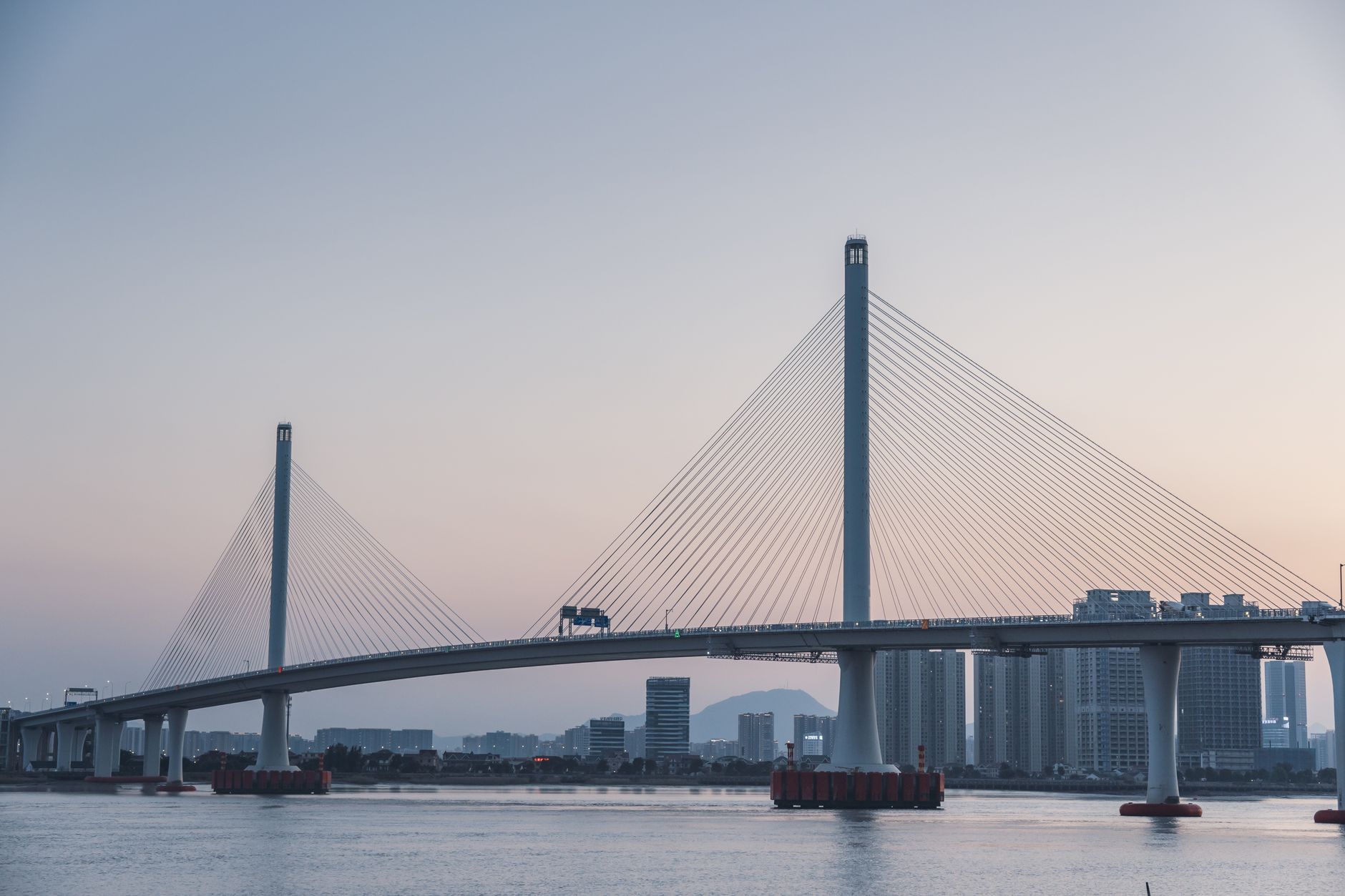
The project builds a new cable-stayed companion bridge just west of the existing Brent Spence Bridge, which has carried I-71 and I-75 across the Ohio River between Cincinnati and Covington since 1963. Through traffic moves onto the new structure. The 1963 double-deck truss stays in service for local traffic.
That is not the whole scope. Every connection to the existing bridge gets overhauled on both sides of the river: more than 30 overpasses or underpasses in Ohio and about a dozen in Kentucky, plus rebuilt approaches, redesigned ramp configurations, and new pedestrian and bike paths.
The existing bridge also gets fixed. In 1985, to absorb traffic growth, the bridge was reconfigured to add a fourth lane in each direction — done by removing the emergency shoulders and narrowing the lanes. Four decades later, this project reverses that: back to three lanes each way, with the emergency shoulders restored. ODOT Director Pamela Boratyn framed the goal as fixing "the paralysis that grips the region when accidents occur," which is the practical consequence of a bridge with nowhere to put a broken-down truck.
The bridge carries roughly 160,000 vehicles a day, double what it was designed for in 1963, and more than $1 billion in freight moves through the corridor daily.
Who is building it and what it costs
The owners are the Ohio Department of Transportation and the Kentucky Transportation Cabinet, working with the Federal Highway Administration. Walsh Kokosing Joint Venture — Walsh Construction and Kokosing — holds the design-build prime contract. AECOM is lead designer. Jacobs serves as Independent Companion Bridge Engineer and Parsons handles independent design quality assurance, a structure that puts separate eyes on the design outside the design-builder's own team.
This phase is $4.05 billion, split so that each state covers its own highway work and the two share the cost of the companion bridge. Two USDOT grants totaling $1.63 billion cover a large share; the balance comes from ODOT and KYTC state revenues and financing. Construction Dive reported the overall figure climbing toward $4.4 billion in mid-2026, roughly $700 million above the earlier $3.6 billion number, and pointed to national highway construction costs rising 61 percent between 2020 and 2025 on FHWA's National Highway Construction Cost Index.
There are no tolls. That was a deliberate funding decision — the state and federal split was structured specifically so drivers crossing the river would not pay one.
The states have not priced everything. Future phases, including the rest of the eight-mile corridor and the eventual rehabilitation of the existing Brent Spence Bridge, will be estimated closer to their construction.
The 2026 work: everything except the bridge
Heavy construction started in spring 2026 and the governors broke ground on May 8. What crews actually did through the first construction season was the unglamorous groundwork that has to finish before a bridge can be built:
- Utility relocations, overhead and underground
- Building demolitions and tree clearing, including a 200-foot section of Longworth Hall — the 1960s additions, with the original brick salvaged for reuse on the rebuilt east facade
- Sewer and water line reconstruction on Third Street on the Kentucky side, plus separating stormwater from combined sewers
- I-75 ramp reconstruction between Second and Ninth Streets on the Ohio side
- Establishing the staging areas that river and bridge operations will run from
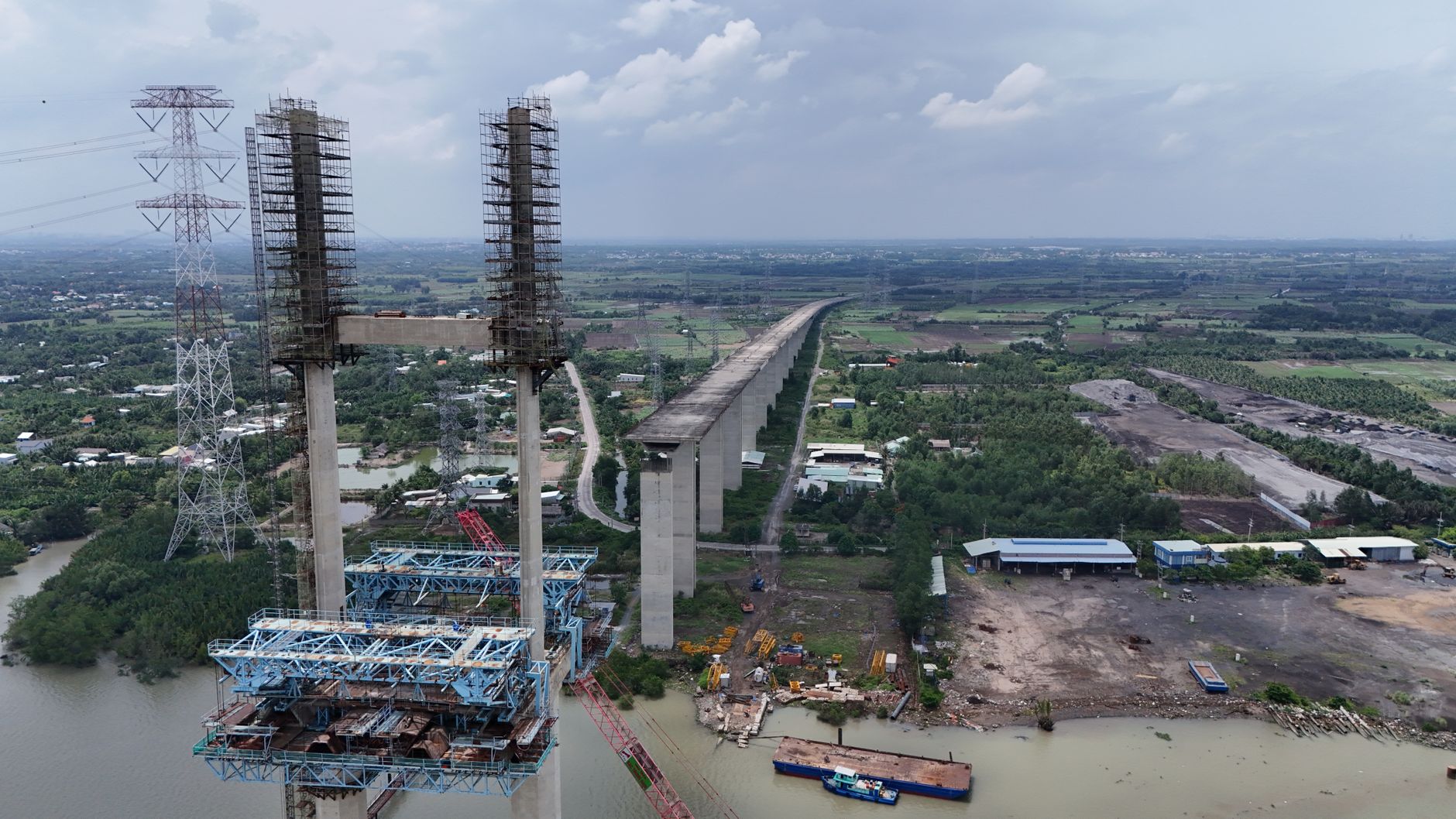
Then, later in 2026, the part people can see: Walsh Kokosing mobilizes barges and heavy cranes on the Ohio River to start foundation and pylon work for the companion bridge, with crane activity becoming visible downstream of the existing bridge in late summer and early fall.
Marine foundation work in a navigable river is a different discipline from land-based bridge work. Crews work off floating platforms whose position and stability change with river stage and traffic. The Ohio is a working commercial waterway, so barge movements have to coexist with tows. Pylons for a cable-stayed span go up in a sequence that has to be maintained regardless of weather windows, and high water can shut the operation down for days at a stretch.
Staffing 6 million hours
The state release puts this phase at approximately 6 million hours of work and more than 700 skilled tradespeople, with the workforce potentially reaching 1,000 at peak. Trade coverage has reported starting wages around $30 an hour.
Six million hours across roughly five years of heavy construction is a sustained draw on two regional labor markets at once. Ironworkers, operating engineers, pile drivers, laborers, carpenters and cement masons all get pulled from a two-state hiring pool, and every other highway job in the Cincinnati and Northern Kentucky area is bidding against it. Contractors who plan to pick up subcontract packages here should be modeling that competition — not just the wage rate, but the availability.
The night-work profile compounds it. Permanent ramp closures at 10 and 11 p.m., overnight sign work, and lane restrictions timed around commuter volumes mean a meaningful share of those hours are premium hours. If you are pricing a package on this corridor, that shift structure runs straight into your labor cost; the overtime calculator is a fast way to see what a night-heavy schedule does to a bid before you commit to it.
Working over live traffic is also the hazard that defines this job. Crews building approach structures and setting overhead signs are working above and beside an interstate carrying 160,000 vehicles a day, which is why so much of the schedule migrates into low-volume windows in the first place. The permanent closures announced in June and July are not just traffic management — they are how the contractor takes ground away from moving vehicles and turns it into a work zone.
Why it matters
This corridor is one of the country's most consequential freight bottlenecks, and the project is about to generate years of subcontract and supplier procurement across Ohio and Kentucky: drilled shafts, structural steel, precast, MSE wall, paving, electrical, signing. A grant-funded design-build package of this size cascades into hundreds of smaller awards. It is also one of the largest single draws on the $40 billion in dedicated IIJA bridge funding now moving through state programs.
It is also a useful read on how federally supported highway money is actually moving right now, which is the kind of question public works spending coverage is built to answer. If you want to see where Ohio and Kentucky contractor dollars already concentrate before you go chase a package here, the state construction dashboards are the starting point.
What happens next
Through the rest of 2026 and into 2027: barge and crane work in the river, foundations and pylon construction, and continued utility relocation. Expect more ramp closures announced with short notice and late-evening effective times — that has been the pattern all summer, and it will not change.
The companion bridge opens to traffic in 2031. Approach work is substantially complete in 2033. Rehabilitation of the 1963 bridge follows after that, on a schedule and a budget the states have not yet set.