A brickmason in Minnesota earns a median $45.78 an hour. A brickmason in Maine earns $20.54. Same trowel, same mortar board, same wear on the shoulders and lower back, and the Minnesota median is more than double the Maine one. The national median for SOC 47-2021, Brickmasons and Blockmasons, is $29.87/hr ($62,120/year), according to the Bureau of Labor Statistics' Occupational Employment and Wage Statistics (OEWS) program, May 2025 data, the most recent release. Here is every state, the percentiles that matter, and the cost-of-living math that decides what the paycheck actually buys.
The National Picture: $29.87/hr Across 52,550 Workers
BLS OEWS counts 52,550 wage-and-salary brickmasons and blockmasons nationally as of May 2025. The distribution (BLS OEWS, May 2025):
- Median: $29.87/hr ($62,120/year)
- Mean: $32.83/hr ($68,280/year)
- 10th percentile: $21.55/hr ($44,820/year)
- 25th percentile: $24.57/hr ($51,110/year)
- 75th percentile: $38.15/hr
- 90th percentile: $48.08/hr
The mean sits almost $3 above the median, which tells you the top of the distribution stretches further than the bottom. The 25th-to-median gap is about $5/hr; the median-to-90th gap is more than $18/hr. The masons in that top band are concentrated in a handful of Midwest and Northeast states with strong building-trades presence and state prevailing-wage laws, where commercial and institutional block work pays well above residential veneer.
For comparison, the national median for carpenters (SOC 47-2031) was $29.12/hr in the same May 2025 release, so masons sit a little under $1/hr ahead at the median.
The BLS Occupational Outlook Handbook groups brickmasons with blockmasons, stonemasons, and cement masons under "masonry workers": 277,700 jobs in 2025, projected to grow 1% from 2025 to 2035 (slower than average), with about 18,400 openings a year, most of them replacing workers who retire or leave the occupation. That broader group's median was $28.02/hr in May 2025. The figures in this article are for brickmasons and blockmasons alone.
One caution the table cannot show: masonry is weather-dependent. The Handbook notes that masons work mostly outdoors and that inclement weather may affect their schedules, and masonry specifications impose cold-weather protection requirements on mortar work. In northern states a mason may not log a full 2,080-hour year. The annual figures below are BLS's annualized wage (hourly times 2,080), not a measure of hours actually worked.
Full State Mason Wage Table (plus DC)
Every state plus the District of Columbia: median hourly wage, median annual wage, and employment for SOC 47-2021, as published by BLS OEWS for May 2025. BLS did not publish an Alaska estimate for this occupation in the May 2025 release, and it published Georgia's wage but not its employment count. The next OEWS release, covering May 2026, is due in spring 2027.
| State | Median Hourly | Median Annual | Employment |
|---|---|---|---|
| Alabama | $23.90 | $49,710 | 370 |
| Alaska | Not published | Not published | Not published |
| Arizona | $28.49 | $59,260 | 1,190 |
| Arkansas | $26.49 | $55,100 | 450 |
| California | $33.20 | $69,050 | 3,820 |
| Colorado | $31.37 | $65,260 | 870 |
| Connecticut | $32.67 | $67,960 | 480 |
| Delaware | $32.00 | $66,550 | 200 |
| District of Columbia | $30.98 | $64,450 | 200 |
| Florida | $25.37 | $52,760 | 2,610 |
| Georgia | $24.35 | $50,650 | Not published |
| Hawaii | $38.10 | $79,250 | 120 |
| Idaho | $30.06 | $62,510 | 320 |
| Illinois | $43.26 | $89,980 | 2,490 |
| Indiana | $35.15 | $73,110 | 1,770 |
| Iowa | $33.38 | $69,440 | 290 |
| Kansas | $28.47 | $59,220 | 330 |
| Kentucky | $28.76 | $59,820 | 780 |
| Louisiana | $27.62 | $57,440 | 240 |
| Maine | $20.54 | $42,710 | 90 |
| Maryland | $28.38 | $59,030 | 1,650 |
| Massachusetts | $45.65 | $94,950 | 1,570 |
| Michigan | $30.53 | $63,500 | 2,240 |
| Minnesota | $45.78 | $95,220 | 1,040 |
| Mississippi | $23.47 | $48,820 | 160 |
| Missouri | $34.80 | $72,370 | 1,940 |
| Montana | $26.94 | $56,030 | 140 |
| Nebraska | $29.42 | $61,200 | 350 |
| Nevada | $29.17 | $60,670 | 810 |
| New Hampshire | $32.16 | $66,890 | 140 |
| New Jersey | $37.03 | $77,010 | 520 |
| New Mexico | $21.63 | $44,980 | 270 |
| New York | $40.58 | $84,410 | 3,790 |
| North Carolina | $24.01 | $49,940 | 1,760 |
| North Dakota | $38.43 | $79,940 | 150 |
| Ohio | $34.11 | $70,950 | 2,770 |
| Oklahoma | $24.34 | $50,620 | 580 |
| Oregon | $38.20 | $79,450 | 650 |
| Pennsylvania | $33.44 | $69,560 | 2,910 |
| Rhode Island | $38.12 | $79,280 | 220 |
| South Carolina | $23.56 | $49,010 | 410 |
| South Dakota | $29.03 | $60,380 | 320 |
| Tennessee | $30.70 | $63,850 | 1,050 |
| Texas | $27.12 | $56,410 | 4,300 |
| Utah | $29.06 | $60,450 | 1,590 |
| Vermont | $28.65 | $59,590 | 100 |
| Virginia | $26.29 | $54,680 | 2,350 |
| Washington | $40.00 | $83,190 | 600 |
| West Virginia | $22.40 | $46,600 | 210 |
| Wisconsin | $38.52 | $80,120 | 1,050 |
| Wyoming | $28.87 | $60,040 | 230 |
| National | $29.87 | $62,120 | 52,550 |
Half of the 50 jurisdictions with published wages (25) sit above the national median. The four largest workforces are Texas (4,300 masons, $27.12), California (3,820, $33.20), New York (3,790, $40.58), and Pennsylvania (2,910, $33.44).
Top 5 and Bottom 5: The $25.24/hr Spread
Minnesota posts the highest median at $45.78/hr and Maine the lowest at $20.54, a $25.24/hr spread (BLS OEWS, May 2025).
Top 5
- Minnesota: $45.78/hr ($95,220/year), 1,040 masons.
- Massachusetts: $45.65/hr ($94,950/year), 1,570 masons, essentially tied with Minnesota.
- Illinois: $43.26/hr ($89,980/year), 2,490 masons. Chicago-area commercial block work plus the state's Prevailing Wage Act on public jobs.
- New York: $40.58/hr ($84,410/year), 3,790 masons, one of the largest workforces in the country. The statewide median blends New York City commercial and restoration work with lower-paid upstate residential work.
- Washington: $40.00/hr ($83,190/year), 600 masons.
Wisconsin ($38.52), North Dakota ($38.43), Oregon ($38.20), Rhode Island ($38.12), and Hawaii ($38.10) round out the top ten. Notice how Midwestern that list is: Minnesota, Illinois, Wisconsin, and North Dakota all make it.
Bottom 5
Maine ($20.54), New Mexico ($21.63), West Virginia ($22.40), Mississippi ($23.47), and South Carolina ($23.56). Alabama ($23.90), North Carolina ($24.01), and Oklahoma ($24.34) are just above them. Most of the low end is in the South, where the work mix leans toward residential brick veneer. Maine is the outlier: a small workforce of 90 and the lowest median in the table.
OEWS covers wage-and-salary workers only. A layer paid piece rate on a 1099 through a labor broker is not in these numbers. A misclassified worker loses workers' compensation coverage and overtime protection under FLSA Section 7, and pays both halves of Social Security and Medicare (15.3% self-employment tax instead of the 7.65% employee share).
Union vs. Non-Union: Compare the Package, Not the Base
Bricklayers organize under the International Union of Bricklayers and Allied Craftworkers (BAC), with training through the International Masonry Institute. There is no official national figure for union mason pay. Scale is negotiated local by local, and BLS OEWS does not split wages by union status. The state table shows a pattern anyway: the top five (Minnesota, Massachusetts, Illinois, New York, Washington) are all states without right-to-work laws and with state prevailing-wage laws, and eight of the bottom ten are right-to-work states.
At the industry level, BLS union membership data for 2025 put the construction union membership rate at 11.1%, with median weekly earnings of $1,585 for union construction workers against $1,132 for nonunion workers. That is an industry-wide figure, not a masonry-specific one, but it shows the size of the gap. A union journeyman's package also includes negotiated fringes (pension, health and welfare, annuity, training) paid per hour on top of the check rate. When you compare offers, compare total package per hour, and get your local's current wage sheet for the real number in your area. Our union vs. non-union construction wages breakdown goes deeper.
The same pattern shows up in the other structural trades; see ironworker wages by state and concrete finisher wages by state.
Cost-of-Living Adjustment: Where the Paycheck Buys the Most
Nominal wages mislead. Divide each state's median by its Regional Price Parity from the Bureau of Economic Analysis (2024 values, national average = 100, retrieved via FRED) and the ranking shifts:
| State | Median Hourly | BEA RPP (2024) | Adjusted Wage |
|---|---|---|---|
| Minnesota | $45.78 | 98.6 | $46.42 |
| Illinois | $43.26 | 100.0 | $43.28 |
| North Dakota | $38.43 | 89.0 | $43.20 |
| Massachusetts | $45.65 | 105.8 | $43.16 |
| Wisconsin | $38.52 | 94.1 | $40.94 |
| Missouri | $34.80 | 90.8 | $38.32 |
| Iowa | $33.38 | 87.8 | $38.03 |
| Indiana | $35.15 | 93.3 | $37.66 |
| Florida | $25.37 | 103.4 | $24.53 |
| Maine | $20.54 | 97.0 | $21.16 |
The Midwest wins this table outright. Minnesota stays first, and Illinois, North Dakota, Wisconsin, Missouri, Iowa, and Indiana all rank in the top eight once prices are counted. New York ($40.58 nominal, RPP 107.9) falls to $37.60 adjusted, and California ($33.20, RPP 110.7) to $29.99. Florida drops near the bottom because its prices run above the national average while its median runs below. A mason weighing a move should run this arithmetic, and should also weigh winter downtime in the northern states against year-round laying in the Sun Belt.
The Apprenticeship Path
The BLS Occupational Outlook Handbook says masons typically need a high school diploma or equivalent and learn the trade either through an apprenticeship or on the job, covering blueprint reading, measurement math, building codes, and safety, and that apprentices become journey workers on completion. Registered programs operate under 29 CFR Part 29. In a registered program the wage ladder is written into the program standards as a percentage of journeyman scale, rising as hours are completed. Each program sets its own steps and length, so ask for the written standards before you sign.
Union programs through BAC and the International Masonry Institute are typically funded through the collective bargaining agreement, and apprentices earn a wage from the first day. Non-union paths run through ABC chapters and mason contractors; there, step increases are company policy rather than contract terms, so get every one in writing. How programs compare on placement is covered in our apprenticeship program rankings. Under 29 CFR Part 30, discrimination in registered apprenticeship is prohibited, and complaints go to your State Apprenticeship Agency or the DOL Office of Apprenticeship.
The Risk the Wage Doesn't Show: Silica, Falls, and Cuts
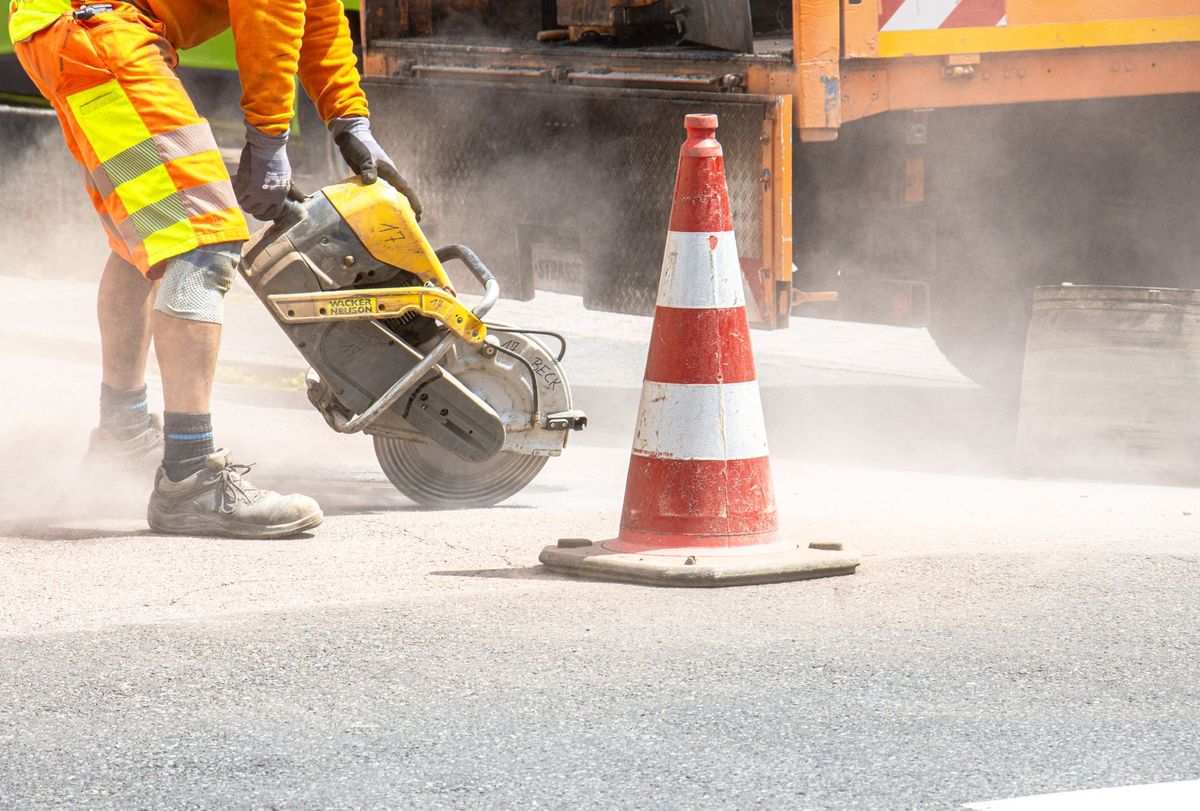
The Handbook notes that cuts are common among masons, as are injuries from falls and being struck by objects. The bigger long-term hazard is respirable crystalline silica. OSHA's construction silica standard, 29 CFR 1926.1153, sets a permissible exposure limit of 50 micrograms per cubic meter averaged over an 8-hour day, with an action level of 25, and Table 1 of the standard specifies engineering controls (water or vacuum dust collection) for tasks such as cutting block with a saw and tuckpointing with a grinder. Construction employers had to comply starting September 23, 2017. If your employer hands you a grinder with no shroud and no water on a tuckpointing job, that is a compliance problem, not a working condition. Our silica enforcement coverage explains what inspectors look for.
Scaffold work is the other daily exposure. OSHA's scaffold standard, 29 CFR 1926.451, governs the frames masons work from, and scaffolding regularly appears on OSHA's most-cited standards list.
Outlook
Three forces shape mason pay:
- Replacement demand. The Handbook projects about 18,400 masonry openings a year through 2035 against only 1% growth, so most openings come from people leaving the trade. Experienced layers remain the scarce resource.
- Institutional and commercial work. CMU remains a common wall system for schools, public buildings, and commercial shells, and that work is concentrated in the prevailing-wage states at the top of the table.
- Compliance costs. Silica controls and scaffold requirements raise the floor for contractors and tend to favor employers who invest in equipment and keep crews.
The next official benchmark is the May 2026 OEWS release, due in spring 2027.
For contractors pricing masonry work: the wage is only the visible cost. Workers' compensation rates for masonry classifications vary by state and carrier, and payroll taxes and liability stack on top. Run the true number through our labor burden calculator before committing to a unit price on block.
Frequently Asked Questions
What state pays masons the most in 2026?
Minnesota, at a $45.78/hr median ($95,220/year) in the latest BLS OEWS data (May 2025), followed closely by Massachusetts at $45.65/hr and Illinois at $43.26/hr. Minnesota also ranks first after adjusting for cost of living, at an effective $46.42/hr.
What is the national median wage for brickmasons and blockmasons?
$29.87 an hour, or $62,120 a year, for SOC 47-2021 (BLS OEWS, May 2025). The 25th percentile is $24.57/hr, the 75th is $38.15/hr, and the 90th is $48.08/hr.
How much do union masons make compared to non-union?
There is no official national split for masons. BLS does not publish OEWS wages by union status, and BAC scale is set local by local. Across all of construction, BLS reported 2025 median weekly earnings of $1,585 for union members versus $1,132 for nonunion workers. Compare total package per hour, including fringes, and get your local's wage sheet for the actual figure.
Is masonry a dying trade?
No. BLS projects masonry employment to grow 1% from 2025 to 2035, slower than average, but still expects about 18,400 openings a year as workers retire or leave. Slow growth with steady replacement demand favors experienced layers.
Do masons earn more than carpenters?
Slightly, at the national median: $29.87/hr for brickmasons and blockmasons versus $29.12/hr for carpenters in the May 2025 OEWS data.
What is the biggest health risk for masons?
Respirable crystalline silica. OSHA's 29 CFR 1926.1153 limits exposure to 50 micrograms per cubic meter over an 8-hour day, and Table 1 requires water or vacuum dust controls for common masonry tasks such as saw cutting and tuckpointing.
Your Action Item for This Week
If you lay brick or block: find your state in the table and compare your rate. If you have years on the trowel and sit well below your state median, competing offers are worth getting. Pull your last pay stub and confirm you are W-2, not 1099. If you employ masons: check every layer against the state table and run true crew cost through the labor burden calculator before your next bid.
Sources and data cited
- BLS Occupational Employment and Wage Statistics (OEWS), SOC 47-2021 and 47-2031, May 2025 data (national and state medians, percentiles, employment), retrieved via the BLS Public Data API: www.bls.gov/oes/current/oes472021.htm
- BLS Occupational Outlook Handbook, Masonry Workers (2025 employment, 2025-2035 projections, training, hazards): www.bls.gov/ooh/construction-and-extraction/brickmasons-blockmasons-and-stonemasons.htm
- BLS Union Members 2025 (construction industry membership rate and median weekly earnings)
- BEA Regional Price Parities by State, 2024, retrieved via FRED (state series such as MNRPPALL)
- OSHA 29 CFR 1926.1153 (respirable crystalline silica), 29 CFR 1926.451 (scaffolds)
- DOL Registered Apprenticeship standards, 29 CFR Parts 29-30
- Related: Ironworker Wages by State 2026 | Concrete Finisher Wages by State 2026