OSHA's enforcement of the respirable crystalline silica standard for construction (29 CFR 1926.1153) has entered an aggressive new phase: silica-related citations increased 340% over a two-year period, with total proposed penalties exceeding $18.4 million in the most recent fiscal year alone. What was once a standard that many contractors treated as aspirational is now the subject of targeted National Emphasis Program inspections, industry-specific enforcement initiatives, and willful violation classifications that carry penalties of up to $161,323 per violation.
The data is clear — the era of silica standard soft enforcement is over. OSHA has trained dedicated compliance officers in silica sampling methodology, invested in portable monitoring equipment, and created a specialized enforcement team focused exclusively on construction silica exposure. Contractors who have not fully implemented silica compliance programs are facing financial penalties that can reach six and seven figures on a single inspection.
The Standard: What 1926.1153 Requires
The OSHA respirable crystalline silica standard for construction, which took full effect for all employers in 2018, establishes requirements that many contractors still do not fully understand:
Permissible Exposure Limit (PEL)
The construction silica PEL is 50 micrograms per cubic meter (µg/m³) as an 8-hour time-weighted average (TWA). To put this in perspective:
- The previous PEL was 250 µg/m³ — the new standard is 5 times more restrictive
- 50 µg/m³ is approximately the weight of a single grain of sand distributed across 20 cubic meters of air
- Many common construction activities generate silica exposure that exceeds 50 µg/m³ by 10-50 times without engineering controls
Action Level
The action level — the exposure level that triggers certain compliance requirements — is 25 µg/m³ (half the PEL). When exposure exceeds the action level but remains below the PEL, employers must:
- Conduct periodic monitoring
- Provide medical surveillance if exposure continues for 30+ days per year
- Maintain exposure records
Table 1: Specified Exposure Control Methods
The standard provides Table 1 — a detailed table listing common construction tasks, specific engineering controls, work practices, and respiratory protection required for each. Table 1 is a "safe harbor" — employers who follow Table 1 requirements for listed tasks are not required to conduct air monitoring to verify compliance.
Selected Table 1 tasks and required controls:
| Task | Engineering Controls | Respiratory Protection |
|---|---|---|
| Concrete sawing (handheld) | Integrated water delivery at blade | APF 10 respirator when indoors or in enclosed area |
| Concrete sawing (walk-behind) | Integrated water delivery | None required outdoors; APF 10 indoors |
| Grinding with handheld grinder | Vacuum dust collection with HEPA filter | APF 10 when dust collection not feasible |
| Jackhammering | Water delivery to point of impact | APF 10 when indoors or exposure exceeds PEL |
| Tuck-point grinding | Vacuum dust collection with HEPA filter | APF 10 minimum |
| Drilling (handheld) | Vacuum dust collection OR water delivery | APF 10 when controls insufficient |
Critical requirement: Dry sweeping and dry brushing of silica-containing dust is prohibited unless wet sweeping, HEPA vacuuming, or other methods are not feasible.
Medical Surveillance
Employers must provide medical examinations to workers who are required to wear a respirator under 1926.1153 for 30 or more days per year. Medical exams include:
- Medical and work history questionnaire
- Physical examination with emphasis on the respiratory system
- Chest X-ray (at initial exam and every 3 years thereafter) or HRCT scan
- Pulmonary function testing
- Any additional testing deemed appropriate by the examining physician
Safety note: Silicosis is an irreversible, progressive, and ultimately fatal lung disease. Workers diagnosed with accelerated silicosis can progress from diagnosis to death in as little as 5-10 years. Unlike many occupational diseases that manifest decades after exposure, aggressive construction-related silicosis has been documented in workers with less than 10 years of exposure to uncontrolled silica dust — particularly in concrete cutting, grinding, and tuck-pointing. This is not a theoretical risk. I have reviewed medical files of workers in their 30s who can no longer climb a flight of stairs because their lungs are scarred from silica exposure that was entirely preventable with proper controls.
The Enforcement Surge: By the Numbers
OSHA enforcement data reveals the dramatic escalation:
Silica-related construction citations:
- FY 2019: 186 citations
- FY 2020: 142 citations (reduced due to COVID inspection limitations)
- FY 2021: 228 citations
- FY 2022: 312 citations
- FY 2023: 486 citations
- FY 2024: 634 citations
- FY 2025: 818 citations — the 340% increase measured from FY 2022 baseline
Total proposed penalties:
- FY 2022: $4.2 million
- FY 2023: $8.6 million
- FY 2024: $14.2 million
- FY 2025: $18.4 million
Average penalty per citation: $22,500 — reflecting the severity with which OSHA classifies silica violations.
Willful violations: 42 willful silica citations were issued in FY 2025, each carrying penalties of up to $161,323. Willful violations are classified when OSHA determines the employer was aware of the requirement and intentionally chose not to comply.
Most commonly cited provisions:
- 1926.1153(c)(1) — Failure to implement Table 1 controls or conduct air monitoring: 34% of citations
- 1926.1153(d) — Failure to provide respiratory protection: 22% of citations
- 1926.1153(h) — Failure to provide medical surveillance: 18% of citations
- 1926.1153(i) — Failure to provide hazard communication/training: 14% of citations
- 1926.1153(e) — Failure to establish and maintain housekeeping practices: 12% of citations
Who Is Getting Cited
OSHA's enforcement data reveals patterns in the types of contractors receiving silica citations:
By contractor size:
- Under 20 employees: 48% of citations — small contractors lack dedicated safety staff and compliance knowledge
- 20-99 employees: 32% — mid-size contractors often have safety programs but with gaps in silica-specific compliance
- 100-499 employees: 14% — larger contractors with more resources but still significant gaps
- 500+ employees: 6% — large contractors generally have comprehensive programs but face challenges with subcontractor compliance
By trade:
- Concrete cutting and coring: 28% of citations
- Masonry/tuck-pointing: 24% of citations
- General demolition: 18% of citations
- Concrete grinding/polishing: 14% of citations
- Drywall sanding: 8% of citations
- Other: 8%
By inspection type:
- National Emphasis Program (NEP) inspections: 42% — OSHA is actively targeting construction sites for silica compliance
- Complaint-based inspections: 28% — workers and competitors are reporting non-compliance
- Referral inspections: 18% — inspectors conducting other inspections observe silica hazards
- Programmed inspections: 12% — random selection from construction site lists
The Cost of Non-Compliance
The financial consequences of silica standard violations extend beyond OSHA penalties:
OSHA penalties:
- Serious violation: Up to $16,131 per violation
- Willful violation: Up to $161,323 per violation
- Repeat violation: Up to $161,323 per violation
- Failure to abate: Up to $16,131 per day beyond abatement deadline
A typical multi-item silica citation might include:
- Failure to implement Table 1 controls (serious): $14,000
- Failure to provide respiratory protection (serious): $14,000
- Failure to conduct medical surveillance (serious): $12,000
- Failure to provide training (serious): $10,000
- Failure to maintain housekeeping (serious): $8,000
- Total: $58,000 for a single inspection
Beyond penalties:
- Workers' compensation: Silicosis claims average $180,000-$420,000 in lifetime medical and disability costs
- Litigation: Silicosis lawsuits have resulted in jury awards and settlements ranging from $500,000 to $8 million per plaintiff
- Multi-plaintiff litigation: Law firms specializing in occupational disease are actively recruiting construction workers for silicosis claims, similar to the asbestos litigation model
- Insurance: EMR impacts from silicosis claims increase workers' compensation premiums for years
- Reputation: Serious OSHA citations are public records and can affect prequalification with owners and general contractors
Compliance Implementation Guide
For contractors who need to implement or improve silica compliance:
Step 1: Identify Silica-Generating Tasks
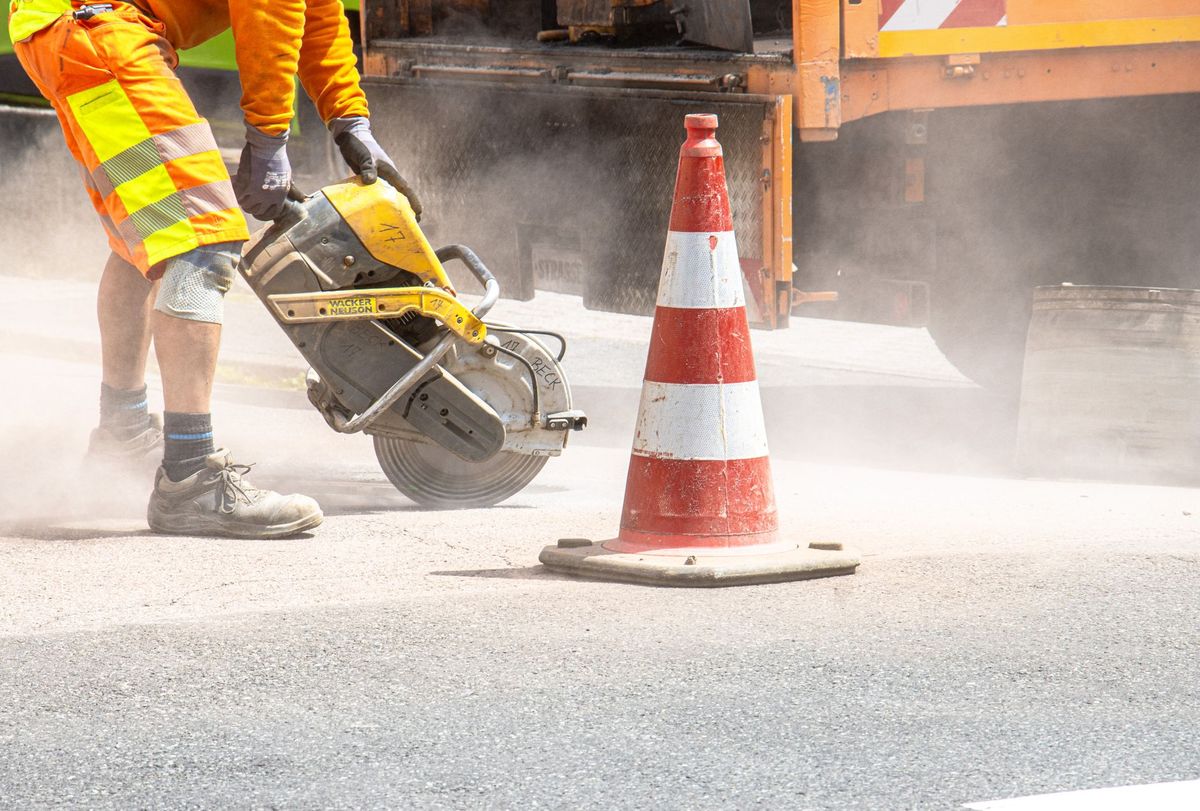
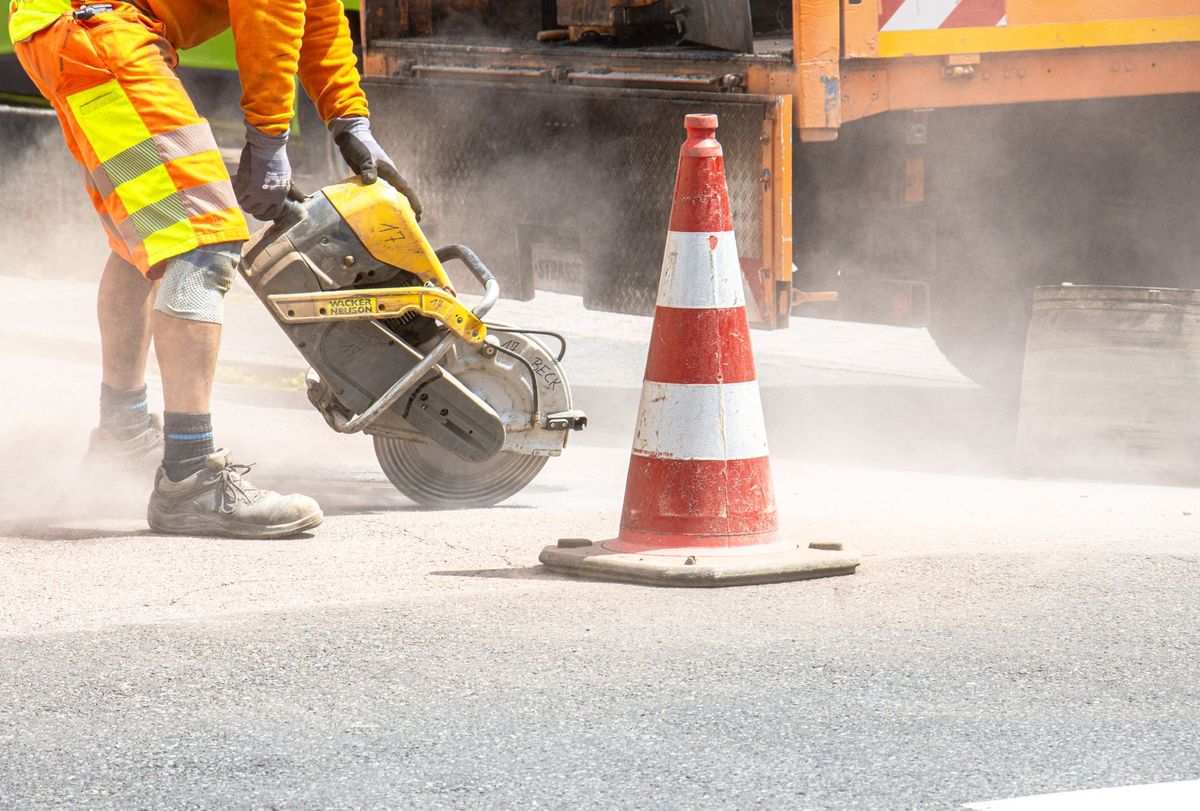
Review all operations that cut, grind, drill, crush, or disturb concrete, masonry, stone, sand, or other silica-containing materials. Common construction silica sources include:
- Concrete and morite cutting, drilling, grinding, and polishing
- Brick, block, and stone cutting
- Tuck-pointing and mortar grinding
- Drywall sanding (joint compound contains small amounts of silica)
- Sand blasting and abrasive blasting
- Demolition of concrete and masonry structures
- Soil and aggregate disturbance
Step 2: Implement Table 1 Controls
For each identified task, implement the specific controls listed in Table 1 of 1926.1153. This is the simplest compliance pathway because it eliminates the need for air monitoring.
Key equipment investments:
- Wet-cutting saws with integrated water delivery: $400-$2,800 per saw
- Vacuum-attached grinders with HEPA collection: $600-$1,800 per grinder
- HEPA vacuums for dust collection: $400-$1,200 each
- Water suppression systems for jackhammers: $200-$600 per attachment
- Dust-collecting drill shrouds: $80-$250 each
Total equipment investment for a mid-size concrete/masonry contractor: $8,000-$25,000 — a fraction of a single OSHA citation.
Step 3: Respiratory Protection Program
When engineering controls are insufficient (or for tasks where Table 1 specifies respiratory protection), establish a respiratory protection program per 29 CFR 1910.134:
- Written respiratory protection program
- Medical evaluation for respirator use
- Fit testing (initial and annual)
- Proper respirator selection (minimum APF 10 — typically N95 filtering facepiece or half-face elastomeric respirator)
- Training on use, maintenance, and limitations
- Respirator inspection and storage procedures
Step 4: Medical Surveillance
Identify workers who wear respirators for silica protection for 30+ days per year and enroll them in medical surveillance:
- Initial baseline exam within 30 days of assignment
- Periodic exams every 3 years (or as recommended by physician)
- Exam within 30 days of notification of abnormal results
- Cost: $250-$600 per exam
Step 5: Training
All workers with potential silica exposure must receive training covering:
- Health hazards of silica exposure
- Tasks that create silica exposure
- Engineering controls and work practices
- Proper use of respiratory protection
- Medical surveillance requirements
- Workers' rights under the standard
Training must be provided before initial assignment and at least annually thereafter. Document all training with attendee names, dates, and topics.
Step 6: Written Exposure Control Plan
Develop a written plan that documents:
- Silica-generating tasks and associated controls
- Procedures to restrict access to high-exposure areas
- Housekeeping procedures (wet sweeping, HEPA vacuuming — NOT dry sweeping)
- Respiratory protection program elements
- Medical surveillance procedures
Safety note: The silica standard exists because silica exposure causes silicosis — a disease that slowly suffocates its victims as lung tissue is replaced by scar tissue. OSHA estimates that full compliance with 1926.1153 will prevent approximately 600 deaths per year from silicosis and related diseases (lung cancer, kidney disease, COPD). These are not abstractions. These are construction workers who cut concrete, grind mortar, and drill masonry — workers who trusted their employers to protect them from hazards that have been known since ancient times. The data is clear — every citation OSHA issues represents a workplace where workers were breathing air that was killing them. The 340% enforcement increase is appropriate, and it should continue until compliance becomes universal.
Industry Resources for Compliance
Contractors who need assistance implementing silica compliance programs have several free and low-cost resources available:
OSHA Consultation Program: Free, confidential safety and health advice available to small and medium-sized businesses through state-administered consultation programs. Consultants will visit your jobsite, evaluate silica exposure risks, and help develop compliance strategies — without issuing citations. Available in all 50 states through OSHA's On-Site Consultation Program (separate from OSHA enforcement).
CPWR — The Center for Construction Research and Training: Provides free silica exposure control guidance, including the Silica-Safe app that allows workers and supervisors to look up Table 1 controls for specific tasks on a mobile device. The app is available in English and Spanish and is the most user-friendly reference for field-level compliance.
NIOSH Recommended Practices: The National Institute for Occupational Safety and Health publishes detailed engineering control guidance for silica-generating tasks, including specific equipment recommendations, water flow rates for wet cutting, and vacuum specifications for dust collection systems.
Manufacturer resources: Major tool and equipment manufacturers (Hilti, Husqvarna, Makita, Bosch) provide silica-compliant dust collection systems designed to integrate with their cutting, grinding, and drilling equipment. Many manufacturers offer free training on proper use of dust collection attachments and will demonstrate equipment on your jobsite.
Trade association programs: The Mason Contractors Association of America, the Concrete Sawing & Drilling Association, and other trade groups have developed trade-specific silica compliance guides that translate the regulatory requirements into practical, field-implementable procedures. These guides are available to members and, in some cases, to non-members at nominal cost.
The data is clear — the 340% increase in OSHA silica citations is a trend that will continue and likely intensify. The cost of compliance — equipment, training, medical surveillance, and documentation — is a fraction of the cost of non-compliance (citations, litigation, workers' compensation, and human suffering). Every contractor who performs work that generates silica dust must treat compliance as a non-negotiable business requirement, implemented with the same rigor as structural engineering or electrical safety. The standard exists because silica kills workers — and preventing those deaths is not optional.
Related Reading
Frequently Asked Questions
What is the average salary for osha silica dust construction citations?
Industry analysts tracking osha silica dust construction citations report that 2026 has brought measurable shifts. With data showing 340%, the trend line suggests continued movement through the remainder of the year. Builders should factor this into both current bids and forward-looking project estimates.
How has osha silica dust construction citations changed in the last 5 years?
Regional analysis of osha silica dust construction citations reveals uneven distribution across U.S. markets. The data point of $18.4 million highlights the scale of activity, with Sun Belt and high-growth metro areas generally leading in volume. Contractors expanding into new territories should evaluate local demand indicators before committing resources.
What states have the highest osha silica dust construction citations?
Year-over-year comparisons for osha silica dust construction citations show meaningful change. The figure of $161,323 from current data represents a shift that contractors need to account for in their planning and bidding strategies. Historical trend analysis suggests this trajectory may continue through the end of the year.