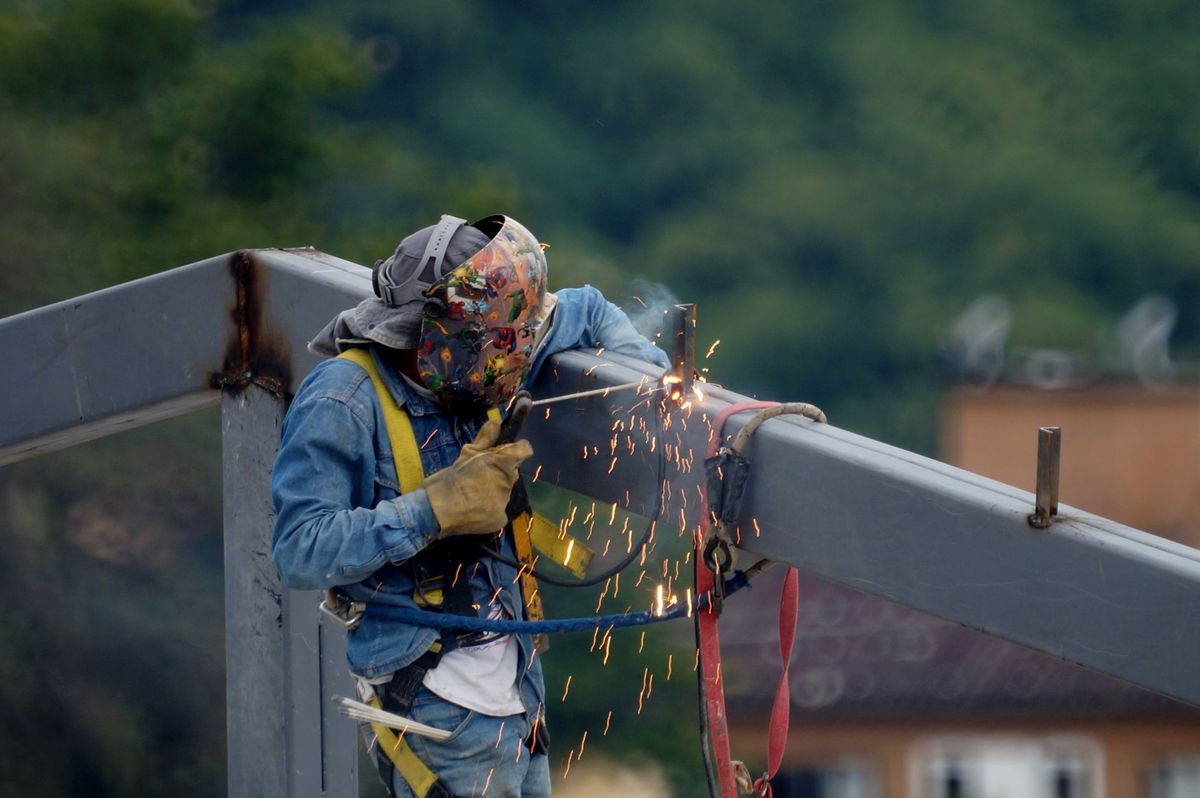
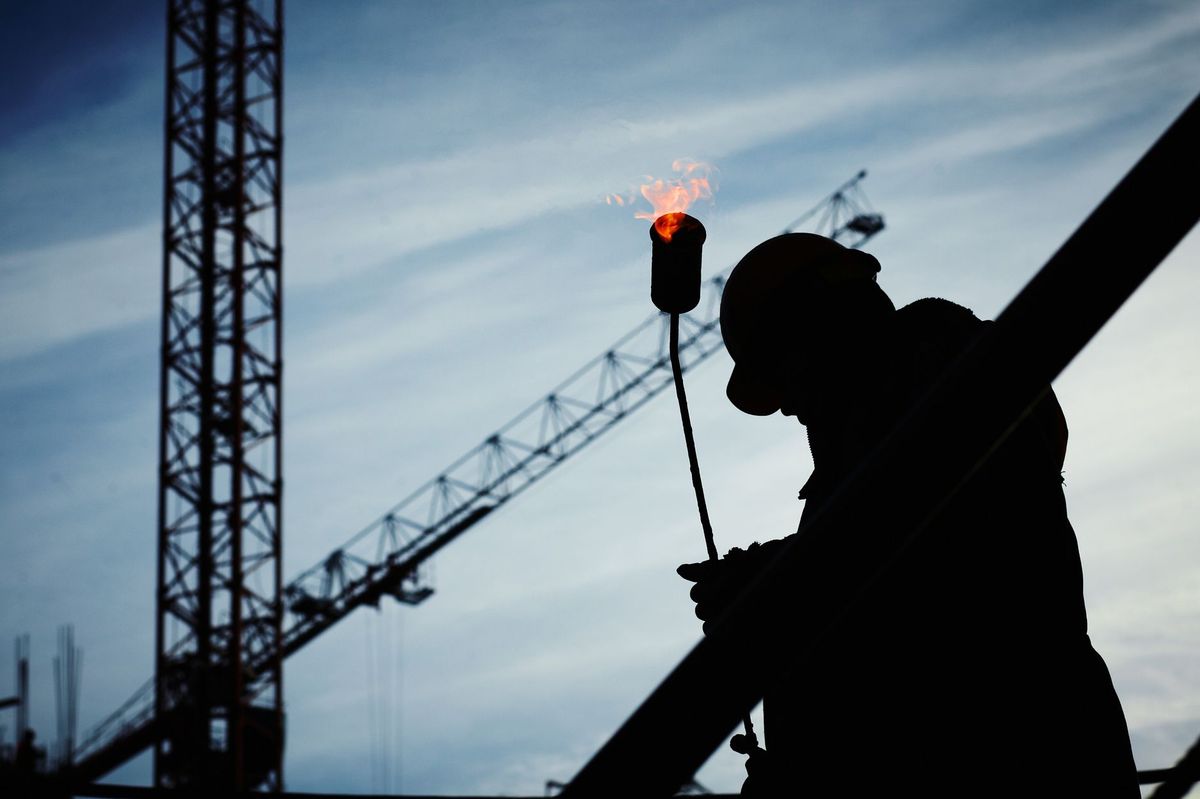
Structural ironworkers died on the job at a rate of 37.8 per 100,000 full-time-equivalent workers in 2024, according to the BLS Census of Fatal Occupational Injuries (released February 2026). The rate for all civilian workers was 3.3. That is more than 11 times the all-worker rate, and the wage table should be read with that in mind. The BLS Occupational Employment and Wage Statistics program (SOC 47-2221, Structural Iron and Steel Workers, May 2025 estimates, the most recent release as of October 2026) puts the national median at $30.18/hr, or $62,780 a year. The state spread runs from $21.88/hr in Arkansas to $58.10/hr in Massachusetts, a 166% gap. The top of the table is crowded with states where the building trades have a strong presence, and the bottom is mostly the South and the Plains.
Ironworker wages by state is the table, and it is below. But this trade covers distinct jobs, structural, rebar and ornamental, and it prices risk. Both deserve honest numbers, and where an honest number does not exist in public data, this page says so.
National Baseline: $30.18/hr Median, 68,380 Ironworkers
Structural iron and steel work is a small trade. BLS counts 68,380 workers nationally in May 2025, under a tenth of the 757,220 electricians in the same survey, which makes its wage statistics volatile at the state level and its labor shortages sharp. The May 2025 distribution (BLS OEWS, national, SOC 47-2221):
- 10th percentile: $21.43/hr ($44,580/yr)
- 25th percentile: $23.98/hr ($49,880/yr)
- Median: $30.18/hr ($62,780/yr)
- 75th percentile: $39.74/hr ($82,660/yr)
- 90th percentile: $52.05/hr ($108,260/yr)
- Mean: $33.79/hr ($70,280/yr)
The mean sits well above the median, which tells you the distribution is pulled up by a high-paid tail. That tail is concentrated in a handful of states, as the table below shows. For context, the May 2025 median for all construction and extraction occupations was $28.63/hr, and for all occupations $24.51/hr, so the typical ironworker earns about $1.55/hr more than the typical construction worker.
Base wage is also only part of compensation in this trade. Union agreements carry fringe packages (pension, annuity, health, training funds) on top of the hourly rate, and those packages vary by local. The most reliable public place to see a fringe number for your county is the Davis-Bacon wage determination on sam.gov, which lists structural and reinforcing ironworker rates with the fringe line separately. This page does not list local scales or fringe totals; the wage determination for your county and your local's current agreement are the documents to check.
Full State Wage Table (SOC 47-2221, May 2025)
Median hourly and annual wages from BLS OEWS May 2025 state estimates, sorted highest to lowest. Employment is the BLS estimate of structural iron and steel workers in the state. New Mexico estimates were not published by BLS for this occupation, so it is not ranked. The District of Columbia, not ranked with the states, had a median of $29.44/hr ($61,240/yr) and 210 workers.
| Rank | State | Median Hourly | Median Annual | Employment |
|---|---|---|---|---|
| 1 | Massachusetts | $58.10 | $120,840 | 2,050 |
| 2 | New Jersey | $54.43 | $113,220 | 1,060 |
| 3 | Washington | $51.76 | $107,660 | 850 |
| 4 | Illinois | $48.97 | $101,850 | 2,740 |
| 5 | Hawaii | $48.01 | $99,860 | 290 |
| 6 | Rhode Island | $47.27 | $98,320 | 360 |
| 7 | Oregon | $46.18 | $96,050 | 570 |
| 8 | Minnesota | $45.83 | $95,320 | 910 |
| 9 | Wisconsin | $44.63 | $92,820 | 710 |
| 10 | New York | $44.52 | $92,610 | 2,700 |
| 11 | Pennsylvania | $39.89 | $82,970 | 1,610 |
| 12 | North Dakota | $39.48 | $82,120 | 270 |
| 13 | Missouri | $37.22 | $77,410 | 1,320 |
| 14 | Iowa | $37.21 | $77,400 | Not published |
| 15 | Alaska | $37.01 | $76,970 | 120 |
| 16 | California | $36.72 | $76,370 | 7,110 |
| 17 | Ohio | $35.92 | $74,710 | 2,290 |
| 18 | Idaho | $34.98 | $72,750 | 500 |
| 19 | West Virginia | $34.54 | $71,850 | 150 |
| 20 | Maryland | $34.49 | $71,730 | 710 |
| 21 | Indiana | $33.72 | $70,130 | 2,750 |
| 22 | Louisiana | $33.09 | $68,830 | 1,180 |
| 23 | Montana | $32.40 | $67,390 | 130 |
| 24 | Nebraska | $31.48 | $65,470 | 610 |
| 25 | Kentucky | $30.80 | $64,060 | 990 |
| 26 | Michigan | $30.21 | $62,830 | 1,750 |
| 27 | Nevada | $30.05 | $62,510 | 1,400 |
| 28 | Connecticut | $30.00 | $62,400 | 330 |
| 29 | Maine | $29.69 | $61,750 | 200 |
| 30 | Virginia | $28.97 | $60,260 | 2,300 |
| 31 | New Hampshire | $28.81 | $59,920 | 220 |
| 32 | Delaware | $28.76 | $59,820 | 90 |
| 33 | Arizona | $28.55 | $59,390 | 3,980 |
| 34 | Colorado | $28.28 | $58,830 | 860 |
| 35 | Kansas | $28.15 | $58,560 | 260 |
| 36 | Utah | $28.01 | $58,250 | 1,630 |
| 37 | South Dakota | $27.43 | $57,050 | 440 |
| 38 | Tennessee | $27.29 | $56,750 | 1,240 |
| 39 | Alabama | $27.23 | $56,640 | 1,740 |
| 40 | Florida | $26.78 | $55,700 | 2,730 |
| 41 | Vermont | $26.75 | $55,640 | 50 |
| 42 | Texas | $25.12 | $52,240 | 9,700 |
| 43 | South Carolina | $24.40 | $50,750 | 660 |
| 44 | Mississippi | $24.37 | $50,690 | 480 |
| 45 | North Carolina | $23.43 | $48,740 | 2,000 |
| 46 | Georgia | $23.12 | $48,090 | 980 |
| 47 | Oklahoma | $22.92 | $47,660 | 1,140 |
| 48 | Wyoming | $22.83 | $47,480 | 80 |
| 49 | Arkansas | $21.88 | $45,510 | 1,080 |
| — | New Mexico | Not published | Not published | Not published |
| — | National Median | $30.18 | $62,780 | 68,380 |
Source: U.S. Bureau of Labor Statistics, Occupational Employment and Wage Statistics, May 2025 state estimates, retrieved via the BLS Public Data API on October 18, 2026. State figures with small employment counts (Vermont, Wyoming, Delaware) carry wide sampling error; treat their rank as approximate.
The Union Effect: A Line Down the Map
Top 10: Where the Building Trades Set the Rate
Massachusetts ($58.10), New Jersey ($54.43), Washington ($51.76) and Illinois ($48.97) lead the May 2025 table, followed by Hawaii, Rhode Island, Oregon, Minnesota, Wisconsin and New York. These are states where union structural steel erection and strong state prevailing-wage laws (the Illinois Prevailing Wage Act and New York Labor Law Section 220 among them) push negotiated scale into public work and, by competition, into private work. When a large share of the commercial steel in a metro is erected under a collective agreement, that agreement becomes the effective market rate for any building of size.
Two things changed from what you may have read in older wage roundups. New York, often cited as the top-paying state, sits tenth on the statewide median, at $44.52/hr. Statewide medians blend New York City with upstate markets, so the city number is higher than the state number. California, with the second-largest ironworker workforce in the country (7,110), lands sixteenth at $36.72/hr for the same reason: a very large and varied state averages a lot of different labor markets together.
A cost-of-living adjustment would change the ranking somewhat, since Massachusetts, New Jersey and Washington are expensive places to live. The figures here are nominal BLS wages, not adjusted for regional prices, so read the ranking as gross pay rather than buying power.
Bottom 10: The Non-Union South and Plains
Arkansas ($21.88), Wyoming ($22.83), Oklahoma ($22.92), Georgia ($23.12), North Carolina ($23.43), Mississippi ($24.37) and South Carolina ($24.40) close the table, with Texas ($25.12), Vermont ($26.75) and Florida ($26.78) just above. Texas has the largest ironworker workforce in the country at 9,700, and its median is about $5/hr below the national figure. The work is the same beam and the same exposure; an Arkansas median ironworker earns about 38% of the Massachusetts median, and about 45% of the Illinois median.
Union membership rates by state for this specific occupation are not published by BLS, so we are not putting a density percentage on any state. The pattern in the table is consistent with the broader research on union wage effects, which our union vs non-union analysis covers across trades.
Structural vs Rebar vs Ornamental: Different Jobs, Different Codes
Structural: The Raising Gang
Structural ironworkers erect the skeleton: columns, beams, decking, bolting-up, welding. This is the group in SOC 47-2221 and the table above, and its 90th percentile ($52.05/hr nationally) is where union connectors, foremen and certified welders tend to land. Connectors, who ride the steel and set incoming pieces, carry the trade's highest fall exposure. Some agreements pay connectors or welders a premium over journeyman scale, but the size of that premium depends on the local and the contract, and we do not have a published source to quote a dollar figure.
Rebar: The Volume Segment
Reinforcing ironworkers place and tie rebar for foundations, decks and highway structures. BLS tracks them separately as SOC 47-2171, Reinforcing Iron and Rebar Workers. In May 2025 there were 13,800 of them nationally, with a median of $28.35/hr ($58,970/yr), a 10th percentile of $20.82/hr and a 90th percentile of $50.26/hr. The median is about $1.83/hr below structural, but the top of the range is close to structural, which fits what the field sees: heavy bridge and post-tensioning work on prevailing-wage jobs pays well, and production tying in non-union markets does not. Every IIJA-funded bridge replacement carries a wage determination that sets rebar hands at the county's prevailing rate. Check it before you take the job, because rebar classification is a common place for wage determination underpayment.
Ornamental: Rails, Curtain Wall, Misc Steel
Ornamental ironworkers hang curtain wall, stairs, railings and miscellaneous metals. BLS does not publish a separate OEWS wage series for ornamental ironwork; depending on the employer's reporting, those workers fall into 47-2221 or other metalworking codes. Curtain-wall installation on data center and lab buildings is a real demand driver, but there is no public wage series that isolates it. If you are weighing ornamental work, ask the local or the erector what the curtain-wall and misc-metals scale is, and whether it differs from structural journeyman scale.
The Danger Premium: What $30.18 Actually Prices
This is a safety column, so here is the plain version. The BLS hours-based fatal injury rate for structural iron and steel workers was 37.8 per 100,000 FTE in 2024 (margin of error plus or minus 13.35, because the occupation is small). The all-worker rate was 3.3. For comparison, roofers were 48.7 per 100,000 FTE in the same table, so ironwork is not the single most dangerous construction trade, but it is in the same band as roofing and far above construction and extraction occupations as a group (12.6). Falls are the dominant hazard. OSHA's Subpart R (29 CFR 1926.750 to 1926.761, Steel Erection) governs the work: under 1926.760(a)(1), workers on a surface with an unprotected edge more than 15 feet above a lower level must be protected from falls; under 1926.760(b)(1), connectors must be protected at more than two stories or 30 feet, whichever is less; and 1926.760(c) allows controlled decking zones over 15 and up to 30 feet where metal decking is first being installed.
Now compare the pay. The ironworker median is $3.53/hr above the roofer median of $26.65/hr (BLS OEWS May 2025), and $1.55/hr above the median for construction and extraction overall. Economists call a wage premium for risk a compensating differential. Measured against a fatality rate more than 11 times the all-worker figure, a premium of a dollar or two over the construction median is thin. That is why the parts of compensation that are not on the hourly line, a pension that pays your family if you do not finish the career, workers' comp advocacy, and training that teaches connectors to survive, matter more in this trade than most. A non-union erector offering $2/hr over the going rate but skipping Subpart R compliance is not paying a premium. He is transferring risk to you at a discount.
Overtime is the other quiet number. Steel erection runs on crane schedules and weather windows, and long weeks are common in season. As an illustration, at the $30.18 median, 12 overtime hours a week for 30 weeks is 360 hours at $45.27, or about $16,300 in overtime pay. Check that your stubs compute it on the correct base with the overtime calculator; on prevailing-wage work, overtime is figured on the basic hourly rate in the wage determination, not on the fringe.
What Contractors Should Budget
Start with the wage, then add burden. Steel erection carries some of the highest workers' comp classification rates in construction, but those rates are set state by state and adjusted by each contractor's experience modification rate, so there is no single national number we can stand behind here. Pull your own carrier's rate for the steel erection class code and run your real number through the labor burden calculator before bidding structural packages; a contractor who prices steel labor at a light-trade comp rate will be badly short. For union work, budget the full package: base rate plus fringe from the current agreement or the wage determination, plus statutory burden. For rebar-heavy IIJA work, pull the county wage determination from sam.gov first. The WD, not your historical crew rate, is your labor floor. Compare crew economics across trades with electrician wages by state and roofer wages by state. Roofers have a higher fatality rate than ironworkers in the 2024 BLS data and earn about $3.50/hr less at the median, which suggests that danger alone does not set the ironworker number.
Your Action Item for This Week
If you work iron: find your state in the table. If your hourly rate is below your state's median, that is worth a conversation, either with your employer or with the local's apprenticeship coordinator about whether your hours could test you into advanced standing. If you are on a federal-aid bridge or building job, pull the wage determination for your county on sam.gov this week and check your stub against it, including the fringe line.
If you erect steel: verify your comp classification and EMR are correctly priced into every open bid using the labor burden calculator, then audit one certified payroll against the current WD before a DOL desk review does it for you.
Frequently Asked Questions
How much do ironworkers make in 2026?
The most recent BLS figures, May 2025 OEWS estimates published in 2026, put the national median at $30.18/hr ($62,780/yr) for SOC 47-2221, with a mean of $33.79/hr. State medians run from $21.88 (Arkansas) to $58.10 (Massachusetts). The top 10% earn more than $52.05/hr. Union scale and fringe vary by local; check the Davis-Bacon wage determination for your county on sam.gov for a published figure.
Why do Massachusetts ironworkers earn more than double the Arkansas rate?
The states at the top of the table (Massachusetts, New Jersey, Washington, Illinois, Hawaii) are states where the building trades are well organized and state prevailing-wage laws extend negotiated scale to public work. The states at the bottom are largely non-union markets. Cost of living explains part of the gap, but not all of it. The work and the risk are the same; the bargaining position is not.
Which pays more, structural or rebar?
Structural, at the median. BLS May 2025 data puts structural iron and steel workers at $30.18/hr and reinforcing iron and rebar workers at $28.35/hr. The top 10% of rebar workers earn more than $50.26/hr, close to the structural 90th percentile of $52.05/hr. BLS does not publish a separate ornamental ironworker series, so there is no comparable public median for ornamental work; the local agreement or the wage determination is the place to look.
Is ironwork the most dangerous construction trade?
It is one of the most dangerous, but not the top in the latest data. The 2024 BLS fatal injury rate was 37.8 per 100,000 FTE for structural iron and steel workers and 48.7 for roofers, against 3.3 for all workers. Falls are the leading hazard, and OSHA Subpart R (29 CFR 1926.750 to 1926.761) sets steel-erection-specific fall protection rules, including protection above 15 feet and connector protection above two stories or 30 feet.
How do I become a union ironworker?
Apply to an Iron Workers apprenticeship through your local's training center. Programs combine classroom instruction with paid on-the-job training, and apprentices are paid a percentage of journeyman scale that rises as they progress. Program length, entry requirements and pay steps are set locally, so call the local's training coordinator for the exact terms. Experienced non-union hands can sometimes test into advanced standing.
Does Davis-Bacon cover ironworkers on bridge jobs?
Yes, on covered work. Davis-Bacon applies to federal construction contracts over $2,000, and the Related Acts, including the federal-aid highway program, extend it to most federally funded bridge work. Each covered project carries a wage determination with ironworker rates plus fringe. If your pay on a covered job is below the WD rate, you may be owed back wages; contact the DOL Wage and Hour Division.
Sources & Data Cited
- BLS Occupational Employment and Wage Statistics (OEWS), May 2025 national and state estimates, SOC 47-2221 and 47-2171, retrieved October 18, 2026 via the BLS Public Data API (api.bls.gov); occupation profile: www.bls.gov/oes/current/oes472221.htm
- BLS Census of Fatal Occupational Injuries, National hours-based fatal injury rates by occupation, 2024 (released February 2026): www.bls.gov/iif/fatal-injuries-tables/fatal-occupational-injuries-hours-based-rates-2024.xlsx
- BLS news release USDL-26-0230, National Census of Fatal Occupational Injuries in 2024 (February 19, 2026)
- OSHA Steel Erection Standard, Subpart R, 29 CFR 1926.750 to 1926.761; fall protection at 1926.760: www.osha.gov/laws-regs/regulations/standardnumber/1926/1926.760
- Davis-Bacon wage determinations: sam.gov/wage-determinations
- Related: Electrician Wages by State 2026 | Roofer Wages by State 2026