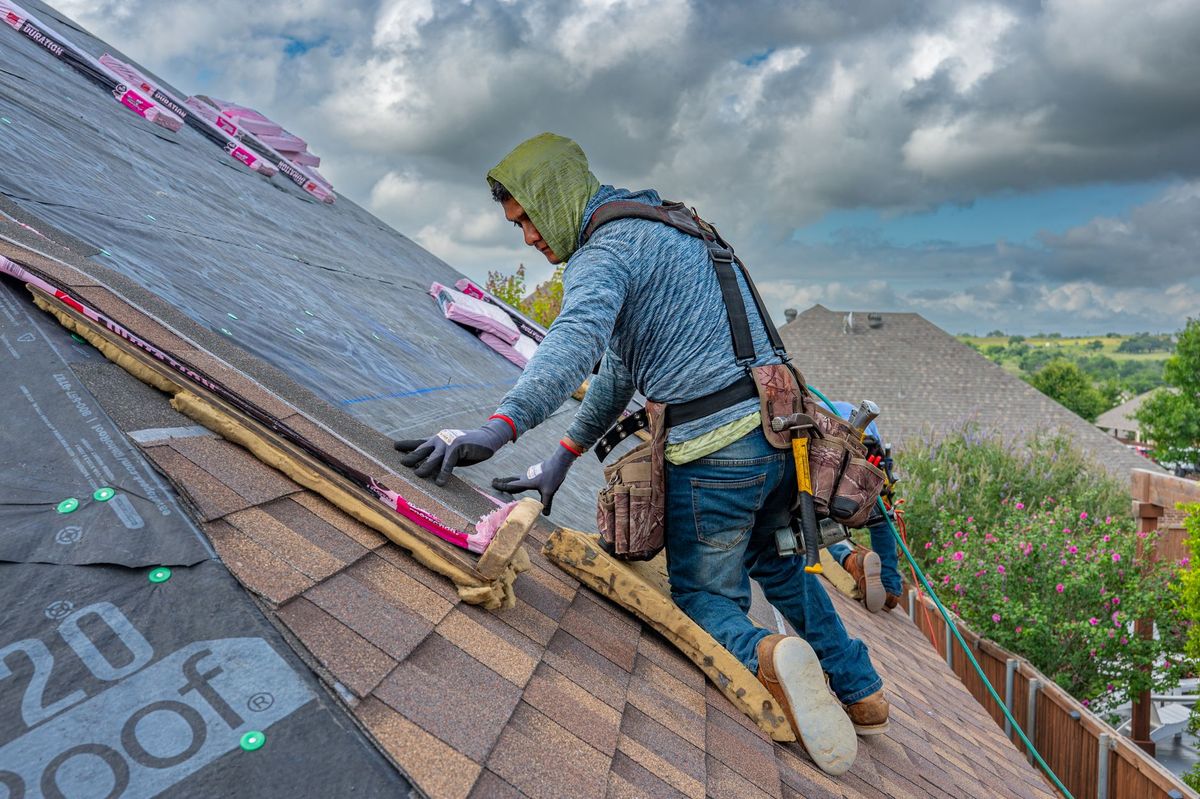
BLS data (SOC 47-2181, Q1 2026) shows the median roofer wage at $25.14/hr nationally, with top-paying states—California, New York, Illinois, Hawaii, and Oregon—ranging from $32.88/hr to $38.44/hr. Union roofers earn 32–40% more than non-union peers ($34.80/hr vs. $24.50/hr). Residential roofers work piece-rate or hourly ($20–28/hr); commercial flat-roof and low-slope specialists earn $28–42/hr. The wage gap between residential and commercial is the largest of any trade—a residential roofer can earn $38K/year; a commercial/industrial roofer earns $58K+.
National Baseline: $25.14/hr Median (Lowest Wage-Growth Trade)
Roofing employs 145,300 workers nationwide (BLS OEWS Q1 2026, SOC 47-2181). The median wage of $25.14/hr makes roofing the lowest-paid specialty trade after laborers and helpers. Why? The work is seasonal (April–October peak in temperate zones), piece-rate compensation is dominant (roofer earns $2–5 per square—100 sq. ft. of roof—rather than hourly), and non-union density remains 71% (vs. 48% for electricians). A roofer completing 40 residential squares in a week earns $80–200 depending on material complexity and regional rate; that's $320–800 in gross pay for a 40-hour week, or $8–20/hr effective.
Commercial and industrial roofers (flat roofs, membrane systems, metal roofing) are unionized more heavily (45% union density) and work hourly year-round, earning $28–42/hr. They represent 35% of all roofers but capture 50% of roofer wages nationally.
Wage growth for roofers (2024–2026): +4.2% cumulative, vs. +6.1% for electricians and +5.8% for plumbers. Roofing lags because piece-rate pay doesn't adjust automatically. Seasonal unemployment is also high: 18–22% of roofers report no work Nov–March.
Top-Paying States: Residential vs. Commercial Split
California ($38.44/hr median): The state enforces prevailing wage (CA Labor Code § 1720) on all public work and many private jobs over $500K. California prevailing wage for roofers: $48–56/hr (including fringes). However, this applies to ~25% of roofing work statewide. Residential roofing in non-union areas (inland CA, rural counties) pays $22–28/hr hourly or $2.50–3.50/sq. Commercial roofers in the Bay Area (tech campus retrofits, hospital additions) earn $42–50/hr.
New York ($37.92/hr median): NYC prevailing wage (NYC Admin Code § 3-403) mandates union scale for all city-funded and most private commercial work. NYC roofer prevailing wage: $52–58/hr (including fringes). Non-union residential (single-family homes in suburbs, rural NY) pays $24–32/hr. The state median is pulled up by NYC's commercial concentration.
Illinois ($36.18/hr median): Chicago's prevailing wage mandate (Illinois Prevailing Wage Act) applies to public work and large private projects. Roofers earn $44–50/hr on prevailing wage jobs; non-union residential is $22–28/hr. Cook County (Chicago) roofers average $34/hr; downstate Illinois rural roofers average $21/hr.
Hawaii ($35.88/hr median): Island constraint on material and labor supply. Honolulu union roofers earn $40–48/hr; neighbor islands pay $32–38/hr. Small roofing workforce (2,100 statewide) and year-round work (no winter layoffs) sustain higher rates.
Oregon ($34.44/hr median): Portland metro and union prevalence (union density 28%) push rates higher. Portland commercial roofers earn $38–44/hr; rural Oregon residential is $22–26/hr. State prevailing wage applies to public work at $40–46/hr.
Residential vs. Commercial Pay Model: 60% Wage Spread
Residential Roofer (single-family, small multi-family, residential replacements): Paid per square (100 sq. ft.) or per hour. Per-square rates vary:
- Asphalt shingle (easiest): $2.00–3.50/sq. (national average $2.75)
- Metal roofing: $3.00–5.00/sq.
- TPO membrane (residential): $2.50–4.00/sq.
- Wood shake: $4.00–6.00/sq. (labor-intensive, fewer roofers specialize)
A roofer completing 5 squares/day × 5 days/week earns $25–35/day × 5 = $125–175/week or $6,500–9,100/year (20-week season). Many residential roofers supplement with gutters, siding, or other trades in off-season, pushing annual income to $32K–42K. Hourly equivalent: $16–24/hr if averaged across 52 weeks.
Commercial/Industrial Roofer (flat roofs, low-slope, membrane systems, tall buildings): Paid hourly, year-round. Base hourly $28–42/hr non-union; $38–55/hr union. Work includes TPO, EPDM, built-up tar systems, metal decking, and specialized equipment (hot tar kettles, crane work, fall protection). A commercial roofer averages 2,000 working hours/year × $35/hr = $70K gross (non-union); $45/hr union = $90K gross.
Commercial work is 2.1x higher annual earnings than residential because it's hourly, year-round, and unionized. A 20-year-old roofer choosing residential vs. commercial differs by $900K+ in lifetime earnings.
Piece-Rate Pay: The Math of Roofing Compensation
Residential roofing is the only trade still heavily paid by piece-rate. A contractor bids a 20-square residential roof replacement at $8,000 total. Labor cost budgeted: 50% of bid = $4,000. Profit: 50% = $4,000. The contractor hires 2 roofers. They complete the job in 3 days (24 labor hours total). The contractor pays the roofers $4,000 ÷ 2 = $2,000 each.
$2,000 ÷ 24 hours = $83/hour? No.
The roofers work 10-hour days in summer heat, but the $4,000 is split among them if they finish in the scheduled 3 days. If it rains (common spring/fall), the job stretches to 4 days, and the roofers still earn $2,000—now $50/hr. If the job finishes early (2.5 days), the roofers might earn a bonus (rare) or nothing extra.
This creates instability: a roofer earning $2,000 for a 3-day job ($83/day gross), times 50 jobs/year = $100K gross, seems high. But weather delays, job cancellations, and equipment downtime reduce actual jobs/year to 30–35, dropping annual income to $60K–70K gross, or $28–33/hr averaged.
Non-union commercial shops sometimes use piece-rate for low-slope TPO (per square, same as residential), but most commercial unions enforce hourly minimum.
By-State Wage Table (SOC 47-2181, Q1 2026)
| State | Median Hourly | 25th Percentile | 75th Percentile | Top 10% | Commercial Premium | Notes |
|---|---|---|---|---|---|---|
| California | $38.44 | $24.50 | $48.80 | $56.00+ | +$12–18/hr | Bay Area commercial; inland residential lower |
| New York | $37.92 | $24.20 | $49.40 | $58.00+ | +$14–20/hr | NYC prevailing dominance; suburban/rural lower |
| Illinois | $36.18 | $23.80 | $46.20 | $54.00+ | +$12–16/hr | Chicago prevailing; downstate residential |
| Hawaii | $35.88 | $25.10 | $44.60 | $52.00+ | +$10–14/hr | Island year-round; material cost pass-through |
| Oregon | $34.44 | $23.50 | $43.80 | $50.00+ | +$10–12/hr | Portland union spillover; rural lower |
| Washington | $33.62 | $22.80 | $42.40 | $48.00+ | +$8–12/hr | Seattle metro; strong union in commercial |
| Connecticut | $33.18 | $22.40 | $41.60 | $48.00+ | +$9–14/hr | Northeast wage cluster |
| Massachusetts | $32.88 | $22.10 | $41.20 | $50.00+ | +$10–14/hr | Boston metro commercial; residential lower |
| Minnesota | $31.44 | $21.60 | $39.20 | $44.00+ | +$8–11/hr | Upper Midwest; seasonal work compressed |
| Colorado | $29.77 | $20.40 | $37.60 | $44.00+ | +$8–10/hr | Denver metro; ski resort retrofit work |
| Texas | $23.14 | $16.80 | $28.40 | $34.00+ | +$6–9/hr | Right-to-work; residential dominates; lowest non-union |
| Florida | $22.95 | $16.50 | $28.20 | $32.00+ | +$5–8/hr | Hurricane re-roofing seasonal spike; mostly residential |
| Georgia | $22.48 | $16.20 | $27.80 | $30.00+ | +$4–7/hr | Right-to-work; residential dominates; low union |
| National Median | $25.14 | $17.40 | $32.60 | $38.00+ | +$6–12/hr | Weighted; 65% residential, 35% commercial |
Union Premium: 40% Higher for Roofers Than for Electricians
A union roofer in Illinois (union density statewide ~22%, but 60%+ in Chicago) earns $34.80/hr (journeyman scale ~$44/hr base + fringes). A non-union roofer in rural Illinois earns $21/hr. The wage premium is 66% ($34.80 vs. $21), higher than the 35% electrician premium.
Why? Roofing unions control fewer jobs (71% non-union means 71% of work goes to non-union shops). When union roofers are hired, they command substantial premium rates to compensate for seasonal downtime and union membership dues. A union roofer earning $44/hr base + $12/hr fringes = $56/hr fully loaded costs a contractor $116K/year (2,080 hours). A non-union roofer earning $24/hr + minimal benefits = $50K/year. The $66K annual gap (132% loaded difference) means union roofers appear expensive.
However, union roofers have defined-benefit pensions worth $15K–25K/year at retirement (age 62+), plus health insurance. A non-union roofer with no pension and a 401k match of 3% earns $1,500/year in retirement savings. Over 30 years, the pension gap alone is $450K–$750K in lifetime value.
Residential Roofing Injury & Fatality Rates Drive Wage Floor
OSHA data (2023–2025) shows roofing has the highest fatality rate of any trade: 4.1 deaths per 100,000 workers (vs. 1.2 for construction overall). Falls account for 80% of roofing deaths. Nonfatal injuries requiring time off (BLS series SOII0400470080) average 14.2 incidents per 100 full-time workers annually for roofers—40% higher than electricians.
The hazard should push wages up. But piece-rate residential work insulates the operator (contractor) from injury costs: the roofer is classified as "independent contractor" or "subcontractor," not employee. Injury claims fall to workers' compensation, which is priced by class code. A roofing class code (WC code 0560) costs 25–45% of payroll—meaning a $50K roofer costs the contractor $12.5K–$22.5K in WC premium alone. This doesn't include wages. High-injury trades cost contractors more, but market competition for low-cost bids suppresses roofer wage offers.
Non-union residential roofers—the majority—accept lower wages partly due to lack of collective bargaining. OSHA's crackdown on roofing safety (part of the Construction NEP targeting fatality rates) will eventually raise prevailing wage pressure, but for now, roofing remains the lowest-paid specialty trade.
If you employ crews at these rates, our free labor burden calculator shows what an hourly wage really costs you, and the overtime calculator handles the time-and-a-half math.
Frequently Asked Questions
Q: I'm a non-union roofer in Texas earning $22/hr. What's my actual annual income if I average 35 weeks of work/year?
A: 35 weeks × 40 hours/week × $22/hr = $30,800 gross. Deduct self-employment tax (~15.3%), FICA, and income tax (~25% total), leaving $23,100 net. If you pick up 15 weeks of off-season work at a gutter company at $18/hr (lighter work), add $10,800 gross ($8,100 net). Total annual net income: ~$31,200. This is below the median for construction at $35K–38K. To reach $45K net, you'd need to charge higher piece-rates ($3.50–4.00/sq. instead of $2.50–3.00) or transition to commercial work.
Q: Can I transition from residential to commercial roofing mid-career?
A: Yes, and it's financially smart. A residential roofer with 8 years of experience can qualify for a journeyman card through reciprocal licensure (many states recognize on-the-job hours). Commercial roofing requires additional certification in flat-roof systems (EPDM, TPO, tar & gravel). NRCA (National Roofing Contractors Assn.) offers a 2-week certification course (~$1,500, plus travel). After certification, you're eligible for commercial union entry if you have 4,000+ documented hours. A 35-year-old transitioning from $24/hr residential to $40/hr commercial hourly work adds $33,280 gross/year × 20 years remaining = $665K additional lifetime earnings.
Q: Our residential roofing company has trouble retaining roofers. What wage increase would help?
A: Industry benchmark: for every 5% wage increase, voluntary turnover drops 15–20%. If you're currently paying $22/hr (median non-union residential), a $1.50/hr increase (7%) to $23.50/hr and guaranteed 40-week minimum work (instead of spot jobs) should reduce turnover by 15–20%. Annual cost: $30K crew (2 roofers × 2,000 hours × $23.50/hr) vs. $29,280 current ($22/hr). The $720/year increase is offset by turnover savings (recruiting, training, lost productivity on incomplete jobs averages $3,500–5,000 per roofer turnover). Retention is cheaper than recruiting.
Q: The bid for a 40-square commercial flat-roof TPO replacement is $28,000. What's the labor cost and roofer pay?
A: Commercial roofing bids assume: 60% material, 30% labor, 10% overhead/profit. Labor cost: $28,000 × 30% = $8,400. Assume 3 roofers × 4 days (24 labor-hours): $8,400 ÷ 24 hours = $350/hr burdened cost (wages + benefits + payroll tax). Actual roofer take-home: $350/hr × 30% (wages/benefits split) = $105 gross per roofer. 24 hours ÷ 3 roofers = 8 hours each. $105 × 8 = $840 gross per roofer for the job. If the crew is union at $44/hr base, the contractor pays $44/hr × 24 hours = $1,056 wages alone, plus 25% fringe ($264), totaling $1,320—which exceeds the $8,400 budget by ~$264. This is why many commercial contractors use union crews on large jobs: the union scale is built into the estimate. Cutting to non-union ($28/hr base × 24 = $672) saves $384 but risks quality, safety, and schedule delays.
Q: Is roofing demand expected to grow through 2026–2030?
A: BLS Employment Projections (2024–2034) forecast roofing to grow 3.2% annually—below average. Residential construction is slowing (housing starts down 8% YoY). However, commercial retrofits (data centers requiring roof-mounted solar, HVAC, condenser placement) and storm recovery (hurricanes, hail) surge regionally. High-skill commercial roofers will see demand. Low-skill residential piece-rate roofers will face stagnation. The trade is bifurcating: commercial union roofers earning $38–50/hr are in demand; residential non-union at $22–24/hr face automated competition (drone inspections reducing callbacks) and margin pressure.
Your Action Item for This Week
If you're a roofer earning <$24/hr and working <40 weeks/year, calculate your actual hourly cost: (annual gross ÷ 52 weeks ÷ average hours/week). If below $20/hr, initiate a conversation with your contractor about guaranteed minimum hours or a per-square rate increase of 10–15%.
If you employ roofers and have >20% voluntary turnover, pull wage data for your state from the table above. If you're below the 25th percentile, budget for a $1.50–2.00/hr raise in Q3 2026 and guarantee 40-week minimum work. Calculate the savings from reduced turnover.
If moving into commercial roofing, enroll in an EPDM/TPO certification course (NRCA or NECA, ~$1,500). Commercial work is 1.6x hourly pay and 2.1x annual earnings vs. residential.
Sources & Data Cited
- BLS Occupational Employment and Wage Statistics (OEWS), SOC 47-2181, Q1 2026: www.bls.gov/oes/current/oes472181.htm
- BLS Census of Fatal Occupational Injuries (CFOI), 2023–2025: www.bls.gov/iif/osh_fatalities.htm (roofing = 4.1 deaths per 100K workers)
- BLS Series SOII0400470080 (Nonfatal occupational injuries by industry, roofers): www.bls.gov/iif
- California Prevailing Wage (Labor Code § 1720): www.dir.ca.gov/databases/pw
- Illinois Prevailing Wage Act (820 ILCS 130): www.cyberdriveillinois.com/departments/labor
- NYC Prevailing Wage (Admin Code § 3-403): www.nyc.gov/site/dca/businesses/prevailing-wage.page
- NRCA Roofing Training: www.nrca.net
- Related: Plumber Wages by State 2026 | Commercial Roofing Cost Per Square Foot: TPO, EPDM, Metal