In March 2026, OSHA cited a concrete cutting contractor in Phoenix $487,000 after an inspection found twelve workers operating masonry saws without any dust controls, respiratory protection, or exposure monitoring. Three of the workers had been with the company for over five years. None had ever been offered a medical exam for silica exposure.
That citation was not unusual. Since OSHA's Table 1 compliance deadline for construction passed in 2018, the agency has issued more than $78 million in silica-related penalties to construction employers. In FY2025 alone, silica citations in construction increased 22% over the prior year. OSHA has made crystalline silica one of its top enforcement priorities, and the numbers show the agency is not bluffing.
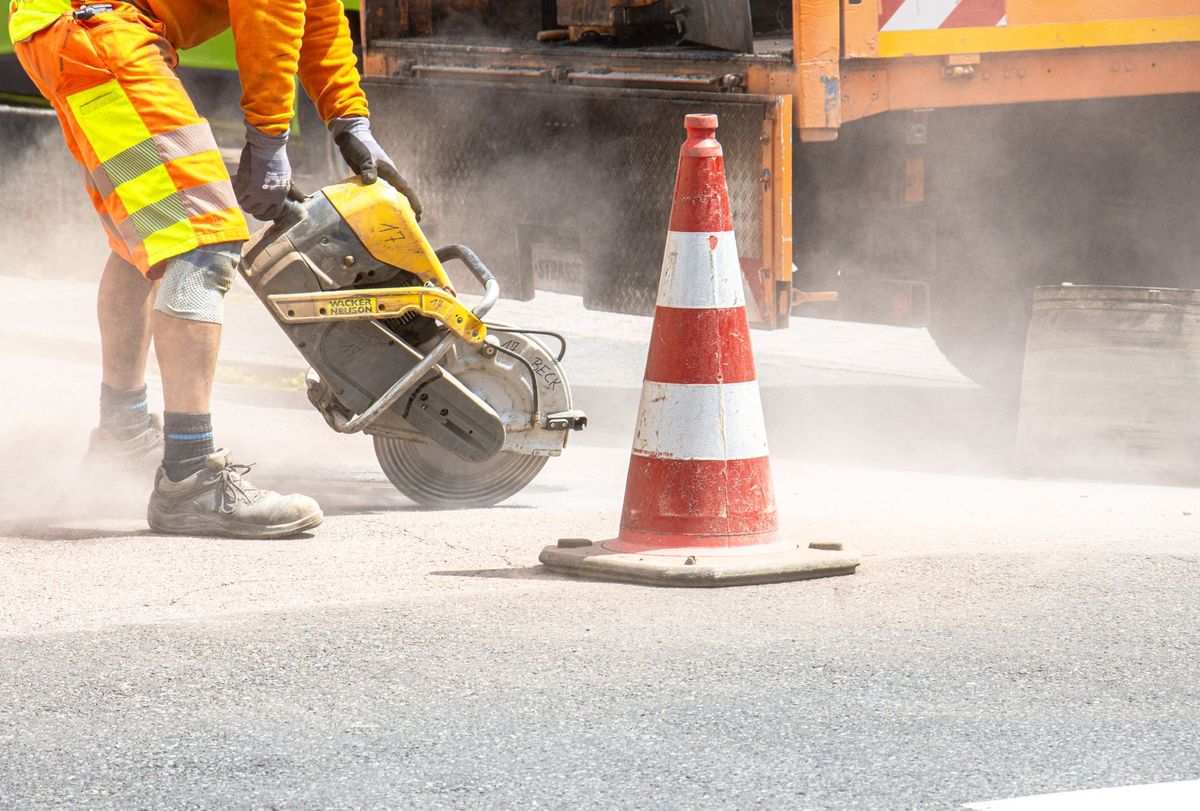
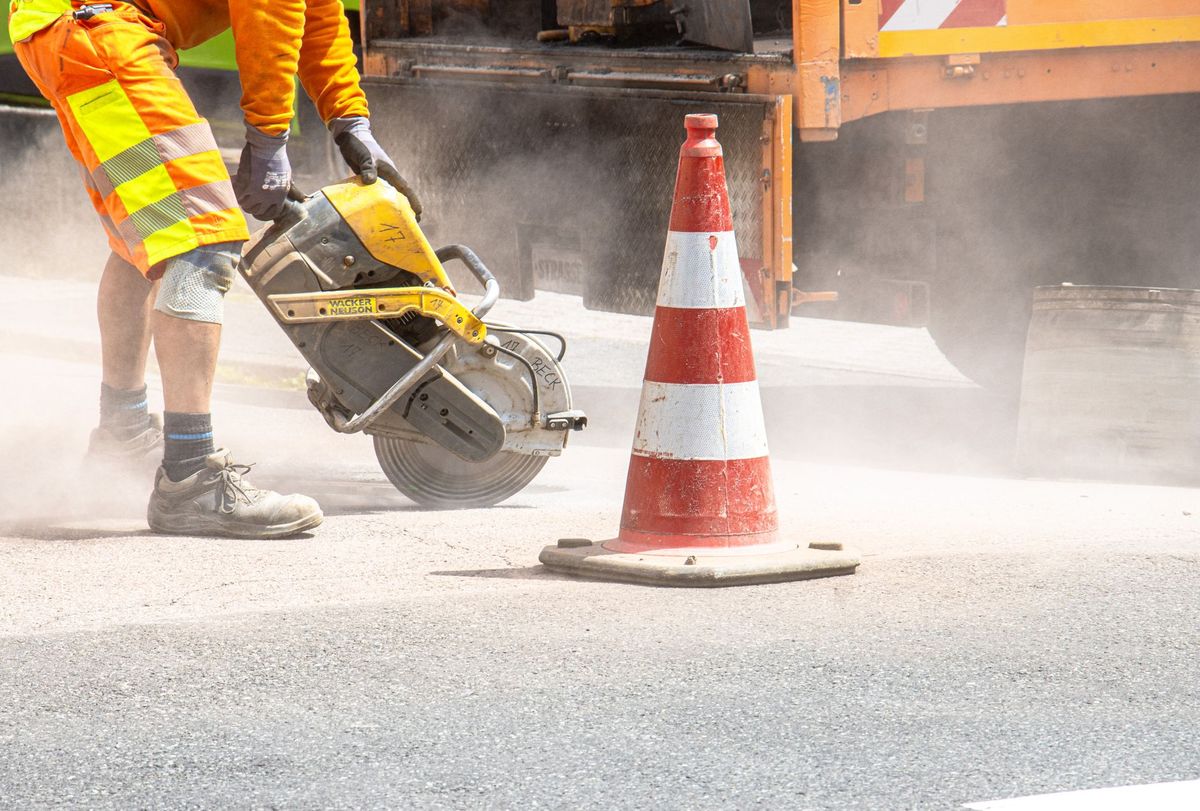
Crystalline silica is one of the most dangerous substances in construction, and one of the most common. Any time a worker cuts, grinds, drills, or crushes concrete, brick, stone, morite, tile, or asphalt, they generate respirable silica dust. Particles small enough to bypass the body's natural defenses lodge deep in the lungs and, over years, cause silicosis — an irreversible, progressive lung disease that can be disabling and fatal.
This is the 2026 compliance guide. If you are already following Table 1 to the letter, you are probably in good shape. If you are not — and inspection data suggests many contractors are not — this article covers what you need to know and do.
The Standard: 29 CFR 1926.1153
OSHA's construction silica standard establishes a permissible exposure limit (PEL) of 50 micrograms per cubic meter of air (50 μg/m³) as an eight-hour time-weighted average. It also establishes an action level of 25 μg/m³, which triggers additional requirements including exposure monitoring and medical surveillance.
The standard offers construction employers two compliance paths:
Path 1: Table 1
Table 1 is the simplified compliance path. It lists 18 common construction tasks — from stationary masonry saws to handheld grinders to jackhammers — and specifies the exact engineering controls, work practices, and respiratory protection required for each task. If you follow Table 1 for a given task, you are deemed to be in compliance with the PEL without needing to conduct exposure monitoring.
This is the path most construction employers should use. It is straightforward, does not require industrial hygiene sampling, and provides a clear compliance checklist for each task.
Path 2: Alternative Exposure Control Methods
If a task is not on Table 1, or if the employer chooses not to follow Table 1, the employer must conduct exposure assessments (either objective data or air monitoring), implement engineering and work practice controls to reduce exposure to the PEL, provide respiratory protection where controls alone are insufficient, and conduct periodic exposure monitoring.
This path requires industrial hygiene expertise and is typically used by larger contractors with dedicated safety departments.
Table 1: The Critical Details
Table 1 is the heart of the standard for most construction contractors. Here are the most common tasks and their requirements:
Stationary masonry saws
- Engineering control required: Integrated water delivery system that feeds water to the blade
- Work practice: Operate and maintain the saw per manufacturer's instructions to minimize dust
- Respiratory protection: None required if engineering controls are functioning properly
Handheld power saws (cutting concrete, stone, etc.)
- Engineering control: Integrated water delivery system
- Work practice: Operate per manufacturer's instructions
- Respiratory protection: None required when cutting outdoors and controls are functioning; APF 10 respirator (N95 or half-face) required when cutting indoors or in enclosed areas
Handheld and stand-mounted grinders (grinding concrete, mortar)
- Engineering control: Commercially available shroud and dust collection system with HEPA filter and minimum 25 CFM airflow per inch of wheel diameter
- Work practice: Operate per manufacturer's instructions
- Respiratory protection: None required when used outdoors with controls functioning; APF 10 required indoors or in enclosed areas for tasks lasting up to 4 hours; APF 10 for all tasks lasting more than 4 hours regardless of location
Safety note: The grinder is where most violations occur. Many contractors have added water to their saws but have not addressed grinders. A 7-inch grinder running on concrete without a shroud and vacuum generates silica exposure levels 10-40 times the PEL. This is not a marginal violation — it is an extreme overexposure.
Walk-behind saws
- Engineering control: Integrated water delivery system
- Work practice: Operate per manufacturer's instructions
- Respiratory protection: None required when used outdoors with controls functioning
Rotary hammers and similar tools (drilling concrete)
- Engineering control: Commercially available shroud or cowl with dust collection system
- Work practice: Operate per manufacturer's instructions
- Respiratory protection: None required with controls functioning
Jackhammers and handheld powered chipping tools
- Engineering control: Water delivery system that supplies a continuous stream of water to the point of impact
- Work practice: Operate per manufacturer's instructions
- Respiratory protection: APF 10 required regardless of engineering controls
Vehicle-mounted drilling rigs (drilling rock or concrete)
- Engineering control: Dust collection system with close-capture hood or shroud, or integrated water delivery
- Work practice: Operate per manufacturer's instructions
- Respiratory protection: None required in enclosed cab with HEPA filtration; APF 10 required if cab is open
Crushing machines
- Engineering control: Use equipment designed to deliver water spray or mist to suppress dust at crusher and conveyor transfer points
- Work practice: Operate per manufacturer's instructions
- Respiratory protection: None required with controls functioning
What Inspectors Are Looking For
OSHA's compliance directive for silica (CPL 02-02-080) tells inspectors exactly what to look for during a construction site inspection. Based on enforcement data from FY2025, here are the most common citation categories:
1926.1153(c)(1) — Failure to implement Table 1 controls
The most common citation. An inspector observes a worker cutting concrete with a gas saw and no water. Or a worker grinding concrete with no shroud and no vacuum. The fix is straightforward — equip the tool with the specified engineering control — but the citations keep coming because contractors either do not have the equipment or do not enforce its use.
1926.1153(d)(2) — No exposure assessment under the alternative path
For employers not using Table 1, this citation means they have not conducted initial exposure monitoring. If you are not following Table 1, you must have objective data or air monitoring results that demonstrate worker exposure levels.
1926.1153(g) — No written exposure control plan
Every employer using Table 1 or the alternative path must have a written exposure control plan that describes the tasks involving silica exposure, the engineering controls and work practices used, and the procedures for restricting access to high-exposure areas.
1926.1153(h) — No medical surveillance
Employers must offer medical exams to any worker who will be required to use a respirator for 30 or more days per year under the standard. The exam must include a chest X-ray, pulmonary function test, and a physical exam with a medical history. The initial exam must be offered within 30 days of assignment, with follow-ups every three years (or annually if recommended by the physician).
1926.1153(i) — Inadequate training
Workers must be trained on the health hazards of silica exposure, the specific tasks on their jobsite that involve silica, the engineering controls and work practices in use, the purpose and proper use of respiratory protection, and the medical surveillance program.
The Health Case: Why This Matters
Silicosis is not a theoretical risk. According to NIOSH, approximately 2.3 million workers in the United States are exposed to respirable crystalline silica, with construction workers representing the largest exposed population.
The disease progresses through stages:
Chronic silicosis develops after 10-30 years of lower-level exposure. It begins with shortness of breath during exertion and progresses to shortness of breath at rest. Lung function deteriorates irreversibly. There is no cure — only management.
Accelerated silicosis develops after 5-10 years of higher exposure. Symptoms are similar to chronic silicosis but progress more rapidly.
Acute silicosis develops within weeks to months of very high exposure — the kind of exposure that occurs when a worker dry-cuts concrete in an enclosed space without respiratory protection. It can be rapidly fatal.
Beyond silicosis, crystalline silica exposure is associated with:
- Lung cancer — silica is classified as a Group 1 carcinogen by IARC
- Chronic obstructive pulmonary disease (COPD)
- Kidney disease
- Autoimmune disorders including rheumatoid arthritis and scleroderma
Safety note: A 35-year-old concrete cutter who has been dry-cutting without protection for ten years may feel perfectly fine today. Silicosis does not announce itself early. By the time symptoms appear, significant and irreversible lung damage has already occurred. This is why the standard requires medical surveillance — it catches the disease before the worker feels it.
The Economics of Compliance
The most common objection to silica compliance is cost. Dust collection systems, HEPA vacuums, water attachments, and respiratory protection programs cost money. But the economics strongly favor compliance:
Equipment costs:
- Dust shroud for a grinder: $50-$150
- HEPA vacuum for dust collection: $400-$1,200
- Water attachment for a handheld saw: typically included by manufacturer or $50-$100 aftermarket
- Annual cost of a two-worker respiratory protection program (medical exams, fit testing, respirators, filters): approximately $800-$1,200
Violation costs:
- Average OSHA silica citation in FY2025: $42,300 (up from $31,200 in FY2023)
- Average willful silica citation: $148,000
- Workers' compensation cost for a silicosis claim: $250,000-$1,500,000
- Wrongful death lawsuit settlement for silica exposure: $1,000,000-$5,000,000+
The equipment pays for itself the first time an inspector walks onto your site.
A Step-by-Step Compliance Checklist
Step 1: Inventory your silica-generating tasks
Walk every active jobsite and list every task that involves cutting, grinding, drilling, chipping, crushing, or disturbing concrete, brick, stone, block, tile, or asphalt. Map each task to the corresponding Table 1 entry.
Step 2: Acquire and deploy the specified controls
For each task on your inventory, ensure the Table 1 engineering control is in place. This means water for saws, shrouds and HEPA vacuums for grinders, dust collection for drills. Do not improvise — use commercially available controls that meet or exceed the Table 1 specifications.
Step 3: Write your exposure control plan
Document every silica-generating task, the controls applied, the respiratory protection assigned, and the procedures for restricting access to high-exposure areas. Designate a competent person responsible for implementing the plan. Keep the plan on-site and accessible to workers.
Step 4: Establish a respiratory protection program
If any task on your inventory requires respiratory protection under Table 1, you need a program that meets 29 CFR 1910.134. That means a written program, medical evaluations, annual fit testing, training, and proper respirator selection and maintenance.
Step 5: Enroll in medical surveillance
Offer medical exams to every worker who is required to wear a respirator for 30 or more days per year. Establish a relationship with an occupational health provider who can conduct the exams and maintain records.
Step 6: Train your workers
Train every worker who may be exposed to silica — not just the ones who operate the tools, but anyone who works in the vicinity. Cover the health hazards, the controls in use, the respiratory protection program, and the medical surveillance program.
Step 7: Enforce and audit
This is where most programs fail. The written plan exists, the equipment has been purchased, but nobody enforces compliance in the field. Build silica compliance into your daily safety inspections. Check that water is flowing on every saw. Check that shrouds and vacuums are connected on every grinder. Check that respirators are being worn when required. Document what you find and correct deficiencies immediately.
For more on OSHA's enforcement priorities, see our analysis of OSHA's top 10 construction violations and how they connect to the broader workforce retention challenge.
Frequently Asked Questions
What is the OSHA silica PEL for construction in 2026?
The permissible exposure limit (PEL) for respirable crystalline silica in construction is 50 micrograms per cubic meter of air (50 μg/m³) as an eight-hour time-weighted average, established by 29 CFR 1926.1153. The action level, which triggers additional requirements including exposure monitoring and medical surveillance, is 25 μg/m³. These limits have been in effect since June 2018 and remain unchanged for 2026.
Do I need to do air monitoring if I follow Table 1 for silica compliance?
No. If you follow Table 1 exactly — using the specified engineering controls, work practices, and respiratory protection for each listed task — you are deemed to be in compliance with the PEL without conducting air monitoring. This is one of the primary advantages of the Table 1 approach. However, if you deviate from Table 1 or your task is not listed, you must conduct exposure assessments through air monitoring or objective data.
What medical exams are required under the OSHA silica standard for construction?
Employers must offer medical exams to workers who will be required to use a respirator under the standard for 30 or more days per year. The exam includes a chest X-ray read by a NIOSH B-reader, a pulmonary function test, and a physical exam with emphasis on the respiratory system. The initial exam must be offered within 30 days of initial assignment, with follow-ups every three years or more frequently if recommended by the examining physician. All exam costs are borne by the employer.
How much does OSHA fine for silica violations in construction?
Silica citations have been increasing in both frequency and severity. The average OSHA silica citation in construction for FY2025 was approximately $42,300, up from $31,200 in FY2023. Willful violations averaged $148,000. Multiple violations on a single site frequently result in combined penalties exceeding $100,000. The highest single-employer silica penalty in FY2025 was $1.2 million for a masonry contractor with multiple willful violations across three jobsites.