The nation's wastewater treatment infrastructure faces an $18 billion construction backlog for plant upgrades, expansions, and new construction needed to meet current and emerging discharge requirements. According to the EPA's most recent Clean Watersheds Needs Survey, the total capital investment needed for wastewater collection and treatment systems exceeds $271 billion over the next 20 years, with treatment plant construction representing the largest single category of need.
The numbers tell a different story than the typical infrastructure narrative focused on roads and bridges. Wastewater treatment plants are among the most complex and expensive facilities in municipal construction, combining heavy civil construction, process mechanical systems, sophisticated instrumentation and controls, and increasingly advanced chemical and biological treatment technologies. For construction firms with industrial process experience, the wastewater plant construction market offers sustained demand driven by regulatory compliance mandates that municipalities cannot defer indefinitely.
The Backlog: What Needs to Be Built
The $18 billion in immediate construction backlog breaks down across several categories of need:
Plant Capacity Expansion: $5.4 billion. Growing communities need additional treatment capacity. The EPA estimates that over 800 treatment plants nationwide need capacity expansions to serve projected population growth over the next 10 years. Capacity expansion projects range from adding parallel treatment trains at existing plants ($20 to $100 million) to constructing entirely new regional treatment facilities ($100 million to $1 billion+).
Nutrient Removal Upgrades: $6.2 billion. Increasingly stringent nitrogen and phosphorus discharge limits — driven by Total Maximum Daily Load (TMDL) requirements in impaired watersheds — are forcing treatment plants to add biological nutrient removal (BNR) processes, chemical phosphorus precipitation systems, and advanced filtration. The Chesapeake Bay watershed alone has driven over $8 billion in nutrient removal plant upgrades across Maryland, Virginia, Pennsylvania, and the District of Columbia since 2010, with approximately $2 billion in active construction.
Aging Infrastructure Replacement: $4.8 billion. Treatment plants built in the 1970s and 1980s under the original Clean Water Act construction grants program are reaching end of useful life. Concrete structures, mechanical equipment, electrical systems, and instrumentation require comprehensive rehabilitation or replacement. Many plants are 40 to 50 years old, with major components — clarifiers, aeration systems, digester covers, secondary treatment equipment — well past their design life.
Emerging Contaminant Treatment: $1.6 billion. New and anticipated regulations for per- and polyfluoroalkyl substances (PFAS), pharmaceutical compounds, and microplastics are driving pilot programs and full-scale treatment system construction at utilities proactively addressing these contaminants. PFAS treatment technologies — granular activated carbon (GAC) adsorption, ion exchange, and high-pressure membrane systems — add $5 to $20 million in construction costs to a typical 10 to 50 MGD treatment plant.
Treatment Plant Construction Costs
Wastewater treatment plant construction costs are among the highest per-square-foot of any building type, reflecting the combination of heavy concrete structures, corrosion-resistant materials, complex mechanical systems, and redundancy requirements for continuous operation.
New plant construction costs by capacity:
- Small plants (1 to 5 MGD): $15 to $40 million ($3,000 to $8,000 per 1,000 gallons per day of capacity)
- Medium plants (5 to 25 MGD): $40 to $200 million ($2,500 to $5,000 per 1,000 GPD)
- Large plants (25 to 100 MGD): $200 million to $1 billion+ ($2,000 to $4,000 per 1,000 GPD)
- Mega plants (100+ MGD): $1 billion+ ($1,500 to $3,000 per 1,000 GPD)
The largest active wastewater treatment plant construction projects include the DC Water Blue Plains Advanced Wastewater Treatment Plant biosolids program at $470 million, the Metropolitan Water Reclamation District of Greater Chicago TARP projects totaling $1.2 billion, the City of Atlanta R.M. Clayton Water Reclamation Center upgrade at $600 million, the Hampton Roads Sanitation District SWIFT program at $1.8 billion for advanced treated water recharge, and the Los Angeles Hyperion Water Reclamation Plant upgrade at $800 million.
Construction Specialties and Technical Requirements
Wastewater treatment plant construction requires specialized capabilities across multiple disciplines:
Heavy Concrete Construction. Treatment plant structures — clarifiers, aeration basins, digesters, filter cells, and chemical storage facilities — require massive reinforced concrete construction designed for continuous water containment, chemical resistance, and seismic loads. Concrete for wastewater structures typically requires special mix designs with corrosion-inhibiting admixtures, low-permeability specifications (often requiring silica fume or fly ash pozzolanic additions), and waterstop systems at all construction joints. Wall thicknesses of 12 to 36 inches are common, with reinforcing steel densities of 150 to 250 pounds per cubic yard. A typical 20 MGD treatment plant requires 15,000 to 30,000 cubic yards of structural concrete.
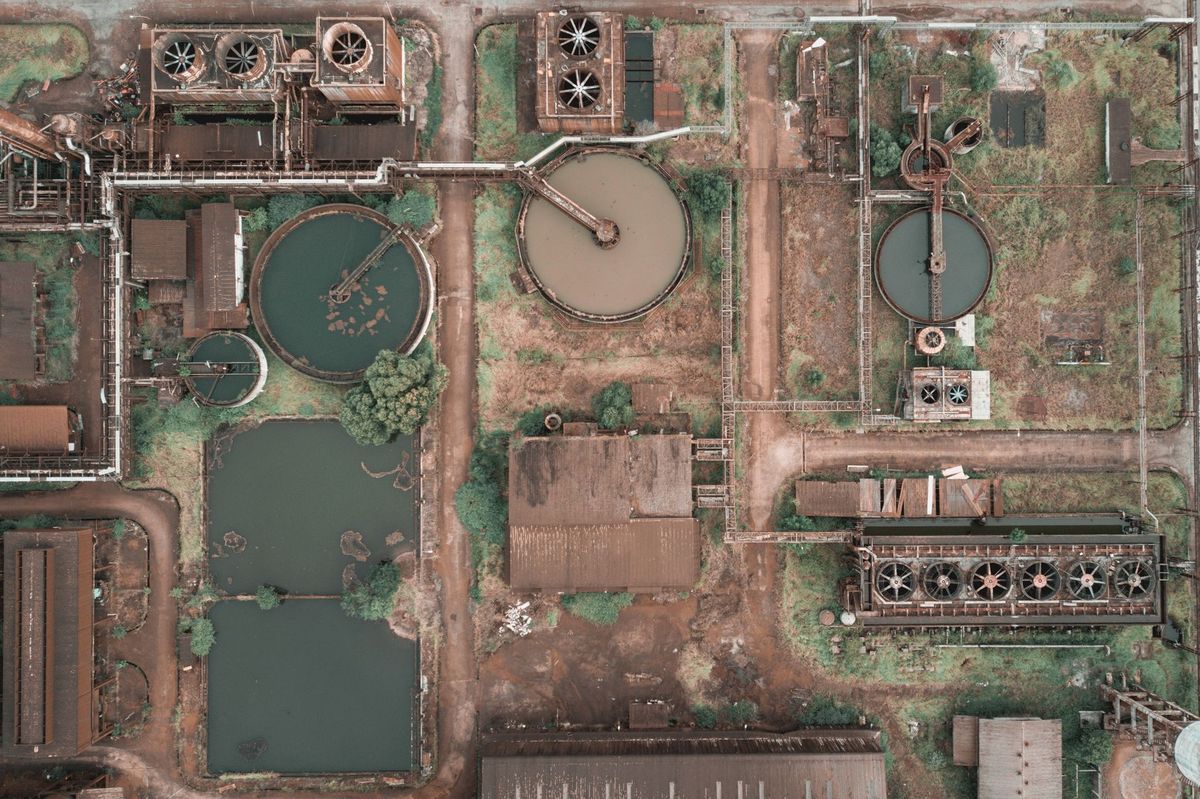
Process Mechanical Installation. Treatment plants contain complex mechanical systems including primary and secondary clarifier mechanisms (rake arms, weirs, scum collection systems), aeration equipment (fine-bubble diffusers, mechanical aerators, blowers ranging from 100 to 5,000 HP), pumping systems with capacities from 100 GPM to 100,000+ GPM, biosolids handling equipment (thickeners, dewatering centrifuges and belt filter presses, digesters), chemical feed systems for disinfection, pH control, and nutrient removal, and filtration systems (granular media, membrane, cloth disk filters). Mechanical equipment installation requires rigging crews capable of handling equipment weighing up to 100 tons, precision alignment of rotating equipment, and pipe fitting in corrosive environments using stainless steel, fiberglass, and exotic alloys.
Electrical and Instrumentation. Modern treatment plants require extensive electrical infrastructure including medium-voltage switchgear (4.16kV to 15kV), motor control centers, variable frequency drives for process optimization, standby power generation (typically 2 to 20+ MW of diesel generation for process continuity during power outages), and comprehensive instrumentation and control systems including SCADA, PLC-based process control, and online water quality analyzers. The electrical scope typically represents 15 to 25% of total plant construction cost.
Odor Control Systems. Treatment plants in urban and suburban settings require sophisticated odor control systems including covered process units with air collection ducting, chemical scrubber towers using sodium hypochlorite, sodium hydroxide, or sulfuric acid solutions, activated carbon adsorption beds, and biofilter media beds using organic media for biological odor destruction. Odor control construction can add $5 to $20 million to plant costs depending on the extent of coverage required.
Funding Sources
Wastewater treatment construction is funded through the EPA Clean Water State Revolving Fund (CWSRF), which received $11.7 billion through the IIJA for capitalization grants to states. Annual CWSRF lending capacity is approximately $8 to $10 billion nationally. WIFIA loans provide supplemental low-cost financing for large projects. Municipal bond financing remains the primary funding mechanism for plant construction, with wastewater revenue bonds among the most creditworthy categories of municipal debt. User rate increases fund debt service, with typical rate impacts of $5 to $20 per month per household for major plant construction programs. Federal grants through the IIJA provide principal forgiveness and interest rate subsidies for disadvantaged communities.
Workforce and Contractor Landscape
Wastewater treatment plant construction employs an estimated 40,000 to 50,000 workers nationally across active projects. The contractor market includes large general contractors managing full plant construction programs (Kiewit, PCL, Clark, McCarthy, Garney), mechanical subcontractors specializing in process equipment installation, electrical contractors handling power distribution and controls, and specialty subcontractors for concrete, structural steel, and coatings.
The market is characterized by relatively high barriers to entry due to the technical complexity of treatment plant construction and the quality assurance requirements imposed by utilities and regulatory agencies. Contractors must demonstrate experience with wastewater process construction, environmental compliance during construction (particularly for work at operating plants where process continuity must be maintained), and ability to manage complex multi-discipline projects with long construction durations (typically 3 to 5 years for major plant upgrades).
For construction firms with industrial process experience, the wastewater market offers a compelling combination of sustained regulatory-driven demand, project sizes that support substantial overhead absorption, and technical complexity that limits competition and supports healthy margins. The $18 billion immediate backlog — supported by the $271 billion 20-year need — ensures this market will remain active for decades.
Emerging Technology: Resource Recovery Facilities
The wastewater treatment industry is undergoing a conceptual transformation from "waste treatment" to "resource recovery," and this shift has significant construction implications. Modern wastewater treatment plants are being designed and constructed as Water Resource Recovery Facilities (WRRFs) that recover multiple valuable products from the waste stream.
Energy Recovery through anaerobic digestion of biosolids produces methane-rich biogas that can be used for on-site power generation (combined heat and power, or CHP), upgraded to pipeline-quality renewable natural gas (RNG), or compressed for use as vehicle fuel. Construction of biogas recovery and utilization systems adds $10 to $50 million to plant costs but generates revenue or energy savings that offset operating costs. The DC Water Blue Plains facility generates approximately 13 MW of electricity from biogas — enough to power one-third of the plant's operations.
Nutrient Recovery through struvite (magnesium ammonium phosphate) crystallization produces a slow-release fertilizer product from the phosphorus and nitrogen in wastewater. Struvite recovery systems cost $3 to $10 million to construct but generate revenue from fertilizer sales and reduce downstream scaling problems in plant piping and equipment.
Water Reuse facilities producing treated effluent suitable for irrigation, industrial use, or groundwater recharge represent the fastest-growing category of wastewater treatment construction. Reuse facilities require additional treatment beyond conventional secondary treatment, typically including membrane filtration (microfiltration or ultrafiltration), reverse osmosis or advanced oxidation, and ultraviolet disinfection. Construction costs for advanced treatment and reuse add $3 to $8 per gallon per day of capacity to conventional treatment plant costs.
The Hampton Roads Sanitation District's SWIFT (Sustainable Water Initiative for Tomorrow) program in Virginia is constructing a $1.8 billion advanced water treatment system that will replenish the Potomac Aquifer with highly treated water — the largest aquifer recharge reuse project on the East Coast.
Biosolids Management Construction
A significant and growing component of wastewater treatment plant construction involves biosolids management facilities. Wastewater treatment produces large volumes of biosolids (treated sewage sludge) — approximately 8 million dry tons per year across US treatment plants — that must be processed, transported, and beneficially used or disposed.
Biosolids processing facility construction includes thickening systems (gravity thickeners, dissolved air flotation, rotary drum thickeners) that concentrate biosolids from 1-2% solids to 4-6% solids, anaerobic digesters — large heated tanks (typically 1 to 5 million gallons) where bacteria break down organic matter over 15 to 30 days, producing methane-rich biogas for energy recovery. Digester construction requires specialized concrete (resistant to hydrogen sulfide corrosion), gas-tight covers (steel or membrane), and complex heating and mixing systems. A new anaerobic digester complex for a 50 MGD plant costs $30 to $80 million.
Dewatering facilities use centrifuges, belt filter presses, or screw presses to remove water from digested biosolids, producing a cake product at 20 to 30% solids suitable for land application, composting, or thermal processing. Dewatering facility construction costs $5 to $20 million depending on capacity and technology selection.
Thermal processing facilities — including dryers, incinerators, and emerging technologies like pyrolysis and gasification — represent the highest-cost biosolids construction category at $30 to $150 million per facility. These facilities convert biosolids to ash, energy, or biochar products, reducing volume by 80 to 95% and producing a Class A product suitable for unrestricted use.
Consent Decree-Driven Construction
A significant driver of wastewater treatment construction is EPA and state enforcement actions resulting in consent decrees — court-ordered agreements requiring municipalities to construct specified improvements within defined timelines. Consent decrees have driven some of the largest wastewater construction programs in the country, including Atlanta's $4 billion program to eliminate SSOs and CSOs, Kansas City's $5 billion consent decree program, Louisville MSD's $2 billion program, and Indianapolis' $3.5 billion DigIndy tunnel and treatment program.
Consent decree construction creates predictable, long-term demand for wastewater construction contractors. Programs typically span 15 to 25 years and involve sequential construction packages that provide sustained employment for contractors with wastewater treatment and collection system expertise. The court-ordered nature of consent decree work means that construction proceeds regardless of economic conditions — municipalities must meet consent decree milestones or face penalties.
Resilience and Redundancy Requirements
Modern wastewater treatment plant construction increasingly incorporates resilience features driven by lessons learned from climate events and the recognition that treatment plants are critical community infrastructure that must operate continuously.
Key resilience construction elements include flood protection (raising critical electrical equipment above projected flood elevations, constructing flood barriers around vulnerable plant areas), backup power (standby generators sized to operate the entire plant for extended periods, often 5 to 14 days of fuel storage), seismic resilience (base isolation or structural strengthening for plants in seismic zones), and climate adaptation (oversizing treatment capacity to handle projected increases in wet-weather flows from more intense rainfall events).
These resilience features add 8 to 15% to total plant construction costs but are increasingly required by state regulatory agencies and recommended by EPA guidance documents. Several states — including California, Florida, and New York — now require resilience assessments and adaptation plans as part of the facility planning process for new plant construction or major upgrades.
Workforce Training Pipeline
The wastewater treatment plant construction workforce faces a particular training challenge. Unlike standard building construction, treatment plant construction requires workers who understand process equipment installation, chemical storage and handling systems, and the operational requirements of treatment systems. Pipe fitters installing process piping must understand that flow direction, pipe slope, and connection configuration directly affect treatment performance — errors that might be merely inconvenient in a commercial building can render a treatment process non-functional.
Many large wastewater contractors maintain in-house training programs that supplement standard trade apprenticeships with treatment plant-specific modules covering process piping standards and installation practices, equipment alignment and vibration testing procedures, electrical and instrumentation installation in classified (hazardous) areas, and construction quality verification testing specific to water and wastewater facilities. These training investments create workforce advantages that support higher productivity and fewer construction defects, ultimately benefiting both contractor profitability and client satisfaction.
Frequently Asked Questions
How much federal funding goes to wastewater treatment construction?
According to the latest industry data, wastewater treatment construction is showing notable trends in 2026. Current figures indicate $18 billion, which represents a significant benchmark for contractors and developers planning projects this year. Regional variations apply, so checking local market conditions remains essential for accurate budgeting.
Which states benefit most from wastewater treatment construction?
Regional analysis of wastewater treatment construction reveals uneven distribution across U.S. markets. The data point of $271 billion highlights the scale of activity, with Sun Belt and high-growth metro areas generally leading in volume. Contractors expanding into new territories should evaluate local demand indicators before committing resources.
What is the timeline for wastewater treatment construction projects?
The trajectory for wastewater treatment construction tells an important story when viewed against historical benchmarks. With the latest data showing $5.4 billion, the trend has clear implications for project feasibility, bidding accuracy, and resource allocation across the construction sector.