The nation's municipal water treatment infrastructure is entering the largest upgrade cycle in its history, with an estimated $50 billion in water and wastewater treatment plant construction and modernization projects either underway or in the pipeline through 2030. The numbers tell a different story than the typical "crumbling infrastructure" headline — this is not a story of neglect alone, but of converging regulatory, demographic, and technological pressures that are forcing every water utility in America to rethink how it treats, distributes, and manages water.
According to the EPA's most recent Drinking Water Infrastructure Needs Survey and Assessment (DWINSA) and Clean Watersheds Needs Survey (CWNS), the combined 20-year need for drinking water and wastewater treatment infrastructure investment exceeds $950 billion. Treatment plant construction, upgrade, and expansion accounts for approximately 35 to 40% of this total — roughly $330 to $380 billion over 20 years, or $16.5 to $19 billion per year in sustained investment. Current spending on water and wastewater treatment plant construction runs approximately $12 to $14 billion per year, leaving an annual shortfall of $4.5 to $5 billion but still representing one of the largest and most consistent construction markets in the public sector.
For general contractors, mechanical contractors, electrical contractors, and process equipment specialists, water and wastewater treatment plant construction is a deep, geographically dispersed market with strong payment reliability, growing demand, and the kind of technical complexity that rewards specialized expertise.
What's Driving the Upgrade Cycle
Several converging forces are pushing water and wastewater treatment plant construction to record levels.
PFAS and emerging contaminant regulations. The EPA's finalization of the first-ever national drinking water standards for per- and polyfluoroalkyl substances (PFAS) in April 2024 created an immediate wave of treatment plant construction demand. The final PFAS rule sets maximum contaminant levels (MCLs) for six PFAS compounds at levels requiring advanced treatment at thousands of water utilities nationwide. The EPA estimates that 6,000 to 10,000 public water systems — serving approximately 100 million people — will need to install new treatment technologies to comply with the PFAS rule. The compliance deadline is 2029, creating an intense construction window.
The treatment technologies for PFAS removal — granular activated carbon (GAC) adsorption, ion exchange (IX), high-pressure membrane systems (reverse osmosis and nanofiltration), and emerging destruction technologies — all require significant capital construction investment. The average PFAS treatment system for a medium-size water utility (serving 10,000 to 50,000 people) costs $5 to $25 million to design and construct. For large utilities serving 100,000+ people, costs can exceed $100 million. The aggregate construction cost of PFAS compliance nationwide is estimated at $21 to $34 billion — a figure the EPA itself acknowledged will drive one of the largest single-contaminant treatment construction waves in drinking water history.
Nutrient removal requirements. Tightening nutrient discharge limits for nitrogen and phosphorus at wastewater treatment plants are driving multi-billion-dollar upgrade programs across the country. The Chesapeake Bay Total Maximum Daily Load (TMDL) alone has triggered over $15 billion in wastewater treatment plant upgrades across Pennsylvania, Maryland, Virginia, West Virginia, New York, and the District of Columbia. Similar nutrient TMDLs in the Great Lakes, Gulf of Mexico (Mississippi River watershed), Long Island Sound, and other impaired water bodies are driving wastewater plant upgrades nationwide.
Biological nutrient removal (BNR) retrofit construction typically costs $2,000 to $5,000 per gallon of treatment capacity for existing plants, translating to $20 to $50 million for a 10-million-gallon-per-day (MGD) plant. The construction scope includes new aeration basins or conversion of existing basins to anoxic/anaerobic zones, new blower and aeration systems, additional clarifiers, chemical feed systems for supplemental carbon and alkalinity, and expanded solids handling facilities to manage increased biological sludge production.
Aging infrastructure replacement. The average age of a U.S. wastewater treatment plant is approximately 45 years, and many drinking water treatment plants date to the 1960s and 1970s. These plants were designed and built to the standards of their era — which did not include advanced nutrient removal, PFAS treatment, or the energy efficiency and operational technology capabilities expected of modern facilities. Major building systems — mechanical equipment, electrical switchgear, process piping, structural concrete — are reaching or exceeding their design lives and require replacement.
Population growth and capacity expansion. Fast-growing communities in the Sunbelt states face a dual challenge: expanding treatment capacity to serve growing populations while simultaneously upgrading existing facilities to meet tighter regulatory requirements. Cities like Phoenix, Austin, Raleigh, Nashville, and Charlotte are investing billions in treatment plant expansion and new plant construction to keep pace with growth that shows no sign of abating.
Types of Treatment Plant Construction Projects
Water and wastewater treatment plant construction encompasses a wide range of project types.
New drinking water treatment plants — greenfield construction of conventional treatment (coagulation, flocculation, sedimentation, filtration, disinfection) or membrane filtration plants. Costs range from $3 to $10 per gallon of daily capacity depending on source water quality and treatment complexity. A new 20 MGD conventional water treatment plant costs approximately $60 to $200 million.
Drinking water treatment plant upgrades — the most common project type, including filter media replacement and retrofit, disinfection system upgrade (conversion from chlorine gas to sodium hypochlorite or UV disinfection), PFAS treatment system addition (GAC, IX, or membrane), and chemical feed system modernization. Upgrade costs range from $5 to $100+ million depending on scope.
New wastewater treatment plants — increasingly designed as water resource recovery facilities (WRRFs) that produce reclaimed water, recover energy through biogas cogeneration, and extract nutrients for beneficial reuse. A new 10 MGD WRRF costs approximately $80 to $150 million depending on treatment level and energy recovery features.
Wastewater plant upgrades — nutrient removal retrofits, capacity expansion, solids processing upgrades (including thermal hydrolysis, anaerobic digestion, and biosolids drying), and effluent polishing for water reuse. Upgrade costs range from $10 to $500+ million for large metropolitan plants.
Advanced water purification facilities for potable reuse — the newest and most technically complex category. As water scarcity intensifies in the West and Southwest, an increasing number of utilities are constructing advanced treatment trains (membrane bioreactor, reverse osmosis, UV/advanced oxidation) to purify wastewater effluent to drinking water standards. These facilities cost $10 to $20 per gallon of daily capacity — roughly double the cost of conventional drinking water treatment.
Construction Characteristics
Water and wastewater treatment plant construction has several distinguishing characteristics that affect how contractors approach the work.
Process mechanical systems dominate the construction scope. Unlike building construction where the structure represents the largest cost component, treatment plant construction is driven by process equipment — pumps, blowers, clarifiers, filters, membrane systems, chemical feed systems, and solids handling equipment. Process mechanical work typically accounts for 35 to 45% of total construction cost, compared to approximately 20% for structural concrete and 15 to 20% for electrical and instrumentation.
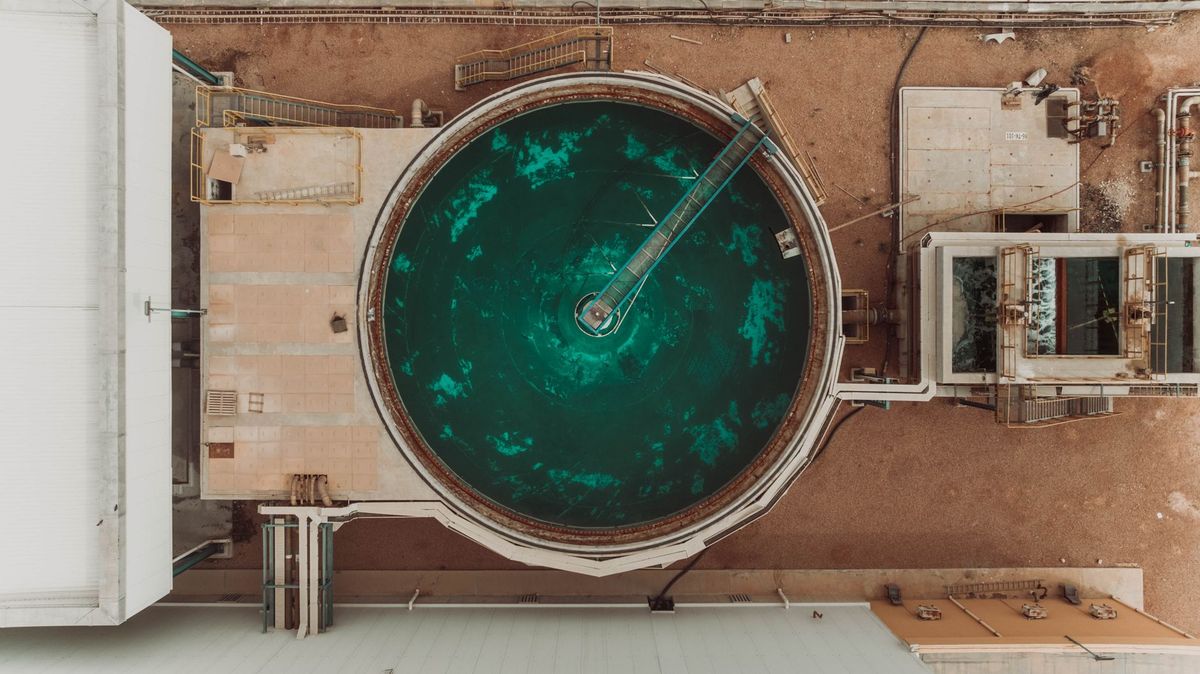
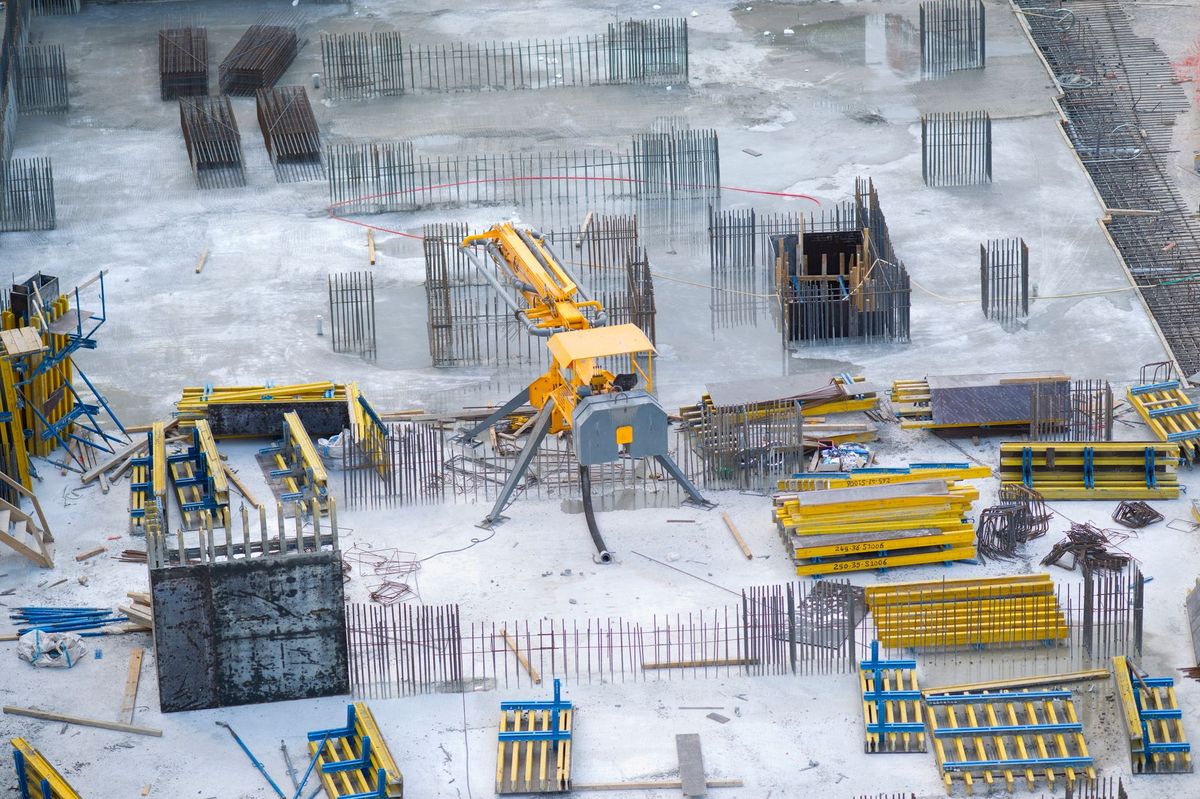
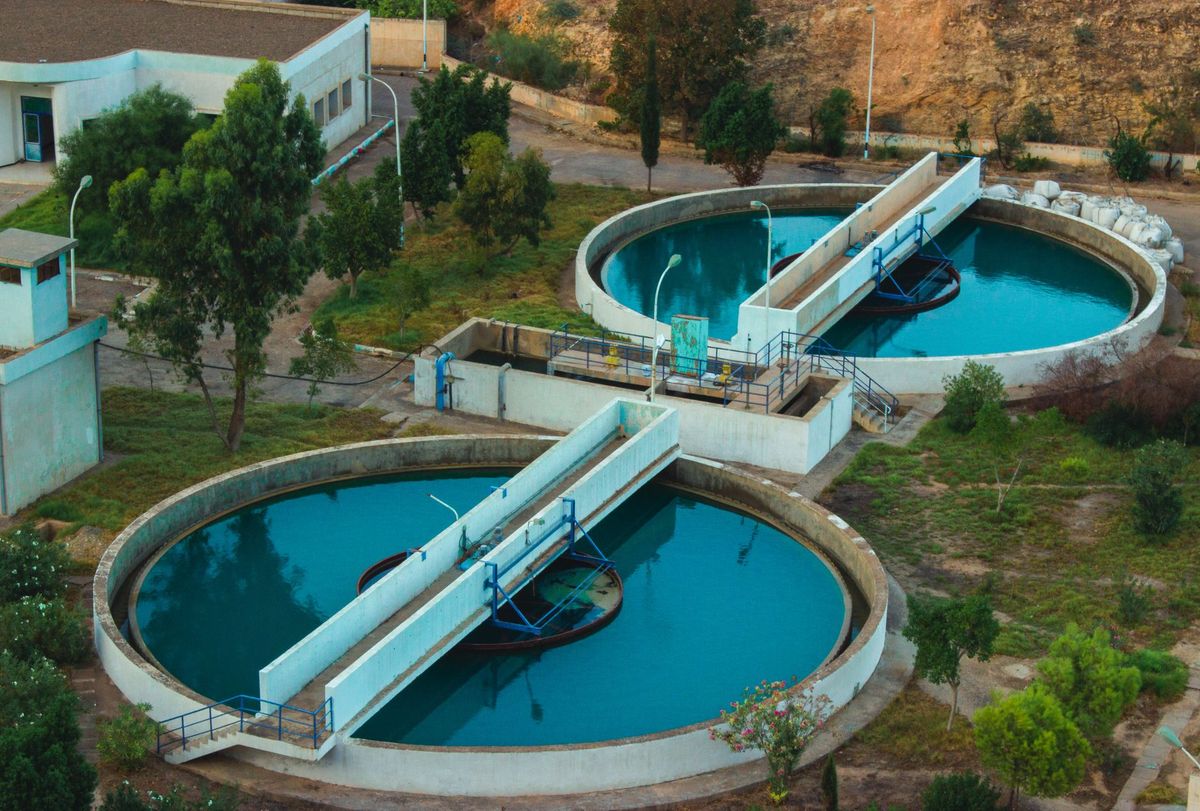
Concrete work at treatment plants is extensive and specialized. Basins, tanks, and channels are constructed with water-retaining concrete that must meet stringent crack control and durability requirements under ACI 350 (Code Requirements for Environmental Engineering Concrete Structures). Formwork for circular and curved structures (clarifiers, digesters, aeration basins), deep structures requiring specialized shoring, and concrete requiring chemical resistance and corrosion protection demand experienced concrete contractors.
Electrical and instrumentation work is complex and growing in scope as treatment plants become increasingly automated. Modern treatment plants incorporate variable frequency drives (VFDs) on most major motor loads for energy optimization, programmable logic controllers (PLCs) and SCADA systems for process control, redundant power systems including emergency generators and automatic transfer switches, and complex power distribution systems serving hundreds of motor loads. E&I costs typically represent 15 to 20% of total treatment plant construction cost.
Construction in an operating plant — most treatment plant upgrades must maintain continuous treatment operations throughout construction. Utilities cannot shut down treatment — water must be treated and delivered, and wastewater must be processed — every day during multi-year construction projects. This requires careful phasing, temporary process systems, bypass piping, and construction sequencing that maintains treatment capacity while demolishing and replacing equipment and structures.
Funding Landscape
Water and wastewater treatment plant construction benefits from multiple funding sources.
State Revolving Funds (SRFs) — the Drinking Water SRF and Clean Water SRF programs are the primary federal-state funding mechanism, providing below-market-rate loans (typically 1 to 3% interest, 20 to 30-year terms) and principal forgiveness for disadvantaged communities. The IIJA provided $44.5 billion in supplemental SRF capitalization — the largest single infusion in the programs' history — with approximately $15 billion for drinking water, $12.7 billion for clean water, $11.7 billion for lead service lines, and $5 billion for emerging contaminants. As IIJA funding passes the halfway mark, SRF loan volume has reached record levels.
WIFIA loans from the EPA provide low-interest federal credit assistance for large water infrastructure projects (over $20 million in project cost). WIFIA has financed over $18 billion in water projects since the program's inception, with treatment plant construction and upgrade projects representing a significant share.
Municipal revenue bonds remain the dominant financing mechanism for water and wastewater treatment construction, with utilities issuing bonds backed by rate revenue. The municipal bond market is well-established for water utility credits, and most investment-grade water utilities can access 30-year fixed-rate financing at competitive rates.
What This Means for Your Crew
Water and wastewater treatment plant construction is a high-skill, high-barrier market that rewards specialization. The technical complexity of process mechanical installation, the critical importance of maintaining operations during construction, and the regulatory compliance requirements create significant barriers to entry — but firms that invest in the capability find a market with strong margins, reliable payment, and consistent demand.
Key areas of opportunity: PFAS treatment system construction will generate $21 to $34 billion in construction demand through 2029, and the need is urgent. Contractors who build PFAS treatment installation capability now will be positioned for years of work. Biosolids processing upgrades — tightening regulations on PFAS in biosolids are forcing utilities to install thermal drying, incineration, and other destruction technologies, creating a new wave of construction demand at wastewater plants. Water reuse facility construction is growing rapidly in water-scarce regions, and the advanced treatment technologies involved command premium construction pricing.
Frequently Asked Questions
How much does it cost to build a water treatment plant?
Construction costs for water treatment plants depend on capacity, source water quality, and treatment complexity. A conventional surface water treatment plant costs approximately $3 to $10 per gallon of daily treatment capacity. For example, a 10 million gallon per day (MGD) plant costs $30 to $100 million. Advanced treatment facilities incorporating membrane filtration or reverse osmosis cost $8 to $20 per gallon of capacity — roughly double conventional treatment. Treatment plant upgrade projects vary widely, from $5 million for chemical feed system modernization to $500+ million for comprehensive facility rehabilitation and expansion at large metropolitan plants.
What is driving the water treatment construction boom?
Three primary factors: PFAS regulations (EPA's 2024 final rule requiring 6,000 to 10,000 utilities to install PFAS treatment by 2029), nutrient removal requirements (tightening nitrogen and phosphorus discharge limits driving wastewater plant upgrades nationwide), and aging infrastructure (the average treatment plant is 45+ years old with major systems at or beyond design life). Federal IIJA funding of $44.5 billion in supplemental SRF capitalization is accelerating the pace of construction.
What trades are most in demand for treatment plant construction?
Treatment plant construction requires specialized trades including millwrights and process mechanical installers (for pumps, blowers, clarifiers, and process equipment), pipe fitters experienced with large-diameter process piping in stainless steel, ductile iron, and specialty materials, electricians with industrial controls and instrumentation experience, concrete workers experienced with water-retaining concrete structures per ACI 350, and HVAC technicians for chemical room ventilation, odor control systems, and building HVAC systems.
How long do water treatment plant construction projects take?
New treatment plant construction typically requires 3 to 5 years from design through construction completion for a medium-size plant (5 to 20 MGD). Large treatment plant expansion and upgrade projects at metropolitan facilities can span 5 to 8 years due to the complexity of phased construction while maintaining operations. Smaller upgrade projects (chemical feed systems, filter rehabilitation, disinfection system replacement) can be completed in 12 to 24 months. The overall project timeline from planning through construction completion, including funding procurement, design, permitting, and bidding, typically adds 2 to 3 years before construction begins.
What to Watch
Three trends will shape the water and wastewater treatment construction market through 2030. First, watch PFAS treatment technology costs — if costs decline as the market matures, more utilities will be able to afford compliance, expanding the construction market. If costs remain high, some utilities may seek compliance deadline extensions, delaying construction. Second, watch biosolids regulations — EPA and state regulatory action on PFAS in biosolids could trigger a massive wave of solids processing upgrades at wastewater plants, potentially adding $10 to $20 billion to the construction pipeline. Third, watch construction spending trends for water infrastructure — sustained growth in water and wastewater capital spending is one of the most reliable forecasting indicators in the construction industry, driven by non-discretionary regulatory compliance and infrastructure lifecycle requirements that persist regardless of economic cycles.