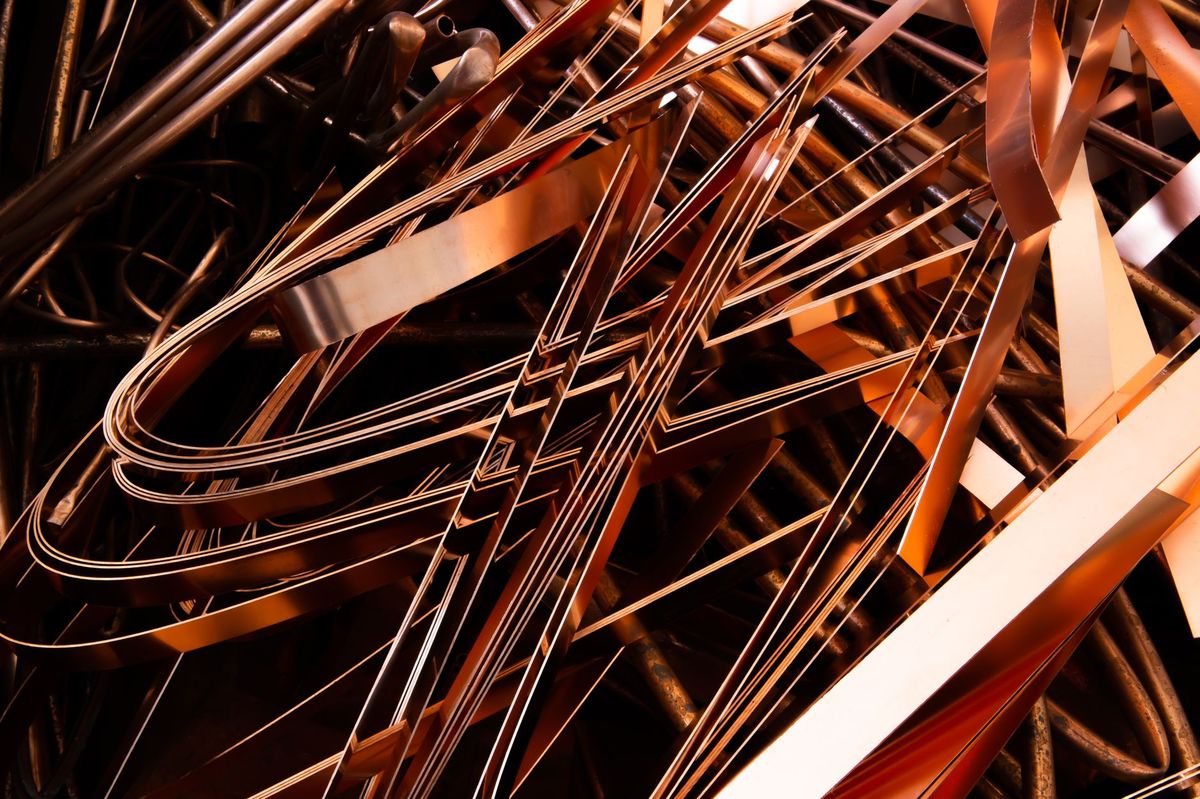
Copper is sitting at $6.01 per pound as of April 2026 (CME copper futures), up roughly 31% year-over-year — and that number is flowing directly through to the materials contractors buy every week. Copper pipe (3/4" Type L) is running $4.85 per linear foot, up 16.8% from a year ago. Copper wire (12 AWG THHN) is at $298 per 1,000 feet, up 18.5% year-over-year. The BLS PPI Copper index confirms the magnitude: +30.5% YoY as of February 2026.
For plumbing and electrical contractors, copper is often the single largest materials line item on a job. At these prices, the difference between getting copper procurement right and getting it wrong is the difference between a profitable project and a thin one. Here's the full picture.
Why Copper Is This Expensive Right Now
Three forces are pushing copper up simultaneously.
Tariff uncertainty and front-running: A 15% tariff on refined copper imports is under active consideration as of mid-2026. Importers and distributors are stockpiling before any announcement, creating artificial demand that inflates prices beyond what physical supply-demand would warrant. This is the same dynamic that drove lumber prices in 2021 — buyers pulling forward demand out of tariff fear.
Supply disruptions: The Grasberg mine in Indonesia (one of the world's largest copper operations, operated by Freeport-McMoRan) experienced operational disruptions in late 2025 that reduced output. Quebrada Blanca in Chile also saw production downgrades. Together these have tightened the physical supply picture in a market that was already running lean on refined copper inventories.
Data center demand: AI infrastructure buildout is consuming copper at a rate that's genuinely new. A single hyperscale data center requires 3,000–10,000 tons of copper in power distribution, cooling systems, and structured cabling. With hundreds of data centers under construction or permitted across the US, J.P. Morgan estimates data center copper demand could add 475,000 metric tons to global consumption in 2026 alone. That's not a rounding error.
The Split in Expert Forecasts
Goldman Sachs and J.P. Morgan have notably different outlooks, and both are worth understanding for contractors.
Goldman Sachs is more bearish near-term. Their base case is that a 15% tariff gets announced mid-2026 but implemented in 2027. Once the tariff uncertainty clears, the stocking-up demand reverses, and attention returns to fundamentals — specifically, Goldman forecasts a 300,000-metric-ton global copper surplus in 2026 from new mine supply coming online in Chile, Peru, and DRC. That surplus could push prices meaningfully lower in H2 2026.
J.P. Morgan is more bullish. They're projecting $12,500 per metric ton in Q2 2026 (approximately $5.67/lb), and a full-year 2026 average of $12,075/mt (~$5.47/lb). Their bull case cites acute supply disruptions that the market is underpricing and data center copper demand that is structurally different from prior demand cycles. Some analysts outside the major banks project even higher — a 330,000-metric-ton deficit scenario that could push prices toward $15,000/mt ($6.80/lb) if supply disruptions persist.
Bottom line for contractors: Expect copper to stay in the $5.50–$6.50/lb range through Q3 2026. A tariff announcement mid-year could trigger a pullback toward $5.00–$5.50. Long-term (2027+), the AI/grid infrastructure demand story pushes prices higher.
The Math on Your Jobs Right Now
Let me put this in concrete terms for a typical residential plumbing rough-in:
A 2,400-square-foot home with a full copper plumbing system (supply lines to 3 baths, kitchen, laundry) uses roughly 400–600 linear feet of copper pipe across various diameters. At an average blended price of $3.50–$5.00/linear foot in the current market, that's $1,400–$3,000 in copper pipe per house — a line item that has grown by $400–$900 per house over the past year.
For electrical contractors, a 2,400-square-foot residential rough-in uses approximately 2,000–3,000 linear feet of Romex (various gauges). At $82 per 250-foot roll of 14/2 (+15.5% YoY), Romex costs have added $200–$400 per house compared to 2025 pricing.
These aren't catastrophic increases individually, but they compound. A volume builder running 50 homes per year has seen copper and wire costs rise by $30,000–$65,000 annually relative to 2025. That requires either price increases to customers or margin compression — most contractors are absorbing some of both.
PEX Is Accelerating — and the Math Is Getting More Compelling
Copper pipe at $4.85/linear foot for 3/4" Type L vs. PEX Type A at $198 per 500-foot coil ($0.40/linear foot for 1/2" equivalent) — that's a 10x price difference at the raw material level.
PEX substitution has been growing for over a decade, but the current copper price premium is accelerating the shift. For a plumbing contractor running 20+ houses per year, switching from copper to PEX on supply lines (while keeping copper for water service and select commercial applications) can reduce material costs by $800–$1,500 per home at current prices.
The argument for keeping copper: longevity (50+ year life vs. 25-40 for PEX), no UV degradation, can handle higher temperatures without expansion concerns. The argument for PEX: dramatically cheaper, faster to install, fewer joints (fewer leak points), code-accepted in all 50 states. In high-cost copper markets, the economics increasingly favor PEX for residential supply lines.
What Contractors Should Do Before the Tariff Decision
Lock pricing on large jobs immediately: If you have a project starting in the next 60–90 days that requires significant copper (a commercial buildout, an apartment building rough-in), lock your material pricing now with a supplier commitment. The tariff announcement window is Q2–Q3 2026. If tariffs are announced, prices could spike 10–15% within days on the front-running; if they're delayed, you haven't lost much by locking early.
Include escalation clauses in bids: On jobs that won't start for 60+ days, include escalation language in your bid that passes through copper price changes beyond a 5–10% threshold. This is standard practice for commercial electrical and mechanical contractors; residential contractors are increasingly adopting it. Sample language: "Material pricing is based on commodity costs as of bid date. If copper commodity prices change by more than 10% prior to material purchase, contract price will be adjusted accordingly with documentation."
Consider partial stocking before the tariff window: If you have storage capacity and cash flow to support it, carrying 4–6 weeks of copper pipe and wire inventory (above your normal 1–2 week buffer) going into Q2 2026 is a reasonable hedge. If the tariff hits, you've effectively locked pricing 10–15% below the post-tariff market. If prices fall, you've accepted a modest holding cost — but your downside is limited.
Evaluate PEX conversion on residential projects: For any residential project where you have design flexibility, run the numbers on PEX. The cost to build a house data shows plumbing running 5–7% of total construction cost — at $4.85/ft copper vs. $0.40/ft PEX, that's a meaningful line item.
The broader construction material cost environment in 2026 shows copper as the standout outlier — most categories are up 2–8%, while copper products are up 16–18%. That gap reflects both commodity-level moves and the data center demand story pulling copper away from traditional construction users.
Want project-specific numbers? Our free cost estimator and markup margin calculator do the math in a couple of minutes.
FAQ
Why are copper prices so high in 2026? Three factors: tariff front-running (importers stockpiling before a potential 15% copper import tariff), genuine supply disruptions at major mines in Indonesia and Chile, and structural demand increases from AI data center buildout consuming copper at unprecedented rates.
Will copper prices go down in 2026? Goldman Sachs expects a pullback once tariff uncertainty clears, citing a 300,000-metric-ton global surplus from new mine supply. J.P. Morgan is more bullish, forecasting prices to remain elevated through the year. Most scenarios point to continued volatility in the $5.00–$6.50/lb range through Q3 2026.
What is copper pipe costing contractors in 2026? 3/4" Type L copper pipe is running $4.85 per linear foot, up 16.8% year-over-year. 12 AWG THHN copper wire is at $298 per 1,000 feet, up 18.5% YoY. These are distributor-level prices; jobsite pricing varies by region and volume.
Is PEX a good substitute for copper at current prices? For residential supply lines, yes — the economics have become compelling. PEX Type A runs $0.40/linear foot vs. $4.85 for 3/4" copper. The tradeoffs are shorter expected service life and UV sensitivity, but for concealed residential plumbing, the cost advantage is now very large.
Should contractors include escalation clauses for copper? Yes, particularly for bids submitted more than 30 days before material purchase. With copper capable of moving 10–15% in a matter of weeks around tariff announcements, locking a fixed price at bid time exposes contractors to significant one-way risk.
How is data center construction affecting copper demand for regular contractors? Indirectly but meaningfully. J.P. Morgan estimates that data center buildout could add 475,000 metric tons to global copper consumption in 2026 — that demand competes with the same refined copper supply that plumbing and electrical distributors source from. Even if your work has nothing to do with data centers, the volume they're pulling is a structural reason why copper inventories stay lean and prices stay elevated through this cycle.
What's the best way to protect margin on copper-heavy bids right now? Three-part approach: quote material pricing as "current at time of bid, subject to adjustment at purchase," get a supplier price hold in writing for 30–60 days if you can, and run a PEX alternative number on any residential plumbing work. The BLS PPI data makes clear that copper products (+30.5% YoY) are outpacing every other construction material category — treating copper like a stable cost is the mistake most contractors made in 2024 and are still paying for.