The Water Problem — Data Centers Use Millions of Gallons for Cooling
There's a resource constraint threatening to reshape the data center construction map that doesn't get nearly enough attention: water.
While the industry — and the media — focus on power availability as the primary constraint on data center growth, water consumption is quietly becoming the binding constraint in several major markets. Data centers use enormous quantities of water for cooling, and in regions facing drought, aquifer depletion, and growing municipal water demand, the competition for water is intensifying.
For construction firms in the data center market, this matters because water constraints are already forcing design changes, redirecting development to new geographies, and creating demand for alternative cooling technologies that require different construction expertise. Understanding the water problem is essential for understanding where data center construction is heading.
How Much Water Do Data Centers Actually Use?
The water consumption of a data center depends on its cooling technology, climate, and power density. Here's the range:
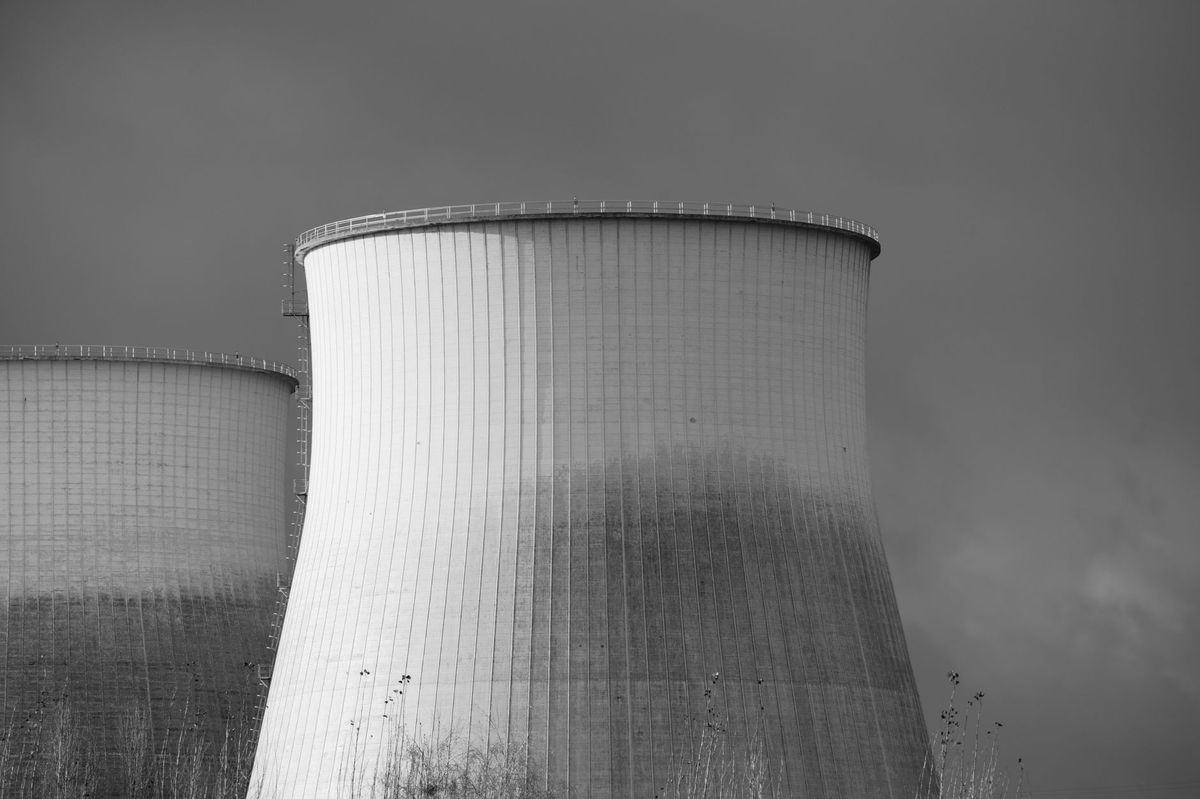
Evaporative cooling (traditional approach): A 50MW data center using evaporative cooling towers consumes approximately 300,000-500,000 gallons of water per day during peak cooling demand. That's 1-5 million gallons per day for a large campus with multiple buildings, or roughly 100-500 million gallons per year.
For context, a community of 10,000 households uses approximately 5-8 million gallons per day. A single hyperscale data center campus can consume as much water as a small city.
Adiabatic cooling: A more efficient variation that uses water to pre-cool air before it enters cooling systems. Water consumption is 30-50% lower than traditional evaporative cooling — but still substantial at 150,000-250,000 gallons per day for a 50MW facility.
Air-cooled systems: These systems use fans and heat exchangers to reject heat directly to the air, with zero water consumption. However, air-cooled systems are 20-30% less efficient than evaporative cooling, meaning they consume more electricity to achieve the same cooling effect. They also require significantly more physical space for outdoor heat rejection equipment.
Direct liquid cooling (DLC): Liquid cooling at the chip or rack level can dramatically reduce or eliminate the need for building-level evaporative cooling. DLC systems use a closed-loop liquid circuit that rejects heat through dry coolers (air-cooled heat exchangers), achieving near-zero water consumption. However, DLC adds $15-25 per square foot to the construction cost and requires entirely different mechanical infrastructure compared to traditional air cooling.
Where the Water Problem Is Most Acute
Arizona — The Poster Child
Arizona has become the national flashpoint for data center water consumption. The state's data center market — concentrated in the Phoenix metro area — has grown rapidly, but Arizona is simultaneously facing a long-term water crisis driven by Colorado River water cuts and aquifer depletion.
In 2024, the City of Mesa rejected a proposed data center that would have consumed 1.25 million gallons of water per day, citing concerns about municipal water supply sustainability. Other Phoenix-area communities have imposed water usage caps on data center developments or required developers to secure independent water rights before receiving building permits.
The construction impact is significant. Data center developers in Arizona are now required to demonstrate water sustainability as part of the entitlement process, which can add 6-12 months to project timelines. Some developers have shifted to 100% air-cooled designs in Arizona, accepting the 20-30% efficiency penalty to eliminate the water permitting challenge.
Oregon — Drought Meets Hydropower
Oregon has attracted data center development because of its abundant and cheap hydroelectric power, no state sales tax, and cool climate. But the state has experienced increasing drought conditions that have put pressure on water resources in key data center corridors.
The Dalles, Oregon — home to one of Google's largest data center campuses — has been particularly affected. Local concerns about data center water consumption have led to increased scrutiny of new development applications and calls for water consumption limits.
Oregon's response has been to encourage water recycling and alternative cooling technologies. New data center developments in the state are increasingly required to demonstrate water conservation measures as a condition of approval.
Texas — ERCOT and Aquifer Concerns
Texas faces a different water challenge. While the state has significant water resources overall, data center development in central Texas (particularly the San Antonio area) is drawing from the Edwards Aquifer — a critical water source that also supplies drinking water to millions of Texans.
The San Antonio Water System (SAWS) has engaged with data center developers to manage water demand, and some developments have been required to secure recycled water supplies rather than drawing from potable water sources. The additional infrastructure cost of recycled water systems — including treatment facilities, dedicated piping, and monitoring systems — adds $5-15M to project costs.
Northern Virginia — Capacity Questions
Even Northern Virginia, the world's largest data center market, faces water considerations. Loudoun County's data center cluster draws water from sources that also serve a rapidly growing residential population. While water hasn't been the primary constraint in Virginia (power availability holds that distinction), long-term water planning is increasingly part of the data center site selection process.
The Engineering Solutions
The data center industry is responding to water constraints with engineering solutions that are reshaping the construction scope and cost of new facilities:
Air-Cooled Chillers
The most straightforward solution to water consumption is replacing evaporative cooling towers with air-cooled chillers. These systems use large fin-and-tube heat exchangers and fans to reject heat directly to the ambient air.
Construction implications:
- Air-cooled chillers require 3-5x more outdoor space than equivalent evaporative cooling towers
- The mechanical equipment footprint can add 1-2 acres to a data center campus
- Noise from air-cooled equipment (large fans operating 24/7) can create community opposition and require sound attenuation walls at $50-100 per linear foot
- Electrical infrastructure must support 20-30% higher cooling power consumption
- Total cooling system construction cost increases 15-25% compared to evaporative systems
Indirect Evaporative Cooling
Indirect evaporative cooling (IEC) systems use water to cool a secondary air stream that then cools the primary air stream through a heat exchanger — without the primary air stream directly contacting the water. This approach uses 40-60% less water than direct evaporative cooling while maintaining good energy efficiency.
Construction implications:
- IEC units are larger than traditional CRAC/CRAH units, requiring more mechanical room space
- Plumbing systems are simpler than full cooling tower installations
- Water treatment requirements are reduced (less risk of Legionella and other biological growth)
- Total cooling system cost is comparable to traditional evaporative cooling
Direct Liquid Cooling (DLC)
For high-density AI workloads, direct liquid cooling is rapidly becoming the standard. DLC systems circulate liquid coolant — typically water-glycol or engineered dielectric fluid — directly to the server components, removing heat at the source rather than conditioning the entire room.
Construction implications:
- Raised floor systems may not be needed (DLC eliminates the need for underfloor air distribution)
- Liquid piping infrastructure replaces air distribution ductwork
- Dry coolers (air-cooled heat exchangers) replace cooling towers, achieving zero water consumption
- The mechanical construction scope shifts from traditional HVAC to precision piping — requiring different trade skills
- Leak detection systems are critical and add to construction cost
- Total construction cost increases $15-25 per square foot versus traditional air cooling
- The semiconductor fab construction analysis noted similar cooling evolution in that adjacent market
Hybrid Systems
Many new data center designs use hybrid cooling systems that combine air-cooled base-load cooling with limited evaporative assist during peak temperature periods. This approach reduces water consumption by 60-80% compared to full evaporative cooling while maintaining energy efficiency during the hottest days of the year.
Construction implications:
- Both air-cooled and evaporative equipment must be installed
- Control systems must manage the transition between cooling modes
- Water treatment and piping infrastructure is still required, but at smaller scale
- Total construction cost is 10-15% higher than pure evaporative systems
Water Recycling and Reuse
Some data center developments are incorporating on-site water recycling systems that treat wastewater (from cooling tower blowdown, condensate, and even municipal recycled water) for reuse in cooling systems.
Construction implications:
- On-site water treatment facilities add $3-10M to project cost
- Additional piping infrastructure for recycled water distribution
- Water quality monitoring systems
- Regulatory compliance with state water reuse standards
- Permits for water discharge (even treated water)
The Regulatory Landscape
Water regulation for data centers is evolving rapidly at the state and local level:
Water use permits: Several jurisdictions now require data centers to obtain specific water use permits that cap daily consumption. These permits often require environmental review and public comment, adding 3-6 months to the development timeline.
Water offset requirements: Some communities require data center developers to offset their water consumption through water conservation projects, irrigation efficiency upgrades, or water rights purchases. These offsets can cost $2-10M per project.
Water recycling mandates: California, Arizona, and several other states are moving toward requiring data centers to use recycled water for cooling rather than potable water. This creates additional construction scope and cost.
Drought contingency plans: Data centers in drought-prone areas may be required to submit drought contingency plans that detail how they will reduce water consumption during water shortages. This can include pre-installing air-cooled backup cooling capacity that can substitute for water-based cooling during drought restrictions.
Environmental impact review: Large data center developments in water-stressed areas increasingly face environmental impact review requirements that evaluate the cumulative effect of data center water consumption on local water resources.
What This Means for Construction Firms
The water constraint is reshaping data center construction in several ways that directly affect contractors:
Mechanical Scope is Changing
The shift from evaporative cooling to air-cooled, liquid cooling, and hybrid systems fundamentally changes the mechanical construction scope. Contractors who specialize in cooling tower installation and traditional chilled water systems need to add capabilities in:
- Air-cooled chiller and dry cooler installation
- Precision piping for direct liquid cooling systems
- Leak detection and monitoring systems
- Water treatment facility construction
- Hybrid cooling system controls and integration
Site Selection is Diversifying
Water constraints are pushing data center development to regions with abundant water resources — the Upper Midwest, Pacific Northwest (where it's not drought-stressed), and parts of the Southeast with adequate surface water and groundwater. Construction firms positioned in these regions will benefit from redirected development.
The geographic shift driven by water is reinforcing the geographic shift driven by power availability, as the construction spending forecast documents. Markets like Columbus, Indianapolis, and the Carolinas are benefiting from both trends.
Sustainability Expertise is Differentiating
Data center clients — particularly the hyperscalers — have ambitious corporate sustainability goals that include water stewardship. Contractors who can demonstrate expertise in water-efficient cooling system construction, water recycling, and water monitoring systems have a marketing advantage.
Some hyperscalers now include water efficiency metrics in their contractor evaluation criteria, alongside safety, quality, and schedule performance. A contractor who can help a client achieve a Water Usage Effectiveness (WUE) target that supports their corporate sustainability reporting has a competitive advantage.
Construction Costs are Rising
Every water-saving alternative costs more to build than traditional evaporative cooling. Air-cooled systems add 15-25% to the cooling plant construction cost. Direct liquid cooling adds $15-25 per square foot. Water recycling adds $3-10M. Hybrid systems split the difference.
These cost increases flow through to GC and subcontractor revenue — more construction dollars per megawatt of data center capacity means more opportunity for contractors. The water problem, paradoxically, is good for construction firms that can deliver the engineering solutions.
The Emerging Opportunity — Water-Free Data Centers
The ultimate solution to the data center water problem is data centers that use zero water for cooling. This is already achievable with current technology through a combination of direct liquid cooling for high-density loads and air-cooled dry coolers for heat rejection.
Several hyperscalers have committed to water-positive operations — meaning they aim to replenish more water than they consume — by 2030. Meeting this goal requires constructing new facilities with zero-water cooling systems and retrofitting existing facilities to reduce water consumption.
For construction firms, the transition to water-free data centers represents a multi-year wave of both new construction and retrofit work. The firms that develop expertise in waterless cooling system construction now will be positioned to capture this work as it accelerates through the rest of the decade.
The water problem is not going to resolve itself. Climate trends are reducing water availability in many data center markets while demand for data center capacity — and the associated water consumption — continues to grow exponentially. The construction industry's response to this challenge will shape the future of data center design and determine which contractors capture the premium margins in this market.
FAQ
Q: A 50MW data center using evaporative cooling consumes 300,000 to 500,000 gallons of water per day — what does that mean for a contractor bidding a project in Phoenix right now? A: Mesa, Arizona rejected a data center in 2024 that would have consumed 1.25 million gallons per day, and Phoenix-area municipalities now require developers to demonstrate water sustainability before receiving permits. That can add 6 to 12 months to project timelines, and some developers have shifted to 100 percent air-cooled designs, accepting a 20 to 30 percent efficiency penalty to eliminate the water permitting challenge entirely.
Q: Direct liquid cooling adds $15 to $25 per square foot to construction cost — is that scope typically in the GC's contract or broken out as a specialty package? A: DLC is typically handled as a specialty mechanical package separate from the main HVAC scope, because it requires precision piping and leak-free connections at a standard closer to pharmaceutical or semiconductor cleanroom work than conventional HVAC. The shift also changes what trades are doing — liquid piping replaces air distribution ductwork, and leak detection systems add monitoring scope that controls contractors need to integrate into the building management system.
Q: Recycled water systems for cooling add $3 to $10 million to project cost in Texas — what's actually driving that range on the low versus high end? A: The range depends on whether the developer is connecting to an existing municipal recycled water main or building on-site treatment capacity from scratch. In San Antonio, the San Antonio Water System has engaged data center developers to use recycled water, and the additional infrastructure — treatment facilities, dedicated piping, and monitoring systems — is what's pushing costs toward the $5 to $15 million range that the San Antonio context describes.
Q: Sound attenuation walls for air-cooled equipment run $50 to $100 per linear foot — how much wall does a typical data center campus actually need? A: Air-cooled chillers require 3 to 5 times more outdoor space than equivalent evaporative cooling towers, adding 1 to 2 acres of mechanical equipment footprint to a campus. On a perimeter of that size, sound attenuation walls can easily run 400 to 800 linear feet of frontage facing residential areas, putting the noise mitigation scope in the $20,000 to $80,000 range at minimum — and potentially much higher on larger campuses or those facing organized community opposition.
READ NEXT: AI Training Facilities — The Next Wave of Data Center Construction