AI Training Facilities — The Next Wave of Data Center Construction
The data center industry has been through several buildout waves. The enterprise era of the 2000s. The cloud migration of the 2010s. The hyperscale explosion of the early 2020s. But what's happening right now — the purpose-built AI training facility — is the most construction-intensive wave yet, and it's rewriting the playbook for what a data center looks like, how it gets built, and how much it costs.
AI training facilities are not just bigger data centers. They are fundamentally different buildings that require different power infrastructure, different cooling systems, different structural engineering, and different construction expertise. The contractors who understand these differences will capture the largest and highest-margin projects in commercial construction for the next decade.
Let me break down what makes AI training facilities different and where the construction opportunity lies.
The Power Density Revolution
The single most important difference between a traditional data center and an AI training facility is power density — the amount of electrical power consumed per rack or per square foot.
Traditional data center: 5-8 kW per rack, 100-200 watts per square foot Cloud/hyperscale data center: 10-20 kW per rack, 200-400 watts per square foot AI training facility: 40-120 kW per rack, 500-2,000+ watts per square foot
That 3-5x increase in power density cascades through every system in the building:
Electrical Infrastructure
An AI training hall needs 3-5x the electrical infrastructure per square foot compared to a traditional data center. Specifically:
- Power distribution: Standard data center PDUs are rated for 100-225 kVA. AI training racks require PDUs rated at 300-500+ kVA, with some configurations using direct busway connections rated at 1 MW per cabinet.
- Cable volume: The copper and fiber cable volume per square foot is 2-3x higher in AI facilities due to the increased power feeds and the high-speed networking required between GPU clusters.
- Transformer density: More and larger transformers are needed to step down voltage to the rack level, increasing the transformer room footprint by 50-100%.
- UPS sizing: Battery runtime requirements increase proportionally with power density, driving larger UPS installations and more extensive battery storage.
Cooling Systems
This is where AI training facilities truly diverge from traditional data centers. At 40-120 kW per rack, air cooling simply cannot remove heat fast enough. The physics don't work — there isn't enough air volume in the room to carry away the heat being generated by thousands of GPUs running at maximum power.
Direct liquid cooling (DLC) is mandatory for AI training at scale. This means:
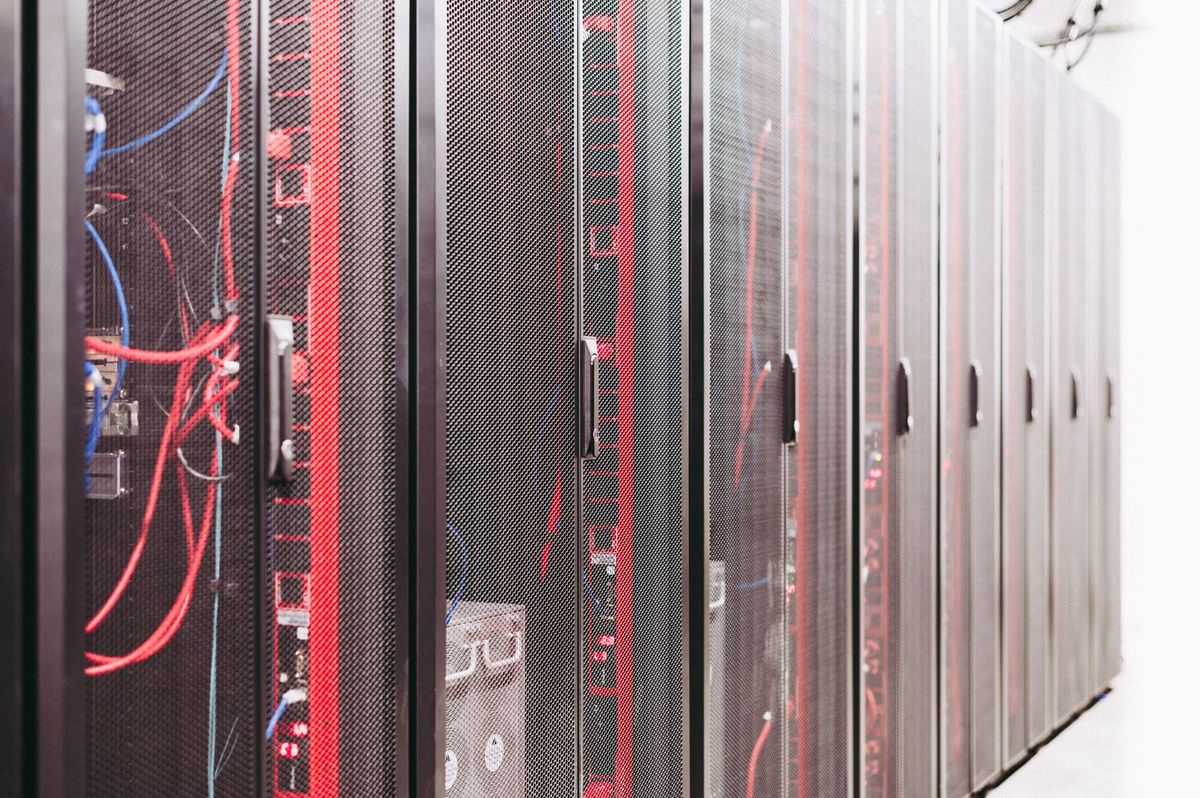
- Cold plates on every GPU and CPU, connected by liquid manifolds
- Coolant distribution units (CDUs) circulating water-glycol or engineered coolant through every rack
- Rear-door heat exchangers for supplemental cooling
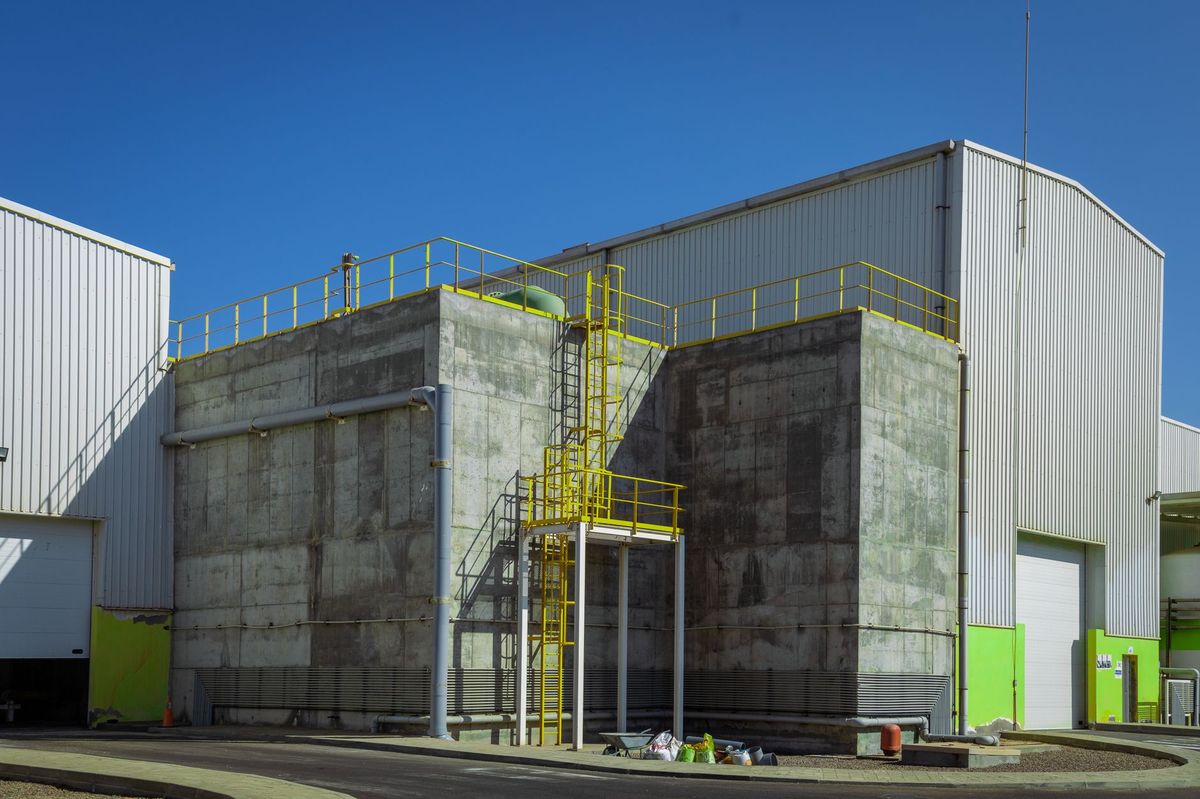
- Dry coolers or cooling towers sized for the facility's total heat rejection
- Leak detection systems at every connection point
- Redundant pumping systems to prevent cooling interruptions
The cooling infrastructure for an AI training facility costs 40-60% more per megawatt than traditional air-cooled data center cooling. For a 100MW AI training campus, the cooling system construction cost alone can exceed $200M.
Structural Requirements
AI training racks are heavier than traditional server racks — often 3,000-5,000 pounds per rack compared to 1,500-2,500 pounds for standard servers. When you pack these heavy racks at higher density (every square foot of white space is filled), the floor loading requirements increase substantially.
AI training facilities typically require:
- 400-500+ PSF floor loading capacity (vs. 250-350 PSF for traditional data centers)
- 14-16 inch thick structural slabs (vs. 8-12 inches)
- More extensive pile foundations in areas with poor soil conditions
- Heavier structural steel framing to support equipment mezzanines
The GPU Supply Chain and Construction Timing
The construction timeline for AI training facilities is uniquely tied to the GPU supply chain. Unlike traditional data centers where the IT equipment is commoditized and readily available, AI training GPUs — specifically NVIDIA's H100, H200, and B200 accelerators — are in extreme shortage, with allocations controlled by NVIDIA based on purchase commitments.
This creates a construction timing dynamic unlike any other building type:
Construction must be synchronized with GPU delivery schedules. When a company secures a $500M GPU allocation from NVIDIA with a delivery window of Q3 2027, the AI training facility must be complete and commissioned by that date. Missing the GPU delivery window means the GPUs sit in a warehouse (or worse, the allocation is redirected to another buyer), costing millions in delayed revenue.
This scheduling pressure drives aggressive construction timelines — 12-18 months for full facility delivery, compared to 18-30 months for traditional hyperscale data centers. The compressed schedule requires:
- Concurrent design and construction (fast-track delivery)
- Pre-fabrication and modular construction techniques
- Extended work shifts (24/7 construction during critical path activities)
- Pre-procurement of long-lead equipment 12-18 months before construction starts
The semiconductor fab construction parallel is instructive — fab construction faces similar equipment-driven scheduling pressures, and many of the same project management techniques apply.
The Scale of the AI Training Buildout
The numbers are staggering. Major AI infrastructure investment announcements for 2026-2028 include:
- Microsoft: $80B+ announced for AI data center infrastructure globally, with significant U.S. allocation
- Amazon/AWS: $50B+ planned for AI-capable data center capacity
- Google/Alphabet: $30B+ in AI infrastructure investment
- Meta: $40B+ announced for AI training and inference infrastructure
- Oracle: $25B+ in data center expansion, heavily weighted toward AI
- CoreWeave: $10B+ in AI training facility development
- xAI (Elon Musk): $10B+ for the Memphis and future training clusters
- Apple: $10B+ in AI infrastructure
- Various AI startups: Collectively $20B+ in planned facilities
Total announced AI data center investment: $275B+ for 2026-2028.
Not all of this will materialize on schedule — permitting delays, power constraints, and capital availability will push some projects out. But even if 50-60% of announced investment converts to actual construction, that's $140-165B in AI data center construction spending over three years.
For context, total U.S. data center construction spending in 2025 was approximately $32B. The AI training buildout represents a potential tripling of the market within three years.
Construction Differences — What Contractors Need to Know
If you're a contractor entering the AI training facility market, here are the key construction differences to understand:
Liquid Cooling Infrastructure
Traditional data center contractors are accustomed to building air-based cooling systems — CRAC units, raised floor air distribution, hot/cold aisle containment. AI training facilities replace much of this with liquid cooling infrastructure that requires different trade skills:
- Precision piping: Liquid cooling manifolds and CDU connections require clean, leak-free piping installation to standards comparable to pharmaceutical manufacturing. A single leak can destroy millions of dollars in GPU equipment.
- Water treatment: Coolant chemistry must be precisely managed to prevent corrosion, biological growth, and scaling in the cooling circuit. Water treatment systems are part of the construction scope.
- Leak detection: Every connection point needs monitored leak detection — typically rope-style sensors below the floor and point sensors at every mechanical connection. The leak detection system for a large AI training facility can cost $3-5M.
- Plumbing trade expansion: The piping scope in an AI training facility is significantly larger than in a traditional data center. Mechanical contractors need to staff accordingly.
High-Speed Network Infrastructure
AI training clusters require specialized networking infrastructure that connects thousands of GPUs in configurations that allow massive parallel processing. This means:
- Fiber density: AI training facilities use 10-50x more fiber optic cable per square foot than traditional data centers. Single-mode and multi-mode fiber runs connect every GPU to every other GPU through high-radix network switches.
- Cable management complexity: The volume of cable — both power and data — in an AI training facility creates cable management challenges that require careful planning and execution. Congested cable pathways are a common construction issue.
- Structured cabling scope: The structured cabling package for a 100MW AI training facility can cost $30-60M, compared to $10-20M for a comparable traditional data center.
Vibration and Environmental Controls
GPU clusters are sensitive to vibration, which can affect cooling connections, cause micro-fractures in solder joints, and degrade system performance over time. AI training facilities require:
- Vibration isolation: Equipment mounting systems that isolate IT equipment from building vibration, including rubber isolation pads, spring mounts, and inertia bases.
- Vibration monitoring: Continuous vibration monitoring systems during construction and operation.
- Construction sequencing: Coordination between construction activities (which generate vibration) and areas where IT equipment is being installed or operated. This often means completing and commissioning data halls one at a time while construction continues on adjacent halls.
Power Quality Requirements
AI training GPUs are extremely sensitive to power quality variations. The power infrastructure must deliver:
- Voltage regulation within +/- 1% (compared to +/- 5% for most commercial equipment)
- Frequency stability within +/- 0.1 Hz
- Total harmonic distortion below 5%
- No interruptions exceeding 10 milliseconds (covered by UPS systems)
Meeting these requirements demands higher-quality electrical installations, more extensive testing and commissioning, and often additional power conditioning equipment such as isolation transformers and active harmonic filters.
Cost Implications
AI training facilities cost 30-60% more per megawatt to build than traditional data centers:
| Cost Category | Traditional DC (per MW) | AI Training (per MW) |
|---|---|---|
| Shell/structure | $2-3M | $3-4.5M |
| Electrical systems | $5-8M | $8-13M |
| Cooling systems | $3-5M | $5-9M |
| Structured cabling | $1-2M | $3-5M |
| Commissioning | $0.5-1M | $1-2M |
| Total | $11.5-19M | $20-33.5M |
For a 100MW AI training campus, total construction cost ranges from $2B to $3.35B — before the cost of the GPU equipment itself, which can exceed another $2-5B.
These higher per-megawatt costs, combined with the sheer scale of planned AI infrastructure investment, make AI training facilities the largest single construction opportunity in the United States through the end of the decade. The EV battery plant construction boom is the closest parallel — another technology-driven construction wave measured in tens of billions of dollars.
The Workforce Challenge
AI training facility construction requires workers with specialized skills that are in extremely short supply:
Liquid cooling pipefitters: The precision piping required for GPU liquid cooling is beyond the capability of standard commercial plumbers. Workers need experience with clean room piping practices, orbital welding, and leak testing procedures typically associated with pharmaceutical or semiconductor manufacturing.
High-voltage electricians: AI facilities use medium voltage distribution at densities that require electricians with utility-grade experience. Workers comfortable with 15kV switchgear, bus duct installations, and paralleling switchgear operation are in intense demand.
Commissioning specialists: The commissioning process for an AI training facility is more complex than any other building type except semiconductor fabs. Cx specialists who understand both the power infrastructure and the liquid cooling systems are commanding $80-100/hr.
Controls technicians: The building management and monitoring systems in AI facilities are extremely sophisticated, integrating power monitoring, cooling performance, leak detection, fire suppression, and security into unified platforms. Controls technicians who can install, program, and commission these systems are among the highest-paid construction workers in the industry.
The construction workforce gap analysis documents the broader labor shortage. The AI training facility buildout will intensify this shortage significantly for the specific trades listed above.
Geographic Concentrations
AI training facility construction is concentrating in markets with three attributes: abundant power, water (or waterless cooling infrastructure), and connectivity to major internet exchange points.
Current hotspots:
- Northern Virginia (Ashburn corridor) — largest cluster, power-constrained
- Dallas-Fort Worth — growing rapidly, ERCOT grid concerns
- Phoenix, Arizona — power-rich, water-constrained
- Columbus, Ohio — emerging market, strong utility support
- Memphis, Tennessee — xAI's massive Colossus facility
- Council Bluffs, Iowa — Google and Meta campuses
- Papillion, Nebraska — Facebook/Meta operations
Emerging markets:
- Central Indiana — cheap power, new state incentives
- The Carolinas — Duke Energy investments in data center power
- West Texas — abundant wind and solar for renewable-powered AI
- Wisconsin and Minnesota — cool climate, available power, water-rich
What Happens Next
The AI training facility buildout is not a blip. The fundamental drivers — increasing AI model sizes, expanding AI applications across every industry, and the insatiable demand for computing power — point to sustained and growing construction demand through at least 2030.
The facilities being planned today are larger than anything the data center industry has built before. Campuses of 500MW to 1GW+ are in development — single sites that consume as much power as a medium-sized city. Building these facilities will require the coordinated effort of thousands of construction workers, billions of dollars in equipment, and construction management capabilities that are currently concentrated in a handful of firms.
For construction firms willing to invest in the specialized capabilities these projects require, AI training facilities represent the most significant market opportunity since the interstate highway system. The projects are massive, the margins are premium, and the pipeline extends for years.
The question is not whether these facilities will be built. The question is whether your firm will be part of building them.
READ NEXT: Tracking Every Data Center Permit Filed in 2026 — A Running List
FAQ
Q: At 40-120 kW per rack for AI training versus 10-20 kW for standard hyperscale, what does that actually mean for a mechanical contractor's cooling system scope on a 100MW AI facility? A: The cooling infrastructure for a 100MW AI training campus costs over $200M, compared to roughly $80-120M for a traditional 100MW hyperscale facility. The scope shifts from large air-handling units and ductwork to precision CDU piping, dry coolers, and liquid manifolds at every rack. A mechanical contractor should expect the piping labor hours to increase by roughly 60-80% compared to an equivalent-capacity standard data center, because every rack now has direct liquid connections requiring leak-free installation.
Q: The article says GPU delivery windows from NVIDIA drive compressed 12-18 month construction schedules — how does that pressure a GC's contract and schedule risk management? A: A fixed GPU delivery window in Q3 2027 means the construction schedule becomes a hard constraint with no float. Contractors should negotiate force majeure provisions specifically for material supply failures on long-lead items like switchgear (40-60 weeks) and CDUs. Liquidated damages clauses on AI training facility projects are often $500K-$1M per day, so any schedule risk from equipment delays or labor shortages must be identified and mitigated before contract execution, not discovered mid-project.
Q: Commissioning specialists for AI facilities are commanding $80-100/hr — how many are needed on a typical 100MW project and how far in advance should a GC secure them? A: A 100MW AI training facility typically needs 8-15 commissioning specialists engaged for the final 4-6 months of construction, with a lead Cx agent involved from design development onward. At $80-100/hr with 60-hour weeks, the commissioning labor budget alone runs $2-4M. Cx firms with AI facility experience book 12-18 months in advance in active markets. If your project hasn't secured a commissioning agent by the time you're completing schematic design, you are already behind.
Q: Microsoft has $80B+ in AI infrastructure planned globally and Google has $30B+ — how does a regional contractor actually get in front of these clients rather than waiting for an RFP? A: The path for regional contractors is through GC prequalification, not direct hyperscaler contact. Holder Construction, DPR, Mortenson, and Hensel Phelps manage most Microsoft and Google construction programs and issue bid invitations to prequalified subs. Submit prequalification packages to all four GCs before any specific project is announced. Relevant credentials are BICSI certifications, OSHA 30, medium voltage or precision piping experience, and documented performance on comparable mission-critical projects.