Active interstate highway expansion projects across 28 states carry a combined construction value of $34 billion, making highway capacity construction the single largest category of surface transportation spending in the United States. Despite decades of debate about induced demand and the effectiveness of highway widening, state departments of transportation continue to advance major capacity expansion projects, driven by population growth in Sun Belt metros, freight volume increases, and congestion metrics that have returned to or exceeded pre-pandemic levels in most major corridors.
The numbers tell a different story than either pro-highway or anti-highway advocates typically present. The $34 billion in active expansion projects is heavily concentrated in a handful of high-growth states — Texas, Florida, Georgia, North Carolina, and Virginia account for over 60% of the total — and the project designs increasingly incorporate managed lanes (tolled express lanes) rather than traditional general-purpose widening, reflecting both fiscal constraints and traffic management objectives.
Active Projects: The Top 10 by Construction Value
The largest active interstate highway expansion projects illustrate the scale and complexity of modern highway construction:
North Houston Highway Improvement Project (I-45, TX): $10.7 billion. The most expensive active highway project in the country involves reconstruction and widening of 24 miles of I-45 through downtown Houston, including depressing the freeway below grade through the central business district, adding managed lanes, and reconstructing 39 bridges and overpasses. The project has been controversial for requiring the demolition of over 1,000 residential units and 344 businesses. Construction is expected to take 10 to 15 years.
I-35 Capital Express Central (Austin, TX): $4.9 billion. Reconstruction and widening of 8 miles of I-35 through downtown Austin, including lowering the mainlanes below grade, adding 4 managed lanes, reconstructing all cross-street bridges, and creating a surface-level boulevard with improved pedestrian and bicycle connections. The project is TxDOT's most expensive single urban highway project and has been in planning for over a decade.
I-285/SR 400 Interchange Reconstruction (Atlanta, GA): $3.2 billion. The most complex interchange reconstruction in Georgia DOT history involves rebuilding the junction of two of Atlanta's busiest freeways, adding collector-distributor roads, constructing flyover ramp bridges, and incorporating managed lane connections. The project area handles over 400,000 vehicles per day.
I-95 Express Lanes Extensions (FL): $2.8 billion combined. Multiple projects extending the managed lane system along I-95 in Miami-Dade, Broward, and Palm Beach counties. These projects add 2 to 4 express toll lanes in each direction while maintaining existing general-purpose capacity.
I-77 Managed Lanes (Charlotte, NC): $1.2 billion. Adding express toll lanes along 26 miles of I-77 north of Charlotte, constructed as a public-private partnership (P3) with Cintra/Webuild as the concessionaire.
I-4 Ultimate (Orlando, FL): $2.3 billion. Reconstruction of 21 miles of I-4 through downtown Orlando, adding 4 express toll lanes, rebuilding 140 bridges, and reconstructing 15 interchanges. The project, originally a P3, was restructured after the concessionaire's financial difficulties.
I-10 Corridor Expansion (Phoenix, AZ): $1.8 billion. Widening I-10 from 6 to 10 lanes through the West Valley, including reconstruction of multiple interchanges and construction of new HOV lanes.
I-405 Improvement Project (Orange County, CA): $2.1 billion. Adding one regular lane and one express lane in each direction along 16 miles of I-405 between I-5 and SR-73, including reconstruction of 18 bridges and ramps.
I-70 Expansion (Indianapolis, IN): $1.6 billion. Reconstruction and widening of I-70 through downtown Indianapolis, including reconstruction of the North Split interchange where I-65 and I-70 converge.
I-35W Expansion (Fort Worth, TX): $1.5 billion. Adding managed lanes along 15 miles of I-35W through the Fort Worth metropolitan area, including reconstruction of 50+ bridge structures.
Construction Methods and Technical Challenges
Interstate highway expansion in urban areas presents unique construction challenges that differentiate this work from rural highway construction:
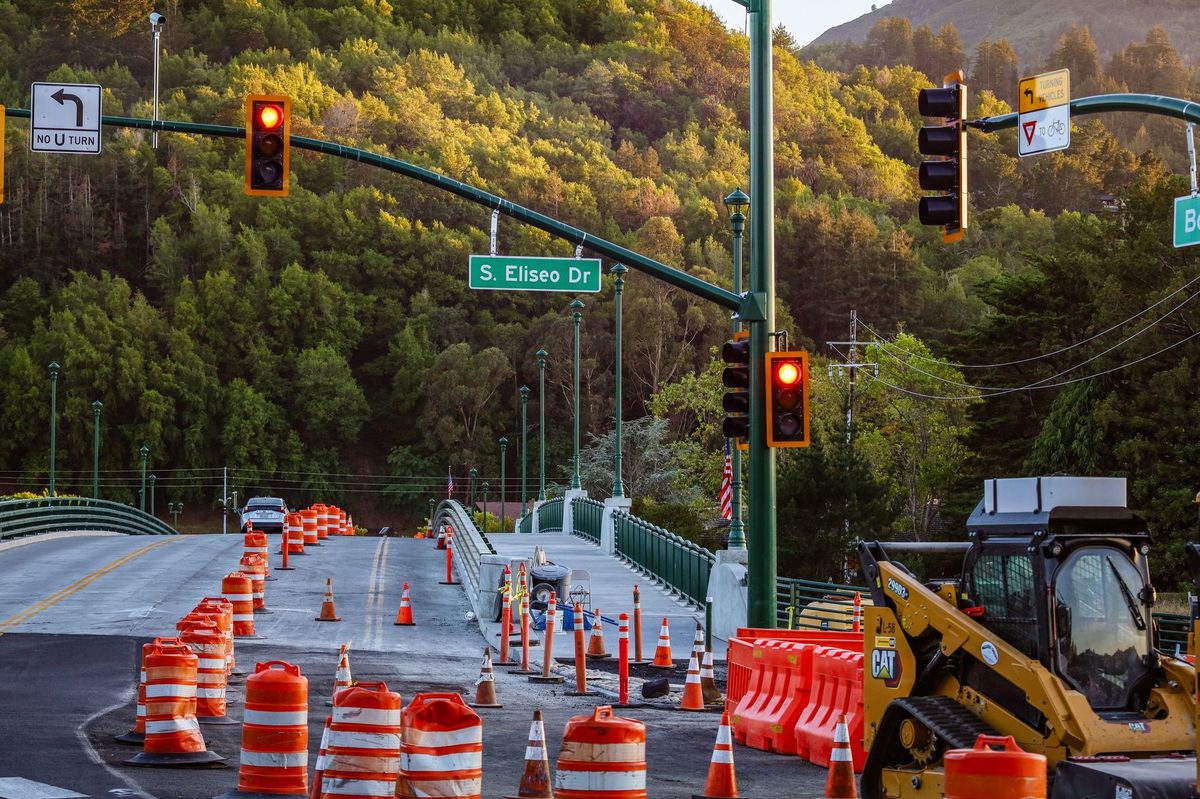
Maintaining Traffic During Construction is the dominant constraint. Urban interstate expansion projects must maintain existing travel lanes during construction, typically requiring complex traffic management plans with multiple construction phases, each shifting traffic patterns to allow work in specific zones. Night work and weekend closures are common for bridge demolition and girder placement, but most construction activities — earthwork, paving, barrier construction, drainage installation — must occur adjacent to live traffic. Traffic management costs typically represent 8 to 15% of total project cost.
Bridge Reconstruction is often the critical path activity. Urban interstate projects involve dozens to hundreds of bridge structures — mainlane bridges over cross streets, cross-street bridges over the interstate, ramp structures, and interchange flyover bridges. Bridge reconstruction requires sequential demolition and rebuilding, often using accelerated bridge construction (ABC) techniques including prefabricated bridge elements, self-propelled modular transporters (SPMTs), and lateral slide methods to minimize traffic disruption. The I-4 Ultimate project in Orlando involved 140 bridge structures — one of the highest bridge counts for any single highway project.
Depressed Section Construction (lowering the highway below grade) is increasingly common in urban highway reconstruction, driven by community demand for improved surface connectivity. Depressed construction involves deep excavation (typically 20 to 40 feet below existing grade), installation of retaining walls (drilled shaft with MSE wall facing, sheet pile, or soldier pile and lagging), groundwater management through dewatering systems and underdrain installation, and construction of the new roadway in the excavation while maintaining existing traffic on temporary alignments above.
Managed Lane Construction adds specialized requirements including tolling gantry foundations, dynamic message signs, traffic management system communications infrastructure, and lane separation barriers (typically movable concrete barriers allowing reversible lane operation).
Contractor Landscape
Urban interstate expansion projects are among the largest and most complex construction contracts in the industry. Prime contractors on the top 10 projects include joint ventures led by firms such as Webuild (formerly Salini Impregilo), Dragados, Kiewit, Fluor, Lane Construction, Walsh Construction, and Granite Construction. These projects require bonding capacity of $500 million to $2 billion, multi-year construction durations of 5 to 15 years, and workforce peaks of 1,000 to 3,000 workers per project.
Subcontractor opportunities are extensive across earthwork, paving, bridge construction, drainage, electrical, signing and striping, and traffic management. A single major urban interstate project can involve 50 to 100 subcontractors and suppliers.
Workforce Requirements
The $34 billion in active projects employs an estimated 85,000 to 100,000 construction workers nationally. Key trades include heavy equipment operators, concrete workers, ironworkers for bridge construction, paving crews, electricians for lighting and tolling systems, and traffic control technicians. Highway construction workforce wages vary by state and prevailing wage requirements, with operators earning $28 to $55 per hour and ironworkers earning $32 to $65 per hour depending on region.
Funding and Delivery Models
Interstate expansion projects use diverse funding and delivery approaches. Traditional federal-aid highway funding through the IIJA provides approximately 80% federal / 20% state match for eligible projects. State transportation bonds and dedicated highway trust fund revenues supplement federal funding. Managed lane projects increasingly use toll revenue-backed financing, either through state-managed tolling or P3 concession agreements. Design-build delivery is now the dominant contracting method for large urban highway projects, with 70% of projects over $500 million using some form of design-build or progressive design-build.
Market Outlook
Despite ongoing policy debates about highway expansion, the construction pipeline for interstate capacity projects remains robust. An additional $25 to $35 billion in planned projects are in design and environmental review across multiple states, with construction expected to begin between 2027 and 2032. Texas alone has over $15 billion in planned interstate improvements beyond currently active projects.
For highway construction firms, the managed lane and urban reconstruction market offers the highest-value work in the surface transportation sector — projects with large contract sizes, long durations, technical complexity, and margins that reflect the difficulty of maintaining traffic during construction in the nation's most congested corridors.
The Managed Lane Model
The shift toward managed lanes (express toll lanes) rather than traditional general-purpose widening represents a fundamental change in how highway capacity is funded and constructed. Managed lanes now account for over 60% of new urban interstate capacity being constructed, up from approximately 20% a decade ago.
The managed lane model has distinct construction implications. Tolling infrastructure (gantries, transponder readers, back-office systems) adds $3 to $5 million per mile to construction costs but generates revenue that can support project financing. Dynamic pricing systems adjust tolls in real-time based on traffic conditions, maintaining free-flow speeds in the managed lanes even during peak periods. Movable barrier systems allowing reversible lane configurations add construction complexity but maximize capacity by providing additional lanes in the peak direction during rush hours.
The construction of managed lane facilities has spawned a specialized contractor niche. Firms must integrate complex tolling and traffic management systems — including RFID transponder readers, video enforcement cameras, dynamic message signs, and real-time traffic monitoring sensors — into the highway construction. This integration requires coordination between traditional highway contractors and technology system integrators, adding project management complexity.
Environmental Mitigation Construction
Urban highway expansion projects generate significant environmental mitigation construction work. Typical mitigation requirements include noise barrier construction (sound walls) along residential frontages at $40 to $80 per square foot of wall area, stormwater treatment facilities (bioretention ponds, underground treatment systems) sized to treat runoff from the expanded impervious area, wetland mitigation banking — constructing or restoring wetland habitat to compensate for wetlands impacted by highway construction, typically at 2:1 to 3:1 mitigation ratios, and environmental monitoring systems during and after construction.
Environmental mitigation construction typically represents 5 to 12% of total highway project cost but creates significant subcontracting opportunities for environmental, landscape, and specialty contractors.
Technology Integration in Highway Construction
Modern interstate expansion projects integrate sophisticated technology systems that go beyond traditional highway construction. Intelligent Transportation Systems (ITS) components include dynamic message signs displaying real-time travel times and incident information, traffic detection systems (radar, video, and inductive loop) monitoring traffic flow and triggering adaptive signal timing on parallel arterials, highway advisory radio transmitters, closed-circuit television (CCTV) surveillance cameras for traffic monitoring and incident management, connected vehicle (CV) roadside units broadcasting signal phase and timing data to approaching vehicles, and automated incident detection systems using AI-powered video analytics.
The ITS component of a major highway project typically costs $1 to $3 million per mile and requires coordination between the highway general contractor and specialized ITS subcontractors or system integrators. This technology integration is creating a growing niche for electrical and communications contractors who develop expertise in traffic management system installation and commissioning.
Noise Wall Construction: A Significant Subcontract Category
Noise barrier construction along interstate expansion projects represents a significant subcontracting opportunity. Federal regulations require noise mitigation when highway construction increases noise levels above thresholds at nearby residences, and most urban interstate expansion projects require miles of noise barriers.
Modern noise walls use several construction methods including precast concrete panels set between steel H-pile posts (the most common system, at $30 to $50 per SF), cast-in-place concrete walls on drilled shaft foundations ($40 to $60 per SF), absorptive panel systems using perforated metal or concrete with sound-absorbing fill ($50 to $80 per SF), and transparent acrylic or polycarbonate panels in areas where visual transparency is desired ($60 to $100 per SF).
A typical urban interstate expansion project requires 3 to 8 miles of noise barriers at heights of 12 to 20 feet, generating $10 to $30 million in noise wall subcontract value. Specialized noise wall contractors handle the design, fabrication, and installation of these systems, often working alongside the highway prime contractor during the finishing phases of construction.
Workforce Retention and Training
Interstate highway construction projects face significant workforce retention challenges due to the multi-year duration, traffic exposure risk, and physically demanding nature of the work. Project labor agreements on major highway projects typically include provisions for comprehensive safety training programs (OSHA 30-hour minimum, project-specific hazard awareness), health and welfare benefits that incentivize workforce retention across multi-year projects, apprenticeship ratios ensuring training of the next generation of highway construction workers, and local hiring targets that create employment opportunities in communities affected by construction.
The highway construction workforce skews older than many other construction sectors. According to Associated General Contractors (AGC) survey data, approximately 28% of heavy highway construction workers are over 55, and recruitment of younger workers has been challenging due to competition from other sectors offering better working conditions and comparable wages. Highway contractors are responding with increased investment in equipment technology that reduces physical demands on workers (GPS-guided machine control, automated paving systems, mechanical concrete placement) and improved job site amenities including climate-controlled equipment cabs, clean break areas, and modern sanitation facilities.
Frequently Asked Questions
How much federal funding goes to interstate highway expansion construction?
According to the latest industry data, interstate highway expansion construction is showing notable trends in 2026. Current figures indicate $34 billion, which represents a significant benchmark for contractors and developers planning projects this year. Regional variations apply, so checking local market conditions remains essential for accurate budgeting.
Which states benefit most from interstate highway expansion construction?
Market research on interstate highway expansion construction shows that geographic concentration matters significantly. With figures reaching 60% in key markets, the opportunities are substantial but location-dependent. States with strong population growth and infrastructure investment tend to see the highest activity levels.
What is the timeline for interstate highway expansion construction projects?
The trajectory for interstate highway expansion construction tells an important story when viewed against historical benchmarks. With the latest data showing $10.7 billion, the trend has clear implications for project feasibility, bidding accuracy, and resource allocation across the construction sector.