Tilt-Up Construction Is Making a Comeback — Here's Why
I'll be honest. Five years ago, if you told me tilt-up concrete construction was going to be one of the hottest methods in commercial building, I would have laughed. Tilt-up was the workhorse of the 1970s and '80s warehouse boom. Strip malls. Distribution centers. Low-budget industrial parks. It had a reputation for being cheap, ugly, and boring.
That reputation is dead. And the contractors who haven't noticed are getting left behind.
In 2026, tilt-up is experiencing a genuine renaissance, driven by three forces that aren't going away: construction speed, labor efficiency, and cost predictability. In a market where material costs are squeezing margins and the workforce gap is 501,000 workers deep, tilt-up checks every box that matters.
I've been involved in six tilt-up projects over the last two years, and I'm about to share everything I've learned about why this method is dominating the commercial landscape.
What Is Tilt-Up Construction?
For the uninitiated, let me break it down. Tilt-up construction is a method where concrete wall panels are cast horizontally on the building's floor slab (or on a temporary casting bed), then tilted up into their vertical position using a crane. The panels are braced, connected to the structural frame, and the joints are sealed.
That's the 30-second version. The reality involves serious engineering, precise formwork, careful lifting calculations, and a choreographed crane operation that looks like a ballet when it's done right and a disaster movie when it's done wrong.
The typical tilt-up panel is 6-8 inches thick, 20-40 feet wide, and can be as tall as 60+ feet for modern warehouse applications. They weigh anywhere from 30,000 to 150,000 pounds each. These are not small pieces of concrete.
The process follows a predictable sequence:
- Pour the floor slab — this becomes your casting surface
- Apply bond breaker to the slab surface so the panels don't stick
- Set formwork for each panel directly on the slab
- Install reinforcement — rebar mats, embed plates, lifting inserts, electrical conduit
- Pour the panels — typically in groups of 4-8 at a time
- Cure for 7-14 days depending on mix design and conditions
- Lift and set using a mobile crane — this is the exciting day
- Brace the panels temporarily until the roof structure connects them
- Remove braces after the roof structure and connections are complete
The whole process, for a 50,000 SF warehouse, takes about 8-12 weeks from slab pour to enclosed building. Compare that to 16-24 weeks for conventional concrete masonry or structural steel with metal panel cladding.
Pro tip: The casting slab surface finish is critical because it becomes the interior face of your wall panels. If the slab has imperfections — rough patches, form marks, or discoloration — they'll telegraph onto every panel cast on that area. Spend the money on a good finishing crew for the slab. It pays dividends on every panel.
Why Tilt-Up Is Surging in 2026
Speed to Occupancy
In commercial construction, time is money in the most literal sense possible. A warehouse tenant paying $8 per square foot per year on a 200,000 SF building is spending $4,383 per day. Every day you deliver that building early is $4,383 in the tenant's pocket. Every day you're late is $4,383 they're paying for space they can't use.
Tilt-up is the fastest site-built construction method for single-story commercial buildings. Period. Here's why:
The floor slab does double duty — it's both the building floor and the casting bed. While conventional construction requires you to build the floor, then build the walls on top of the floor, tilt-up lets you cast the walls on the floor simultaneously with other site work. The foundation, underground utilities, and slab can be completed while the crane and rigging are being mobilized.
On my most recent 80,000 SF distribution center, we poured the slab on Week 1, cast panels on Weeks 2-4, and had all 42 panels standing by Week 6. The steel roof joists were being set by Week 7. The building was dried in by Week 10. Try that with CMU block. You'd still be laying block at Week 10.
Labor Efficiency
This is the killer advantage in 2026. With the workforce gap at 501,000 unfilled positions, any construction method that requires fewer skilled workers has a massive competitive advantage.
Tilt-up panel casting is fundamentally a concrete placement operation. You need skilled form carpenters for the panel formwork, ironworkers for the rebar, and concrete finishers for the pour. But the volume of work per worker is much higher than comparable methods.
Consider a CMU (concrete masonry unit) wall. A skilled mason lays 350-500 block per day. A 50,000 SF building might have 1,200 linear feet of exterior wall at 30 feet high — that's approximately 72,000 block. At 400 block per day per mason, with a crew of 4 masons, that's 45 working days just for the block walls. Plus the mortar mixing, scaffolding, grouting, and reinforcement.
The same walls in tilt-up? Cast in 2 weeks with a 6-person concrete crew. Lifted in 3 days with a crane crew of 5.
That's not a marginal improvement. That's a 60% reduction in labor-hours for the wall system.
Cost Predictability
Here's the thing that building owners and developers love about tilt-up. The cost is predictable.
Concrete prices move slowly compared to steel and lumber. When lumber was swinging wildly between $400 and $1,500 per thousand board feet, tilt-up projects held their budgets because the primary material — concrete — was moving maybe 3-5% per year.
Steel prices have been similarly volatile. A structural steel building's cost can swing 15-20% between the estimate and the buy based on mill pricing alone. Tilt-up insulates you from that volatility because the walls are concrete and the only steel components are the roof structure (which is a much smaller tonnage than a full steel frame).
My tilt-up bids typically hold within 3-5% of the original estimate. My steel frame bids? I've seen 12% swings between bid and buyout. That unpredictability makes developers nervous, and nervous developers don't sign contracts.
Pro tip: When estimating tilt-up, lock your concrete price with the ready-mix supplier for the duration of the project. Most suppliers will hold pricing for 90-120 days on a committed volume. For a 50,000 SF building using 2,000+ cubic yards, you have negotiating leverage. Use it.
The Engineering That Makes It Work
Tilt-up isn't something you can improvise. Every panel requires structural engineering for:
- Panel thickness and reinforcement — based on wind loads, seismic forces, and gravity loads from the roof structure
- Lifting design — the location, type, and capacity of the lifting inserts must be engineered so the panel can be tilted from horizontal to vertical without cracking
- Temporary bracing — each panel needs diagonal pipe braces designed to resist wind loads until the roof structure is connected
- Connection details — how the panels connect to each other at the corners, how the roof structure attaches to the panels, and how the panels anchor to the foundation
The lifting design is the most critical engineering element. When a 100,000-pound concrete panel goes from horizontal to vertical, the stresses change dramatically. The bending forces at the pick points can crack the panel if the inserts are in the wrong location or the wrong type.
I've seen a panel crack during a lift. It's terrifying. A hairline crack appeared at the mid-span as the crane took the load, and it propagated to about 1/4-inch wide before the crane set it back down. That panel had to be demolished and re-cast — a $15,000 mistake that delayed the project by two weeks.
The cause? The lifting insert layout was designed for a 6-inch panel but the actual panel was poured at 7-1/2 inches (the forming crew added thickness without telling the engineer). The extra weight and the changed center of gravity exceeded the insert capacity.
Pro tip: Never deviate from the engineered panel thickness without consulting the structural engineer. Even a 1-inch change in thickness changes the panel weight by 12-15 pounds per square foot, which changes the lifting forces, the brace loads, and the foundation reactions. A 5-minute phone call to the engineer can prevent a catastrophic panel failure.
Modern Tilt-Up: Not Your Father's Warehouse
The aesthetic argument against tilt-up — that it looks like a cheap warehouse — is dead. Modern tilt-up buildings are architecturally impressive, and the finish techniques available today would blow the minds of the guys casting panels in 1985.
Form-liner finishes: Rubber or plastic form liners placed in the panel forms create textured surfaces that mimic stone, brick, wood grain, or abstract patterns. A quality form liner costs $15-25 per square foot but the result is a concrete wall that looks like hand-laid stone.
Integral color: Pigments added to the concrete mix create panels in any color you want. Warm earth tones, cool grays, terracotta reds. The color goes all the way through the panel, so chips and scratches don't show a different color underneath.
Thin brick veneer: Real clay brick, sliced to 1/2-inch thickness, installed in the panel form before the concrete is poured. The result is a building that looks entirely brick-clad but was built in a fraction of the time. This is huge for retail and office projects where the aesthetic matters.
Reveals and rustication strips: Foam or rubber strips placed in the forms create shadow lines, reveals, and geometric patterns in the panel surface. A skilled form carpenter can create remarkably sophisticated facades with these simple tools.
I toured a recently completed Class A office building in Raleigh that was built entirely with tilt-up. If you didn't know it was tilt-up, you'd swear it was precast or even stone veneer. The architect used form liners, integral color, and strategic reveal patterns to create a building that won a design award. A design award. For a tilt-up building. Times have changed.
The Data Center Connection
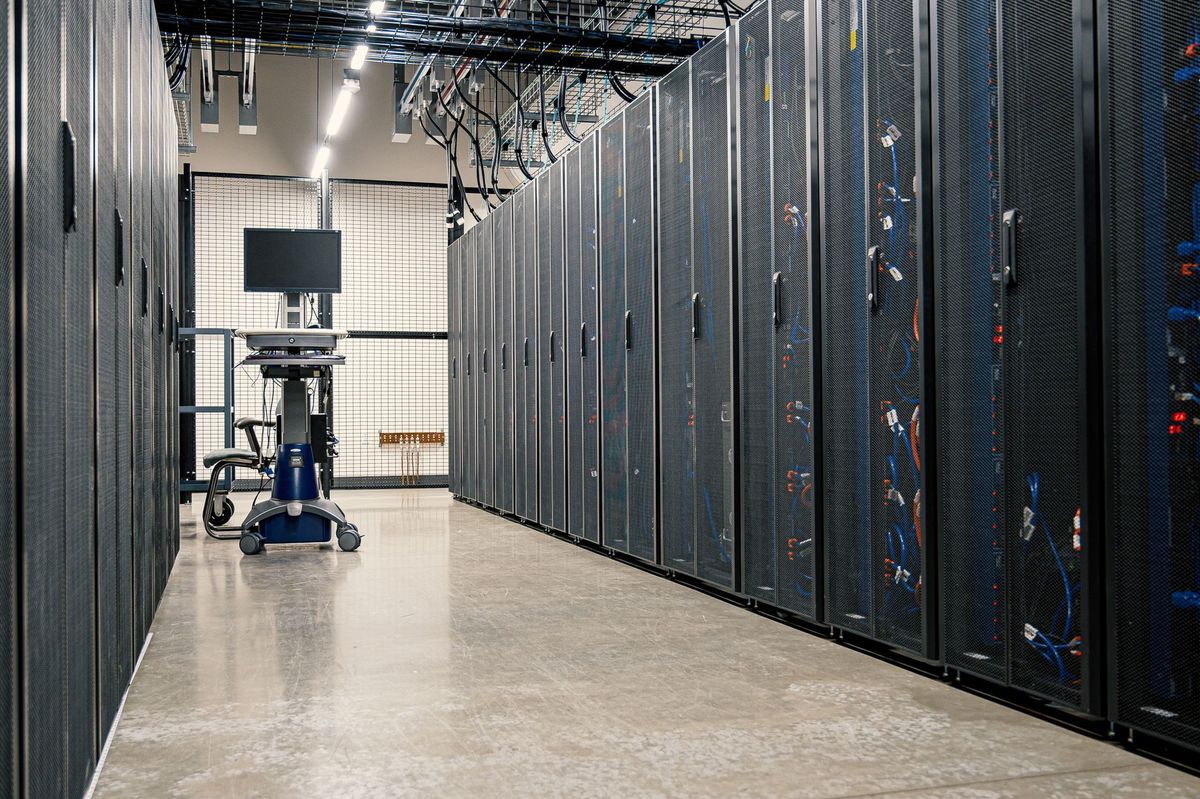
With data center construction hitting $32 billion, tilt-up is becoming the preferred method for the shell buildings that house these facilities.
Data centers need:
- Thick walls for security and blast resistance — tilt-up does this naturally
- Speed because every month of delay is millions in lost hosting revenue
- Large clear spans for server racks — tilt-up with steel bar joists delivers 50-60 foot clear spans
- Predictable costs because data center developers finance projects based on locked-in construction budgets
Several major data center developers have standardized on tilt-up for their facilities. The shell goes up in 12-16 weeks, the MEP contractors take over for the critical infrastructure, and the building is operational in 9-12 months. Try that with structural steel and precast — you're looking at 18+ months.
Getting Into Tilt-Up: What GCs Need to Know
If you're a general contractor or a concrete subcontractor thinking about adding tilt-up to your capabilities, here's my honest assessment of the barriers to entry.
Crane costs are real. A 300-ton mobile crane — the minimum for a typical commercial tilt-up project — costs $15,000-25,000 per day including operator and rigging crew. A 42-panel project might take 3-4 lift days. That's $60,000-100,000 in crane costs alone. This needs to be accurately estimated and any weather delays during the lift sequence cost you crane standby charges.
Bracing is expensive and critical. Temporary pipe braces for a tilt-up project can cost $50,000-80,000 in rental and installation. The braces stay in place for 4-6 weeks until the roof structure is connected and the building is self-supporting. Under-bracing is not an option — a panel that falls kills people.
You need a tilt-up experienced superintendent. This is not a method where you can learn on the job. The sequencing, the forming details, the lifting procedures, and the safety protocols are specialized. Hire someone who's done at least 10 tilt-up projects before you take on your first one.
Relationships with specialty suppliers matter. Lifting insert manufacturers (Dayton Superior, Meadow Burke), form liner companies (Symons, Scott System), and bond breaker suppliers are specialized. Build these relationships before you bid your first project.
Pro tip: The Tilt-Up Concrete Association (TCA) offers an excellent "Achievement in Tilt-Up" annual conference and training programs. Attend before you bid your first project. The contacts you make and the knowledge you gain will prevent expensive first-project mistakes.
The Bottom Line
Tilt-up construction is making a comeback because the market demands speed, labor efficiency, and cost predictability. The three forces driving commercial construction in 2026 — workforce shortage, material cost volatility, and schedule pressure — all favor tilt-up over conventional methods.
The aesthetic limitations that held tilt-up back for decades have been solved by modern forming techniques. The engineering has matured. The crane technology has improved. And a new generation of contractors is discovering that this "old" method is actually the most modern way to build commercial buildings.
If you're in commercial construction and you're not looking at tilt-up, you're ignoring the fastest-growing segment of the market. The comeback is here. Get on board or get left behind.
Frequently Asked Questions
How tall can tilt-up panels be?
Modern tilt-up panels routinely reach 50-60 feet tall, and specialty projects have gone as high as 80+ feet. The height limitation is primarily driven by crane capacity (taller panels are heavier and require a bigger crane), transportation if panels are cast off-site (rare but it happens), and engineering for wind loads (taller panels experience more wind force and require more reinforcement). For distribution centers with clear-height requirements of 36-40 feet, the panels are typically 42-48 feet tall to accommodate the roof structure above the clear height. Each foot of additional height adds approximately 75-100 pounds per linear foot of panel width, which directly impacts crane selection and cost.
Can tilt-up be used for multi-story buildings?
Yes, and it's becoming more common. Multi-story tilt-up buildings up to 6 stories are being built for office, hotel, and residential applications. The panels for upper stories can be cast on the ground-floor slab and lifted directly to their final position, or the building can use tilt-up for the first floor and conventional framing above. The engineering is more complex — the panels carry gravity loads from upper floors in addition to lateral loads, so the reinforcement and thickness increase. Multi-story tilt-up also requires floor-to-panel connections at each level that can transfer diaphragm forces. An experienced tilt-up structural engineer is essential for multi-story applications.
How does tilt-up perform in seismic zones?
Tilt-up has an excellent track record in seismic zones when properly designed and constructed. The key is the connection details — panels must be connected to the roof diaphragm with ductile connectors that can accommodate seismic movement without failing. The 1994 Northridge earthquake exposed weaknesses in older tilt-up connection details, leading to significant code improvements. Modern tilt-up seismic design uses flexible connections at the roof-to-panel interface, strong panel-to-foundation anchoring, and continuous drag struts to transfer diaphragm forces. California, which has some of the strictest seismic codes in the world, builds more tilt-up square footage than any other state. That tells you everything you need to know about its seismic suitability.
What's the cost per square foot for tilt-up vs. steel frame construction?
For a typical 50,000-100,000 SF single-story commercial building, tilt-up shell costs run $45-65 per square foot depending on panel height, finish complexity, and region. Comparable structural steel with metal panel cladding runs $55-80 per square foot. Pre-engineered metal buildings (Butler, Varco Pruden) run $35-50 per square foot but with less aesthetic flexibility and lower perceived quality. The tilt-up cost advantage widens on larger projects because the casting efficiency improves — more panels cast on the same slab means lower per-panel setup costs. The speed advantage also creates indirect savings through reduced general conditions, shorter construction loan interest, and earlier occupancy.
READ NEXT: Data Center Construction Hits $32 Billion