The Current Numbers
The Bureau of Labor Statistics Producer Price Index for construction materials and components stood at 267.4 in February 2026, up 6.2% from February 2025. That marks an acceleration from the 4.8% annual increase recorded in mid-2025 and puts material inflation back near the top of contractors' list of business concerns.
I run a mechanical contracting shop, and I watch these numbers the way other people watch the stock market — because they directly determine whether the jobs we bid will make money or lose it. So let me walk through what is actually happening with the materials that matter most, and what contractors like me are doing about it.
Material by Material
Lumber: $487 per Thousand Board Feet, Up 12%
Lumber has been volatile for five years running, and 2026 is no exception. The Random Lengths framing lumber composite price hit $487/MBF in late March, up approximately 12% from a year ago. The primary driver this cycle is tariff uncertainty on Canadian softwood lumber, which supplies roughly 30% of U.S. consumption. The current tariff rate is 14.54%, and periodic signals from both governments about potential changes send prices swinging.
For residential framers and general contractors, lumber at $487 is painful but manageable — it is well below the $1,500+ insanity of 2021. The problem is unpredictability. A $50/MBF swing on a house that uses 14,000 board feet is a $700 cost change. Multiply that by 20 houses in a subdivision and you are talking about real money on thin-margin production work.
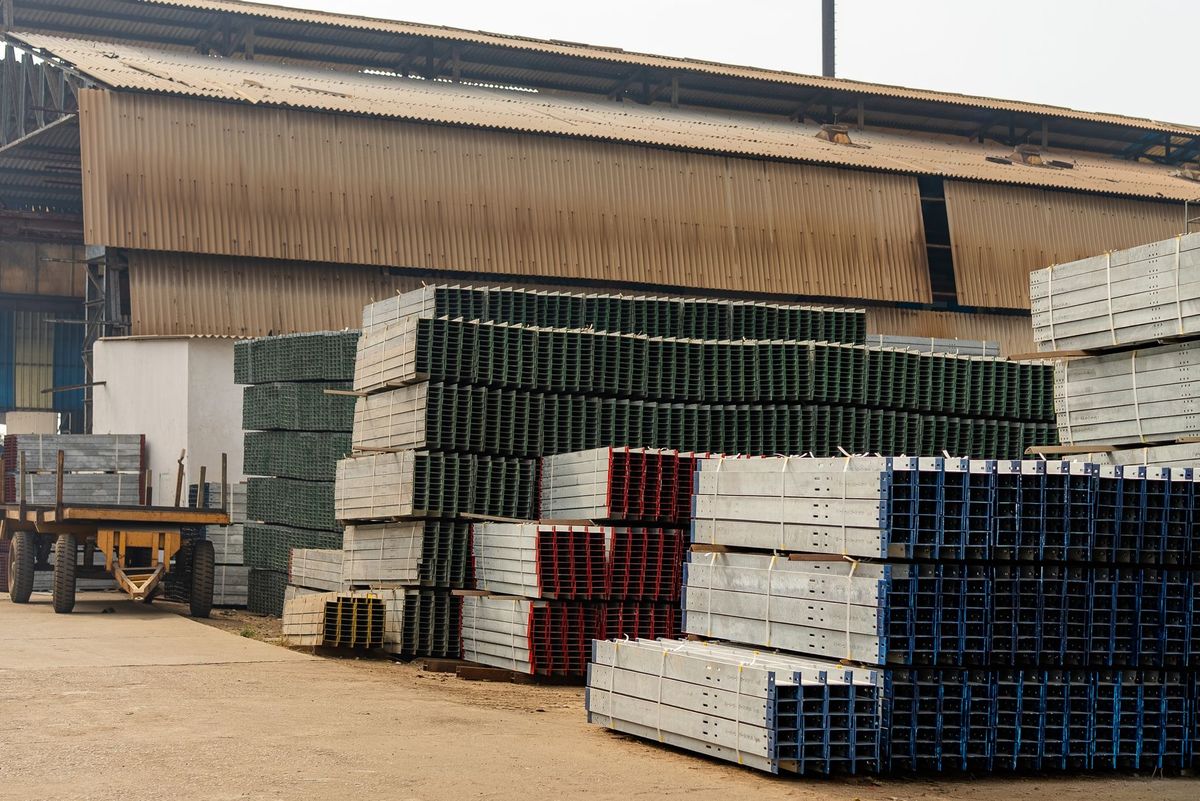
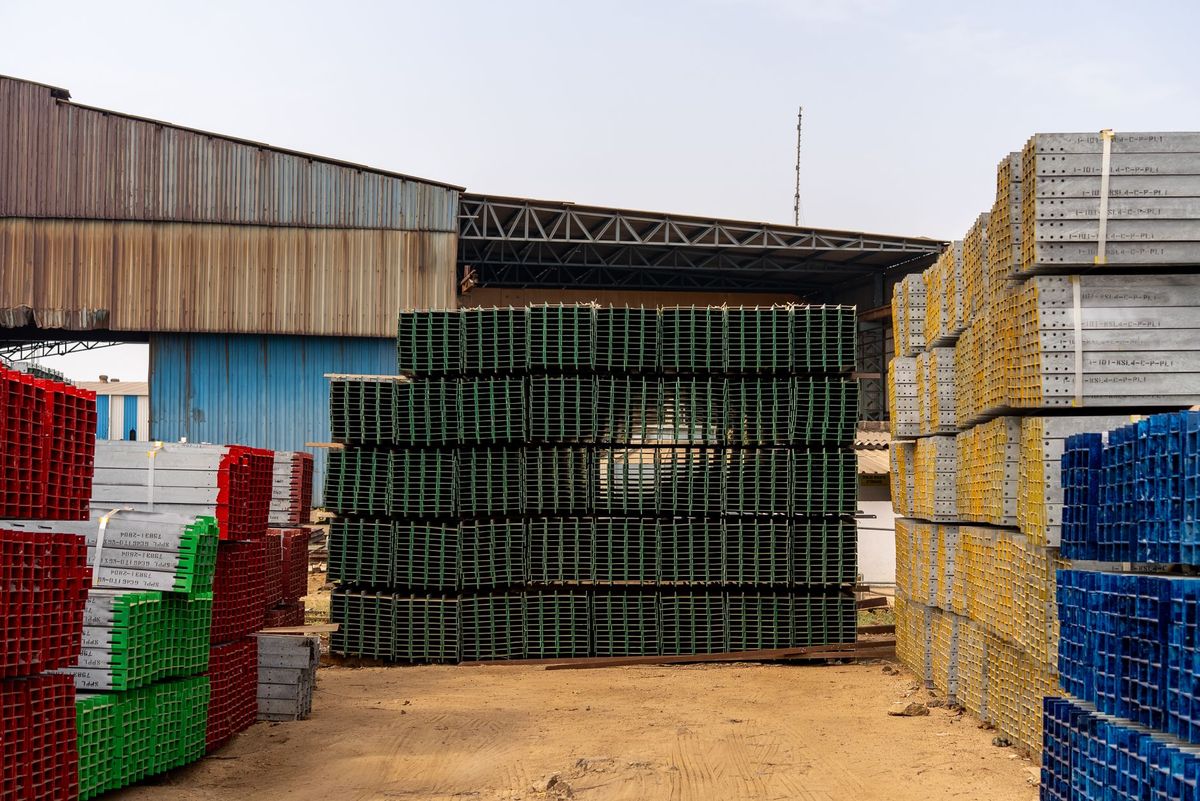
Steel: $820 per Ton (Hot-Rolled Coil), Volatile
Hot-rolled coil steel is currently trading around $820 per short ton, down about 3% from the January peak of $845 but still elevated relative to the $720 average of early 2025. Structural steel shapes are running 5% to 8% higher year-over-year depending on the section.
Steel pricing is being influenced by a combination of factors: domestic mill capacity utilization remains above 75%, import tariffs (Section 232 tariffs of 25% remain in effect), and demand from manufacturing and infrastructure construction. The automotive sector's weakness has provided some relief on flat-rolled products, but structural shapes used in construction remain tight.
For commercial and industrial contractors, steel price volatility is a constant headache. A structural steel package on a mid-rise building might represent $1.5 million to $3 million. A 5% swing is $75,000 to $150,000 — enough to wipe out the profit on a competitively bid job.
Ready-Mix Concrete: Up 8% in Most Markets
Concrete is less volatile than lumber or steel, but it has been marching steadily upward. Ready-mix prices have increased roughly 8% year-over-year in most metro markets, driven by energy costs (cement kilns are energy-intensive), transportation costs, and strong demand across virtually all construction sectors.
The national average for 4,000 PSI ready-mix delivered is now in the $165 to $185 per cubic yard range, though prices vary significantly by market and by distance from the batch plant. In high-demand markets like Phoenix and Dallas, some contractors report prices approaching $200 per yard for standard mixes.
Concrete is particularly difficult to manage on large projects because the volumes are enormous and the material is perishable — you cannot stockpile it. A foundation pour on a commercial building might require 500 to 1,000 yards in a single day. At $175 per yard, that is $87,500 to $175,000 in material for one day's work.
Copper: Up 15% on Electrification Demand
Copper has been the standout mover. COMEX copper futures are trading above $4.50 per pound, up approximately 15% from a year ago. The demand story is straightforward: electrification. Electric vehicle charging infrastructure, data center power distribution, solar installations, building electrification, and grid upgrades are all copper-intensive, and they are all growing simultaneously.
For electrical and mechanical contractors, copper shows up in wire, tubing, and fittings. A typical commercial electrical rough-in might use $15,000 to $40,000 in copper wire. At 15% inflation, that is $2,250 to $6,000 of additional cost per job. On a $200,000 electrical contract with a 10% margin, a $6,000 material increase eats nearly a third of the profit.
PVC, CPVC, and Mechanical Piping
PVC pipe prices have stabilized somewhat after the wild swings of 2021-2023 but remain about 4% higher year-over-year. CPVC is up roughly 6%. Copper tubing, following the copper commodity price, is up in the 12% to 15% range. These increases hit plumbing and mechanical contractors on every job.
The Math on a Real Job
Let me make this concrete with numbers from my own shop. We recently bid a mechanical rough-in for a 12-unit townhouse project — copper DWV, PEX supply, gas piping, and vent systems. Straightforward residential mechanical work.
Our material takeoff came to $43,200 at current pricing. I pulled up our takeoff for a nearly identical scope we did 14 months ago: $37,800 in materials. That is a $5,400 difference — a 14.3% increase — on the same scope of work.
Our labor estimate was essentially the same: 620 hours at our loaded crew rate. The only thing that changed was materials. On a job we bid at $198,000, that $5,400 came straight out of our margin. We had priced the job at an 11% margin. After the material increase, we were looking at 8.3% before anything went wrong.
Now scale that to a commercial job. A $1.2 million mechanical contract with 35% material content at 6% inflation means roughly $25,000 in additional material cost. On a job bid at 8% margin ($96,000), that $25,000 eats more than a quarter of your profit.
This is the math that keeps small contractors awake at night. We are not dealing with rounding errors. We are dealing with cost increases that can turn a profitable job into a break-even exercise or worse.
What Contractors Are Doing About It
Escalation Clauses: Now Standard
Material escalation clauses have gone from rare to routine over the past three years. On any job with a duration exceeding six months, most experienced contractors now include a material escalation provision tied to specific indices — typically the PPI for the relevant material categories.
The pushback from owners and general contractors has diminished as the reality of material volatility has become undeniable. I am seeing escalation clauses accepted on jobs as short as four months in duration, particularly for copper-intensive or steel-intensive scopes.
The key is specificity. A vague clause that says "prices subject to change" gives you no real protection. A clause that references the BLS PPI for copper and brass mill shapes (Series ID WPU10250101) and provides a formula for adjustment gives you a defensible mechanism for recovering documented cost increases.
Material Pre-Purchasing
On jobs where the scope is well-defined and the timeline is known, pre-purchasing materials at bid time prices is one of the most effective hedges available. We have been buying copper wire and piping as soon as we get a signed contract rather than waiting until the installation phase.
This requires working capital and storage space, which not every small contractor has. It also requires coordination with suppliers who will hold material for weeks or months. But the math is compelling. On our last commercial job, we pre-purchased $68,000 in copper and brass material at contract signing. By the time we installed it four months later, replacement cost had risen approximately 9%. That pre-purchase saved us roughly $6,100 — essentially free money for having the discipline and cash to buy early.
Supplier Relationships
In a volatile market, your relationship with your distributor matters more than in stable times. Contractors who place consistent orders, pay on time, and maintain volume commitments get better allocation, better pricing, and better information about upcoming price changes.
I have a quarterly sit-down with my three primary suppliers where we review our projected material needs for the coming 90 days. They give us advance notice of manufacturer price increases, which typically come with 30 to 60 days' lead time. That advance notice lets us adjust bids in progress and front-load purchases before increases take effect.
Value Engineering
Value engineering has always been part of construction, but material inflation makes it more financially significant. Substituting PEX for copper supply lines where code and customer requirements allow, using engineered lumber products in place of dimensional lumber where appropriate, specifying domestic steel alternatives to avoid tariff-inflated import pricing — these decisions are worth more dollars today than they were two years ago.
The discipline is doing this during estimating, not after you have already bid the job and locked in a price. Value engineering after award is damage control. Value engineering during estimating is strategy.
Walking Away from Bids
This is the hardest discipline for any contractor, but material inflation makes it more important. There are jobs where the numbers simply do not work. When a general contractor's budget is based on pricing from 12 months ago, and material costs have risen 6% to 15% depending on the commodity, the gap between what the project can afford and what the work actually costs may be unbridgeable.
In my shop, we have a hard rule: we do not bid work below a 7% net margin after accounting for current material pricing and a reasonable escalation assumption. If the budget cannot support that margin, we decline. In the past year, we have walked away from roughly 15% of the bid invitations we received because the numbers were not there.
This is not comfortable. Turning down work feels wrong, especially when your crews need hours. But taking work at 2% or 3% margins in a 6% material inflation environment is a path to financial trouble. One material spike, one scope issue, one schedule delay, and you are working for free or worse.
When Does This Get Better?
The honest answer: probably not soon. The structural drivers of material cost inflation — tariffs on lumber and steel, electrification-driven copper demand, energy costs embedded in concrete and manufactured products, strong construction demand across sectors — are not going away in the near term.
The PPI construction materials index has been above its 2019 level by more than 40% for three straight years now. Some of that increase is permanent. The construction industry is not going back to 2019 material pricing.
What contractors can control is how they respond. Escalation clauses, pre-purchasing, supplier management, value engineering, and pricing discipline are not glamorous. They require time, attention, working capital, and the willingness to say no to work that does not pencil. But they are the difference between contractors who survive inflationary periods and those who do not.
The PPI report for March is due April 11. I will be watching.
Data sources: Bureau of Labor Statistics Producer Price Index (construction materials and components), Random Lengths lumber composite pricing, COMEX copper futures, American Iron and Steel Institute capacity utilization data, Portland Cement Association market data, Associated General Contractors construction inflation alert.
Before you commit to a budget, run your own numbers with our free construction cost estimator and check quantities with the markup margin calculator.
Frequently Asked Questions
How does construction material costs 2026 affect construction costs?
According to the latest industry data, construction material costs 2026 is showing notable trends in 2026. Current figures indicate 6.2%, which represents a significant benchmark for contractors and developers planning projects this year. Regional variations apply, so checking local market conditions remains essential for accurate budgeting.
What is the forecast for construction material costs 2026 in 2026?
Regional analysis of construction material costs 2026 reveals uneven distribution across U.S. markets. The data point of 4.8% highlights the scale of activity, with Sun Belt and high-growth metro areas generally leading in volume. Contractors expanding into new territories should evaluate local demand indicators before committing resources.
How are contractors responding to construction material costs 2026?
Year-over-year comparisons for construction material costs 2026 show meaningful change. The figure of $487 from current data represents a shift that contractors need to account for in their planning and bidding strategies. Historical trend analysis suggests this trajectory may continue through the end of the year.