$480 Per Thousand Board Feet — Finally, Some Stability
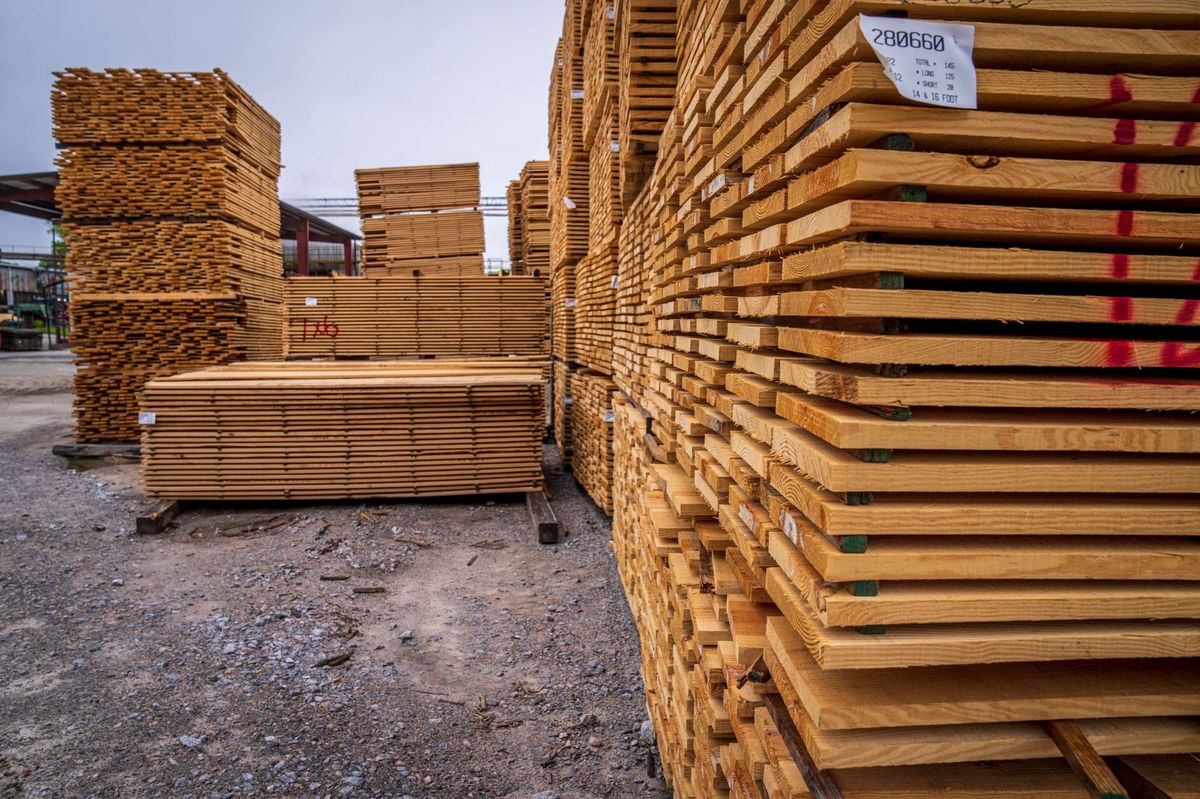
Lumber prices have settled at approximately $480 per thousand board feet (MBF) as of early April 2026, according to the Random Lengths Framing Lumber Composite. If you have been running residential crews at any point since 2020, you know how remarkable that stability is. We went from $350 pre-pandemic to $1,515 in May 2021, back down to $350 in late 2022, up to $620 in early 2024, and now we are sitting in a range that has held between $460 and $510 for the past five months.
Here is the deal: $480 is not cheap lumber. It is still 37% above the 2015-2019 average of $350 per MBF, according to Random Lengths historical data. But it is a price you can bid around. It is a price you can estimate against without padding your quotes by 15% to cover volatility. And for the first time in six years, the framing package on a typical home is predictable.
What Is Driving the Price Stability
Three factors have converged to create the current equilibrium. First, U.S. housing starts are running at 1.38 million SAAR, according to Census Bureau data — solid but not overheated. The demand for framing lumber is steady without the surge-and-crash pattern of 2020-2022. Builders are starting homes at a measured pace, which means mills can plan production without whipsawing between overtime and curtailments.
Second, Canadian lumber production has stabilized. According to Natural Resources Canada, Canadian softwood lumber production was approximately 22.4 billion board feet in 2025, down 8% from the 2018 peak of 24.3 billion board feet but stable year-over-year. The mountain pine beetle epidemic that devastated British Columbia timber stands has largely run its course, and salvage logging has wound down. What remains is a smaller but sustainable production base.
Third, U.S. domestic mill capacity has expanded. According to Fastmarkets RISI, seven new or expanded sawmills came online in the U.S. South between 2023 and 2025, adding approximately 3.8 billion board feet of annual capacity. Companies including Canfor, West Fraser, and Interfor invested heavily in Southern Yellow Pine production, drawn by the region is fast-growing timber plantations and proximity to the largest housing markets.
The Canadian Tariff Factor
The elephant in the lumber room remains the U.S. tariff on Canadian softwood lumber. As of April 2026, the combined countervailing duty and anti-dumping duty rate stands at 14.54% for most Canadian producers, according to the U.S. International Trade Commission. Some producers face rates as high as 17.9%.
These tariffs have been in place in various forms since 2017, and the industry has largely priced them in. According to the National Association of Home Builders, the tariffs add approximately $7,300 to the cost of a typical new single-family home. The U.S. Commerce Department completed its most recent administrative review in November 2025, and the rates remained largely unchanged.
Here is what could disrupt the current stability: any escalation in trade tensions with Canada could push tariff rates higher. Conversely, a resolution of the long-running softwood lumber dispute — which has been litigated through multiple rounds of WTO and NAFTA/USMCA panels — could reduce tariffs and push lumber prices into the low-$400 range. According to trade attorneys following the case, neither outcome is likely before 2027.
What $480 Lumber Means for Framing Costs
Let me put this in terms that matter to your bottom line. According to NAHB cost breakdown data, the framing lumber package for a 2,400 square-foot single-family home costs approximately $33,100 at current prices. That includes studs, plates, headers, joists, rafters or trusses, and sheathing. Add engineered wood products — LVLs, I-joists, and glulam beams — and the total wood framing package runs about $41,500.
Compare that to the pandemic peak: at $1,515 per MBF in May 2021, that same framing package would have cost approximately $104,000. The difference between peak and current pricing is roughly $63,000 per home. That is real money that has come back into builder margins or been passed through to buyers in the form of lower prices.
At the pre-pandemic average of $350 per MBF, the framing package would cost about $24,100. So current pricing adds roughly $9,000 per home compared to the old normal. According to the NAHB, lumber and wood products now represent approximately 15.8% of total construction costs for a typical new home, down from the 24.3% peak in 2021 but above the 12.1% historical average.
Regional Price Variations
Lumber prices are not uniform across the country. According to Random Lengths regional composite data, Southern Yellow Pine 2x4 No. 2 was trading at $462 per MBF in early April, while Spruce-Pine-Fir (SPF) 2x4 No. 2 from Western Canada was at $498 per MBF. Douglas Fir from the Pacific Northwest was the most expensive at $524 per MBF.
Shipping costs account for much of the regional variation. According to Fastmarkets RISI, trucking lumber from a Southern mill to a job site in Atlanta costs approximately $45 per MBF, while shipping SPF from British Columbia to a job site in Chicago costs approximately $110 per MBF. Rail shipment is cheaper for long hauls but adds transit time — typically 10 to 14 days versus 2 to 3 days for truck delivery.
For builders in the South, the proximity to Southern Yellow Pine mills is a structural cost advantage. According to the USDA Forest Service, the 13 Southern states now account for approximately 62% of all U.S. softwood lumber production, up from 54% a decade ago. That regional production shift benefits Southern builders and puts upward pressure on delivered prices in the Northeast and Midwest.
Engineered Wood Products Fill the Gap
One trend worth watching is the growing substitution of engineered wood products for dimension lumber. According to the APA — The Engineered Wood Association, shipments of structural panels (plywood and OSB) totaled approximately 27.8 billion square feet in 2025, up 4.2% from 2024. I-joist shipments rose 6.1% year-over-year.
OSB prices have been particularly stable, trading around $420 per thousand square feet (3/8-inch basis) in early April 2026, according to Random Lengths. That is well below the $1,200 pandemic peak and within 10% of the pre-pandemic average. The OSB market benefited from significant capacity additions — approximately 4.5 billion square feet of new capacity came online in 2024-2025, according to Fastmarkets RISI.
Cross-laminated timber (CLT) remains a niche product but is gaining traction in mid-rise construction. According to the Softwood Lumber Board, CLT production capacity in North America reached approximately 320,000 cubic meters in 2025, nearly triple the 2020 level. CLT is being used primarily in 4 to 8 story residential and mixed-use buildings, where it competes with steel and concrete on cost and schedule.
Mill Economics and Future Supply
Understanding mill economics helps predict where prices are headed. According to Fastmarkets RISI, the average cash cost of production for a U.S. Southern sawmill is approximately $310 to $340 per MBF, including log costs, labor, energy, and maintenance. Canadian SPF mills operate at slightly higher costs of $330 to $370 per MBF due to higher log costs and transportation.
At $480 per MBF, Southern mills are earning margins of approximately 30% to 35%, which is healthy but not excessive by historical standards. At these margins, mills have no incentive to curtail production, which supports stable supply. If prices dropped below $380, some higher-cost mills would begin curtailing, which would put a floor under prices.
The U.S. South has a robust timber supply pipeline. According to the USDA Forest Service Forest Inventory and Analysis data, Southern softwood timber inventory grew 1.2% annually over the past decade, meaning timber is being grown faster than it is being harvested. That sustainable yield supports long-term mill operations without the supply constraints that plague the Canadian industry.
The Pressure Treated and Specialty Lumber Market
While framing lumber has stabilized, pressure-treated lumber for decks, fences, and outdoor structures tells a different story. According to the Southern Forest Products Association, pressure-treated lumber prices are running approximately $620 per MBF, about 30% above untreated equivalents. The premium has widened from the historical 20% gap due to increased demand for outdoor living construction.
According to the NAHB Remodeling Market Index, deck and outdoor structure projects were the second most common remodeling project in Q1 2026, behind kitchen renovations. The treated lumber market is smaller but higher-margin for dealers, and it is less cyclical than framing lumber because it is driven by remodeling rather than new starts.
Cedar and redwood remain expensive specialty products, with Western Red Cedar 2x6 decking trading at approximately $1,800 per MBF, according to Random Lengths. Composite decking continues to take market share from wood in the premium segment, with Trex reporting 12% revenue growth in their latest quarterly earnings.
How to Lock In Current Prices
Here is the deal about buying lumber in a stable market: do not get complacent. The current $460 to $510 range feels comfortable, but a single supply disruption — a hurricane hitting Southern mills, a rail strike, or a tariff escalation — could push prices up 20% to 30% within weeks. We have seen it happen repeatedly.
According to the NAHB, 73% of builders now use some form of forward purchasing or price protection on lumber, up from 41% in 2019. Options include forward contracts with suppliers (locking price 60 to 90 days out), futures contracts on the CME lumber futures market, and strategic inventory management at the lumberyard level.
For small to mid-size builders, the most practical approach is to maintain a relationship with two to three lumber suppliers and negotiate volume-based pricing. According to ProSales magazine survey data, builders who purchase more than 500,000 board feet annually receive average discounts of 8% to 12% off list pricing. Consolidating your purchases with fewer suppliers increases your leverage.
The Historical Price Chart in Perspective
For those who want the full picture, here is how the Random Lengths Composite has moved over the past six years, based on approximate quarterly averages. In 2020 Q1, prices started at $380 before surging to $950 by Q3. The year 2021 saw the all-time peak of $1,515 in May before crashing to $550 by August. Prices bounced between $400 and $620 through 2022 and 2023, spiked briefly to $620 in early 2024, and have been grinding between $460 and $510 since late 2025.
The six-year average is approximately $540 per MBF, according to Random Lengths. Current prices at $480 are below that average, which suggests we are in a favorable buying environment by recent standards, even if not by pre-pandemic standards. The old $350 normal may never return — higher mill operating costs, sustained tariffs, and inflationary pressures on logging and transportation have structurally raised the floor.
Related Reading
Before you commit to a budget, run your own numbers with our free construction cost estimator and check quantities with the lumber calculator.
Frequently Asked Questions
What is the current price of framing lumber in 2026?
As of early April 2026, the Random Lengths Framing Lumber Composite stands at approximately $480 per thousand board feet (MBF). Southern Yellow Pine 2x4 trades at $462, SPF from Canada at $498, and Douglas Fir at $524. Prices have been stable in the $460 to $510 range for the past five months, a significant improvement from the extreme volatility of 2020-2024.
How much does lumber add to the cost of building a home?
At current prices of $480 per MBF, the framing lumber package for a typical 2,400 square-foot single-family home costs approximately $33,100, according to NAHB cost breakdown data. Including engineered wood products, the total wood package runs about $41,500. Lumber and wood products represent approximately 15.8% of total construction costs, according to NAHB analysis.
Will lumber prices go up or down in 2026?
Most industry analysts expect lumber prices to remain in the $450 to $520 range through 2026, barring trade policy changes or supply disruptions. Fastmarkets RISI projects a slight upward bias to $490-$500 by Q4 2026, driven by steady housing starts at 1.38 million SAAR. The main downside risk is a housing slowdown; the main upside risk is a tariff escalation on Canadian imports or a major weather event affecting Southern mills.
Your Action Item for This Week
Review your last five material takeoffs and compare your estimated lumber costs to actual invoiced costs. If your estimates are still padded with the 10% to 15% volatility cushion from the pandemic years, you are probably overbidding and losing work. At $480 per MBF with five months of price stability, you can tighten your lumber estimates to a 5% contingency. Use the savings to sharpen your bids — the crews that win work in this market are the ones pricing lumber at today is cost, not yesterday is fear.