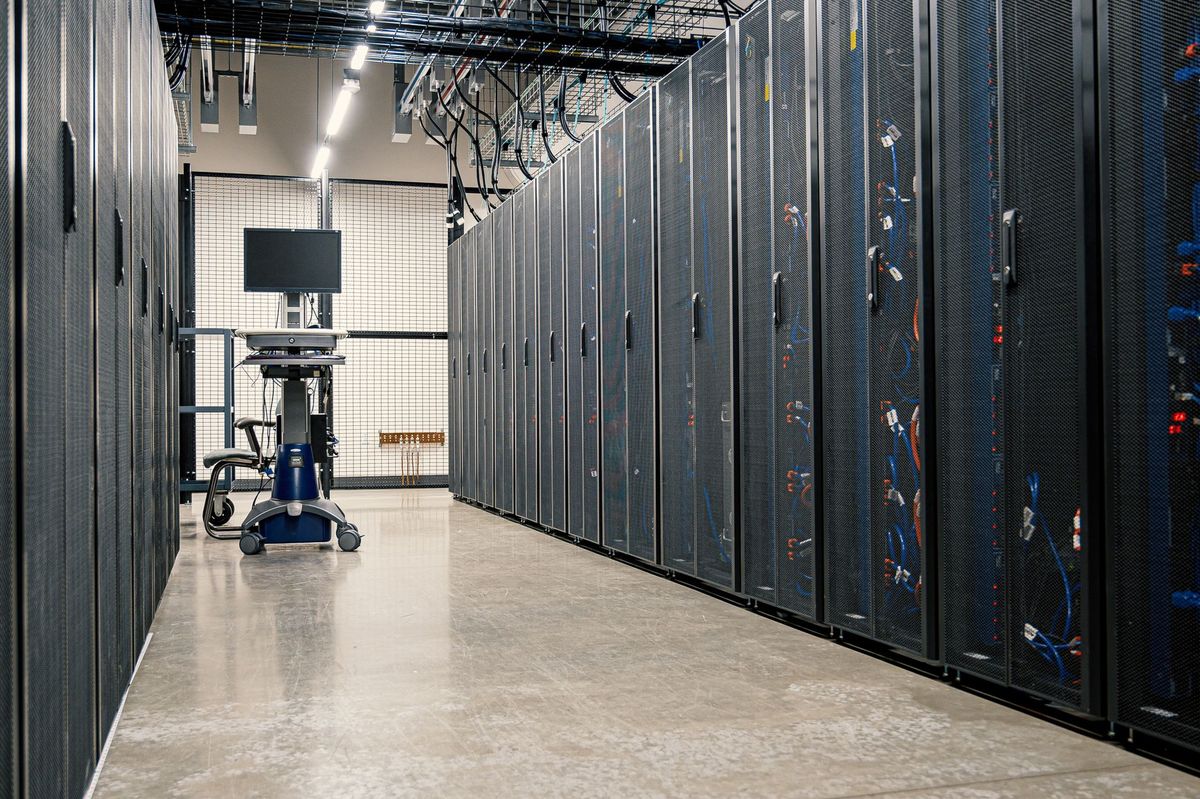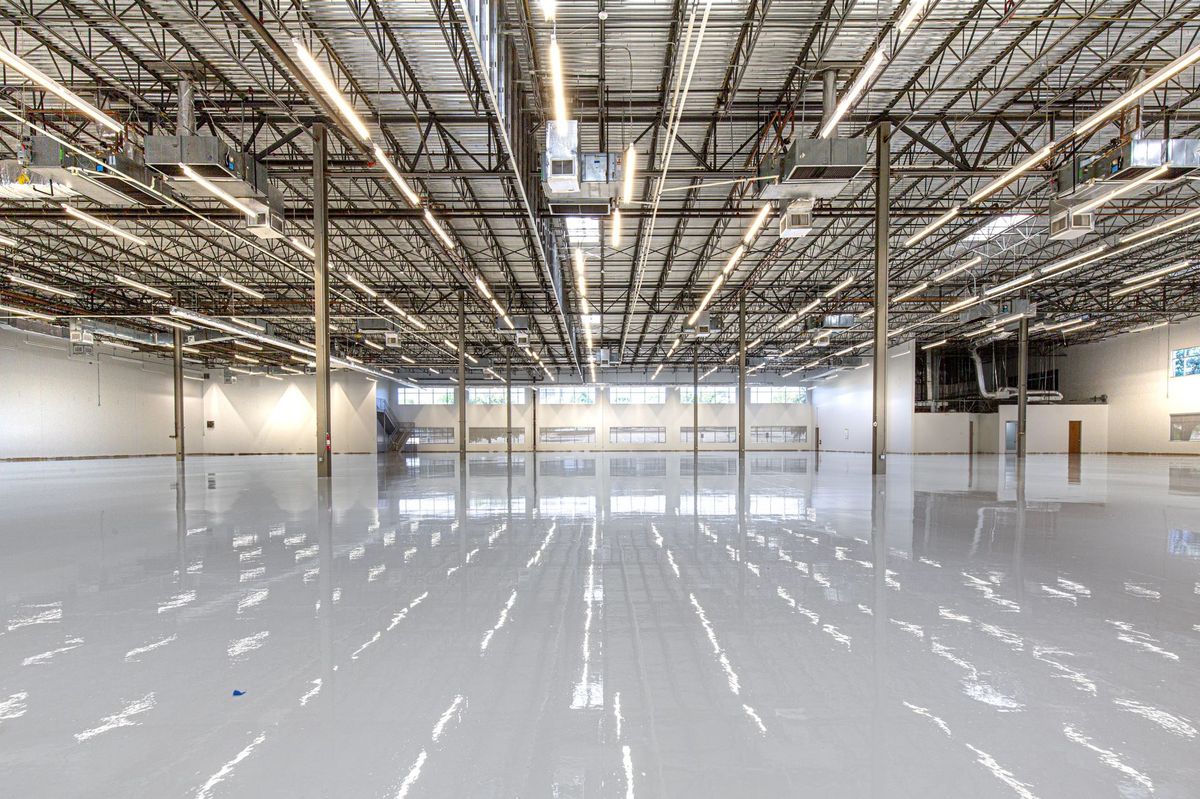
At peak, a single hyperscale data center project pulls 1,400 electricians onto a job site simultaneously — more than most mid-size electrical contractors have in their entire workforce. That number came from a Holder Construction project manager I spoke with on a Northern Virginia site last fall, and it's the one that stopped me cold. I've been in commercial construction for a long time, and I've never seen a single project category eat manpower like this one.
Data center construction spending hit $32.4 billion in 2026, up 18% from $27.5 billion the year before, according to Cushman & Wakefield's latest market report. There are 847 active data center projects in the U.S. right now as of Q1 2026. Those aren't proposals. Those are projects under construction, pulling permits, and hiring crews. If you're a tradesperson or a specialty subcontractor trying to figure out where the work is going over the next three years, the answer isn't complicated: it's data centers, and it's happening in five markets most of all.
This isn't another market overview — there's already a solid breakdown of the data center construction boom and where investment is concentrating if you want the big picture. What I want to talk about is what it's actually like to be a tradesperson on one of these jobs. What the work looks like. What it pays. And how you get your first one.
What's Actually Being Built — The Scope of a Hyperscale Job
Most tradespeople have a general sense that data centers are big, but the actual scope doesn't hit you until you're standing on the job site. A hyperscale facility — the kind Amazon Web Services or Microsoft is building — runs 300,000 to 500,000 square feet per phase, and projects typically run in two or three phases back to back. That's 18 to 30 months of continuous work minimum, often more.
The electrical content alone runs between 40% and 50% of total construction cost on a hyperscale build. On a 100-megawatt facility — and 100 MW is a medium-sized hyperscale now, not a large one — the electrical scope is typically $85 million to $120 million. That single line item is larger than entire mid-rise office buildings. It's transformer vaults, 4,160-volt distribution, 480-volt secondary distribution, a switchgear room that looks like the inside of a power substation, emergency generator systems, and an uninterruptible power supply infrastructure that runs the length of the building.
Here's what that looks like on the ground for specific trades:
Electricians: The Core Trade on Every Data Center
If you're an electrician, this is your category. Period. A commercial office building might have 20 to 30 electricians working it at peak. A hyperscale data center has 800 to 1,400 at peak. The electrical infrastructure is that different in scale.
The work that's in shortest supply — and paying the most — is medium-voltage switchgear experience. Data centers run 4,160-volt distribution systems, sometimes 13,800-volt primary. If you've worked substations, utility-scale solar, or industrial manufacturing with medium-voltage experience, you're a direct transfer. Electricians with documented switchgear experience are earning $48 to $58 per hour on active Northern Virginia projects right now. Journey-level electricians without that background are starting around $38 to $44.
The other area I hear about constantly is generator installation. These facilities run diesel generators — 1.5 MW to 3 MW units per generator set — and they run them in clusters. A 100 MW campus might have 50 to 80 generator sets providing N+1 or 2N redundancy. Installing, wiring, testing, and commissioning those units is specialized work, and crews with generator experience are earning $44 to $52 per hour with consistent 60-hour weeks.
UPS system installation is another premium niche. The battery rooms in a hyperscale data center are enormous — tens of thousands of lead-acid or lithium cells — and commissioning them requires a combination of electrical skill and manufacturer-specific certification. Electricians who have completed Eaton, Vertiv, or Schneider Electric commissioning programs are worth considerably more than their base wage rate on these projects.
HVAC and Mechanical: Where Cooling Gets Serious
The cooling infrastructure on a hyperscale data center is unlike anything you'll work on in standard commercial construction. These facilities aren't using rooftop package units. They're running computer room air handling units, chilled water systems, cooling towers, and — increasingly — rear-door heat exchangers and direct liquid cooling loops for the highest-density AI training racks.
The numbers are staggering. Mechanical and HVAC scope on a hyperscale data center runs $15 million to $25 million per megawatt of cooling capacity. On a 100 MW facility designed for standard cloud workloads, that's a $500 million to $800 million mechanical scope across the full build program. Even on a single-phase project, the mechanical contractor on a hyperscale job is doing more revenue than most regional mechanical firms see in a year.
Pipefitters with chilled water experience are in strong demand. The pipe runs in these buildings are massive — 12-inch and 16-inch chilled water mains running hundreds of feet — and the tolerances and testing requirements are stricter than most commercial work because the systems are critical infrastructure. Sheet metal workers are running ductwork at scales that most crews haven't seen since hospital or pharmaceutical construction.
HVAC technicians and BAS (building automation system) specialists who can program and commission Johnson Controls, Siemens, or Schneider Electric systems are particularly short. I've heard $52 to $68 per hour cited for controls specialists in Northern Virginia, with an eight-month backlog on available talent. If you know Niagara Framework or Tridium, someone will find you.
Ironworkers and Concrete: The Structural Side
Structural steel on a hyperscale data center is heavy. The floor loading requirements for raised floor areas with servers and batteries are significant, and the generator yards and transformer pads require foundations that wouldn't be out of place in a manufacturing plant. Ironworkers on data center structural steel are seeing $38 to $45 per hour, which is at the top of the commercial range for that trade.
Concrete finishers are pulling $34 to $40 per hour for two specific types of work: the raised-floor pedestal system installation and the equipment pads for generators, transformers, and cooling equipment. The raised floor work is a learned skill — the pedestals have to be dead-level and the grid has to be exact or the floor tiles won't seal properly. Contractors who specialize in raised floor installation build their entire business around data center work.
Foundation work is different here too. A 200,000-square-foot data center sitting on a slab doesn't sound that unusual, but when you factor in the weight of the generator yard, the transformer vaults, and the UPS battery rooms, you're dealing with concentrated loads that require serious engineering review and close coordination between the concrete crew and the structural engineer.
The IT Infrastructure Trades: Often Overlooked, Very Well Paid
Most commercial contractors think about data centers in terms of the building shell and the MEP systems. The IT infrastructure trades — the people actually wiring the white space where the servers go — are a separate ecosystem, and they pay differently.
BICSI (Building Industry Consulting Service International) is the certification body for IT infrastructure. The Registered Communications Distribution Designer (RCDD) credential is the industry standard for anyone planning and specifying data center cabling infrastructure. Getting that credential typically adds $8 to $12 per hour over uncertified IT infrastructure work, and in the current market, RCDD holders in active data center markets are turning down work because they can't take on more.
The work itself covers structured cabling (fiber and copper backbone), cable tray installation, overhead ladder rack, and the fiber patching inside the server halls. It's clean work compared to the civil and MEP trades — no mud, no heavy lifting — but the precision requirements are exacting. Fiber terminations have to be certified to specific loss budgets, and the testing documentation is extensive.
NECA (National Electrical Contractors Association) and SMACNA (Sheet Metal and Air Conditioning Contractors' National Association) certifications are meaningful for subcontractors trying to bid on prime data center GC lists. Turner, Holder, DPR, Power Construction, and Barton Malow — the five GCs who dominate the data center market — maintain qualified subcontractor lists and won't add a new name without seeing a track record and certifications.
How Crews Break Into the Data Center Market
This is the question I get most often from subs who are killing it on standard commercial but want in on data center work. Here's the deal: you don't walk onto a hyperscale project without a reference. The GCs are too busy and the schedules are too tight to onboard a new sub mid-project.
The path I've seen work most consistently:
Start on a smaller project in the same market. Edge data centers — the smaller facilities telecom carriers and cloud companies are building in secondary markets — are 10,000 to 50,000 square feet. They have the same systems as hyperscale but a smaller scope. Getting onto an edge facility as a first credit lets you develop your resume without the pressure of a 100 MW build.
Get in front of a qualified GC before the project starts. Turner, Holder, and DPR all have preconstruction teams that build subcontractor lists 12 to 18 months before a project breaks ground. If you're not in their system before the project is bid, you're not getting the call. Get to their local office, bring your safety data (EMR, incident rates), your bonding capacity, and any relevant experience documentation.
Consider joint venturing with an experienced sub for the first job. Several data center veteran electrical and mechanical contractors are willing to bring in regional firms as JV partners to access local labor pools. You give up some margin, but you gain the experience credit and the relationship. For a first credit on a hyperscale project, that's a reasonable trade.
Build your safety record. Data center GCs are obsessive about safety. They're working on critical infrastructure for major tech companies, and one bad incident makes national news. An EMR above 1.0 is a disqualifier at most prime GCs. An EMR below 0.75 is a differentiator. If your safety numbers aren't there, fix that before you try to break into this market.
See also our analysis of how construction wages are outpacing inflation — the data center premium is real but it compounds on top of an already-rising base.
What the Jobsite is Actually Like
I want to be straight with you about what working a data center site is like, because it's different from typical commercial work in ways that matter.
The schedule pressure is unlike anything else in construction. Data centers go on penalty clauses tied to facility operational dates, and those dates are connected to customer contracts the owner has already signed. When Microsoft commits to a customer that a new cloud region will be live on a specific date, that date is immovable. The last 60 days of a data center project — the commissioning phase — is organized chaos. Overnight work, weekend work, systems testing that runs continuously. If you're a foreman who can run a crew through commissioning without losing people or making mistakes on energized systems, you're worth your weight.
You're working around energized systems constantly. Once the electrical infrastructure starts getting energized for testing — which happens well before construction is complete in other parts of the building — you're working in an environment with live medium-voltage equipment nearby. This isn't unusual for industrial work, but it catches commercial tradespeople off guard. Every GC runs their own energized electrical safety program on data center sites. If you haven't had your NFPA 70E refresher in the last two years, do it before you show up.
The commissioning documentation is extensive. Data center owners require a documentation package for every system — controls sequences, alarm setpoints, test results, as-built drawings, O&M manuals — that dwarfs what you'd produce on a typical commercial job. This isn't a place for a team that cuts corners on paperwork. The closeout requirements will burn weeks if you're not organized.
For more on the broader market that's driving all of this demand, the earlier analysis of data center construction spending in 2026 covers where the investment is concentrating and why Northern Virginia alone has 217 active projects.
FAQ
Which trade is in highest demand on data center projects right now? Electricians with medium-voltage switchgear experience are the most constrained trade in active data center markets. Controls and BAS specialists are running an eight-month backlog in Northern Virginia specifically. Both are earning $52-$68/hr in the current market. Demand is so concentrated in active markets that some electrical contractors are flying crews in from other states on per diem rather than letting projects slip.
Do I need specific certifications to work data center construction? For the building trades (electricians, pipefitters, ironworkers, concrete), standard journeyman credentials are the baseline. NFPA 70E for energized electrical work is mandatory on most data center sites. For IT infrastructure work, BICSI's RCDD certification adds $8-$12/hr to your rate. For subcontractors bidding as prime subs, NECA and SMACNA certifications are meaningful differentiators on qualified sub lists maintained by Turner, Holder, and DPR.
What's the pay difference between data center work and standard commercial? The premium runs 15-30% above standard commercial rates for the same trade classification, depending on the specific role. Electricians with switchgear experience are earning $48-$58/hr vs. $36-$42 on standard commercial. The premium is highest for trades with specialized skills (controls, generator installation, raised floor) and in markets with the most active projects (Northern Virginia, Dallas, Phoenix). Overtime is also more consistent — 50- to 60-hour weeks are normal through most of a project.
How long do data center projects run and what's the work continuity like? A single hyperscale phase runs 18 to 30 months. Most campuses build in multiple phases, meaning the same site can provide 5 to 8 years of continuous work for trades that perform well in Phase 1. The largest projects in Northern Virginia and Dallas have kept the same core subcontractor teams employed for four to five years across sequential phases. This is the closest thing to guaranteed long-term work in commercial construction right now.
Which markets have the most active data center construction right now? Northern Virginia leads with 217 active projects as of Q1 2026, followed by Dallas (143), Phoenix (98), Chicago (87), and Atlanta (74). If you're a tradesperson in those markets, data center work should already be on your radar. If you're not in one of those markets, the closest active hub is likely worth the per diem for the right project.
Your Action Item for This Week
If you're an electrical or mechanical subcontractor who wants a piece of this market, your action item is to pull your current safety numbers (EMR, OSHA 300 log, incident rate) and benchmark them against what Turner and Holder require for their qualified sub lists. Call your local Turner or Holder preconstruction office — not the project office, the preconstruction office — and ask to schedule a prequalification meeting. Bring a one-page capability statement that lists your largest single-project electrical or mechanical scope, your bonding capacity, and your labor pool size. That meeting is how the door opens. Without it, you're not getting a call when the next 100 MW project breaks ground six months from now.