Eighty percent. That's roughly how much of a gravel driveway's real cost is buried where you'll never see it — in the base prep, the grading, the fabric, and the drainage — while the stone everybody argues about at the supply yard is maybe 20 cents of every dollar. I've built and rebuilt more gravel drives in 25 years than I can count, and every single failed one I've been called to fix died from the same disease: somebody spread $800 of pretty rock on $0 of preparation and wondered why they had a rutted mud strip by March.
Here's the deal on gravel driveway cost in 2026: figure $1 to $3 per square foot installed for a straightforward job, which puts most driveways between $300 and $3,000. A basic 12x50 single-car drive (600 SF) lands around $600-$1,800. A 12x200 rural drive to a setback house runs $2,400-$7,200 done right. Long farm lanes with culverts and real earthwork can hit $5-$8 per square foot and nobody's ripping you off — that's what moving water and dirt costs. NAHB's 2026 remodeling data pegs gravel as the cheapest driveway surface going, at roughly a quarter the installed cost of asphalt and a sixth of concrete, and after this year's material prices, that gap got wider, not narrower.
Let me walk you through where the money actually goes, stone by stone.
What a Gravel Driveway Costs in 2026, Layer by Layer
A gravel driveway that lasts is a three-layer sandwich on prepared ground: 4 inches of large base stone (#3 or #2, fist-sized), 3-4 inches of intermediate stone, and 2-3 inches of surface gravel, with geotextile fabric under the whole thing if your subgrade is anything but bony, well-drained soil. Skip a layer and you didn't save money — you prepaid for a rebuild.
The 2026 Cost Table
Prices below are what I'm seeing across the Southeast and Midwest this summer; add 20-30% in high-cost coastal metros. Per-ton stone prices are delivered for full loads (18-22 tons); small orders under 10 tons carry a delivery premium of $75-$150 per trip. The BLS Producer Price Index for crushed stone was up about 5% year-over-year as of spring 2026 — quarries have had pricing power for four straight years thanks to all the public roadwork.
| Item | Unit | 2026 Price | Notes |
|---|---|---|---|
| Crusher run (#21A / crush & run) | per ton | $18 – $38 | Best surface layer; fines lock it tight |
| #57 stone (3/4") | per ton | $25 – $50 | Clean stone, great mid-layer, drains well |
| Pea gravel | per ton | $30 – $60 | Looks nice, migrates like crazy — borders required |
| #3 / #2 base stone | per ton | $20 – $40 | The 4" foundation layer |
| Item #4 / road base blend | per ton | $16 – $32 | Recycled blends can run cheaper |
| Geotextile fabric | per SF | $0.30 – $0.85 | Installed; woven for driveways |
| Grading / subgrade prep | per SF | $0.50 – $2.00 | Skid steer or tractor + box blade, compaction |
| Excavation (topsoil strip) | per CY | $5 – $25 | Only if cutting a new drive |
| Culvert (12"-15" x 20 ft, installed) | each | $800 – $2,500 | Pipe $300-$900 + dig, bed, backfill, ends |
| Full install (all layers, fabric, grading) | per SF | $1 – $3 | The number that matters |
Do the tonnage math before anyone quotes you: one ton of gravel covers about 80-100 SF at 2 inches deep, or roughly 55 SF at 3 inches. A 600 SF single-car drive with a proper 8-10 inch total section needs 25-35 tons across all layers — call it $600-$1,200 in stone delivered. See it now? Even on a small drive, stone is barely a third of the finished $1,200-$1,800 price. The rest is dirt work.
Crusher Run vs. #57 vs. Pea Gravel: Pick Once, Pick Right
Crusher run (called crush-and-run, #21A, ABC, or road bond depending on your state) is crushed stone with the fines left in. Wet it, compact it, and it locks up almost like soft pavement. At $18-$38 per ton it's the cheapest of the three and the correct top layer for 90% of driveways. Every state DOT specs some version of it as aggregate base for actual highways — that should tell you something.
#57 stone is clean 3/4-inch crushed rock, $25-$50 per ton. No fines, so water runs through it beautifully, but it never locks up — it stays loose and rolls under tires forever. Ideal as the middle drainage layer; as a surface it's tolerable but you'll feel your tires swim in it. Never lay #57 straight on dirt without fabric — it'll swallow itself into the subgrade in two wet seasons.
Pea gravel is the rounded, pretty stuff at $30-$60 per ton. Rounded means nothing interlocks, so it migrates constantly — into the yard, down the slope, into your mower. If you want the look, budget for steel or timber edging at $3-$8 per linear foot to cage it, and expect to rake it home weekly. On a slope over 4-5%, just don't.
Base Prep and Fabric: The Unskippable $0.80-$2.85 Per SF
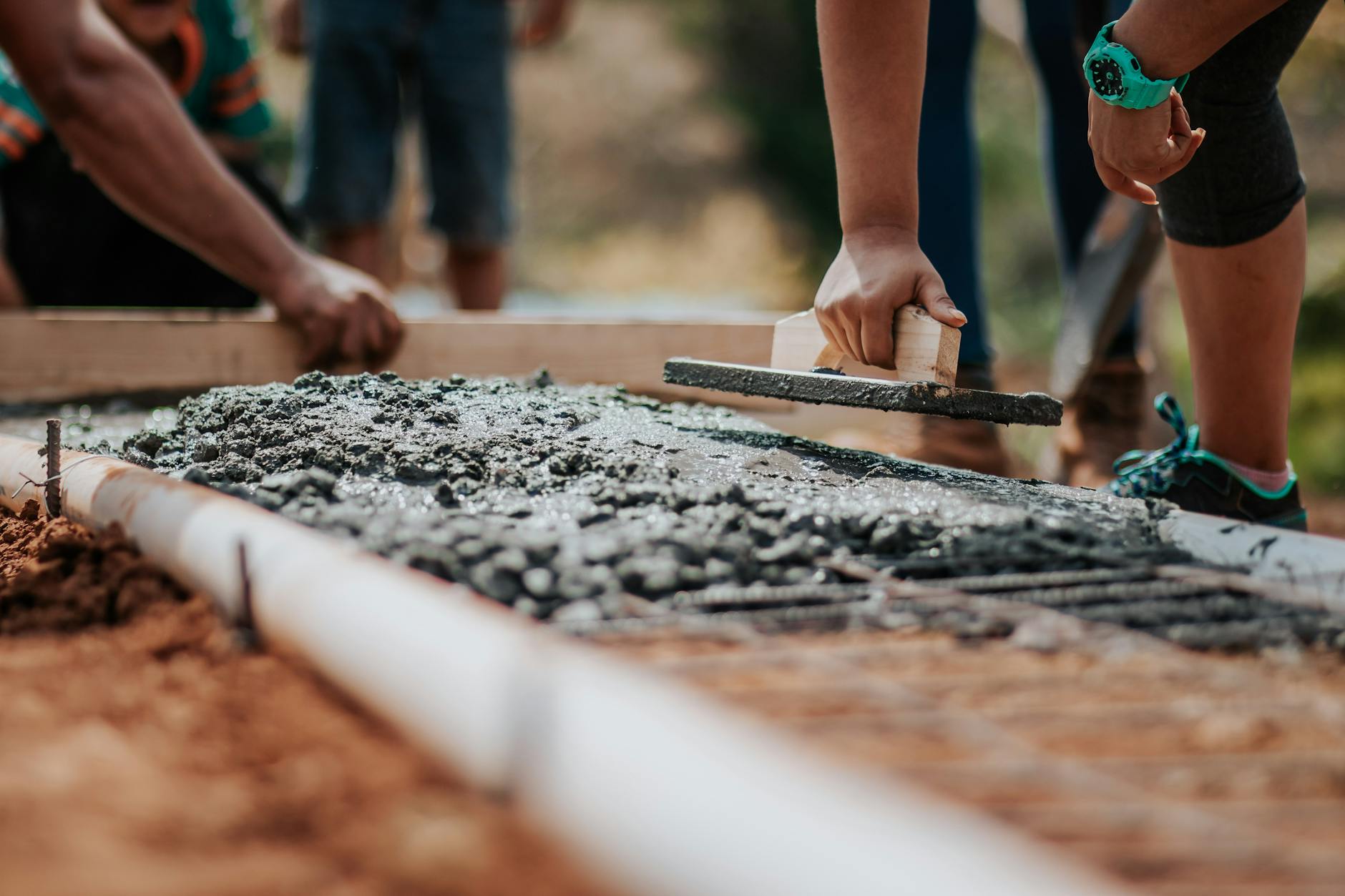
Strip the topsoil (organic soil under a driveway is a guaranteed failure — it compresses and holds water), grade a crown of 2-4% so water sheds to the sides, compact the subgrade, and roll out woven geotextile fabric before the first stone hits the ground. Fabric at $0.30-$0.85 per SF installed is the best money on the whole job: it stops your $30-a-ton stone from disappearing into the mud below, which on soft clay subgrades can eat 30-50% of your base layer in the first two years. On a 2,400 SF drive, fabric costs maybe $1,000 and protects $2,000+ of stone. That's not an upsell. That's arithmetic.
If you're cutting a brand-new drive through a lawn or field, run your dig quantities through our excavation calculator first — stripping 4-6 inches of topsoil off a 12x200 drive is 30-45 cubic yards of material, and knowing that number before the contractor shows up keeps everybody honest.
The Line Items That Blow Up Rural Driveway Budgets
Short suburban drives are simple. Long rural drives are civil engineering with a farmhouse at the end, and three items do most of the damage.
Culverts: $800-$2,500 Each, Non-Negotiable
Anywhere your driveway crosses a ditch, a swale, or the county road's drainage line, you need a culvert — and most counties require one at the road entrance by permit, typically a 12- to 15-inch pipe, 20 feet minimum, sometimes with flared end sections per the local road standard. The pipe itself (corrugated HDPE) runs $300-$900; installed with excavation, bedding, backfill, and stone armoring at the ends you're at $800-$2,500. Undersize it to save $200 and the first big storm makes the decision permanent — washed-out entrances cost $1,500-$4,000 to rebuild, and I've rebuilt plenty. The county road office will tell you the required diameter for free; the backlog of failing rural crossings is real, and I covered the bigger version of that problem in my culvert replacement cost breakdown.
Grading and Drainage on Slopes
A drive with more than about 8-10% grade sheds water like a roof, and moving water takes your gravel with it. Solutions cost money: cutting the grade with switchbacks (real excavation dollars), water bars every 50-75 feet ($100-$250 each), or ditching along the uphill side at $3-$6 per linear foot. On steep sections above 12%, honestly, gravel is the wrong answer — that's where a strip of pavement earns its keep, and my asphalt paving cost guide covers what that costs per square foot in 2026.
Length Itself
Everything scales linearly except mobilization. At $2 per SF, every extra 100 feet of a 12-foot-wide drive is another $2,400. A quarter-mile farm lane (1,320 feet x 12 feet = 15,840 SF) at even $1.50/SF is $23,760 — which is why long lanes get built with cheaper Item #4 base blends, a narrower 10-foot width, and gravel only in the wheel paths on the back sections. If you're building a drive to serve a new outbuilding, fold the numbers together — my pole barn cost article covers the building side, and the same dirt contractor should price both while the machine's on site to save you a second $500-$1,000 mobilization.
DIY vs. Contractor: The Actual Math
This is the most DIY-able hardscape project there is, and it's also the one where DIY most often produces a driveway-shaped pile of regret. Here's the honest ledger for a 12x100 (1,200 SF) drive.
The Contractor Number
At $1-$3 per SF: $1,200 to $3,600, with most quotes clustering around $1,800-$2,600 for full-section work — topsoil strip, fabric, three compacted lifts, crowned finish grade. One day, maybe a day and a half, done. Get itemized quotes and check them against our cost estimator — if a bid is under $1/SF for full-depth new construction, something (usually the base layers or the fabric) has quietly fallen out of the scope.
The DIY Number
Materials: 45-55 tons of stone across all layers, delivered, $1,100-$1,900. Fabric: $350-$500. Rentals: a skid steer or compact tractor with box blade at $250-$400/day for two days, plus a plate compactor or ride-on roller at $90-$250/day. Total: $1,900-$3,200 — and 2-4 full days of work you have to be able to do. You save real money only if you already own the tractor. If you're renting everything, the DIY discount on a new-construction drive is $300-$800, and you're betting it against your own grading skill. Crown wrong and you'll pay a pro to fix it anyway.
Where DIY genuinely wins: resurfacing. Topping up an existing sound drive with 2 inches of crusher run — 15 tons on our 1,200 SF example, about $400-$600 delivered — then spreading with a rake and truck tires is a weekend job that saves you most of a $1,000-$1,500 contractor visit. Do that every 2-4 years and a gravel drive lasts indefinitely. That maintenance cycle, figure $0.10-$0.25 per SF per year, is the real cost of ownership — still miles under an asphalt overlay.
Where DIY loses: anything involving a culvert, a permit, a slope, or virgin ground. The machine work is the skill, the stone is just the topping.
Frequently Asked Questions
How much does a gravel driveway cost in 2026?
$1 to $3 per square foot installed, or $300 to $3,000 for most residential driveways. A 600 SF single-car drive runs $600-$1,800; a 2,400 SF rural drive runs $2,400-$7,200. Long lanes with culverts and heavy grading can reach $5-$8 per SF. Stone is only 20-35% of the total — grading, fabric, and drainage carry the rest.
How many tons of gravel do I need for my driveway?
One ton covers roughly 80-100 SF at 2 inches deep. For a proper new drive with an 8-10 inch total section (base, middle, and surface layers), figure 4-5 tons per 100 SF. A 12x100 driveway needs 45-55 tons total across all lifts. Order full truckloads (18-22 tons) when you can — partial loads carry $75-$150 delivery premiums per trip.
What is the cheapest gravel for a driveway?
Crusher run at $18-$38 per ton delivered, and it happens to also be the best surface layer because its fines compact into a near-solid crust. Recycled Item #4 or crushed concrete blends can run even cheaper ($16-$32/ton) for base layers. Pea gravel at $30-$60 per ton is the most expensive common option and the worst performer without edging.
Do I really need fabric under a gravel driveway?
If your subgrade is clay, silt, or anything that gets soft when wet — yes. Woven geotextile at $0.30-$0.85 per SF stops the stone from punching down into the soil, which otherwise consumes 30-50% of your base layer within a couple of wet seasons. On naturally gravelly, well-drained ground you can skip it. When in doubt, a $500 roll of fabric is cheaper than re-buying stone.
How much does a driveway culvert cost installed?
$800 to $2,500 for a typical 12- to 15-inch, 20-foot corrugated HDPE culvert including excavation, bedding, backfill, and stone at the ends. The pipe alone is $300-$900. Most counties require a culvert permit at the road entrance and will specify the diameter for free — undersizing to save money is how entrances wash out, and rebuilds run $1,500-$4,000.
Is a gravel driveway cheaper than asphalt?
By a lot. Gravel installs at $1-$3 per SF against asphalt at roughly $5-$8 per SF in 2026 — about a quarter of the upfront cost. The trade is maintenance: gravel wants a $400-$600 top-up of stone every 2-4 years and occasional regrading, while asphalt wants sealcoating every 3-5 years and a real overlay at year 15-20. Over 20 years, gravel still wins on total dollars in almost every case.
Your Action Item for This Week
Walk your driveway — or the route where the new one is going — after the next rain and mark every spot where water stands, crosses, or runs down the path. Each mark is either a culvert, a ditch, or a crown fix, and every one of them belongs in your budget before a single ton of stone does. Then measure the square footage, run it through the cost estimator and the excavation calculator, and get two itemized quotes that break out grading, fabric, and each stone layer separately. Twenty minutes of walking beats two years of ruts.