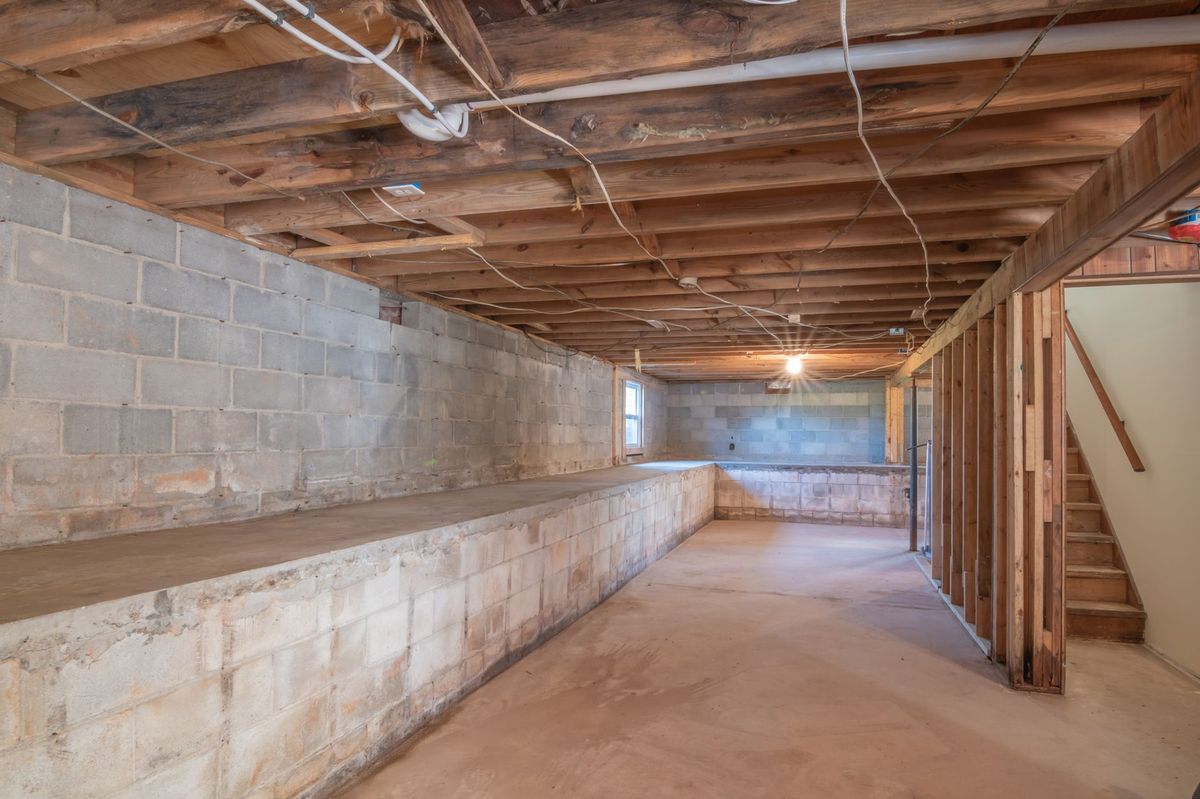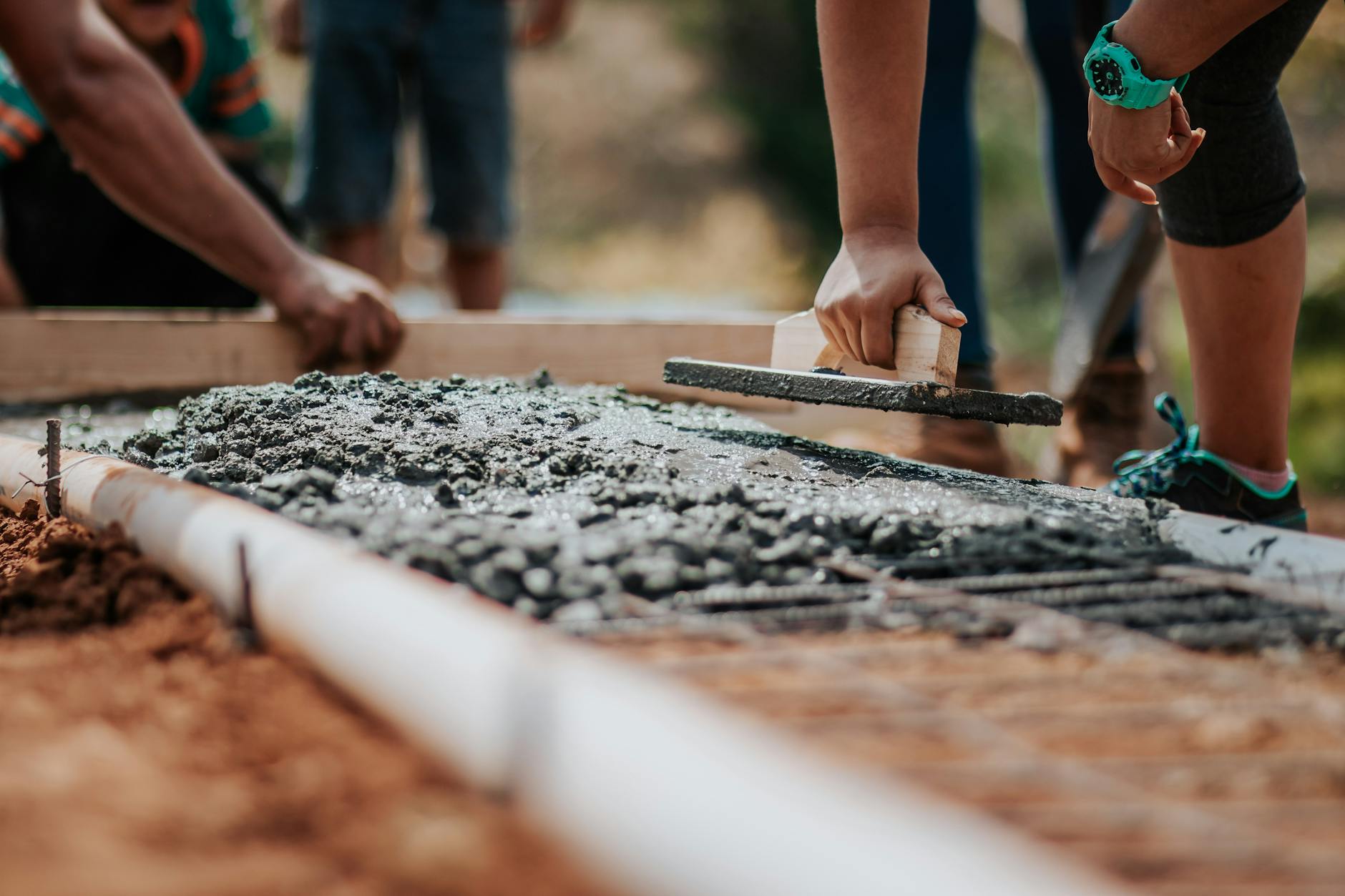
A yard of ready-mix cost my shop $168 last month. Three years ago it was $131. That single number — a 28% jump in the raw material — is why every online "concrete costs $6 per square foot" article you've read is either stale or lying to somebody. In 2026, a plain 4-inch residential slab runs $4 to $8 per square foot installed in most of the country, and the spread between those two numbers is where contractors either make their margin or give it away.
I've poured slabs for 20 years and I price them weekly. Here's exactly where every dollar goes, why a 6-inch garage slab is not 50% more than a 4-inch shed slab, and the three reinforcement decisions that swing your bid by $1.50 per square foot.
What a Concrete Slab Actually Costs in 2026
Start with the material math, because it anchors everything. Ready-mix in most US metros is running $155 to $175 per cubic yard for standard 3,000 PSI mix. A cubic yard covers 81 square feet at 4 inches thick, or 54 square feet at 6 inches. That means the concrete itself costs:
- 4-inch slab: $1.91 to $2.16 per square foot
- 6-inch slab: $2.87 to $3.24 per square foot
Everything else — base prep, forms, reinforcement, labor, finishing, curing — is stacked on top of that. Here's the full installed range I'm seeing on 2026 bids:
| Slab Type | Thickness | Typical Size | Installed $/SF | Total Project Cost |
|---|---|---|---|---|
| Shed slab | 4" | 10x12 (120 SF) | $4.50-$6.50 | $540-$780 |
| Patio slab | 4" | 12x20 (240 SF) | $4.00-$6.00 | $960-$1,440 |
| 1-car garage | 4-6" | 12x24 (288 SF) | $5.00-$7.00 | $1,440-$2,016 |
| 2-car garage | 6" | 24x24 (576 SF) | $5.50-$7.50 | $3,168-$4,320 |
| House slab (monolithic) | 4" field / 12-24" edge | 1,800 SF | $6.00-$8.00 | $10,800-$14,400 |
Notice the pattern: smaller pours cost more per square foot. A 120 SF shed slab still needs a truck (with a $150-$250 short-load fee under 4-5 yards), still needs forms, and still needs a two-man crew for half a day. Fixed costs don't shrink with the slab. On anything under 200 SF, I tell customers straight up that they're paying $1 to $2 per square foot in what amounts to mobilization.
The 4-Inch vs 6-Inch Decision
The default residential slab is 4 inches, and for a patio or shed floor that's genuinely all you need — 4 inches of 3,000 PSI concrete handles foot traffic and lawn equipment with a safety margin. Going to 6 inches adds roughly $0.95 to $1.10 per square foot in material alone, plus a bit more labor for the extra screeding volume.
Where 6 inches earns its money is vehicle loads. A 2-car garage slab at 6 inches with proper reinforcement will carry a 7,000-pound pickup for 40 years without complaint. I've also started quoting 6 inches by default for any slab that might see an EV — a Rivian R1T weighs a hair over 7,100 pounds, and point loads from a jack or lift multiply fast. The upcharge on a 576 SF garage is about $550 to $650. Cheapest insurance in construction.
Monolithic vs Floating Slabs
This is the fork in the road that most homeowners don't know exists, and it changes the price by 20-35%.
A floating slab (also called slab-on-grade) sits on a prepared gravel base with no integrated footing — it's the right answer for sheds, patios, and detached garages in areas with mild frost. Cost: the $4-$7/SF ranges above.
A monolithic slab pours the slab and a thickened perimeter footing (typically 12 to 24 inches deep) in a single placement. It's code-required for houses and attached garages in most jurisdictions because the footing carries the wall loads. The thickened edge adds concrete volume — on an 1,800 SF house slab, the perimeter grade beam alone can eat 8-10 extra yards, about $1,400-$1,700 in material — plus more excavation and forming labor. That's why house slabs land at $6-$8/SF while a same-size floating slab would price closer to $5.
In deep-frost states, a floating slab under a heated structure needs frost-protected shallow foundation detailing (rigid foam skirting, roughly $0.75-$1.25/SF extra) or you go monolithic with footings below frost depth. Skip that step and I promise the slab will heave — I've been paid twice to demo and repour slabs that cracked in their first winter.
Reinforcement: Rebar vs Wire Mesh vs Fiber
Here's my contrarian take: most residential slabs are over-specified on reinforcement and under-specified on base prep. Reinforcement doesn't stop concrete from cracking — it holds the cracks tight after they form. Your base is what prevents them. But you still need it, so here's the honest cost comparison:
| Reinforcement | Added Cost/SF | Best For | My Take |
|---|---|---|---|
| Fiber mesh (in the mix) | $0.15-$0.30 | Patios, sheds, sidewalks | Cheapest, controls shrinkage cracking only |
| Welded wire mesh (WWM) | $0.35-$0.55 | Light garage, patio | Fine IF crews pull it up during the pour (most don't) |
| #3/#4 rebar grid, 18" o.c. | $0.75-$1.50 | Garages, house slabs, anything with wheels | The only one I trust under a vehicle |
Fiber runs $8-$12 per yard added at the plant — for a 240 SF patio that's about $35 total, and it does a legitimate job on plastic shrinkage cracks. Wire mesh looks good on paper at $0.35-$0.55/SF, but its value depends entirely on it sitting mid-slab, and I've watched too many crews leave it on the ground where it does exactly nothing. If your bid says mesh, ask the contractor how they chair it. The answer tells you everything.
Rebar on 18-inch centers with proper chairs adds $430 to $860 on a 2-car garage. On a $3,500 slab that's real money, but a rebar-reinforced 6-inch garage slab is functionally a 50-year floor. On house slabs, rebar (or post-tension cables in expansive-soil markets like Texas, which run $1.25-$2.00/SF) isn't optional — it's engineered and inspected.
The Line Items Nobody Quotes You
Base prep is 15-25% of a proper slab bid and it's the first thing lowball bidders cut. Four inches of compacted crusher run gravel costs $0.50-$0.90/SF delivered and placed. A vapor barrier (required under conditioned space, smart under garages) is $0.10-$0.15/SF. Grading and excavation on a sloped site can add $500-$2,000 before a single form stake goes in. If two bids are $1.50/SF apart, the cheap one is almost always thin on base — and base failures are the ones you can't patch.
Finishing matters too: broom finish is baked into the numbers above, but a machine-troweled garage finish adds $0.30-$0.50/SF, and decorative options are their own universe — stamped concrete runs $12-$18/SF total, which is a different product category entirely.
Regional Prices and How to Sanity-Check a Bid
Ready-mix pricing is brutally local because you're shipping 4,000-pound yards of wet product from plants within a 60-90 minute window. Current spot ranges I'm hearing from other contractors:
- Southeast / Texas: $145-$160/yd — cheapest concrete in America
- Midwest: $155-$170/yd
- Northeast: $165-$185/yd
- West Coast metros: $175-$200/yd, with California hitting $210+ on small orders
- Mountain West: $160-$180/yd, plus long-haul fuel surcharges in rural areas
Labor moves the same direction. A finisher in Alabama costs a crew $28/hour; the same finisher in New Jersey is $52 plus burden. That's why a 2-car garage slab that's $3,200 in Atlanta prices at $4,600 in Boston for identical scope. For the broader material picture, our 2026 concrete price tracker follows the PPI cement and ready-mix series month by month.
Quick sanity check for any bid: take the square footage, divide by 81 (for 4-inch) or 54 (for 6-inch) to get yards, multiply by your local per-yard price, then double it. A legitimate installed bid should land between 2.0x and 2.6x the raw concrete cost. Below 1.8x, something's missing — usually base, reinforcement, or insurance. Run your volume numbers through our free concrete calculator before you talk to anyone; walking into a bid conversation knowing you need 10.7 yards changes the dynamic entirely.
One scope note: driveways are a different animal — thickness transitions, aprons, expansion joints against the garage, and often municipal permits at the right-of-way. We've covered the alternatives in our gravel driveway cost guide, and if you're comparing all the flatwork categories side by side, the concrete flatwork cost breakdown covers sidewalks and driveways in detail. This article is about slabs — structures sit on these.
Where the Margin Hides (Contractor Math)
For the contractors reading: slab work in 2026 is quietly one of the better-margin trades if you price fixed costs honestly. My shop's rule — mobilization, forms, and pump/short-load fees get spread across the actual square footage, not hand-waved. On a 120 SF shed slab, that pushes my floor price to $6.50/SF and I don't apologize for it. The guys bidding $4 flat on small pours are donating their weekends. Material is 35-42% of my slab revenue; labor 30-35%; base and reinforcement 12-15%; the rest is overhead and margin. If your material share creeps past 45%, your pricing hasn't caught up to the 2023-2026 ready-mix run.
Frequently Asked Questions
How much does a 24x24 concrete slab cost?
A 576 SF 2-car garage slab at 6 inches thick with rebar runs $3,168 to $4,320 installed in most markets ($5.50-$7.50/SF). In low-cost Southeast markets you might see $2,900; in coastal metros, $4,800+. Material alone is roughly $1,700-$1,900 of that.
Is it cheaper to pour a concrete slab yourself?
On material, yes — you'd pay roughly $2.00-$3.25/SF for concrete plus $0.80-$1.40/SF for base, forms, and reinforcement, about half the installed price. But concrete gives you a 90-minute working window and zero do-overs. For anything over 100 SF or anything a building sits on, a botched DIY pour costs more to demo ($2-$6/SF) than the labor you saved.
How thick should a concrete slab be for a garage?
Six inches for any garage that parks vehicles, with #4 rebar on 18-inch centers or an engineered equivalent. Four inches technically meets many residential codes, but the $550-$650 upgrade on a typical 2-car garage buys decades of margin against cracking under 5,000-7,000 pound vehicles.
What's the difference between a monolithic and floating slab?
A monolithic slab pours the floor and a thickened perimeter footing in one placement — required for houses and attached garages since the edge carries wall loads. A floating slab has no integrated footing and rests on compacted gravel — appropriate for sheds, patios, and detached outbuildings. Monolithic costs 20-35% more due to extra concrete and forming.
Do I need rebar in a 4-inch slab?
For patios and sheds, no — fiber mesh ($0.15-$0.30/SF) handles shrinkage cracking, and compacted base does the structural work. For anything supporting vehicles or walls, yes: rebar at $0.75-$1.50/SF is the only reinforcement I'd stand behind, because wire mesh only works if it's held mid-slab during the pour.
How long before I can use a new concrete slab?
Foot traffic at 24-48 hours, vehicles at 7 days, full design strength at 28 days. Concrete reaches about 70% of its strength in the first week at moderate temperatures. Park a truck on day 3 and you're gambling with a $4,000 slab to save four days.
Your Action Item for This Week
Before you request a single bid, measure your slab area and run it through the concrete calculator — get your yardage, then call two local ready-mix plants and ask for their current per-yard price on 3,000 PSI with fiber. Ten minutes of phone calls gives you the material floor for your project. Then when bids come in, apply the 2.0x-2.6x test. Any contractor who gets annoyed that you know your yardage is a contractor who was counting on you not knowing it.