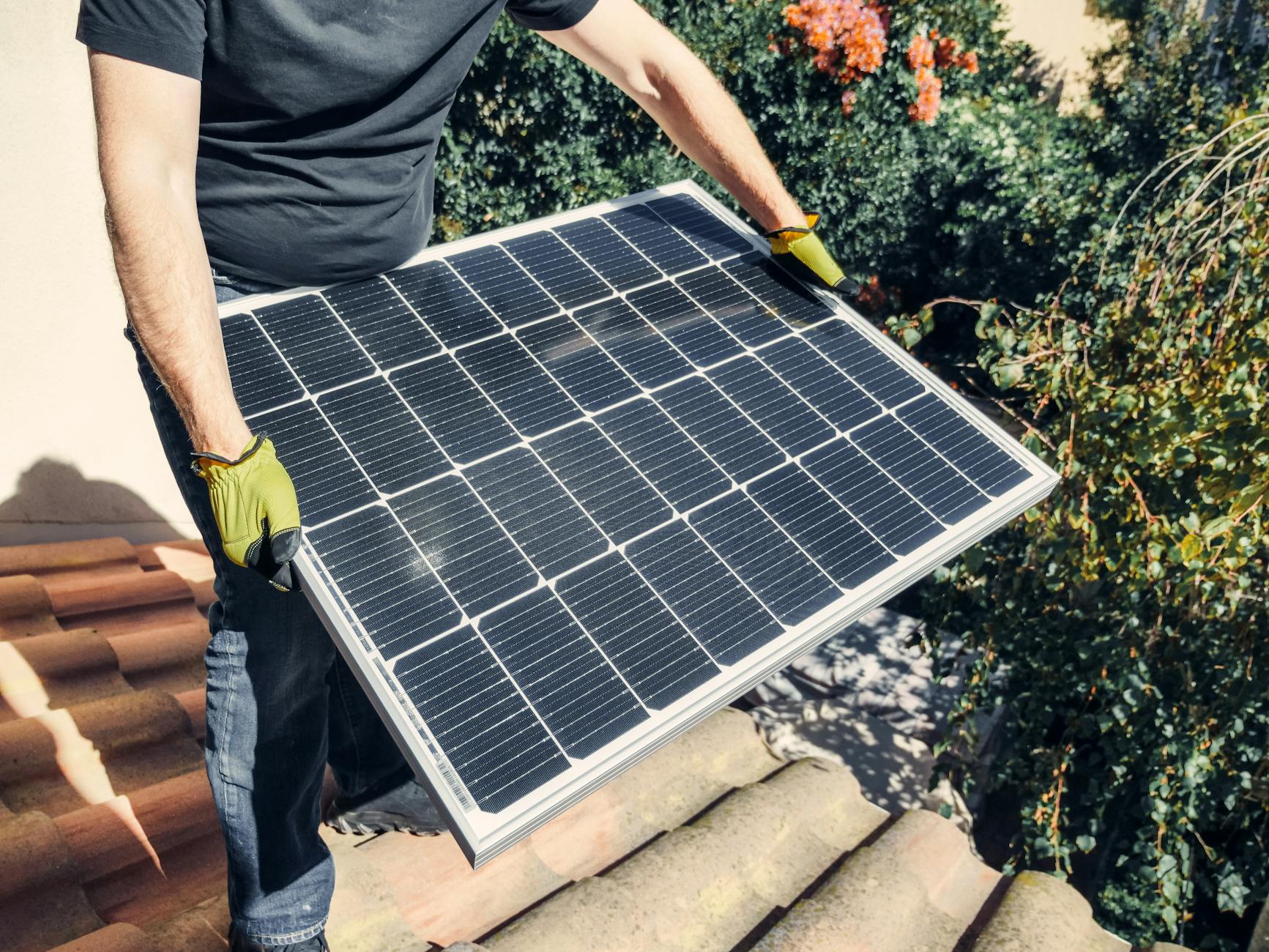
A solar photovoltaic installer in Massachusetts out-earns one in Arkansas by more than $27,000 a year for the same rooftop work, according to Bureau of Labor Statistics Occupational Employment and Wage Statistics figures. That gap, roughly $13 an hour, is wider than the entire annual raise most installers see over their first three years on the job. If you install PV for a living, or you hire the crews who do, the state line you stand on decides more about your paycheck than your years of experience.
The BLS tracks this trade under occupation code 47-2231, Solar Photovoltaic Installers. The national median wage sits at about $23.90 an hour, or roughly $49,700 a year for a full-time schedule. The mean runs slightly higher at $52,400 because a thin band of high-wage states and union markets pulls the average up. Employment in the occupation has grown faster than nearly any other construction trade, with BLS projecting 22 percent growth through the decade, several times the 4 percent average across all occupations. Demand is real, but pay has not converged, which is exactly why the state spread matters so much.
What Solar Installers Actually Earn in 2026
The national baseline
Break the BLS distribution into quarters and the shape becomes clear. The bottom 10 percent of solar installers earn under $17.10 an hour, about $35,600 a year. The 25th percentile lands near $19.80. The median, again, is $23.90. The 75th percentile reaches $29.40, and the top 10 percent clear $37.50 an hour, which annualizes past $78,000. That top decile is not a fluke, it clusters in three places: high-cost coastal states, markets with strong electrical union density, and roles where the installer also holds an electrician's license and gets paid for both skill sets.
Overtime widens the picture further. Residential solar crews routinely book 45 to 50 hours a week during summer install season, and time-and-a-half on a $24 base means the marginal hour pays $36. A crew lead working ten overtime hours a week for the 20-week peak adds roughly $7,200 in premium pay on top of base earnings. If you want to model what those hours actually cost an employer or return to a worker, run the numbers through the overtime calculator before you commit to a season of long days.
Where the money concentrates
The employers paying top wages are not evenly spread. BLS data shows the highest concentration of solar installer jobs in California, followed by Florida, Texas, New York, and Arizona. But high employment and high pay are not the same thing. Florida employs thousands of installers at a median near $21.50 an hour, below the national figure, while Massachusetts employs far fewer but pays a median above $31. Volume markets like Texas and Florida keep wages competitive precisely because there is a deep pool of crews; constrained markets in the Northeast pay a premium to attract and keep licensed talent.
Solar Installer Wages by State
The full spread
The table below draws on BLS OES state wage data for occupation 47-2231, expressed as median hourly and approximate annual figures. The 25th-to-75th-percentile band inside each state is roughly $8 to $11 an hour wide, so treat these medians as the center of a real range, not a fixed rate.
| State | Median hourly | Approx. annual |
|---|---|---|
| Massachusetts | $31.60 | $65,700 |
| Illinois | $30.10 | $62,600 |
| New York | $29.40 | $61,200 |
| Washington | $28.20 | $58,700 |
| New Jersey | $27.90 | $58,000 |
| Oregon | $26.70 | $55,500 |
| California | $26.10 | $54,300 |
| Minnesota | $25.40 | $52,800 |
| Colorado | $24.30 | $50,500 |
| Nevada | $23.10 | $48,000 |
| Arizona | $22.40 | $46,600 |
| Florida | $21.50 | $44,700 |
| Texas | $21.20 | $44,100 |
| Georgia | $20.10 | $41,800 |
| Kentucky | $19.40 | $40,400 |
| Arkansas | $18.40 | $38,300 |
| Mississippi | $18.10 | $37,600 |
The distance from Massachusetts at $65,700 to Mississippi at $37,600 is that $28,100 gap I opened with, and it tracks two variables almost perfectly: prevailing electrical wages and the presence of state renewable mandates. Illinois and New York both carry aggressive clean-energy targets and pay accordingly. The Southeast, with weaker mandates and lower construction wages generally, sits at the bottom.
Reading the table against cost of living
A raw wage lies if you ignore what it costs to live where you earn it. The $31.60 Massachusetts median loses much of its edge against Boston-area housing costs that run 40 to 60 percent above the national average. The $22.40 Arizona median stretches considerably further in Phoenix, where costs sit closer to the national line. For a crew deciding where to chase work, the honest comparison is wage minus local cost, not the headline number. Colorado at $24.30 and Minnesota at $25.40 often deliver more real buying power than California at $26.10 once housing enters the math.
The Apprentice-to-Journeyman Path and the Electrical Crossover
How pay climbs with skill
A first-year solar installer with no prior trade experience typically starts between $17 and $19 an hour, the bottom quartile of the BLS range. By year two, after a full install season and basic training on racking, flashing, and array layout, that worker moves to roughly $21 to $23. The step to crew lead or senior installer, usually around years three to five, pushes pay to $26 to $30 in most markets. The single largest jump comes not from tenure but from the electrical qualification.
Why the license changes everything
Solar work sits on a fault line between two trades. Mounting panels and running racking is construction labor. Wiring the array, tying into the service panel, and terminating at the inverter is electrical work, and in most states that side of the job must be performed or supervised by a licensed electrician. An installer who earns a journeyman electrician's license typically sees a $6 to $10 hourly premium, because they can perform the DC and AC connections that unlicensed crew members legally cannot touch.
That crossover is why solar pay and electrical pay move together. The states topping the solar table, Massachusetts, Illinois, New York, are the same states near the top of the electrician wage rankings, and the correlation is not a coincidence. If you are early in a solar career and want the fastest route to the top decile, an electrical apprenticeship is the clearest path. Compare that trajectory to the entry-level ceiling documented in construction laborer wages by state, and the case for licensing gets stronger with every percentage point.
What the crossover costs employers
For contractors, the licensed-installer premium is a real line item. A crew of four with one licensed electrician at $32 an hour and three installers averaging $23 carries a blended base of about $25.25 an hour. Layer in payroll taxes, workers' compensation, which runs high for roof-based trades, and general liability, and the fully loaded cost climbs 35 to 55 percent above base. Model your own crew mix with the labor burden calculator before you bid a job, because underpricing the licensed portion of the labor is how solar contractors lose money on jobs that looked profitable on the estimate sheet.
Total Compensation Beyond the Base Wage
Benefits add 25 to 35 percent
The hourly figures in the state table describe base wages, not what a solar job actually costs or delivers. Employer-paid benefits typically add 25 to 35 percent on top of base for full-time installers who receive health insurance, paid time off, and retirement contributions. On a $24 base, that means total compensation closer to $30 to $32 an hour once benefits are counted. Non-union residential shops often sit at the low end near 25 percent, while union or prevailing-wage roles push benefit loads past 35 percent because health-and-welfare and pension contributions are set contractually rather than at the employer's discretion.
Prevailing wage on public solar
Solar work funded by public dollars or built under state incentive programs frequently carries prevailing-wage requirements, and those rates run far above the private-market medians in the state table. On a prevailing-wage utility or municipal solar project, a solar installer classification can be set at $38 to $55 an hour in base plus fringe depending on the state and county, sometimes double the private residential rate. States with strong clean-energy mandates increasingly attach prevailing-wage conditions to incentive eligibility, which is one more reason the top-of-table states pay so much better than the private median alone suggests.
Travel and per diem on utility-scale
Utility-scale solar changes the compensation math again. Large field jobs, often built in remote high-sun regions of Texas, Nevada, and Arizona, commonly pay a per diem of $100 to $150 a day for travel and lodging on top of the hourly wage. An installer working a 10-week utility build 300 miles from home can add $5,000 to $7,500 in per diem across the stint, tax-treated separately from wages. That travel premium is why an installer in a lower-median state like Nevada at $23.10 can out-earn a residential installer in a higher-median state who never leaves the metro, once per diem and overtime on a large field job are counted.
FAQ
How much does a solar installer make per hour in 2026?
The national median is about $23.90 an hour according to BLS OES data, roughly $49,700 a year full-time. The range runs from about $17.10 at the 10th percentile to $37.50 at the 90th percentile. State medians vary from roughly $18 in Mississippi and Arkansas to more than $31 in Massachusetts.
Which state pays solar installers the most?
Massachusetts leads with a median near $31.60 an hour, or about $65,700 a year. Illinois and New York follow closely, both above $29. These states combine high prevailing electrical wages with strong renewable-energy mandates that keep demand for licensed crews elevated.
Do you need an electrician's license to install solar?
Not for the mounting and racking, but yes for the electrical connections in most states. Tying the array into the service panel, wiring the inverter, and terminating AC and DC circuits generally require a licensed electrician or direct supervision by one. Installers who earn that license typically see a $6 to $10 hourly premium.
How long does it take to reach top solar installer pay?
Base tenure gets you from roughly $18 to about $30 an hour over three to five seasons. Reaching the top decile above $37 almost always requires the electrical qualification, which adds one to two years of apprenticeship but unlocks the highest-paid portion of the work.
Is solar installation growing as a career?
Yes. BLS projects 22 percent employment growth for solar photovoltaic installers through the decade, several times the average across all occupations. California, Florida, Texas, New York, and Arizona employ the largest numbers, though pay is highest in the Northeast and Pacific states.
Why do Southern states pay solar installers less?
Two reasons show up in the data. Prevailing construction and electrical wages are lower across much of the Southeast, and weaker state renewable mandates mean less policy-driven demand. Florida is the exception on volume, employing thousands of installers, but its median near $21.50 stays below the national figure because the labor pool is deep.
Your Action Item for This Week
Pull your own state's median from the table above, then find the actual local prevailing electrical wage through your state labor department or a local IBEW chapter. Calculate the gap between what a solar installer earns and what a licensed electrician earns in your market. If that gap is $6 an hour or more, and in most states it is, price out the nearest electrical apprenticeship this week. For contractors, run one representative crew through the labor burden calculator and confirm your bids account for the licensed-installer premium, because that single number decides whether your next residential job earns money or bleeds it.