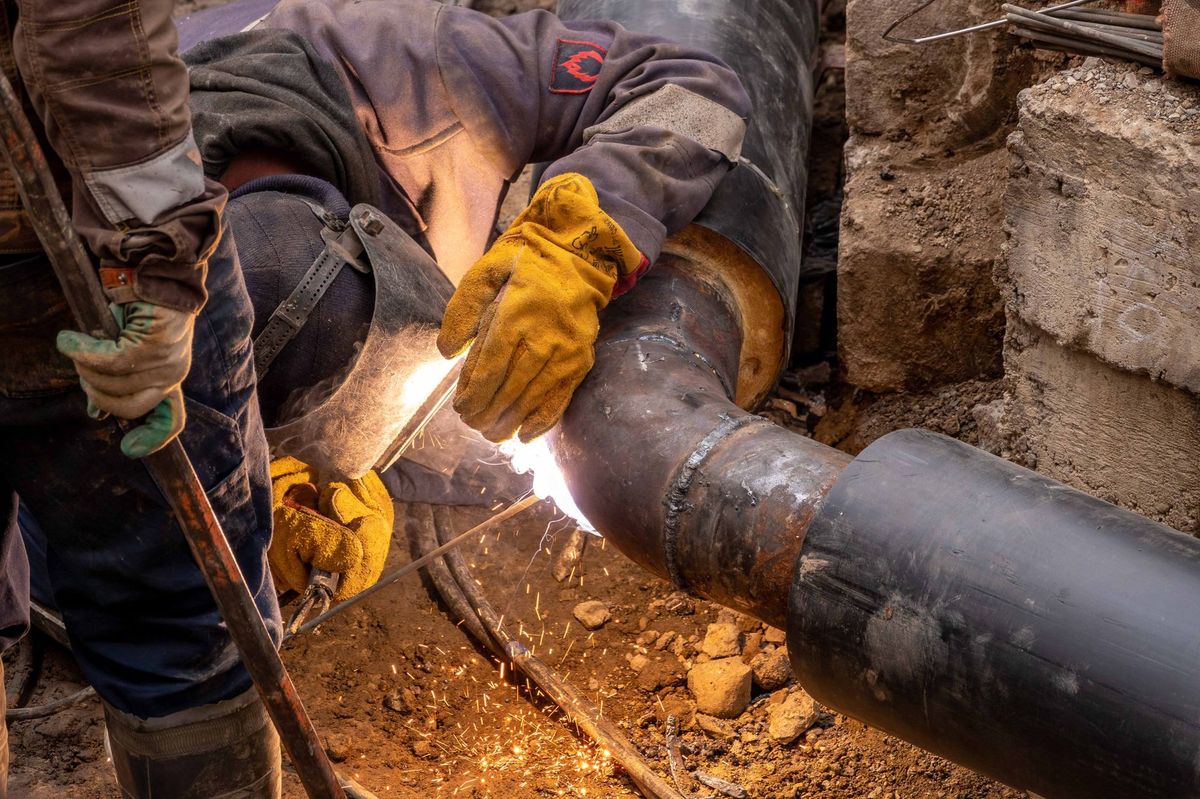
A construction laborer in Hawaii earns a median $37.07 an hour. A laborer in Alabama earns $17.74. Same trench, same compactor, same concrete pour, and the Hawaii median is 109% higher. The national median for SOC 47-2061, Construction Laborers, is $22.66/hr ($47,120/year), according to the Bureau of Labor Statistics' Occupational Employment and Wage Statistics (OEWS) program, May 2025 data, the most recent release. Laborers are the biggest single trade in construction and the first hands on most sites, and the job title covers everything from a first-week cleanup hand to a pipelayer working in a shored trench. Here is every state, the percentiles that matter, and what the paycheck buys after cost of living.
The National Picture: $22.66/hr Across 1.1 Million Workers
BLS OEWS counts 1,096,780 wage-and-salary construction laborers nationally as of May 2025. That is the largest employment count of any construction occupation BLS tracks. The distribution (BLS OEWS, May 2025):
- Median: $22.66/hr ($47,120/year)
- Mean: $25.02/hr ($52,030/year)
- 10th percentile: $16.87/hr
- 25th percentile: $18.57/hr
- 75th percentile: $28.72/hr ($59,740/year)
- 90th percentile: $37.54/hr ($78,090/year)
The bottom half of the distribution is tightly packed: the 10th percentile and the median are less than $6/hr apart. The top half spreads out. From the 75th percentile to the 90th is another $8.82/hr, and the 90th percentile is 2.2 times the 10th. That shape tells you where the money is. A general site laborer in a low-wage market sits near the bottom of the band. A laborer with pipelaying, concrete, or utility skills working in a high-wage metro, often under a union agreement or on prevailing-wage public work, sits near the top. The title stays the same; the pay doesn't.
You will sometimes see a larger headcount for this trade. The BLS Occupational Outlook Handbook reports 1,674,400 jobs in 2025, but that figure combines construction laborers with helpers in other trades. The 1.1 million figure above is SOC 47-2061 alone, which is what the wage table measures. The Handbook projects 6% employment growth for laborers and helpers from 2025 to 2035, faster than the average for all occupations, with about 137,000 openings a year over the decade.
Full State Construction Laborer Wage Table (plus DC)
Every state plus the District of Columbia: median hourly wage, median annual wage, and employment for SOC 47-2061, as published by BLS OEWS for May 2025. BLS published estimates for all 50 states and DC for this occupation. The next OEWS release, covering May 2026, is due in spring 2027.
| State | Median Hourly | Median Annual | Employment |
|---|---|---|---|
| Alabama | $17.74 | $36,900 | 18,400 |
| Alaska | $27.91 | $58,060 | 3,690 |
| Arizona | $22.40 | $46,590 | 37,630 |
| Arkansas | $18.09 | $37,630 | 10,650 |
| California | $28.98 | $60,270 | 88,240 |
| Colorado | $23.03 | $47,900 | 18,680 |
| Connecticut | $28.03 | $58,290 | 7,360 |
| Delaware | $21.90 | $45,550 | 3,240 |
| District of Columbia | $24.05 | $50,020 | 2,090 |
| Florida | $21.17 | $44,030 | 87,040 |
| Georgia | $18.74 | $38,990 | 27,800 |
| Hawaii | $37.07 | $77,110 | 4,580 |
| Idaho | $22.57 | $46,940 | 10,850 |
| Illinois | $29.18 | $60,690 | 35,940 |
| Indiana | $24.07 | $50,070 | 28,600 |
| Iowa | $23.31 | $48,490 | 13,780 |
| Kansas | $21.56 | $44,840 | 9,990 |
| Kentucky | $21.98 | $45,710 | 13,280 |
| Louisiana | $18.38 | $38,230 | 22,100 |
| Maine | $22.32 | $46,430 | 3,960 |
| Maryland | $22.58 | $46,960 | 20,920 |
| Massachusetts | $30.48 | $63,390 | 16,210 |
| Michigan | $23.84 | $49,590 | 28,490 |
| Minnesota | $28.97 | $60,260 | 28,530 |
| Mississippi | $18.13 | $37,710 | 8,800 |
| Missouri | $27.28 | $56,730 | 17,050 |
| Montana | $23.96 | $49,830 | 4,590 |
| Nebraska | $22.72 | $47,260 | 8,530 |
| Nevada | $23.55 | $48,990 | 11,890 |
| New Hampshire | $24.03 | $49,980 | 4,330 |
| New Jersey | $30.80 | $64,060 | 23,590 |
| New Mexico | $18.46 | $38,400 | 12,470 |
| New York | $26.89 | $55,930 | 52,090 |
| North Carolina | $21.50 | $44,720 | 35,620 |
| North Dakota | $23.59 | $49,070 | 5,050 |
| Ohio | $26.96 | $56,080 | 31,910 |
| Oklahoma | $18.92 | $39,360 | 13,710 |
| Oregon | $24.45 | $50,860 | 12,620 |
| Pennsylvania | $23.75 | $49,400 | 35,920 |
| Rhode Island | $27.52 | $57,240 | 2,110 |
| South Carolina | $20.65 | $42,940 | 19,620 |
| South Dakota | $21.98 | $45,710 | 1,780 |
| Tennessee | $21.64 | $45,000 | 26,250 |
| Texas | $19.53 | $40,620 | 123,250 |
| Utah | $22.38 | $46,550 | 20,950 |
| Vermont | $23.36 | $48,580 | 1,430 |
| Virginia | $20.94 | $43,560 | 25,830 |
| Washington | $27.75 | $57,720 | 25,060 |
| West Virginia | $20.51 | $42,670 | 6,620 |
| Wisconsin | $26.97 | $56,100 | 20,330 |
| Wyoming | $22.13 | $46,030 | 3,350 |
| National | $22.66 | $47,120 | 1,096,780 |
27 of the 51 jurisdictions sit above the national median. The three largest laborer workforces are Texas (123,250 workers, $19.53), California (88,240, $28.98), and Florida (87,040, $21.17). Together they employ about 27% of the country's construction laborers, and two of the three pay below the national median. Texas alone employs more laborers than any other state by a wide margin, at a median about $3.13/hr under the national figure.
Top 5 and Bottom 5: A $19.33/hr Spread
Hawaii posts the highest median at $37.07/hr and Alabama the lowest at $17.74, a $19.33/hr spread (BLS OEWS, May 2025).
Top 5
- Hawaii: $37.07/hr ($77,110/year), 4,580 laborers. More than $6/hr above any other state.
- New Jersey: $30.80/hr ($64,060/year), 23,590 laborers.
- Massachusetts: $30.48/hr ($63,390/year), 16,210 laborers.
- Illinois: $29.18/hr ($60,690/year), 35,940 laborers.
- California: $28.98/hr ($60,270/year), 88,240 laborers.
Minnesota ($28.97) misses the top five by a penny, followed by Connecticut ($28.03), Alaska ($27.91), Washington ($27.75), and Rhode Island ($27.52).
The 75th percentile shows how far up the scale runs in some of these markets. In Illinois the 75th-percentile laborer earns $45.79/hr, and in New Jersey $45.44/hr (BLS OEWS, May 2025). Those figures sit well above the state medians and are in the range you would expect for heavy-civil and union work in the Chicago and New York metro areas. A laborer doing that kind of work in either state should benchmark against the 75th percentile, not the statewide median.
New York is a useful outlier the other way. Its statewide median is $26.89, below Missouri ($27.28). New York City laborers on large commercial and infrastructure jobs earn far more than that, but the statewide figure blends them with lower-paid work upstate.
Bottom 5
Alabama ($17.74), Arkansas ($18.09), Mississippi ($18.13), Louisiana ($18.38), and New Mexico ($18.46). Georgia ($18.74) and Oklahoma ($18.92) are close behind. At $17.74/hr, a full-time year at 2,080 hours comes to about $36,900, which is what the OEWS annual figure for Alabama shows. Laborers often do not get 2,080 guaranteed hours, so actual earnings can run lower.
OEWS covers wage-and-salary workers only. A laborer paid cash or on a 1099 through a labor broker is not in these numbers. A misclassified worker loses workers' compensation coverage, unemployment insurance, and overtime protection under FLSA Section 7, and pays both halves of Social Security and Medicare through self-employment tax. In a trade with trench, struck-by, and heat exposure, losing comp coverage is a serious risk.
Union vs. Non-Union: Compare the Package, Not the Base
Construction laborers organize under the Laborers' International Union of North America (LIUNA). There is no official national figure for union laborer pay: scale is negotiated local by local, and BLS OEWS does not split wages by union status. Any national "union average" you see quoted without a named source should be treated with suspicion.
What the state table does show is a pattern. Most of the highest medians are in states with strong building-trades presence and state prevailing-wage laws (New Jersey, Massachusetts, Illinois, California, Minnesota), and eight of the bottom ten (Alabama, Arkansas, Mississippi, Louisiana, Georgia, Oklahoma, West Virginia, and South Carolina) appear on the Department of Labor's list of states without a state prevailing-wage law. On federal and federally assisted jobs over $2,000, the Davis-Bacon Act sets minimum wage and fringe rates by classification and county regardless of state law; see our guide to Davis-Bacon prevailing wages for federal bids.
When you compare offers, compare total package per hour. A union laborer's package adds negotiated fringes (pension, health and welfare, training) paid per hour worked on top of the posted rate. Get your local's current wage sheet for the real number in your area. Laborers most often move up into equipment operation or carpentry; see heavy equipment operator wages by state and concrete finisher wages by state for the next rungs.
Every hour past 40 in a workweek is time-and-a-half for non-exempt workers under FLSA Section 7, and site laborers are non-exempt however they are paid. Back-wage claims can generally be filed within two years, or three years for a willful violation (29 U.S.C. 255). Check what your check should say with the overtime calculator.
Cost-of-Living Adjustment: The Midwest Moves Up
Nominal wages mislead. Divide each state's median by its Regional Price Parity from the Bureau of Economic Analysis (2024 values, national average = 100, retrieved via FRED) and the ranking shifts:
| State | Median Hourly | BEA RPP (2024) | Adjusted Wage |
|---|---|---|---|
| Hawaii | $37.07 | 110.0 | $33.72 |
| Missouri | $27.28 | 90.8 | $30.04 |
| Minnesota | $28.97 | 98.6 | $29.38 |
| Illinois | $29.18 | 100.0 | $29.19 |
| Ohio | $26.96 | 92.8 | $29.06 |
| Massachusetts | $30.48 | 105.8 | $28.82 |
| Wisconsin | $26.97 | 94.1 | $28.66 |
| New Jersey | $30.80 | 108.8 | $28.31 |
| California | $28.98 | 110.7 | $26.17 |
| New York | $26.89 | 107.9 | $24.92 |
| Texas | $19.53 | 97.1 | $20.12 |
| Georgia | $18.74 | 96.3 | $19.46 |
Hawaii stays first even after its high prices are counted. Missouri jumps to second, and Ohio and Wisconsin move into the top seven, because prices in all three run below the national average. California and New York both slide once prices are counted. At the bottom, Georgia has the lowest adjusted wage in the country at $19.46, just below Alabama ($19.97), New Mexico ($20.02), and Texas ($20.12). For a laborer who can move, the Midwest markets with strong building trades (Missouri, Minnesota, Illinois, Ohio, Wisconsin) pay more real money than most of the coasts.
The Career Ladder: Laborer Is an Entry Point
The laborer classification has the lowest formal entry barrier in construction. The BLS Occupational Outlook Handbook lists short-term on-the-job training as typical, and notes that some laborers complete apprenticeship programs. Registered apprenticeships run under 29 CFR Part 29; under 29 CFR 29.5, a time-based program requires at least 2,000 hours of on-the-job learning, and the regulation recommends at least 144 hours of related instruction for each year of apprenticeship. Ask any program for its written wage schedule before you sign.
Inside the classification, skills raise pay:
- Excavation work. Under OSHA 29 CFR 1926.651(k), a competent person must inspect excavations, adjacent areas, and protective systems daily before work starts. Laborers who can take on that role are worth more to a utility or site contractor.
- Confined spaces. 29 CFR 1926 Subpart AA covers confined-space entry in construction, and trained entrants and attendants are needed on vault, manhole, and tank work.
- Concrete, pipelaying, and asphalt. These are where the 75th-percentile wages tend to show up.
How the trades compare on apprenticeship volume is covered in our apprenticeship program rankings.
Outlook
Three things to watch:
- Openings. BLS projects about 137,000 openings a year for laborers and helpers through 2035, most from workers leaving the occupation. Steady turnover keeps demand for new hands high.
- The next data point. The May 2026 OEWS release, due in spring 2027, will show whether state medians moved. Until then, the May 2025 numbers above are the official benchmark.
- Classification on public work. On Davis-Bacon and state prevailing-wage jobs, the wage is set by classification. A laborer doing operator or mason-tender work may be owed a different rate than general labor under the posted wage determination.
For contractors pricing labor-heavy work, the wage is only part of the cost. Workers' compensation, payroll taxes, and liability stack on top, and comp rates vary by state, classification, and carrier. Run true crew cost through the labor burden calculator before you price a bid.
Frequently Asked Questions
What state pays construction laborers the most in 2026?
Hawaii, at a $37.07/hr median ($77,110/year) in the latest BLS OEWS data (May 2025), followed by New Jersey at $30.80/hr and Massachusetts at $30.48/hr. Hawaii also ranks first after adjusting for cost of living, at an effective $33.72/hr, with Missouri second at $30.04/hr.
What is the national median wage for construction laborers?
$22.66 an hour, or $47,120 a year, for SOC 47-2061 (BLS OEWS, May 2025). The 25th percentile is $18.57/hr, the 75th is $28.72/hr, and the 90th is $37.54/hr.
Which state pays construction laborers the least?
Alabama, at a $17.74/hr median, followed by Arkansas ($18.09), Mississippi ($18.13), Louisiana ($18.38), and New Mexico ($18.46). After adjusting for cost of living, Georgia has the lowest effective wage at $19.46/hr.
How much do union laborers make compared to non-union?
There is no official national split. BLS does not publish OEWS wages by union status, and LIUNA scale is set local by local. The highest state medians are mostly in states with strong building-trades presence and state prevailing-wage laws. Compare total package per hour, including fringes, and get your local's wage sheet for the actual figure.
Do construction laborers get overtime pay?
Yes. FLSA Section 7 requires time-and-a-half after 40 hours in a workweek for non-exempt workers, and site laborers are non-exempt whether paid hourly, by the day, or by the piece. Back-wage claims generally must be filed within two years, or three years for willful violations, under 29 U.S.C. 255.
How many construction laborers are there?
BLS OEWS counts 1,096,780 wage-and-salary construction laborers as of May 2025. The Occupational Outlook Handbook's larger figure of 1,674,400 jobs combines laborers with helpers in other trades.
Your Action Item for This Week
If you work as a laborer: find your state in the table and compare your rate. If you do pipe, concrete, or trench work in Illinois, New Jersey, or another high-wage market, compare against your state's 75th percentile, not the median. Confirm your pay stub says W-2, and run last month's hours through the overtime calculator.
If you employ laborers: check every hand against the state table, and run true crew cost through the labor burden calculator before your next bid.
Sources and data cited
- BLS Occupational Employment and Wage Statistics (OEWS), SOC 47-2061, May 2025 data (national and state medians, percentiles, employment), retrieved via the BLS Public Data API: www.bls.gov/oes/current/oes472061.htm
- BLS Occupational Outlook Handbook, Construction Laborers and Helpers (2025 jobs, 2025-2035 projections, training): www.bls.gov/ooh/construction-and-extraction/construction-laborers-and-helpers.htm
- BEA Regional Price Parities by State, 2024, retrieved via FRED (state series such as MORPPALL)
- FLSA overtime, 29 U.S.C. 207; limitations period, 29 U.S.C. 255
- OSHA 29 CFR 1926.651(k) (excavation inspections), 29 CFR 1926 Subpart AA (confined spaces in construction)
- DOL Registered Apprenticeship standards, 29 CFR 29.5
- DOL Wage and Hour Division, State Prevailing Wage Laws table (last updated January 1, 2023): www.dol.gov/agencies/whd/state/prevailing-wages
- Related: Heavy Equipment Operator Wages by State 2026 | Concrete Finisher Wages by State 2026