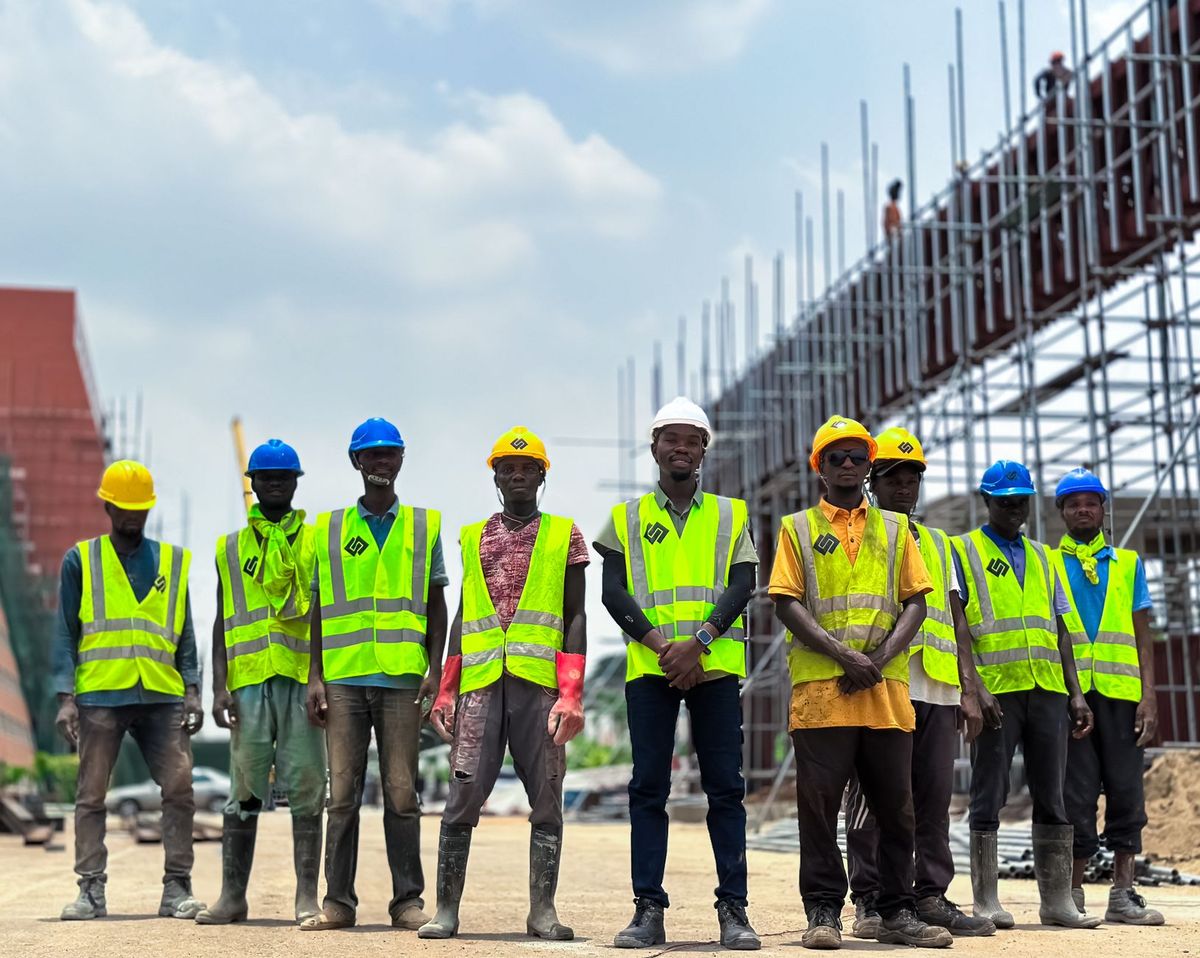
Bureau of Labor Statistics Current Population Survey data shows that workers aged 18-27 — Generation Z — now comprise approximately 12.4% of the construction workforce, up from 8.1% three years ago. That 4.3 percentage point increase represents roughly 340,000 additional Gen Z workers entering construction, making it the fastest-growing demographic segment in an industry desperate for bodies.
But the data is clear — Gen Z workers are not simply younger versions of the millennials and Gen Xers who preceded them. They bring fundamentally different expectations about compensation transparency, career development, technology, work-life integration, and workplace culture. Contractors who treat them like the 22-year-olds of 2005 are losing them within the first year at alarming rates.
The Demographic Shift in Numbers
BLS data provides a clear picture of generational composition in construction (2025):
Construction workforce by generation:
- Baby Boomers (born 1946-1964): 11.2% — down from 22.4% a decade ago
- Generation X (born 1965-1980): 31.8% — stable but beginning to decline
- Millennials (born 1981-1996): 44.6% — the dominant cohort
- Generation Z (born 1997-2012): 12.4% — the fastest-growing segment
The Boomer exodus is accelerating. Approximately 180,000 construction workers aged 60+ retired in the most recent year, and the pipeline of incoming Gen Z workers has only partially offset this loss. The mathematical reality: construction needs Gen Z at a rate and scale that no previous generation has been recruited.
Gen Z construction workers by trade:
- General laborers: 28% — the entry point for most
- Carpenter helpers/apprentices: 14%
- Electrical apprentices: 12%
- HVAC apprentices: 8%
- Plumbing apprentices: 7%
- Equipment operators: 6%
- All other: 25%
The concentration in laborer positions reflects Gen Z's relative youth and inexperience, but the strong representation in skilled trade apprenticeships is encouraging — it suggests that a meaningful portion intends to build careers in construction, not just pass through temporarily.
Safety note: OSHA 29 CFR 1926.21(b)(2) requires that employers instruct each employee in the recognition and avoidance of unsafe conditions. New workers — regardless of generation — face elevated injury risk during their first year. BLS data shows workers under 25 have a non-fatal injury rate 18% higher than workers aged 25-54 in construction. Gen Z workers deserve the same thorough safety onboarding as any other employee, delivered in formats they actually absorb. If your safety orientation is a 4-hour lecture with a VHS tape from 2003, you are failing these workers before they start.
What Gen Z Wants: Survey Data and Behavioral Evidence
Multiple industry surveys and BLS data provide insight into what differentiates Gen Z construction workers:
1. Pay Transparency (85% Say It's Essential)
The National Association of Home Builders workforce survey found that 85% of Gen Z construction workers consider pay transparency — knowing exactly what they can earn at each career stage — essential in deciding whether to stay with an employer. This compares to 62% of millennials and 41% of Gen X workers who rated it essential.
Gen Z entered the workforce during the pay transparency movement. Many states now require salary ranges in job postings. They expect to know:
- Exactly what they earn today
- Exactly what they will earn after completing apprenticeship
- Exactly what foremen, superintendents, and project managers earn
- How bonuses are calculated and distributed
Contractors who post job listings saying "competitive pay" without a dollar figure are losing Gen Z applicants before the interview. Industry data shows that job postings with specific salary ranges receive 42% more applications from workers under 28 than identical postings without ranges.
2. Technology as a Baseline Expectation (Not a Perk)
For Gen Z, technology is not innovative — it is infrastructure. Workers who grew up with smartphones, GPS, and instant information find it jarring to encounter jobsites where:
- Timesheets are paper-based
- Safety meetings use printed handouts
- Plans are distributed as rolled paper drawings
- Communication happens through a chain of phone calls
AGC of America survey data shows that 73% of Gen Z construction workers say technology availability influences their employer choice. Specifically, they expect:
- Digital timekeeping via mobile app (not paper time cards)
- Digital plan access on tablets or phones (not plan rooms with paper rolls)
- Text/app-based communication for schedule changes and updates
- Online training options for continuing education and certification
- Digital pay stubs and benefits management
Contractors who have implemented construction technology platforms report 28% higher retention among workers under 28. The investment is not about being cutting-edge — it is about meeting a baseline expectation from a generation that has never known a non-digital world.
3. Clear Career Pathways (The 5-Year Horizon)
Gen Z workers are more likely than any previous generation to ask during the interview: "Where will I be in 5 years?" BLS data and industry surveys reveal that:
- 68% of Gen Z construction workers want a written career development plan within their first 90 days
- 54% say they would leave for an employer offering clearer advancement
- 41% are interested in eventually starting their own construction company
The implication: contractors must articulate a clear career ladder, including:
- Timeline: How long to move from helper to apprentice to journeyman to foreman
- Milestones: Specific skills, certifications, and hours required at each level
- Compensation: Exact wage/salary at each stage (see point #1 — these connect)
- Mentorship: Who will guide them through each transition
Construction companies that have implemented formal career pathway programs report 34% lower first-year turnover among Gen Z workers.
4. Work-Life Balance Is Non-Negotiable
This is where the greatest generational friction occurs. Construction has traditionally been a "work when there's work" industry with 50-60 hour weeks during peak seasons, mandatory Saturdays, and limited schedule predictability.
Gen Z workers push back against this model:
- 72% say they would take a lower-paying job with predictable hours over a higher-paying one with unpredictable schedules
- 64% say mandatory Saturday work is a negative factor in employer choice
- 58% rate work-life balance as more important than total compensation
The data is clear — this is not laziness. Gen Z workers average 42.8 hours per week in construction, compared to 44.2 hours for all construction workers. They are working — they just resist open-ended time commitments.
Contractors adapting to this reality are:
- Scheduling crew hours at least 2 weeks in advance
- Making Saturday work voluntary with premium pay (not mandatory at straight time)
- Implementing 4x10 schedules (four 10-hour days) where project conditions allow — this is the most frequently requested schedule format among Gen Z workers
- Providing schedule predictability as an explicit benefit during recruitment
5. Mental Health and Workplace Culture
Gen Z is the first construction generation to openly discuss mental health on the jobsite. Surveys show:
- 47% of Gen Z construction workers say they have experienced anxiety or depression related to work
- 38% say they would use employer-provided mental health resources if available
- 62% say jobsite culture (hazing, harassment, bullying) is a factor in whether they stay
- 55% say they have witnessed workplace behavior they considered unacceptable but did not report
This generation has lower tolerance for the "tough it out" culture that has traditionally characterized construction jobsites. They are more likely to leave quietly than to endure workplace hostility.
Safety note: The construction industry's suicide rate is five times the national average according to CDC data. OSHA's Safe + Sound campaign (OSHA.gov/safeandsound) promotes addressing worker wellbeing as part of a comprehensive safety program. Gen Z's willingness to discuss mental health openly is not a weakness — it may be the generation that finally breaks through the stigma that costs the industry hundreds of lives per year. Contractors should see this as an opportunity, not a nuisance.
The Retention Problem: First-Year Turnover
Despite growing Gen Z entry into construction, retention remains challenging:
- First-year turnover among Gen Z construction workers: 46%
- Compare to first-year turnover for millennials: 32%
- Compare to first-year turnover for Gen X: 24%
Nearly half of Gen Z workers who enter construction leave within 12 months. Exit interview data from major contractors reveals the top reasons:
- Found better-paying opportunity outside construction (28%)
- Physical demands exceeded expectations (22%)
- Poor workplace culture (19%)
- Lack of advancement/training (16%)
- Schedule unpredictability (15%)
The physical demands issue (#2) reflects a recruitment problem — many Gen Z workers enter construction without fully understanding what the work entails. Better pre-employment communication about physical requirements, combined with graduated physical conditioning during the first 30 days, reduces this attrition.
Recruiting Strategies That Work
Contractors successfully attracting Gen Z workers share common approaches:
Digital-first recruitment:
- 92% of Gen Z job seekers start their search on a mobile device
- Job postings must be mobile-optimized, visually engaging, and include specific pay ranges
- Video testimonials from young workers on jobsites outperform written job descriptions by 3.2x in click-through rates
- Instagram, TikTok, and YouTube are more effective recruiting channels than Indeed or Craigslist for this demographic
High school and community college partnerships:
- Contractors partnering with local schools for career awareness programs report 18% higher application rates from Gen Z
- Pre-apprenticeship programs that introduce construction during junior and senior year create a pipeline of informed, interested candidates
- Offering paid summer internships to high school students (complying with child labor provisions under 29 CFR 570) creates early engagement
Apprenticeship marketing:
- Framing apprenticeship as "earn $45K-$55K while training for a career that pays $80K+" resonates with Gen Z's pragmatism about student debt
- Comparing 4-year apprenticeship earnings to 4-year college costs (accumulated debt vs. accumulated earnings) is a powerful recruiting message
- Apprenticeship completion should be celebrated with the same significance as a college graduation
Starting wage competitiveness:
- Gen Z will not accept below-market starting wages on the promise of future earnings
- BLS data shows that Gen Z construction workers who start at $20+/hour are 2.3x more likely to remain past year one than those starting below $17/hour
- Benefits enrollment from day one (not after 90 days) significantly impacts retention
The Technology Bridge
Gen Z's comfort with technology creates an opportunity for the construction industry to accelerate digital transformation:
Current technology adoption by generation:
- Gen Z workers using construction-specific software daily: 68%
- Millennial workers: 52%
- Gen X workers: 34%
- Boomer workers: 18%
Gen Z workers are often the most capable users of:
- BIM and 3D visualization tools
- Drone operation for site surveys and progress monitoring
- GPS-guided equipment operation
- Digital safety reporting and inspection apps
- Time-lapse and photo documentation
Smart contractors are leveraging Gen Z's technology fluency by:
- Assigning technology champion roles to younger workers
- Pairing Gen Z workers with experienced tradespeople in mutual mentoring (tech skills flowing one direction, craft skills the other)
- Using technology proficiency as a pathway to advancement
What Contractors Must Change
The bottom line for contractors seeking to attract and retain Gen Z workers:
Stop doing:
- Posting jobs without salary ranges
- Using paper-based processes when digital alternatives exist
- Mandatory unpaid orientation/training periods
- Hazing, harassment, or "earning your place" culture
- Dismissing mental health discussions
Start doing:
- Publishing clear compensation structures from entry level through management
- Investing in basic technology (digital timekeeping, mobile plan access, app-based communication)
- Creating written career development plans for every worker within 90 days
- Implementing predictable scheduling with voluntary overtime
- Training supervisors in inclusive leadership and mental health awareness
Keep doing:
- Maintaining rigorous safety programs — Gen Z rates safety as their #1 workplace concern
- Providing hands-on training and mentorship — they want to learn by doing
- Offering physical challenges and variety — they chose construction partly because they do not want a desk job
- Building team identity and crew cohesion — they want to belong to something
The data is clear — Gen Z is not going to adapt to construction's traditional culture. Construction must adapt to Gen Z, or face a workforce crisis that makes the current labor shortage look manageable. The good news: the changes Gen Z demands — transparency, technology, clear pathways, and respectful culture — are changes that benefit every worker on the jobsite, regardless of generation.
Related Reading
Frequently Asked Questions
What is the average salary for gen z construction workers?
Industry analysts tracking gen z construction workers report that 2026 has brought measurable shifts. With data showing 12.4%, the trend line suggests continued movement through the remainder of the year. Builders should factor this into both current bids and forward-looking project estimates.
How has gen z construction workers changed in the last 5 years?
The geographic landscape for gen z construction workers is shifting in 2026. Data indicating 8.1% underscores the importance of market selection for contractors seeking growth. Western and southeastern states continue to attract disproportionate investment relative to their population share.
What states have the highest gen z construction workers?
Year-over-year comparisons for gen z construction workers show meaningful change. The figure of 340,000 from current data represents a shift that contractors need to account for in their planning and bidding strategies. Historical trend analysis suggests this trajectory may continue through the end of the year.