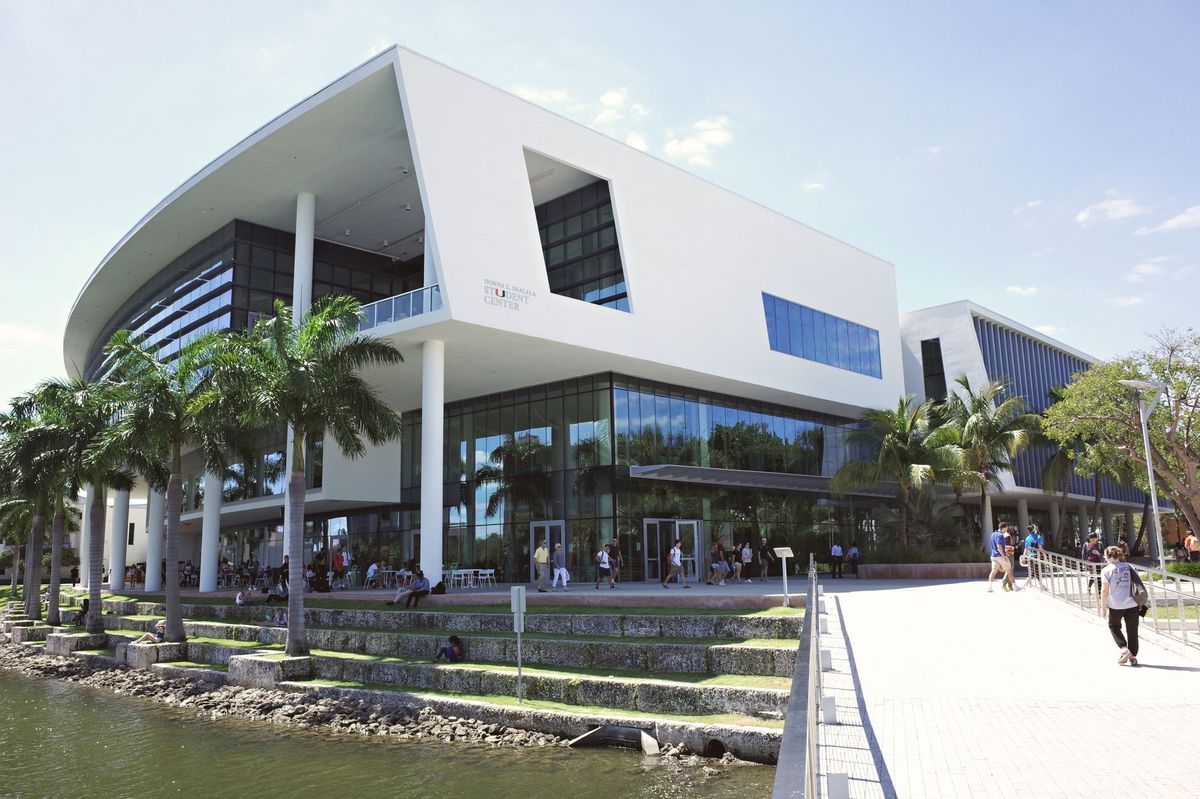
The math: community college construction has reached $12 billion in active bond-funded projects across approximately 400 campus locations in 38 states. The spending is concentrated in states with recent bond measure approvals — California alone accounts for $4.5 billion through Proposition 51 and local bond measures — but the construction wave extends across the country as community colleges modernize aging campuses and expand workforce training capacity.
Bottom line: community college construction is among the most politically well-supported categories of public construction spending. Bond measures for community college capital improvements pass at rates exceeding 70% nationally, reflecting broad public support for workforce development, vocational training, and affordable higher education access. For contractors, this translates to a large, geographically distributed, and reliably funded construction market.
What's Being Built
Community college construction spans several building types, each with distinct construction requirements and cost profiles:
Workforce Training and Career Technical Education (CTE) Facilities: $4.2 billion. The fastest-growing category reflects community colleges' expanding role in workforce development. CTE facilities include welding shops with ventilation systems, automotive technology labs with vehicle lifts, healthcare simulation labs with patient simulators, advanced manufacturing spaces with CNC equipment, and culinary arts kitchens with commercial equipment. Construction costs for CTE facilities average $400 to $600 per SF, higher than standard academic buildings due to specialized mechanical systems, heavy-duty floors, and industrial equipment infrastructure.
Science and Technology Buildings: $3.1 billion. STEM education facilities with teaching laboratories cost $500 to $800 per SF. Community college science buildings must provide the same laboratory infrastructure as university buildings — fume hoods, chemical storage, emergency showers, lab-grade HVAC — but at lower cost per SF because they serve teaching rather than research functions.
Student Services and Learning Centers: $2.4 billion. Modern student services buildings integrate enrollment, financial aid, counseling, tutoring, and library services into a single facility designed for efficiency and student accessibility. Construction costs average $350 to $500 per SF.
Campus Infrastructure and Modernization: $2.3 billion. Replacing aging mechanical systems, upgrading electrical infrastructure, improving accessibility, and addressing deferred maintenance across campus building portfolios.
Funding and Procurement
Community college construction is funded primarily through local general obligation (GO) bond measures approved by voters. California's community college system exemplifies the scale: Proposition 51 (2016) authorized $2 billion in state matching funds for community college construction, leveraging local bond measures that have raised an additional $20+ billion statewide over the past decade.
Other states with major community college bond programs include Texas ($2.1 billion in active community college bonds across multiple districts), Illinois ($1.4 billion through the Community College Capital Development Program), Florida ($980 million through PECO and local bonds), and New York ($780 million through SUNY capital plans).
Community college construction procurement follows public bidding requirements, with most states requiring competitive sealed bidding for construction contracts exceeding threshold amounts ($25,000 to $200,000 depending on state). Design-build delivery is increasingly authorized for community college projects in states that have adopted alternative delivery legislation.
Business tip: Community college construction is ideal for mid-size general contractors ($50 to $500 million annual revenue) who want institutional building experience without the complexity and bonding requirements of university or hospital projects. Individual projects typically range from $5 to $80 million, with occasional larger campus-wide programs reaching $200+ million.
Contractor Landscape and Workforce
Community college construction employs an estimated 40,000 to 50,000 workers nationally across active projects. The contractor base includes regional general contractors with public institutional experience, mechanical and electrical contractors experienced in laboratory and industrial ventilation systems, and specialty contractors for laboratory casework, fume hoods, and CTE equipment installation.
The geographic distribution of community college construction — over 400 active campus locations in 38 states — creates construction opportunities in virtually every metropolitan area and many rural communities, making it one of the most broadly accessible segments of the institutional construction market.
Bottom line: community college construction is a $12 billion market with reliable bond-funded revenue, broad geographic distribution, and manageable project sizes that create opportunities for contractors of all sizes. The workforce training focus ensures continued political support and funding as communities invest in career pathway infrastructure.
Career Technical Education Facility Design
CTE facilities are the fastest-growing and most technically demanding category of community college construction. These facilities must replicate real-world work environments while maintaining educational flexibility and meeting building code requirements for institutional occupancies.
Healthcare Simulation Labs. Nursing and allied health programs require clinical simulation laboratories equipped with high-fidelity patient simulators ($50,000 to $250,000 each), medical gas systems (oxygen, vacuum, compressed air), nurse call and patient monitoring systems identical to hospital installations, medication dispensing systems for training, and observation rooms with one-way glass and AV recording for instructor evaluation. Healthcare simulation lab construction costs $600 to $900 per SF — comparable to actual hospital clinical space.
Advanced Manufacturing Labs. Manufacturing technology programs require heavy-duty floor slabs (8 to 12 inches reinforced concrete), electrical systems providing 200A or larger dedicated circuits for CNC machines and welding equipment, industrial ventilation systems sized for welding fumes, cutting fluid mist, and 3D printing emissions, compressed air systems at 100+ PSI for pneumatic equipment, and crane systems (overhead bridge or jib cranes with 1 to 5-ton capacity) for material handling.
Culinary Arts Facilities. Commercial kitchen construction for culinary programs requires Type I exhaust hoods with fire suppression, makeup air units, grease interceptors, commercial refrigeration and freezer walk-ins, bakery equipment including deck ovens, proof boxes, and mixers, and dining room or student-run restaurant space for front-of-house training. Culinary facility construction costs $500 to $700 per SF including equipment.
Automotive Technology Labs. Automotive programs require vehicle lifts (2-post and 4-post, $5,000 to $15,000 each), alignment racks, brake lathes, engine analyzers, vehicle exhaust extraction systems, and compressed air throughout. Floor drains with oil-water separators are required for vehicle maintenance areas.
Campus Master Planning and Phased Construction
Community college construction rarely involves building a single facility in isolation. Most construction programs emerge from campus master plans that envision a sequence of projects over 10 to 20 years, with each project contributing to the overall campus vision while functioning independently.
Master plan-driven construction creates strategic considerations for contractors. Early-phase projects must accommodate future buildings, utility extensions, and infrastructure improvements anticipated in later phases. Utility infrastructure (water, sewer, electrical, data) is often oversized in early phases to serve future buildings, adding 10 to 15% to initial infrastructure costs but avoiding costly system upgrades when future phases are constructed.
For contractors, understanding the campus master plan provides visibility into future construction opportunities beyond the immediate project. A contractor who performs well on Phase 1 of a bond-funded campus construction program is well-positioned for subsequent phases, potentially creating a multi-year relationship with the college that spans multiple projects.
Business tip: Community college bond-funded construction programs typically include 5 to 15 individual projects rolled out over 8 to 12 years. Contractors who invest in building relationships with the college's facilities department and bond program management team during early-phase projects gain significant advantages for subsequent phase opportunities. Many colleges use pre-qualification processes that weight past performance on the same campus more heavily than general construction experience.
Bond Measure Campaign and Construction Timeline
Understanding the timeline from bond measure passage to construction completion is important for contractors planning to pursue community college work. The typical sequence spans bond measure campaign and election (12 to 18 months before construction), bond sale and program establishment (3 to 6 months after election), architectural design and environmental review (6 to 18 months), construction document preparation (4 to 8 months), bidding and contractor selection (2 to 4 months), construction (12 to 30 months depending on project size), and commissioning and occupancy (2 to 4 months). Total timeline from bond passage to building occupancy: 3 to 5 years for typical projects.
For contractors, this means that bond measures approved in 2026 will generate construction opportunities in 2028 to 2030. Tracking bond measure elections across your target market provides 2 to 3 years of advance notice for workforce planning and business development.
Renovation vs New Construction
Many community college bond programs include both new construction and renovation projects, reflecting the need to both expand capacity and modernize existing facilities. Renovation projects present unique challenges on community college campuses including maintaining campus operations during construction (class schedules, parking, pedestrian circulation), hazardous material abatement in buildings constructed with asbestos, lead paint, and PCB-containing materials, structural modifications to accommodate modern laboratory equipment loads and HVAC systems, and technology infrastructure upgrades including fiber optic backbone, wireless access points, and classroom AV systems.
Renovation costs at community colleges typically range from $250 to $500 per SF, compared to $350 to $600 per SF for new construction. However, renovation projects frequently encounter hidden conditions — structural deterioration, undocumented hazardous materials, outdated utility infrastructure — that generate change orders adding 10 to 20% to the original contract value.
Energy and Sustainability Requirements
State building codes and community college system sustainability policies increasingly require new and renovated buildings to meet enhanced energy performance standards. California community colleges must comply with Title 24 energy requirements and increasingly target Zero Net Energy (ZNE) performance. Several other state systems have adopted LEED Silver or equivalent as a minimum standard for new construction.
Sustainable construction features common in community college projects include rooftop solar photovoltaic arrays (generating 30 to 70% of building electrical demand), high-efficiency HVAC systems (variable refrigerant flow, ground-source heat pumps, or dedicated outdoor air systems with energy recovery), building envelope optimization (high-performance glazing, continuous insulation, air barrier systems), water conservation (low-flow fixtures, recycled water for irrigation, rainwater harvesting), and cool roof systems reducing urban heat island effect and cooling loads.
These sustainability requirements add 5 to 10% to construction costs but generate operating savings of 30 to 50% compared to code-minimum buildings, with payback periods of 5 to 12 years depending on utility rates and climate zone.
Library and Learning Resource Centers
Community college libraries — increasingly called Learning Resource Centers (LRCs) to reflect their expanded mission — are among the most construction-intensive buildings on campus. Modern LRCs combine traditional library functions (book collections, periodicals, reference materials) with computer labs, tutoring centers, writing labs, group study rooms, media production studios, and maker spaces.
LRC construction costs average $400 to $600 per SF, reflecting the diverse functional requirements and technology intensity of these multipurpose facilities. A typical 30,000 to 50,000 SF community college LRC costs $12 to $30 million and includes open-plan study areas with extensive power and data access at every seat, enclosed group study rooms (8 to 20 rooms with glass walls for visibility and acoustic separation), computer labs with 50 to 200 workstations requiring high-density electrical and data distribution, tutoring and writing centers with flexible partition systems, media production spaces including video recording studios and podcast rooms with professional acoustic treatment, and maker spaces with 3D printers, laser cutters, and other fabrication equipment requiring specialized ventilation and power.
Parking and Transportation Infrastructure
Community college campus construction includes significant parking and transportation infrastructure reflecting the commuter-oriented nature of most community college campuses. Unlike residential universities where students live on campus, community colleges must provide parking for virtually every student, faculty member, and staff person who attends or works on campus.
Surface parking costs $3,000 to $5,000 per space for new lot construction (including grading, paving, drainage, lighting, and landscaping). Structured parking, when required due to site constraints, costs $25,000 to $45,000 per space — a significant budget item when hundreds or thousands of spaces are needed. Many community college bond programs include $10 to $30 million specifically for parking construction. EV charging infrastructure is increasingly required in new parking construction, with California mandating that 10% of new parking spaces be EV-ready (pre-wired for future charger installation) and 6% be EV-capable (with active charging equipment).
Industry Partnerships and Workforce Alignment
Community colleges increasingly develop construction programs in partnership with local industry employers, and these partnerships influence facility construction requirements. Industry advisory boards recommend equipment purchases, lab configurations, and training space designs that align with actual workplace conditions, ensuring that CTE facilities prepare students for immediate employment.
Construction implications of industry partnerships include employer-donated or employer-specified equipment that must be accommodated in facility design (foundation loads, utility connections, ventilation requirements), industry-standard safety systems (emergency stops, lockout-tagout systems, machine guarding) that must be integrated into lab construction, and flexible lab layouts that can be reconfigured as industry technologies evolve without major construction modifications.
These partnership-driven requirements make community college CTE construction more dynamic and industry-responsive than traditional academic construction, requiring contractors who can adapt to changing equipment specifications and layout requirements during design and construction.
Frequently Asked Questions
How are community college construction projects funded?
According to the latest industry data, community college construction is showing notable trends in 2026. Current figures indicate $12 billion, which represents a significant benchmark for contractors and developers planning projects this year. Regional variations apply, so checking local market conditions remains essential for accurate budgeting.
What is the average cost of community college construction?
Market research on community college construction shows that geographic concentration matters significantly. With figures reaching $4.5 billion in key markets, the opportunities are substantial but location-dependent. States with strong population growth and infrastructure investment tend to see the highest activity levels.
Which states are investing the most in community college construction?
The trajectory for community college construction tells an important story when viewed against historical benchmarks. With the latest data showing 70%, the trend has clear implications for project feasibility, bidding accuracy, and resource allocation across the construction sector.