The global construction technology market reached $18 billion in annual spending according to McKinsey & Company's latest construction technology survey — a figure that has grown at 24% annually for three years but still represents only 1.5% of total construction industry revenue. For context, manufacturing spends 3.4% of revenue on technology, and financial services spends 7.2%. Construction remains one of the least digitized industries on the planet, and the $18 billion being spent raises a critical question: what is actually working?
The math: a mid-size contractor spending $500,000 annually on technology (roughly 1.5% of $33 million revenue) needs to generate at least $500,000 in identifiable value — through productivity gains, error reduction, faster project delivery, or improved safety — to justify the investment. Yet industry surveys consistently show that 42% of construction technology investments fail to deliver measurable ROI within three years.
Bottom line: the construction technology market is large, growing, and full of both genuine innovation and expensive disappointment. The contractors who succeed with technology are not the ones who spend the most — they are the ones who select tools that solve specific operational problems, implement them rigorously, and measure results honestly.
Where the $18 Billion Goes
Construction technology spending by category:
| Category | Annual Spend | Growth Rate | Adoption Rate |
|---|---|---|---|
| Project management software | $4.8B | 18% | 62% |
| BIM and 3D modeling | $3.2B | 22% | 48% |
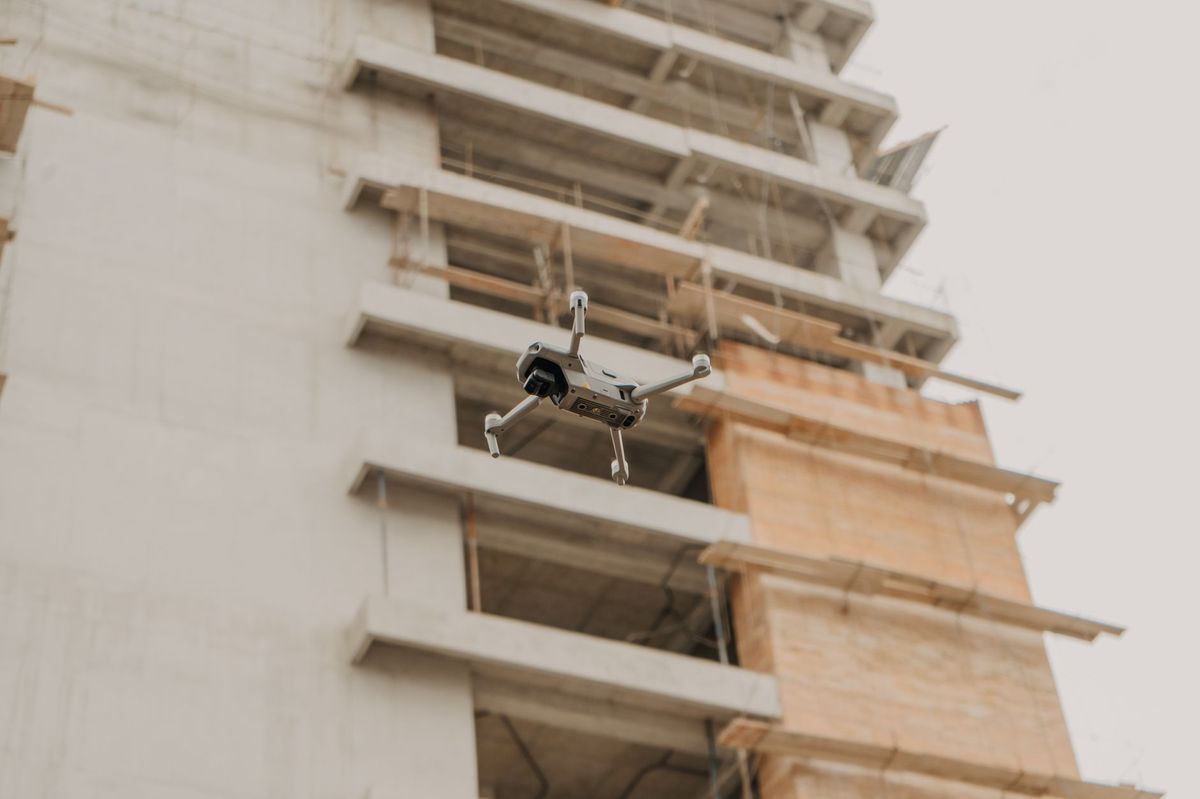
| Drones and aerial imaging | $1.8B | 28% | 34% |
| Estimating and takeoff | $1.6B | 14% | 58% |
| Safety and wearable tech | $1.4B | 32% | 22% |
| AI and machine learning | $1.2B | 45% | 12% |
| Fleet and equipment mgmt | $1.1B | 16% | 38% |
| Robotics and automation | $0.9B | 42% | 4% |
| AR/VR visualization | $0.8B | 26% | 8% |
| Prefab/modular technology | $0.7B | 18% | 14% |
| Other | $0.5B | — | — |
Key observations:
The highest spending categories (project management, BIM, estimating) are also the most mature and have the highest adoption rates. This makes sense — they address core business processes with proven technology.
The fastest-growing categories (AI, robotics, safety wearables) are in early stages with low adoption. Growth rates are high because they are growing from small bases, and many investments are experimental rather than proven.
Business tip: The adoption rate column is your guide to risk. Technologies with 50%+ adoption have been validated by the market — the risk of implementation failure is lower. Technologies with under 15% adoption are still in the "early adopter" phase — higher potential reward but also higher risk of spending money on something that doesn't deliver. Bottom line: unless you have dedicated technology staff and high risk tolerance, stick with the proven categories.
What's Actually Working: ROI Analysis
Project Management Software (Procore, Autodesk Build, PlanGrid)
Average ROI: 3.2x annual investment Key benefits:
- RFI processing time reduced 42% (from 14 days average to 8 days)
- Document distribution costs reduced 68% (elimination of printed drawings)
- Punchlist completion time reduced 34%
- Change order processing improved by 28% Why it works: Addresses fundamental coordination and communication problems with relatively straightforward digital tools that replicate familiar paper processes.
Drones and Aerial Imaging
Average ROI: 4.1x annual investment Key benefits:
- Site survey time reduced from 2-3 days to 2-4 hours for most projects
- Earthwork quantity measurement accuracy improved to within 1.5% (vs. 5-8% for traditional survey)
- Progress photo documentation automated — reducing manual documentation labor by 85%
- Safety inspections of elevated structures conducted without worker exposure Why it works: Drones provide a clear cost/time savings on a specific, measurable task. A drone survey that takes 2 hours and costs $500 replaces a traditional survey that takes 16 hours and costs $4,000.
BIM (Building Information Modeling)
Average ROI: 2.8x annual investment (but varies dramatically by implementation quality) Key benefits:
- Clash detection in design reduces field rework by 40-60% on MEP-intensive projects
- Prefabrication enabled by BIM reduces on-site labor for MEP by 15-25%
- As-built model value for facility management estimated at $1.50-$3.00/sf over building lifecycle Why it sometimes fails: BIM requires significant training investment, organizational change, and workflow redesign. Contractors who adopt BIM as a technology without changing their processes often fail to capture ROI.
Estimating and Takeoff Software
Average ROI: 3.8x annual investment Key benefits:
- Quantity takeoff time reduced by 60-75% compared to manual methods
- Estimating accuracy improved by 3-5 percentage points (directly impacting win rate and margin)
- Bid capacity increased — firms can pursue 40-50% more opportunities with the same estimating staff Why it works: Estimating is a high-value, time-intensive process where errors have direct financial consequences. Technology improvements create measurable savings.
What's Not Working (Yet)
AI Scheduling and Optimization
Average ROI: 0.8x (negative return for most implementers) The promise: AI analyzes historical project data to optimize schedules, predict delays, and allocate resources more efficiently The reality: Most construction companies lack the quality historical data needed to train AI models. Schedule optimization is highly context-dependent, and AI models trained on one contractor's projects often perform poorly when applied to different project types, markets, or teams. When it might work: Large contractors with 500+ completed projects of similar type and consistent data collection practices
Construction Robotics
Average ROI: 0.6x (early stage — significant negative returns for most) Current applications: Bricklaying robots, rebar tying robots, drywall finishing robots, demolition robots The challenge: Construction environments are unstructured — unlike factory floors, every jobsite is different. Robots that work perfectly in demonstrations often struggle with real-world conditions (uneven surfaces, weather, coordination with human workers). The outlook: Robotic applications will mature, but widespread cost-effective deployment is 5-8 years away for most applications. Current spending is primarily by large contractors with R&D budgets.
AR/VR for Field Use
Average ROI: 1.1x (approximately break-even) Use cases: Overlaying BIM models on physical spaces for installation guidance; virtual walkthroughs for owner approval; safety training simulations The challenge: Field conditions (sunlight, dust, physical activity) make current AR headsets impractical for extended use. VR is useful for training and pre-construction visualization but has limited field application. The exception: AR/VR for pre-construction owner engagement has strong ROI — helping owners visualize and approve designs before construction reduces changes during construction.
Implementation Best Practices
For contractors considering technology investments:
1. Start with the Problem, Not the Solution
- Identify the specific operational problem costing you money (slow estimating, excessive rework, poor document management)
- Quantify the cost of the problem in dollars
- Evaluate whether technology can address it more cost-effectively than process improvement alone
2. Budget for Implementation, Not Just Licenses
- Software licensing is typically 30-40% of total technology cost
- Training, customization, data migration, and productivity loss during transition account for the remaining 60-70%
- A $50,000 software license typically requires $75,000-$125,000 in implementation investment
3. Pilot Before Scaling
- Test new technology on one project or one team before company-wide rollout
- Measure results rigorously during the pilot — time savings, error reduction, cost impact
- Adjust the implementation approach based on pilot learnings
- If the pilot doesn't show measurable value, do not proceed to full deployment
4. Assign Ownership
- Every technology implementation needs a dedicated champion — someone whose job includes driving adoption
- Without an internal champion, technology becomes "shelfware" — purchased, partially implemented, and abandoned
- The champion should have both technical aptitude and organizational credibility
5. Measure Continuously
- Define success metrics before implementation
- Track metrics monthly during the first year
- Report technology ROI to leadership with the same rigor as financial performance
- Kill investments that do not demonstrate value within 12-18 months
Business tip: The best technology investment is the one your people will actually use. A $10,000 tool that gets 90% adoption beats a $100,000 tool that gets 20% adoption every time. The math: $10,000 × 90% utilization = $9,000 in deployed value. $100,000 × 20% utilization = $20,000 in deployed value — but at 10x the cost, the ROI is dramatically worse. Bottom line: simplicity and usability matter more than feature richness.
The Technology Spending Decision Framework
For every potential technology investment, answer these questions:
- What specific problem does this solve? (If you can't name it, don't buy it)
- What is the current cost of this problem? (Quantify in dollars per year)
- What is the total cost of the technology solution? (License + implementation + training + ongoing)
- What is the realistic adoption rate? (Based on your team's technology comfort level)
- What is the expected payback period? (Should be under 18 months for proven categories)
- Can we measure the results? (If not, you can't manage the investment)
Bottom line: $18 billion in construction technology spending represents both an industry awakening and an industry vulnerability. The awakening: construction is finally investing in digital tools that other industries adopted a decade ago. The vulnerability: much of the spending is driven by FOMO (fear of missing out) rather than rigorous business case analysis. The contractors who win the technology game will be those who treat technology investments with the same financial discipline they apply to equipment purchases — demand measurable returns, pilot before committing, and cut losses on investments that don't perform. The math should drive every technology decision, and any vendor who can't quantify the ROI of their product is selling hope, not value.
The Small Contractor Technology Stack
Large contractors with dedicated IT departments and six-figure technology budgets dominate the construction technology conversation. But the majority of the construction industry — firms with under $10 million in revenue — need a practical technology stack that provides maximum value at minimum cost and complexity:
Essential tools (total cost: $300-$600/month for a 20-person firm):
Cloud-based project management: Procore (starts at $375/month), Buildertrend ($199-$599/month for residential), or PlanGrid/Autodesk Build ($39/user/month). Choose based on your sector — residential builders have different needs than commercial subcontractors.
Digital time tracking: Busybusy ($8/user/month), ClockShark ($8/user/month), or ExakTime ($9/user/month). Eliminates paper timesheets, enables GPS-verified hours, and simplifies certified payroll reporting on prevailing wage projects.
Estimating software: Stack (from $3,499/year), PlanSwift ($1,599 one-time), or Bluebeam Revu ($240/year) for digital takeoff. ROI is immediate — digital takeoff is 60-75% faster than manual methods.
Accounting: QuickBooks Online ($90/month) or Sage 100 Contractor (for larger firms). Construction-specific features (job costing, WIP reporting, AIA billing) are essential — generic accounting software does not support construction financial management.
Communication: Microsoft Teams or Slack (free tiers available). Replaces group text messages with organized, searchable, documented communication channels.
Nice-to-have tools (add when justified by volume):
- Drone surveying service (outsource at $500-$1,500/flight rather than purchasing hardware)
- BIM coordination (when required by project specifications)
- Safety management software (iAuditor/SafetyCulture at $19/user/month)
- Fleet/equipment tracking (Tenna, HCSS, or manufacturer telematics)
The math for small contractors: A $300/month technology investment ($3,600/year) that saves one estimator 10 hours/month ($4,200/year in time value) and reduces one rework incident per year ($8,000 average rework cost) generates approximately $12,200 in annual value — a 3.4x return on the technology investment. And these are conservative estimates. Bottom line: small contractors have the most to gain and the least to lose from basic technology adoption. The barrier is not cost — it is inertia.
The Integration Challenge
The final barrier to construction technology ROI is not any single tool — it is the integration between tools. The average construction company uses 6-8 different software platforms that do not communicate with each other. Data entered in the estimating system must be re-entered in the project management system. Field reports in one platform do not sync with financial tracking in another. This duplication wastes an estimated 15-20 hours per project manager per month in data re-entry and reconciliation.
The solution: Select technology platforms that integrate natively or through APIs. The major construction technology ecosystems (Autodesk Construction Cloud, Procore, Trimble) are building integration capabilities that allow data to flow between estimating, project management, financial management, and field reporting without manual re-entry. Prioritizing integrated platforms over best-of-breed point solutions reduces the data fragmentation problem and increases the likelihood of realizing technology ROI.
Bottom line: $18 billion in construction technology spending will only deliver industry-wide value when contractors move beyond purchasing tools and toward implementing systems — integrated, measured, and optimized technology ecosystems that support every phase of the construction process from pre-bid to warranty. The math is available to prove the case for technology investment. What is needed is the discipline to select wisely, implement rigorously, and measure honestly.
Related Reading
- Restaurant Construction Costs Hit $380/SF — Full Breakdown by Type
- How Much Does Construction Make Per Hour? 2026 Wages by Role & Region
Frequently Asked Questions
How does construction technology spending affect construction costs?
Federal and state data confirm that construction technology spending continues to be a major factor in 2026 construction planning. The latest available figure of $18 billion provides a useful baseline, though actual costs vary by region, project scope, and market conditions. Contractors should request updated quotes from suppliers and subcontractors before finalizing bids.
What is the forecast for construction technology spending in 2026?
Market research on construction technology spending shows that geographic concentration matters significantly. With figures reaching 24% in key markets, the opportunities are substantial but location-dependent. States with strong population growth and infrastructure investment tend to see the highest activity levels.
How are contractors responding to construction technology spending?
Year-over-year comparisons for construction technology spending show meaningful change. The figure of 1.5% from current data represents a shift that contractors need to account for in their planning and bidding strategies. Historical trend analysis suggests this trajectory may continue through the end of the year.