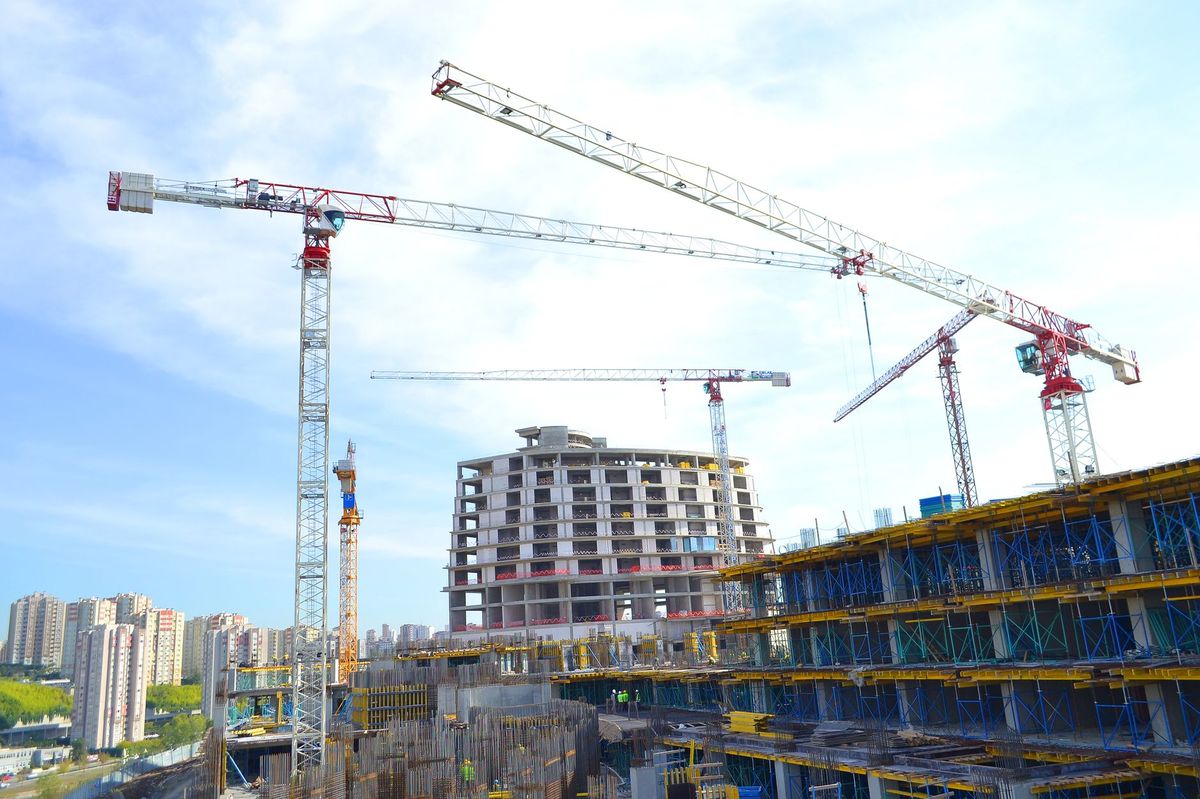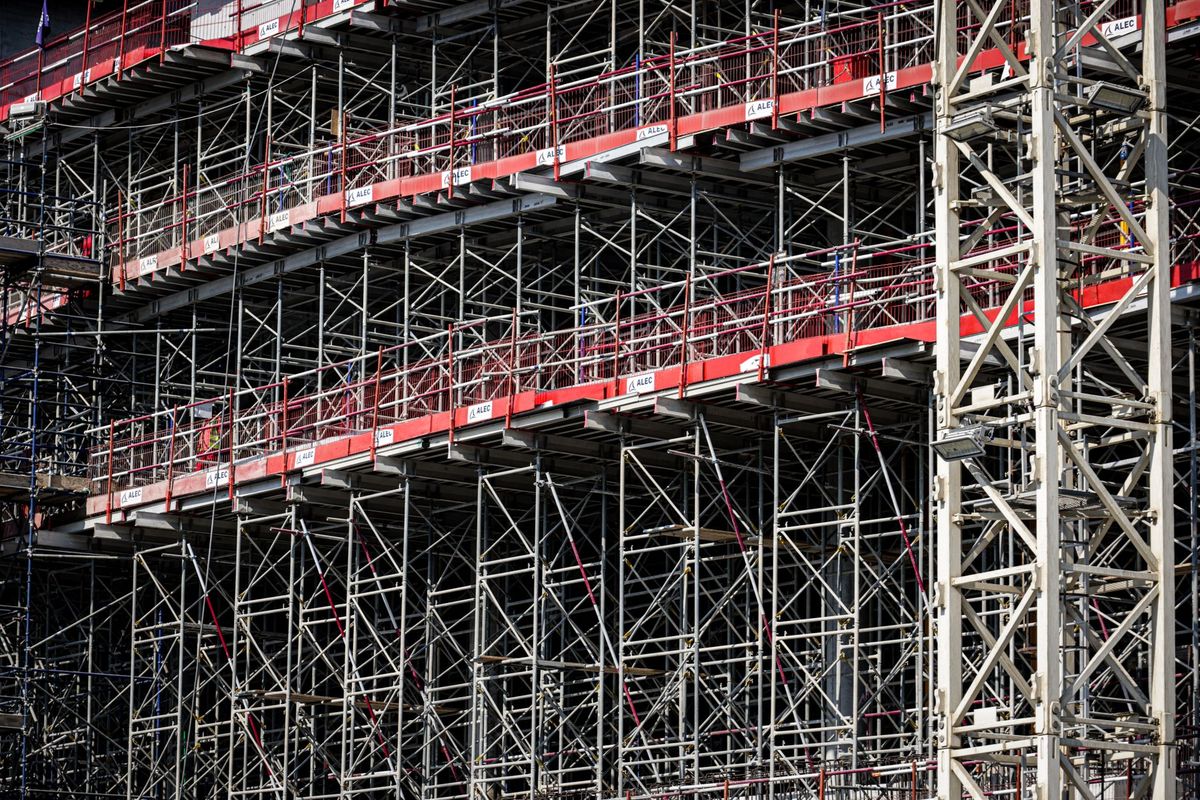
A power line 20 feet away killed more crane operators and riggers than any structural failure in the standard, and OSHA priced that hazard at up to $165,514 per willful violation in 2026. Contact with energized power lines accounts for roughly 45 percent of all crane-related construction fatalities, and nearly every one traces back to a missing or ignored lift plan. Cranes are the most heavily regulated single piece of equipment on a construction site, governed by 29 CFR 1926 Subpart CC, sections 1926.1400 through 1926.1442, and the paperwork that surrounds a lift exists because the failure modes are catastrophic and fast.
A crane that tips or drops a load does not injure one worker. The BLS Census of Fatal Occupational Injuries counts roughly 40 to 45 crane-related deaths a year in construction, and OSHA data shows the median crane-collapse incident involves a boom that was working within 90 percent of its rated capacity when something the lift plan should have caught went wrong. Subpart CC runs more than 100 pages precisely because each of those failures is preventable with planning that costs a fraction of the penalty.
What a Lift Plan Must Contain
Subpart CC does not use the phrase "lift plan" in a single tidy definition, but it requires the planning elements that together make one. For routine lifts, much of the plan is embedded in the crane's load chart and the operator's setup checks. For critical lifts, the plan becomes a formal written document.
The elements OSHA expects
Every lift plan starts with the load. The actual weight of the load, including rigging, must be known and must not exceed the crane's rated capacity for the configuration and radius, as required by 29 CFR 1926.1417. The plan identifies the crane's configuration, boom length, counterweight, and operating radius, then cross-references the manufacturer's load chart to confirm the lift falls within capacity, typically with a safety margin that keeps the lift below 75 to 85 percent of rated capacity for anything nonroutine.
The plan then addresses the site. It documents ground conditions, the position of outriggers or crawlers, the swing radius and how it will be barricaded, the presence of any power lines and the required clearance, and the rigging configuration with sling angles and hitch types. Sling capacity drops sharply as the angle decreases: a sling at a 30-degree angle carries only 50 percent of its vertical rated capacity, a fact that has caused more dropped loads than defective hardware. The same load-angle physics that govern rigging govern any suspended platform or shored structure, and the principle carries straight into how loads distribute across scaffold load capacity and OSHA duty ratings.
Critical lifts
A critical lift is one that carries elevated risk, and while Subpart CC does not fix a single national threshold, industry practice and most site safety programs trigger a written critical-lift plan when the load exceeds 75 percent of rated capacity, when two or more cranes lift a single load, when the lift is over occupied structures or the public, or when personnel are hoisted. Personnel hoisting under 1926.1431 is one of the most tightly controlled operations in all of OSHA, permitted only when conventional access is more hazardous, and it requires a proof-load test to 125 percent of the platform's rated capacity plus a trial lift before any worker leaves the ground. A written critical-lift plan names the qualified person who prepared it, the crane operator, the signal person, the rigger, and the lift director, and it is reviewed on site before the lift begins.
Operator Certification and Qualified Personnel
The people around a crane are as regulated as the crane itself. OSHA phased in operator certification over several years, and the requirements are now fully in force with no remaining grace periods.
Operator certification under 1926.1427
Since the final compliance deadline, 29 CFR 1926.1427 requires every crane operator to be certified by an accredited testing organization for the type and, where applicable, the capacity of crane being operated. Certification alone is not enough: the employer must also evaluate the operator and document that the individual can safely operate the specific equipment on that site, a requirement OSHA added in the 2018 final rule. An operator running a crane without a current certification is a per-instance violation at up to $16,550, and an employer who knew the certification had lapsed faces a willful classification at up to $165,514.
Certification is not a one-time event. It must be renewed every 5 years, and the employer's documented evaluation must be repeated whenever the operator moves to a materially different piece of equipment. OSHA inspectors routinely ask for both the certification card and the employer evaluation record, and a missing evaluation is cited even when the card is valid.
Signal persons and riggers
Signal persons are required whenever the operator's view of the load or the load path is obstructed, or when working near power lines, under 1926.1419 and 1926.1428. A signal person must be qualified by a third party or documented as qualified by the employer, and must know the standard hand signals in 1926.1422, voice-signal protocols, and the crane's operating characteristics. Riggers who hook up loads during assembly, disassembly, or hoisting must be qualified under 1926.1425(c) and 1926.1404(r). "Qualified" is a defined term in OSHA's world, and an employer cannot simply designate the nearest available worker. Getting these roles documented is exactly the kind of task a structured job hazard analysis is built to capture, role by role and hazard by hazard.
Ground Conditions and Power Line Clearance
Two site hazards cause the majority of crane catastrophes, and Subpart CC devotes specific sections to each. Both belong in every lift plan, and both are among the most frequently cited crane violations.
Ground conditions under 1926.1402
A crane sits on whatever is beneath its outriggers or tracks, and if that ground fails, the crane tips. Section 1926.1402 requires that the ground be firm, drained, and graded to a degree sufficient, with supporting materials such as blocking, cribbing, mats, or timbers, to safely support the crane and its rated capacity. The controlling entity on the site, usually the general contractor, is required to inform the crane operator of known hazards beneath the setup area, including voids, backfilled excavations, underground utilities, and buried structures. An outrigger pad that punches through unnoticed backfill is a classic collapse cause, and outrigger float sizing has to spread the load below the bearing capacity of the soil, which for uncompacted fill can be under 2,000 pounds per square foot.
Power line clearance under 1926.1408
The deadliest crane hazard has the most prescriptive rule. For power lines up to 350 kV, 29 CFR 1926.1408 Table A requires a minimum clearance of 20 feet between any part of the crane, load line, or load and the line, unless the utility owner deenergizes and grounds the line or installs insulating barriers. For lines above 350 kV up to 1,000 kV, the clearance rises to 50 feet. Before any work near power lines, the employer must identify the work zone, determine whether any part of the crane could get closer than the Table A distance, and if so, implement one of the listed protective measures. Encroachment on the 20-foot boundary without those measures is a serious violation at minimum and, given how well known the hazard is, a strong candidate for a willful citation at up to $165,514. Power-line and struck-by exposures appear repeatedly in the agency's enforcement data, which we break down in OSHA's top 10 construction citations for 2026.
Assembly, Inspection, and Penalty Exposure
The lift plan is one piece of a larger compliance chain that begins before the crane arrives and continues through every shift it operates. Two of the most-cited failures happen before the first lift.
Assembly, disassembly, and inspection
Assembly and disassembly must be directed by a qualified A/D director under 1926.1403 through 1926.1406, who is responsible for the safety of the operation and for reviewing the manufacturer's procedures. Cranes require documented inspections at multiple intervals under 1926.1412: a shift inspection by a competent person before each shift, monthly documented inspections, and an annual detailed inspection by a qualified person, with records kept for at least 12 months. A crane put into service without a documented shift inspection is cited even if it operates flawlessly, because the standard requires the record, not just the safe outcome.
What the penalties look like in 2026
OSHA's 2026 maximums apply across every Subpart CC requirement. A serious violation, such as an incomplete inspection record or a missing signal person, runs up to $16,550 per instance. A willful or repeat violation, such as operating within the 20-foot power-line boundary or hoisting a load beyond rated capacity, runs up to $165,514 per instance. Failure-to-abate penalties add up to $16,550 per day past the deadline. Because crane incidents frequently involve multiple standards at once, a single collapse investigation can generate citations for ground conditions, power-line clearance, operator qualification, and inspection failures simultaneously, stacking into six-figure or seven-figure totals. Running a standardized safety inspection checklist before every shift creates the dated record that both prevents the incident and proves due diligence if one occurs.
Frequently Asked Questions
Does OSHA require a written lift plan for every crane lift?
No. OSHA Subpart CC requires the planning elements, but a formal written lift plan is expected for critical lifts, which most safety programs define as lifts above roughly 75 percent of rated capacity, multi-crane lifts, personnel hoisting, and lifts over occupied areas. Routine lifts still require the operator to confirm the load against the load chart under 1926.1417 and to complete a shift inspection, but the plan can be far less formal.
What is the minimum clearance from power lines for a crane?
For power lines up to 350 kV, 29 CFR 1926.1408 Table A requires a minimum of 20 feet between any part of the crane, load line, or load and the line. For lines above 350 kV up to 1,000 kV, the minimum is 50 feet. The distance only shrinks if the utility deenergizes and grounds the line or installs qualified insulating barriers.
How often must crane operators be recertified?
Operator certification under 29 CFR 1926.1427 must be renewed every 5 years through an accredited testing organization. Separately, the employer must document an evaluation confirming the operator can safely run the specific equipment, and that evaluation must be repeated whenever the operator moves to a materially different crane.
Who is responsible for ground conditions under the crane?
Under 1926.1402, the controlling entity, usually the general contractor, must inform the crane operator of known hazards beneath the setup area, including voids, backfill, and buried utilities. The employer operating the crane is responsible for confirming the ground and supporting materials can safely bear the crane's rated capacity before lifting.
What is a critical lift?
A critical lift is any lift with elevated risk. Common triggers are loads above 75 percent of the crane's rated capacity, lifts using two or more cranes, personnel hoisting under 1926.1431, and lifts over occupied structures or the public. Critical lifts require a written plan naming the qualified planner, operator, signal person, rigger, and lift director, reviewed on site before the lift.
What are the 2026 OSHA penalties for crane violations?
In 2026, a serious crane violation carries a maximum of $16,550 per instance, and a willful or repeat violation runs up to $165,514 per instance. Failure-to-abate violations add up to $16,550 per day past the abatement deadline. A single crane incident often generates multiple citations at once because Subpart CC covers ground conditions, power lines, operator qualification, and inspections separately.
Your Action Item for This Week
Pick the single most demanding crane lift scheduled on your site in the next two weeks and build its lift plan on paper before the crane arrives. Write down the actual load weight including rigging, the crane configuration and radius, the load-chart capacity at that radius, the sling angles, the swing-radius barricade, and the exact distance to the nearest power line. If that distance is under 20 feet, stop and call the utility now rather than on lift day. Then confirm your operator's certification card is current and that you have a signed employer evaluation on file for that specific crane. If either document is missing, you have a citation waiting to happen, and it is far cheaper to fix this week than after an incident.