In fiscal year 2025, OSHA issued 38,742 citations to construction employers — a 6.3% increase from the prior year. Every one of those citations represented a hazard that could have injured or killed a worker. Every one was preventable.
The agency's top-ten list of most-cited standards is the closest thing the construction industry has to a report card, and in 2026, the grades still need work. Fall protection has held the number-one spot for fourteen consecutive years. Scaffolding, ladders, hazard communication — these are not obscure regulations. They are the basics.
This article breaks down each of OSHA's ten most-cited construction standards for 2026, explains the specific violations inspectors are flagging, and gives you the concrete steps to stay off the list.
1. Fall Protection — General Requirements (29 CFR 1926.501)
Total citations in FY2025: 7,271
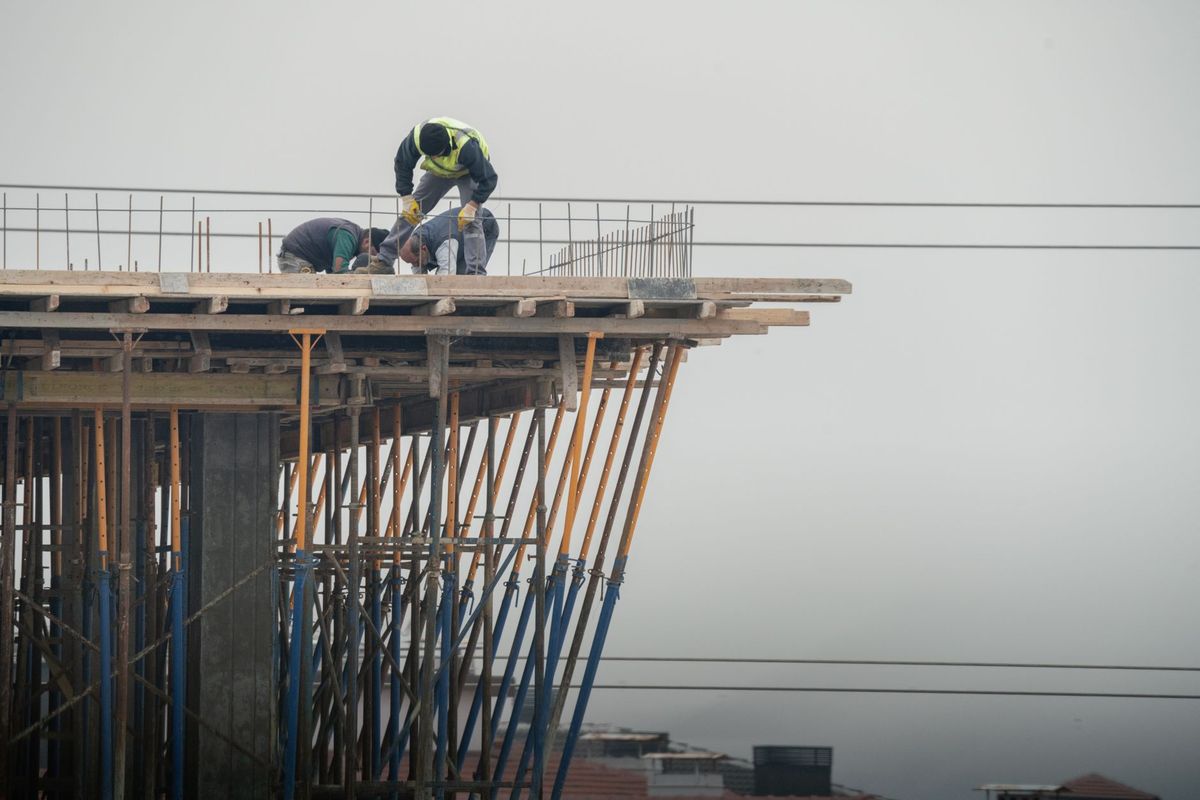
Fall protection has been the most-cited OSHA standard since 2012, and there is no sign of that changing. The standard requires fall protection at six feet or more in construction (compared to four feet in general industry), and inspectors find violations on nearly every jobsite they visit.
The most common sub-violations include:
- 1926.501(b)(1): Unprotected sides and edges. Workers on surfaces with unprotected sides or edges six feet or more above a lower level must be protected by guardrail systems, safety net systems, or personal fall arrest systems.
- 1926.501(b)(13): Residential construction. The residential construction exemption is frequently misapplied. Contractors assume that because they are building houses, they do not need conventional fall protection. The standard requires either conventional fall protection or an alternative plan that meets specific criteria.
- 1926.501(b)(10): Roofing work on low-slope roofs. Workers on low-slope roofs with unprotected sides and edges six feet or more above lower levels must be protected.
Safety note: Fall protection is not optional once you reach six feet. The "it's only a short job" mentality has killed more construction workers than any single hazard. In 2025, 384 construction workers died from falls — the leading cause of death in the industry.
How to stay compliant
Conduct a fall hazard assessment before work begins on every job. Identify every location where workers could be exposed to falls of six feet or more. Specify the fall protection method for each location in your site-specific safety plan. Train every worker on the specific fall protection systems they will use — not just a generic toolbox talk, but hands-on training with the actual equipment.
Inspect fall protection equipment before each use. Harnesses with frayed webbing, self-retracting lifelines that do not retract, and anchor points that have not been engineered for the load — these are the violations that get cited and the failures that get people killed.
2. Hazard Communication (29 CFR 1926.59 / 1910.1200)
Total citations in FY2025: 3,213
Hazard communication — HazCom — requires employers to inform workers about the chemical hazards they are exposed to on the job. In construction, that means silica dust, lead paint, solvents, epoxies, concrete additives, and dozens of other substances.
The most common violations are:
- No written hazard communication program
- Safety Data Sheets (SDS) not accessible at the worksite
- Containers not labeled or mislabeled
- Workers not trained on the specific chemicals they handle
The 2012 revision aligned HazCom with the Globally Harmonized System (GHS), which standardized labels and SDS formats. Thirteen years later, OSHA is still finding contractors who have not updated their programs.
How to stay compliant
Maintain a written HazCom program that lists every chemical product on your jobsites. Keep SDS binders (physical or digital) accessible where workers can reach them during their shifts. Label every secondary container. And train workers — not just on what HazCom is, but on the specific chemicals they will encounter on each project.
Safety note: If a worker is rushed to the ER after chemical exposure and the responding physician cannot identify the substance because your SDS are locked in a trailer on the other side of the site, you have failed that worker. Accessibility means accessible, not theoretically available.
3. Scaffolding (29 CFR 1926.451)
Total citations in FY2025: 2,859
Scaffolding violations are the third most-cited standard and one of the most dangerous. The Bureau of Labor Statistics estimates that 4,500 scaffold-related injuries occur in construction each year, and approximately 60 workers die annually in scaffold collapses or falls from scaffolds.
Key violations include:
- 1926.451(g)(1): Guardrails not installed on all open sides and ends of platforms more than ten feet above the ground
- 1926.451(e)(1): Access requirements — no safe means of access provided to scaffold platforms
- 1926.451(b)(1): Capacity — scaffolds not designed to support four times the maximum intended load
How to stay compliant
Every scaffold must be erected, moved, dismantled, or altered under the supervision of a competent person as defined by 29 CFR 1926.450(b). That competent person must be able to identify existing and predictable hazards and has the authority to take corrective measures.
Before any worker gets on a scaffold, verify: Are guardrails in place on all open sides? Is the scaffold level and on firm footing? Is the scaffold tied to the structure at appropriate intervals? Are planks in good condition and extending at least six inches beyond the support? Is safe access — ladder, stair tower, or integral frame — available?
4. Ladders (29 CFR 1926.1053)
Total citations in FY2025: 2,617
Ladder violations are deceptively dangerous. Because ladders are so common on construction sites, workers become complacent. But ladder falls account for approximately 20% of all construction fall fatalities.
The most-cited sub-sections include:
- 1926.1053(b)(1): Ladders not extending three feet above the landing surface
- 1926.1053(b)(4): Ladders used on slippery surfaces without slip-resistant feet or being secured
- 1926.1053(b)(13): Top of stepladder used as a step
How to stay compliant
Inspect every ladder before use. Set extension ladders at the proper 4:1 angle — for every four feet of height, the base should be one foot out from the wall. Extend the ladder at least three feet above the landing. Secure the ladder at the top, bottom, or both to prevent displacement. Never use a damaged ladder — tag it out and remove it from the site.
Train workers that the top two rungs of an extension ladder and the top step of a stepladder are not steps. This seems elementary, but 2,617 citations prove that the message has not landed.
5. Eye and Face Protection (29 CFR 1926.102)
Total citations in FY2025: 2,074
Eye injuries in construction are almost entirely preventable. OSHA estimates that 90% of eye injuries could be prevented with proper eye protection. Despite this, 2,074 citations were issued in FY2025 for eye and face protection violations.
Common violations include:
- Workers not wearing eye protection during grinding, cutting, welding, or chipping operations
- Eye protection that does not meet ANSI Z87.1 standards
- No face shields provided for operations that generate flying particles
How to stay compliant
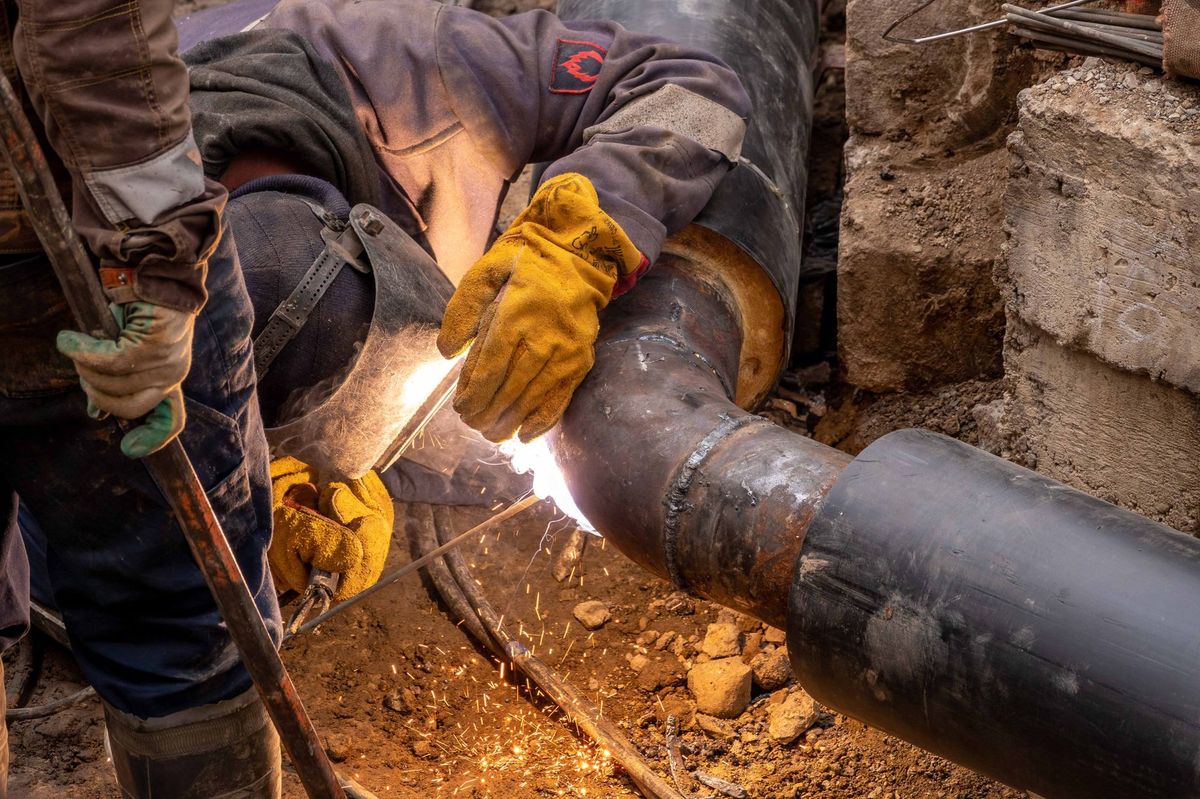
Conduct a hazard assessment for eye and face hazards on every task. Grinding, cutting, drilling, chipping, powder-actuated tool use, and any operation that generates flying particles requires eye protection at minimum. Welding requires filter lenses with the correct shade number for the operation.
Provide workers with eye protection that actually fits. Workers who remove their safety glasses because they fog up, pinch their nose, or do not fit over their prescription glasses are workers who will get cited — and injured. Invest in anti-fog coatings, comfortable frames, and prescription safety glasses for workers who need them.
6. Respiratory Protection (29 CFR 1926.103 / 1910.134)
Total citations in FY2025: 1,892
The respiratory protection standard requires employers to establish and maintain a respiratory protection program when workers are exposed to airborne contaminants above permissible exposure limits. In construction, that frequently means silica dust, lead dust, asbestos, paint fumes, and welding fumes.
Common citations include:
- No written respiratory protection program
- Workers not medically evaluated before respirator use
- Workers not fit-tested for tight-fitting respirators
- Respirators not properly selected for the hazard
Safety note: You cannot just hand a worker a N95 and call it respiratory protection. OSHA requires a written program, medical evaluation, fit testing, and training. Skipping these steps does not just result in citations — it results in workers developing silicosis, COPD, and occupational cancers that do not show symptoms for years.
How to stay compliant
If any worker on your site is exposed to airborne contaminants above the PEL or action level, you need a respiratory protection program that meets 29 CFR 1910.134. That means a written program, a qualified program administrator, medical evaluations for every respirator wearer, annual fit testing for tight-fitting respirators, and training on use, maintenance, and limitations.
7. Fall Protection — Training Requirements (29 CFR 1926.503)
Total citations in FY2025: 1,673
This is separate from the general fall protection standard (1926.501) and specifically addresses training. The standard requires that each employee who might be exposed to fall hazards be trained by a competent person to recognize the hazards of falling and the procedures to follow to minimize those hazards.
The most common citation is straightforward: the employer could not demonstrate that affected workers had been trained. No training records, no documentation that a competent person conducted the training, no evidence that the training covered the specific fall hazards on the jobsite.
How to stay compliant
Document everything. Train workers on the specific fall protection systems they will use on your jobsite — not a generic video, but training on the actual guardrails, harnesses, lifelines, and anchor points they will encounter. Have the training conducted by a competent person. Certify each worker in writing, including the date, the topics covered, and the name of the trainer. Retrain whenever a worker demonstrates a lack of understanding or when conditions change.
8. Electrical — Wiring Methods (29 CFR 1926.405)
Total citations in FY2025: 1,512
Electrical violations in construction frequently involve temporary wiring, damaged extension cords, and improper use of flexible cords. The standard covers wiring design and protection, and the most common violations include:
- 1926.405(a)(2)(ii)(J): Flexible cords and cables not protected from damage
- 1926.405(g)(2)(iv): Temporary lights not guarded or equivalent
- 1926.405(a)(2)(ii)(I): Flexible cords run through holes in walls, ceilings, or floors
How to stay compliant
Inspect all temporary wiring and extension cords daily. Remove damaged cords from service immediately — do not tape them. Use GFCI protection on all temporary wiring. Do not run flexible cords through doorways, windows, or holes in walls where they can be pinched or damaged. Provide guards on all temporary lighting.
9. Personal Protective and Life Saving Equipment — Fall Protection (29 CFR 1926.502)
Total citations in FY2025: 1,401
This standard specifies the criteria for fall protection systems. Where 1926.501 tells you when you need fall protection and 1926.503 tells you to train on it, 1926.502 tells you what the systems must look like.
Common citations include:
- 1926.502(d): Personal fall arrest systems that do not meet the standard — lanyards too long, anchor points not capable of supporting 5,000 pounds, D-rings not at the center of the worker's back
- 1926.502(b): Guardrail systems that do not meet height, strength, or opening requirements
- 1926.502(k): No fall protection plan where conventional systems are infeasible
How to stay compliant
Ensure every guardrail has a top rail at 42 inches (plus or minus 3 inches), a mid-rail, and can withstand 200 pounds of force applied in any direction at any point along the top rail. Ensure personal fall arrest systems are rigged so a worker cannot free-fall more than six feet or contact any lower level. Ensure anchor points can support 5,000 pounds per worker attached, or are designed, installed, and used under the supervision of a qualified person with a safety factor of at least two.
10. Stairways (29 CFR 1926.1052)
Total citations in FY2025: 1,198
Stairway violations round out the top ten. The standard requires stairways on construction sites where there is a break in elevation of 19 inches or more and no ramp, runway, or personnel hoist is provided.
Common citations include:
- No stairway provided where required
- Stairways without handrails or with handrails that do not meet strength requirements
- Stairways with uneven riser heights or inadequate tread depth
How to stay compliant
Provide stairways or ladders at every point of access where there is a break in elevation of 19 inches or more. Install handrails on all stairways with four or more risers or rising more than 30 inches. Ensure handrails can withstand 200 pounds of force applied in any direction. Keep stairways clear of materials, debris, and obstructions.
The Pattern Behind the Top 10
Look at that list again. Fall protection appears three times (1926.501, 1926.502, 1926.503). Combine the citations and falls account for more than 10,000 of OSHA's roughly 38,700 construction citations — over 26% of the total.
This is not a coincidence. Falls remain the leading cause of death in construction, accounting for 38.4% of all construction fatalities according to the BLS Census of Fatal Occupational Injuries. Until the industry takes fall protection as seriously as it takes schedule and budget, this list will not change.
The second pattern is that most of these violations are documentation and program failures, not just physical hazards. No written HazCom program. No respiratory protection program. No fall protection training records. These are management failures, not just field failures.
What OSHA Penalties Look Like in 2026
OSHA's penalty structure increased again in January 2026, adjusted for inflation as required by the Federal Civil Penalties Inflation Adjustment Act:
- Serious violation: Up to $16,550 per violation (up from $16,131 in 2025)
- Willful or repeated violation: Up to $165,500 per violation (up from $161,323 in 2025)
- Failure to abate: Up to $16,550 per day beyond the abatement date
A single inspection that identifies violations across multiple standards can easily result in penalties exceeding $100,000. Willful violations involving worker deaths routinely exceed $500,000 and can trigger criminal referrals.
But penalties are not the point. A $16,550 fine is a rounding error on a $50 million project. The point is that every one of these citations represents a hazard that could injure or kill someone on your crew.
Building a Compliance System That Works
Chasing compliance standard by standard is a losing strategy. Instead, build a system:
1. Pre-task planning. Before every new phase of work, conduct a hazard assessment that specifically addresses the top-ten standards. Where will workers be exposed to falls? What chemicals will be present? What PPE is required? Document the assessment and communicate it to every worker on the task.
2. Competent persons. OSHA requires a competent person for scaffolding, excavations, fall protection, and several other standards. Identify your competent persons by name, ensure they have the training and authority to act, and document their qualifications.
3. Training records. If you cannot prove training happened, it did not happen. Maintain training records that include dates, topics, trainer qualifications, and employee signatures. Review records before workers begin new tasks.
4. Daily inspections. Inspect fall protection equipment, scaffolding, electrical systems, and PPE before each shift. Document inspections and corrective actions. Empower workers to stop work when they identify a hazard.
5. Program audits. Review your written programs (HazCom, respiratory protection, fall protection) at least annually. Update them when regulations change, when you take on new types of work, or when an incident reveals a gap.
The construction industry's OSHA citation rate has been essentially flat for a decade. The same standards appear on the top-ten list year after year. The only way to change that is to stop treating safety as a compliance exercise and start treating it as a management system — as fundamental to project delivery as the schedule and the budget.
For a deeper dive into how the construction workforce gap is affecting safety staffing, and why the growing number of women in construction may actually improve safety culture, explore our related coverage.
Frequently Asked Questions
What is the most common OSHA citation in construction for 2026?
Fall protection — general requirements (29 CFR 1926.501) remains the most-cited OSHA standard in construction for the fourteenth consecutive year. In FY2025, OSHA issued 7,271 citations under this standard, representing nearly 19% of all construction citations. The standard requires fall protection for workers exposed to falls of six feet or more, and violations typically involve unprotected edges, missing guardrails, and improper or absent personal fall arrest systems.
How much can OSHA fine a construction company in 2026?
OSHA's maximum penalty for a serious violation in 2026 is $16,550, while willful or repeated violations can reach $165,500 per violation. A single inspection that uncovers multiple violations across several standards can result in combined penalties exceeding $100,000. In cases involving worker fatalities and willful disregard for safety standards, penalties routinely exceed $500,000 and may result in criminal referrals to the Department of Justice.
What are the OSHA Focus Four hazards in construction?
The OSHA Focus Four hazards are falls, struck-by incidents, electrocutions, and caught-in/between hazards. These four categories account for approximately 59.6% of all construction worker fatalities according to BLS data. Falls alone account for 38.4% of construction deaths. OSHA's outreach and training programs prioritize these four hazards because eliminating them would prevent the majority of construction fatalities each year.
How often do OSHA's top-ten cited standards change?
The top-ten list changes very little from year to year. Fall protection (1926.501) has held the number-one position since 2012, and the same core standards — scaffolding, ladders, HazCom, respiratory protection, eye protection, and electrical wiring — have appeared on the list for over a decade. The order may shift slightly, and occasional new entries appear (the silica standard entered the list in 2019), but the fundamental pattern reflects persistent, systemic compliance gaps across the construction industry.