An employer that hands a 5-foot-2 ironworker a size-large harness rated for someone 8 inches taller is now writing a $16,550 check, because as of January 13, 2025, OSHA amended 29 CFR 1926.95(a) to require that personal protective equipment "properly fit each affected employee." That single word change ended a decade of arguments and added a citation category that inspectors have written more than 600 times in the 18 months since the rule took effect. Personal protective equipment is the last barrier between a worker and an injury, and OSHA treats defects in that barrier as seriously as an unguarded excavation.
The rules governing construction PPE live in Subpart E of 29 CFR 1926, sections 1926.95 through 1926.107. They are short, they are specific, and they carry real money. A serious violation of any PPE standard runs up to $16,550 per instance in 2026, a willful or repeat violation runs up to $165,514, and OSHA counts each unprotected worker as a separate instance. A crew of 6 without proper eye protection on a grinding operation is not one $16,550 problem. It is potentially six of them.
What OSHA Requires, Body Part by Body Part
Subpart E does not say "wear PPE." It assigns a specific standard to each hazard and each part of the body, and it requires the employer to conduct a hazard assessment first. The general duty to assess and provide sits in 1926.95(a), and the individual standards follow.
Head, eyes, and face
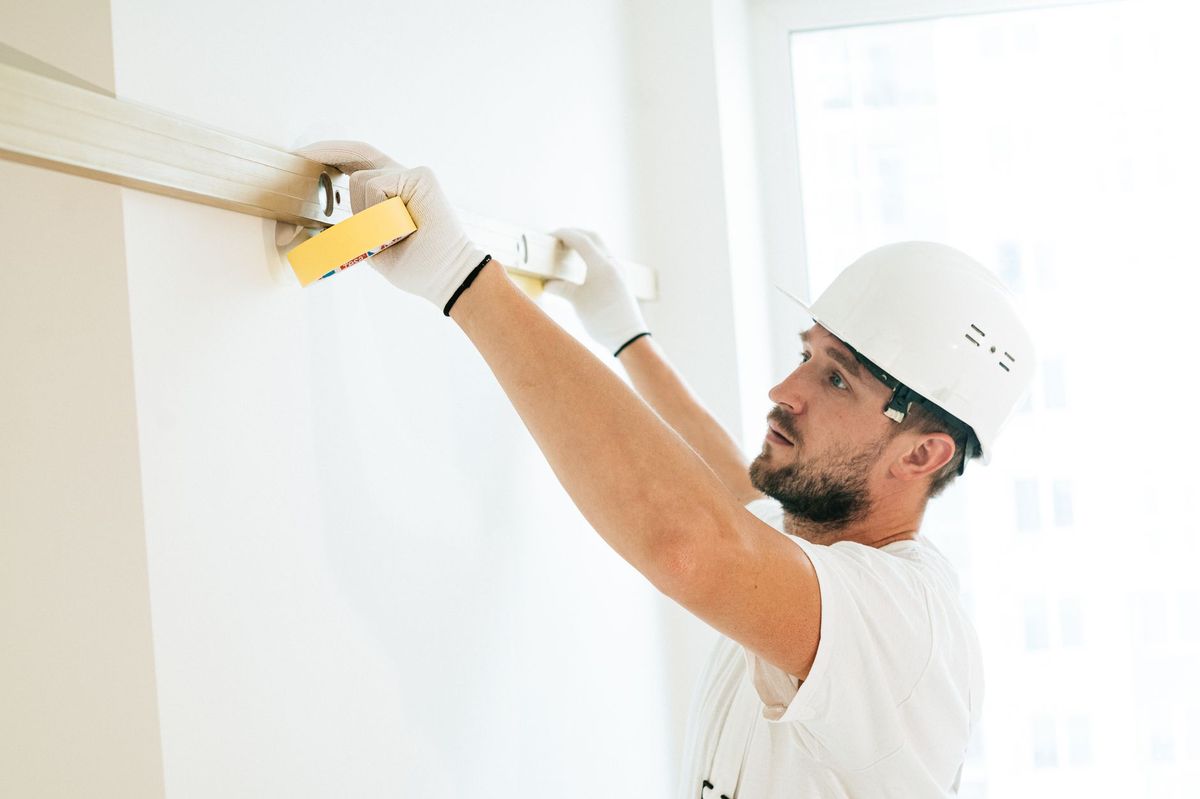
Head protection lives in 29 CFR 1926.100. Any worker exposed to falling objects, or working near exposed electrical conductors, must wear a hard hat, and since the 2024 update OSHA formally recognizes ANSI/ISEA Z89.1 Type II helmets with chin straps for elevated work and struck-by exposure. Head injuries account for roughly 20 percent of construction fatalities in a typical year, and struck-by-object incidents killed 150 construction workers in the most recent BLS Census of Fatal Occupational Injuries. A hard hat older than 5 years, or one that has taken a single hard impact, is out of service regardless of how it looks.
Eye and face protection sits in 29 CFR 1926.102 and references ANSI Z87.1. Employers must provide eye protection whenever workers face flying particles, molten metal, chemical splash, or harmful light. BLS data shows about 18,000 construction eye injuries a year, and NIOSH estimates that 90 percent of them are preventable with the correct Z87.1-rated protection. Safety glasses with side shields are the floor; grinding and chipping require goggles or a face shield worn over primary eye protection, not instead of it.
Feet and hands
Foot protection is governed by 29 CFR 1926.96, which requires safety-toe footwear meeting ASTM F2413 for workers exposed to falling or rolling objects or to objects that could pierce the sole. Foot injuries send roughly 60,000 construction workers to treatment annually, and a puncture wound from a nail through a soft-soled shoe averages more than $2,000 in medical costs before any lost-time calculation.
Hand protection does not have its own numbered section in Subpart E for construction the way general industry does, so OSHA cites hand-injury exposure under the general PPE requirement in 1926.95(a) and, for specific operations, under the relevant task standard. Lacerations and hand injuries are the single most common construction injury type, running above 100,000 recordable cases a year, and cut-resistant gloves rated ANSI/ISEA 105 level A4 or higher are the accepted control for blade and sheet-metal work.
Hi-visibility and fall protection
High-visibility apparel is required for any worker exposed to public vehicular traffic or to construction equipment, and OSHA enforces it through 23 CFR 634 for federal-aid highway work and through the general duty clause plus MUTCD referencing elsewhere. The garment must meet ANSI/ISEA 107, and a Class 3 vest is required when traffic exceeds 25 mph or at night. Workers on foot struck by vehicles account for more than 100 construction deaths a year.
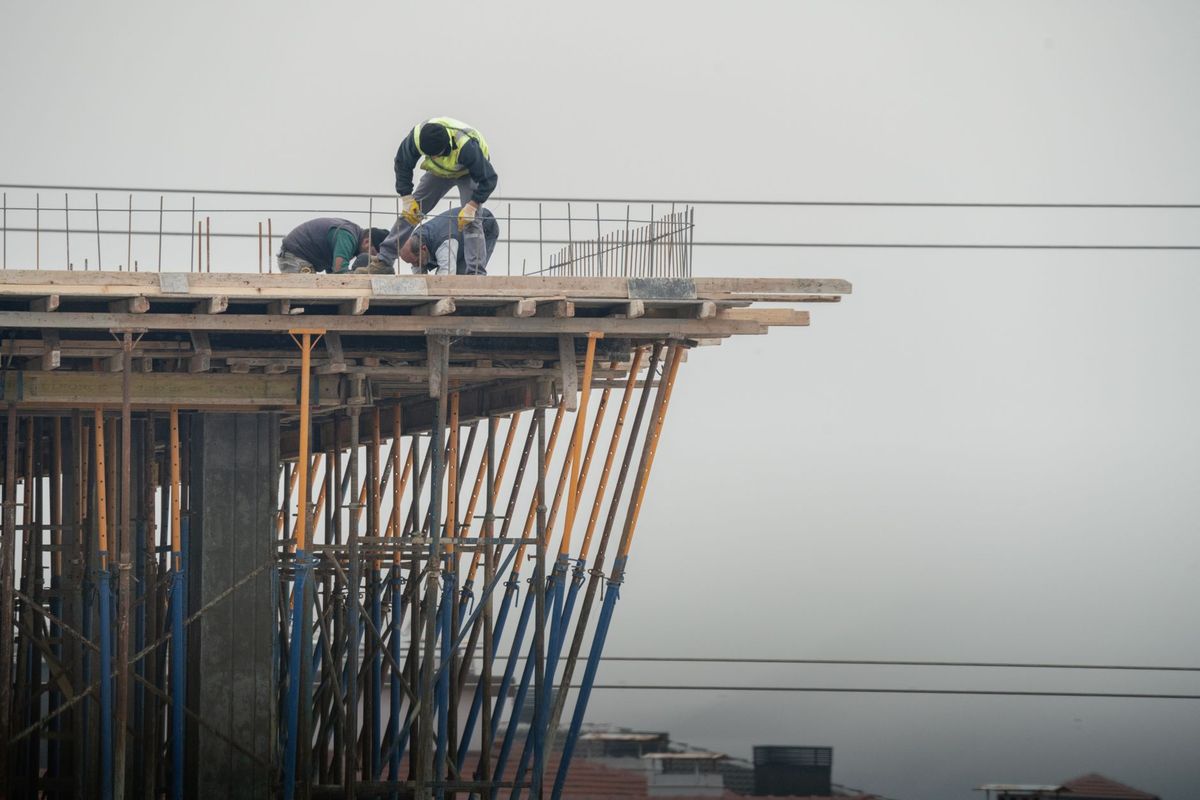
Fall protection is the largest PPE category by both injury count and citation volume, and it has its own subpart. The trigger height in construction is 6 feet under 29 CFR 1926.501, and the equipment requirements sit in 1926.502. Falls remain the leading cause of construction death, killing between 350 and 400 workers annually. For the full breakdown of duty-to-have-fall-protection triggers, anchor strength, and personal fall arrest system requirements, see our guide to construction fall protection requirements.
The 2024 Properly-Fitting PPE Rule
The most consequential PPE change in a decade is not a new hazard standard. It is a two-word amendment to an existing one, and it targets a problem that has quietly injured workers for years.
What changed and why
Before 2025, 29 CFR 1926.95(a) required PPE to be "of safe design and construction for the work to be performed." It said nothing about fit. General industry's parallel standard, 1910.132, had contained fit language for years, but construction had not. OSHA closed that gap with a final rule published December 12, 2024, effective January 13, 2025, adding the requirement that PPE "properly fits each affected employee."
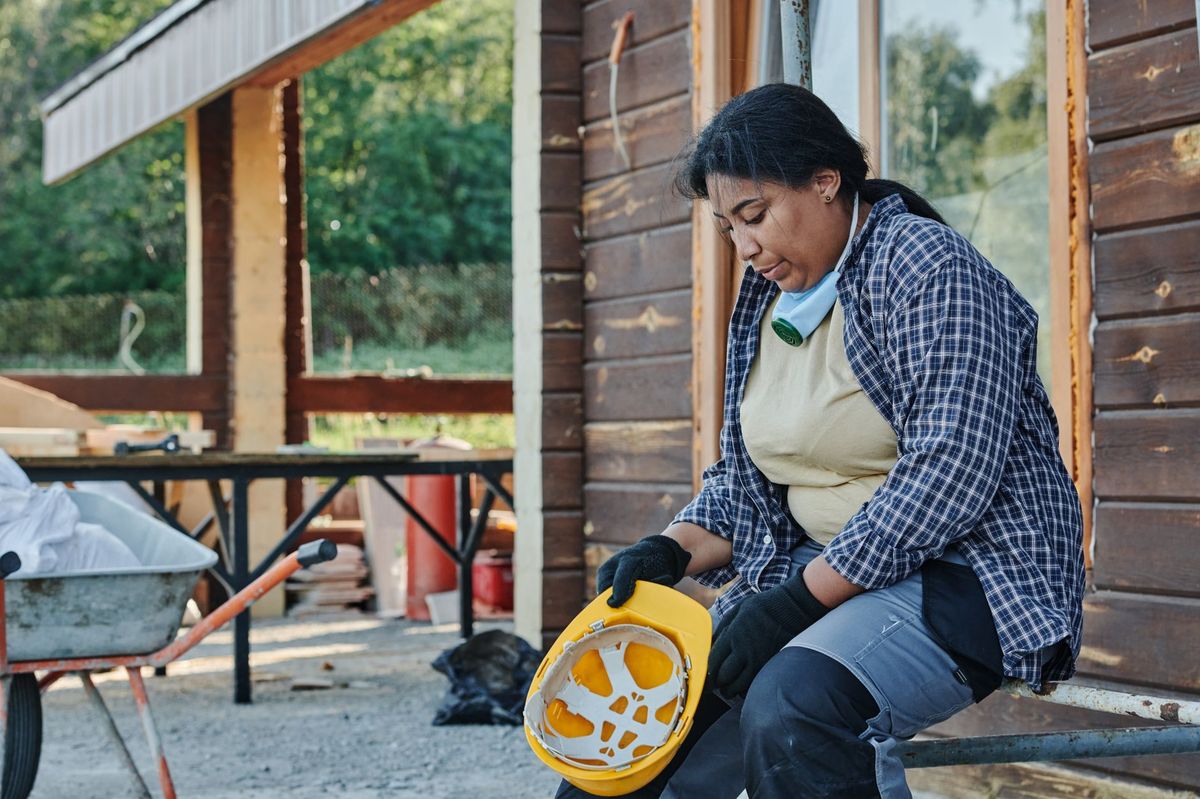
The rule matters most for the roughly 1.3 million women in construction and for workers whose body size falls outside the range a standard-issue kit assumes. Ill-fitting fall harnesses can fail to distribute arrest forces correctly, oversized gloves reduce grip and get caught in machinery, and loose eye protection lets particles reach the eye from the side. NIOSH research found that a majority of women in construction reported PPE that fit poorly or not at all, and OSHA cited that body of evidence directly in the preamble to the rule.
What it means for employers in 2026
Employers can no longer stock a single size and call the assessment complete. The hazard assessment required under 1926.95 now has to account for the individuals actually doing the work, which in practice means offering a size range and documenting that each worker received equipment that fits. OSHA inspectors are checking harness sizing, glove sizing, and hi-vis garment fit during routine visits, and a poorly fitting harness on a worker at height is treated as a serious violation at up to $16,550, with an obvious path to a willful classification at up to $165,514 if the employer knew and did nothing. Building the fit check into your onboarding and toolbox-talk routine is the cleanest way to document compliance, and a structured job hazard analysis captures both the hazard and the equipment assigned to control it.
Who Pays for PPE
The single most misunderstood PPE rule on any jobsite is not what to wear. It is who buys it. OSHA settled this in 2008, and the answer has not changed.
The employer-pays rule
Under 29 CFR 1926.95(d), the employer must provide required PPE at no cost to the employee. That covers hard hats, safety glasses, face shields, most gloves, hi-vis apparel, hearing protection, respirators, and fall arrest harnesses. An employer who deducts the cost of a required hard hat from a paycheck, or who requires workers to show up with their own, is in violation, and OSHA can assess up to $16,550 per affected worker even if no injury ever occurs.
The employer also pays for replacement PPE when equipment wears out or is damaged in normal use. The only time an employer may charge for replacement is when a worker loses or intentionally damages the equipment, and even then OSHA reads that exception narrowly.
The narrow exceptions
The rule lists specific items the employer does not have to pay for. Ordinary safety-toe footwear and ordinary prescription safety eyewear are excepted under 1926.95(d)(2) when the employer permits them to be worn off the jobsite. Everyday weather gear like winter coats and ordinary sunglasses is excepted. Logging boots under 1910.266 are excepted. Everything else that the standard requires is on the employer's dime, full stop.
One clarification that trips up contractors: if a worker chooses a more expensive brand or an upgraded model of a required item, the employer only has to cover the cost of an adequate compliant version. But the employer cannot use that clause to push the base cost onto workers. Any confusion here shows up fast in an OSHA audit, and PPE payment violations have appeared repeatedly among the agency's most-cited construction standards. For where PPE sits relative to fall protection, scaffolding, and the other perennial problem areas, see OSHA's top 10 construction citations for 2026.
Building a PPE Program That Survives an Inspection
A pile of hard hats in a job trailer is not a program. OSHA expects a documented system, and the difference between a warning and a $165,514 penalty often comes down to paperwork.
The hazard assessment and training
The hazard assessment required by 1926.95 has to be specific to the site and the task. A framing crew, a demolition crew, and a concrete crew on the same project face different hazards and need different PPE selections. OSHA does not require the construction assessment to be written the way general industry's 1910.132 does, but a written assessment is the only practical way to prove you did one, and inspectors ask for it.
Training is mandatory under the individual standards and under the employer's general duty. Each worker has to know what PPE is required, when to wear it, how to put it on and adjust it, its limitations, and its useful life. Fall arrest training under 1926.503 must be documented with the worker's name, the trainer's signature, and the date. Undocumented training is treated as no training.
Inspection and replacement cadence
PPE degrades. Hard hat shells lose impact resistance from UV exposure in as little as 2 to 3 years of outdoor use, harness webbing weakens after any fall event, and cut gloves lose their rating once the coating wears through. A functioning program inspects PPE before each shift and pulls damaged equipment immediately. Running a standardized safety inspection checklist each morning creates the dated record that proves the equipment was serviceable, which is exactly the evidence OSHA looks for after an incident. The cost of a replacement hard hat is about $15. The cost of the citation for the head injury it would have prevented starts at $16,550 and climbs from there.
Frequently Asked Questions
Does OSHA require employers to pay for work boots?
Not ordinary safety-toe boots. Under 29 CFR 1926.95(d)(2), the employer does not have to pay for non-specialty safety-toe footwear if it allows the boots to be worn off the jobsite. If the work requires specialty footwear, such as metatarsal guards or non-slip soles for a specific hazard, and those boots cannot reasonably be worn away from work, the employer pays. The same logic applies to prescription safety eyewear.
What is the OSHA penalty for a PPE violation in 2026?
A serious PPE violation carries a maximum of $16,550 per instance in 2026, and OSHA can count each unprotected worker as a separate instance. Willful or repeat violations run up to $165,514 each. Failure-to-abate violations add up to $16,550 per day beyond the abatement deadline. These figures are indexed to inflation and adjusted every January.
Does the 2024 properly-fitting PPE rule apply to my small crew?
Yes. The amendment to 29 CFR 1926.95(a) applies to all construction employers regardless of size, effective January 13, 2025. There is no small-employer exemption. If you provide PPE, it must fit the individual worker wearing it, which means stocking a size range for harnesses, gloves, and hi-vis apparel rather than a single one-size option.
Can I require workers to buy their own hard hats?
No. Hard hats are required PPE under 29 CFR 1926.100, and the employer-pays rule in 1926.95(d) makes them the employer's cost. Requiring workers to supply their own, or deducting the cost from wages, is a citable violation at up to $16,550 per worker even if nobody is ever injured.
How often do hard hats need to be replaced?
There is no single OSHA-mandated interval, but manufacturers and ANSI/ISEA Z89.1 guidance point to replacing the shell every 5 years from the date of manufacture under normal use, and the suspension every 12 months. Any hard hat that has absorbed an impact, shows cracks or chalking, or has been exposed to solvents is retired immediately regardless of age.
Is high-visibility clothing always required?
It is required whenever workers are exposed to public vehicular traffic or to construction equipment operating nearby. For federal-aid highway projects, 23 CFR 634 mandates ANSI/ISEA 107 apparel, with Class 2 as the minimum and Class 3 required at speeds above 25 mph or in low light. Outside highway work, OSHA enforces hi-vis through the general duty clause when a struck-by hazard exists.
Your Action Item for This Week
Pull your PPE stock into the job trailer and physically check two things. First, confirm you have fall harnesses, cut gloves, and hi-vis vests in at least three sizes each, so every worker on the crew can be fitted to the 2025 properly-fitting requirement. Second, spot-check five random workers this week and ask each one where their PPE came from and whether they paid for any of it. If a single answer is "I bought it myself," you have a 1926.95(d) violation on your hands right now. Fix both gaps before your next inspection, and document the fix with a dated toolbox talk and a sign-in sheet.