The federal government's goal of 500,000 public EV charging stations by 2030 has transformed electric vehicle charging infrastructure from a niche market into a mainstream construction opportunity. As of Q1 2026, the United States has approximately 192,000 public charging ports — which means roughly 308,000 additional ports must be installed in the next four years to hit the target. The numbers tell a different story than the industry's promotional narratives: this is first and foremost a construction challenge, not a technology challenge. The chargers exist. The vehicles exist. What's missing is the physical infrastructure — the concrete pads, the electrical service, the conduit runs, and the site work that turns a parking lot into a charging station.
For electrical contractors, civil site contractors, and general contractors with commercial capabilities, EV charging station construction is rapidly evolving from a small-project niche into a multi-billion-dollar market segment. The Department of Energy estimates that cumulative EV charging infrastructure construction spending will reach $35 to $50 billion through 2030, driven by the $7.5 billion in IIJA-funded programs, state-level mandates and incentives, utility investment programs, and private sector deployment by charging network operators and real estate developers.
Federal Funding Programs: NEVI and Beyond
The primary federal EV charging construction program is the National Electric Vehicle Infrastructure (NEVI) Formula Program, which allocated $5 billion over five years (FY2022-2026) to states to build a national network of DC fast charging stations along designated Alternative Fuel Corridors — primarily the Interstate Highway System and major U.S. highways.
Through Q1 2026, states have obligated approximately $3.4 billion of NEVI funding, with approximately 1,800 NEVI-funded stations in active construction or completed. Each NEVI station must include a minimum of four DC fast chargers rated at 150 kilowatts (kW) or higher, with at least one charger capable of 350 kW. The standardized minimum configuration means each NEVI station represents a construction project of meaningful scale — not a simple equipment installation, but a complete site development project.
The Charging and Fueling Infrastructure Discretionary Grant Program (CFI) provides an additional $2.5 billion in competitive grants for EV charging infrastructure, including $1.25 billion for community charging (urban and rural locations not along highway corridors) and $1.25 billion for corridor charging. CFI grants have funded larger-scale charging hub projects with 8 to 20 or more chargers per site, creating construction projects that rival small commercial buildings in scope and complexity.
State-level programs add billions more. California's investment through the California Energy Commission exceeds $2.9 billion in EV infrastructure funding. New York's EV Make-Ready program has committed over $700 million in utility infrastructure investment. Illinois, Colorado, New Jersey, and Massachusetts each have programs exceeding $200 million. These state programs often fund the "make-ready" electrical infrastructure (transformer, switchgear, conduit, conductors) that represents the majority of construction cost, with the charging equipment itself funded separately by the charging network operator.
Anatomy of a Charging Station Construction Project
Understanding what goes into building an EV charging station is essential for contractors evaluating the market. The construction scope varies dramatically based on the charging level, number of ports, and site conditions, but a typical NEVI-compliant DC fast charging station illustrates the full scope.
Site civil work includes demolition and removal of existing pavement (if retrofitting an existing parking area), grading and drainage modifications, new concrete or asphalt paving for charging stalls, curbing, striping, and ADA-compliant accessible charging stalls, stormwater management modifications if impervious area changes trigger local requirements, and site lighting. Civil costs typically range from $50,000 to $200,000 per station depending on site conditions and the extent of pavement and grading work required.
Electrical infrastructure is the largest cost component and includes utility service upgrade or new service installation (often requiring transformer and switchgear rated at 1 to 3 megawatts (MW) for a four-charger station at 350 kW each), main distribution panel and circuit protection, underground conduit runs from the service entrance to each charger location (typically 200 to 500 feet, depending on site layout), conductors sized for the full load (often 500 MCM or larger aluminum or copper for 350 kW circuits), grounding and bonding system, and utility meter installation. Electrical infrastructure costs range from $150,000 to $500,000 per station, driven primarily by the utility service upgrade requirements and the distance from the utility service point to the charger locations.
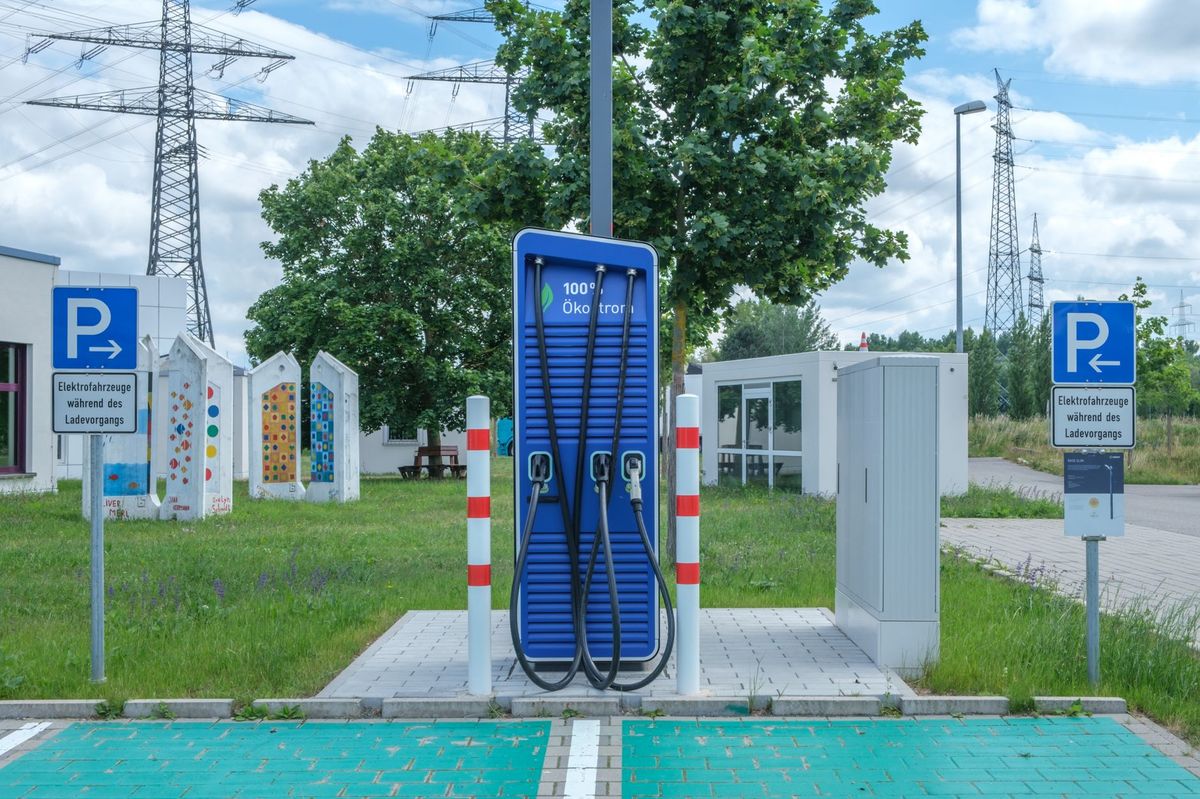
Charging equipment installation involves setting the charger units on pre-cast concrete pads or direct-embedded mounting, connecting power conductors and communication cables, commissioning and testing, and network connectivity (cellular, ethernet, or fiber backhaul). Equipment installation labor costs range from $20,000 to $60,000 for a four-charger station, with the charger equipment itself costing $100,000 to $200,000 (typically furnished by the charging network operator, not the construction contractor).
Total installed cost for a NEVI-compliant four-charger DC fast charging station ranges from $500,000 to $1.2 million, with the wide range driven primarily by electrical service upgrade costs. Sites that require new utility transformer installation or significant distribution system upgrades can see electrical costs alone exceed $500,000. Sites with adequate existing electrical capacity — increasingly rare as charging station power demands grow — can be built for under $500,000.
Utility Infrastructure: The Hidden Bottleneck
The single biggest construction bottleneck in EV charging deployment is not the charging equipment or the site work — it's the electrical utility infrastructure required to deliver the power. A single NEVI-compliant four-charger station at 350 kW per charger requires 1.4 MW of electrical capacity — equivalent to the electrical load of a 100 to 150-unit apartment building. A charging hub with 10 to 20 chargers may require 5 to 10 MW — the load of a small industrial facility.
Delivering this level of power to locations along highway corridors — often in rural or semi-rural areas with limited existing electrical distribution infrastructure — is a major construction challenge. Utility upgrade timelines range from 6 to 18 months for service upgrades requiring distribution line extension or transformer installation, and 18 to 36 months for upgrades requiring transmission-level work or substation modifications.
The utility construction work includes distribution line extension (overhead or underground) from existing lines to the charging station site, transformer pad construction and transformer installation, switchgear and metering equipment installation, and distribution system upgrades (reconductoring, voltage conversion, or protection coordination modifications) to handle the added load.
This utility infrastructure work represents a significant construction opportunity for electrical contractors and utility construction firms. The Edison Electric Institute estimates that utility-side infrastructure investment for EV charging will total $8 to $12 billion through 2030 — roughly equivalent to the total investment in chargers and site construction combined.
Battery Energy Storage Integration
An emerging construction subsector within EV charging is the integration of battery energy storage systems (BESS) at charging stations. Battery storage addresses two key challenges: it reduces the peak demand charges that can make DC fast charging station economics unsustainable in utility rate structures with high demand charges, and it enables charging station deployment at locations where utility capacity is insufficient for full-load simultaneous charging.
A typical BESS installation at a DC fast charging station includes 500 kWh to 2 MWh of lithium-ion battery storage in containerized or cabinet-mounted enclosures. Construction work includes concrete pad or foundation for the battery container, electrical connections between the battery system, the utility service, and the chargers, HVAC or liquid cooling systems for battery thermal management, fire suppression and safety systems as required by local fire codes (typically NFPA 855), and protective bollards, fencing, and signage.
BESS installation costs add $200,000 to $800,000 per charging station depending on storage capacity, with the battery equipment itself representing approximately 60% of the total installed cost. For contractors, the balance-of-system construction work — foundations, electrical, fire protection, and site work — is where the construction revenue lies.
Construction Workforce and Skill Requirements
EV charging station construction requires a specific mix of electrical and civil construction skills. The electrical work is the most specialized component and drives contractor selection.
Licensed electricians with commercial or industrial experience are the core trade requirement. The National Electrical Contractors Association (NECA) estimates that NEVI and related programs will require an additional 12,000 to 15,000 electricians dedicated to EV infrastructure work through 2030. The specific skill requirements include medium-voltage distribution work (utility service entrances at 4.16 kV to 34.5 kV), power distribution system design and installation (switchgear, panelboards, circuit protection), large conductor installation (pulling 500+ MCM conductors through conduit systems), grounding and bonding per NEC Article 250, and commissioning and testing of high-power charging systems.
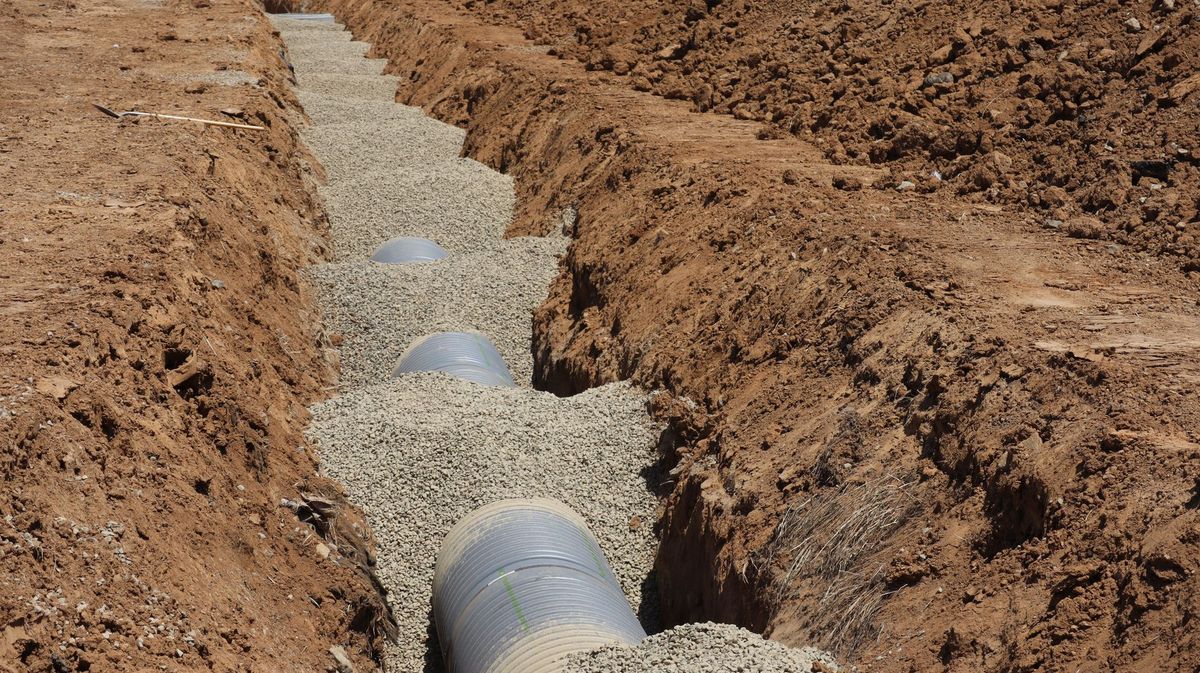
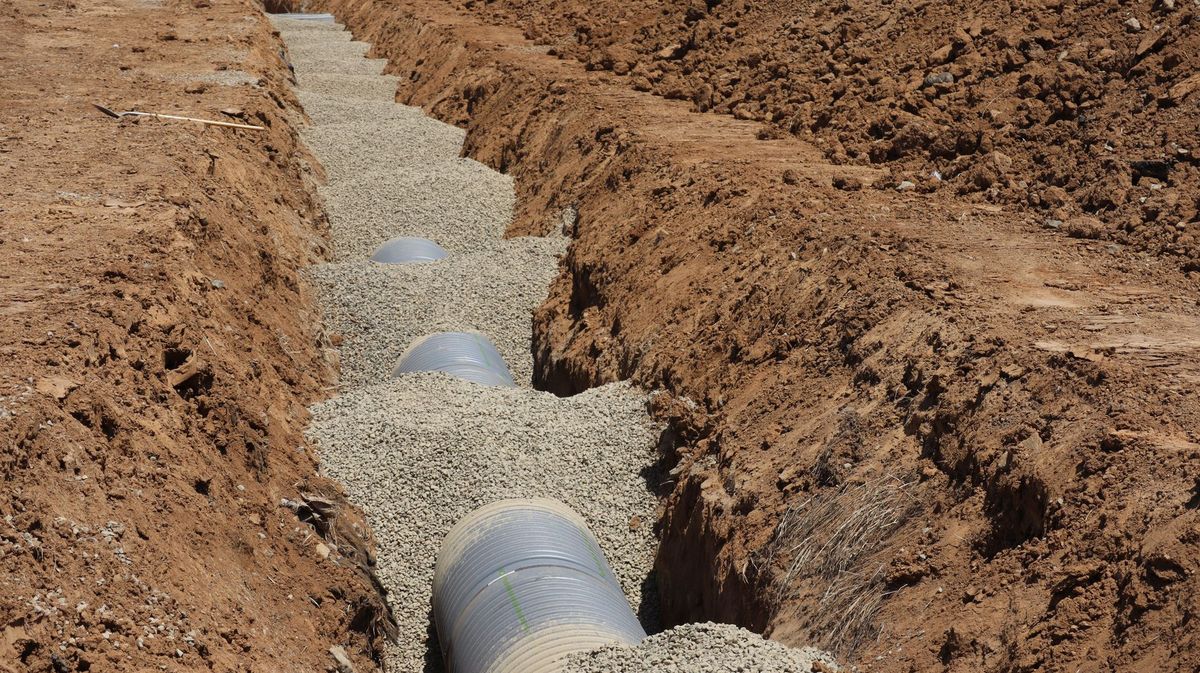
Civil construction workers — laborers, equipment operators, and concrete finishers — handle the site work, trenching, and paving that constitute approximately 25 to 35% of total construction cost. The civil work is relatively straightforward for experienced site contractors but requires coordination with the electrical scope to ensure conduit banks are properly placed and graded before paving.
Market Segmentation: Where the Construction Dollars Flow
The EV charging construction market segments into several distinct project types, each with different contractor requirements and competitive dynamics.
Highway corridor DC fast charging (NEVI program) — These are the flagship projects, with 4 to 10 chargers per site at 150 to 350 kW. Estimated market size: $8 to $12 billion through 2030. Prime contractors are typically electrical or general contractors with commercial site development experience.
Urban and suburban Level 2 charging — Parking garages, retail locations, workplaces, and multifamily residential properties are installing Level 2 (7.2 to 19.2 kW) charging stations in bulk. Individual installations are smaller ($5,000 to $25,000 per charger installed), but the aggregate volume is enormous — an estimated 300,000+ Level 2 ports will be installed through 2030. Electrical contractors dominate this segment.
Fleet charging depots — Transit agencies, school districts, delivery companies, and corporate fleets are building dedicated charging facilities for electric buses, trucks, and fleet vehicles. These projects are large-scale electrical construction jobs, with fleet depots requiring 2 to 20 MW of electrical capacity and total construction costs of $2 to $20 million per depot. The transit bus electrification segment alone represents an estimated $5 to $8 billion construction market.
Destination charging — Hotels, resorts, national parks, and tourism destinations are installing charging infrastructure. These projects are typically smaller in scale but occur in high volumes.
The combined EV charging construction market is growing at 35 to 45% annually through 2026 and is projected to sustain 20 to 25% annual growth through 2030. This growth rate places EV charging among the fastest-growing construction subsectors in the country, behind only data center construction in growth rate.
What This Means for Your Crew
EV charging station construction is accessible to mid-size electrical and general contractors with commercial experience. The projects are manageable in scale (typically $500K to $2M per station), geographically dispersed (creating opportunities in every state), and growing at a rate that will absorb significant new entrant capacity.
Key considerations for your crew: First, establish a relationship with the major charging network operators (ChargePoint, Electrify America, EVgo, Tesla, bp pulse, Francis Energy) — these companies are awarding construction contracts at an accelerating pace and prefer contractors who understand the specific requirements of charging infrastructure. Second, invest in medium-voltage electrical capabilities if you don't already have them — the utility service entrance work is the highest-value and most differentiated construction activity at a charging station. Third, get familiar with NEVI program requirements — prevailing wage (Davis-Bacon), Buy America provisions for electrical equipment, and the specific reliability and uptime standards that NEVI imposes on funded stations all affect construction specifications and costs.
Frequently Asked Questions
How much does it cost to build an EV charging station?
Construction costs vary widely based on charging level, number of ports, and site conditions. A NEVI-compliant DC fast charging station with four chargers at 150 to 350 kW typically costs $500,000 to $1.2 million total installed, including site civil work ($50K to $200K), electrical infrastructure ($150K to $500K), and charger equipment and installation ($120K to $260K). A Level 2 charging installation at a commercial parking facility costs $5,000 to $25,000 per charger installed, depending on the distance from the electrical panel and whether a service upgrade is required. Fleet charging depots for electric buses or trucks range from $2 to $20 million depending on fleet size and power requirements.
What trades are needed for EV charging construction?
The primary trade is licensed electricians with commercial or industrial experience, particularly in medium-voltage distribution, large conductor installation, and power distribution systems. Civil construction workers — equipment operators, laborers, concrete finishers — handle site preparation, trenching, paving, and foundation work. Utility lineworkers may be needed for distribution line extensions and transformer installations on the utility side of the meter. For projects with battery energy storage, fire protection contractors install suppression systems per NFPA 855.
What is the NEVI program?
The National Electric Vehicle Infrastructure (NEVI) Formula Program is a $5 billion federal program under the Infrastructure Investment and Jobs Act that allocates funding to states to build a national network of DC fast charging stations along designated Alternative Fuel Corridors. Each state receives an annual allocation based on a formula considering lane-miles of Alternative Fuel Corridors and population. NEVI stations must meet specific minimum standards: at least four DC fast chargers per station, minimum 150 kW per charger (with at least one at 350 kW), Combined Charging System (CCS) connectors, maximum spacing of 50 miles between stations, and location within one mile of the corridor. The program also requires prevailing wage compliance, Buy America provisions, and minimum reliability standards.
How long does it take to build an EV charging station?
Construction timelines for EV charging stations vary significantly based on utility infrastructure requirements. The site construction itself — civil work, electrical installation, and charger mounting — typically takes 6 to 12 weeks for a standard four-charger DC fast charging station. However, the utility service upgrade process often takes 6 to 18 months from application to energization, making it the primary schedule driver. The overall timeline from project initiation (site selection, permitting, utility application) to operational charging station typically ranges from 12 to 24 months, with utility lead time as the critical path. Contractors can improve timelines by initiating utility applications early in the design phase and pre-ordering long-lead electrical equipment (transformers, switchgear).
What to Watch
The EV charging construction market is poised for sustained growth, but watch for inflection points. First, monitor NEVI program spending velocity — as of Q1 2026, states have obligated $3.4 billion of the $5 billion allocation, with construction spending accelerating. The pace of NEVI buildout will determine whether the highway corridor network is completed by 2028 as planned or extends into 2030. Second, watch utility interconnection timelines — if utility lead times extend beyond 18 months, charging station deployment will slow regardless of available construction capacity. Third, monitor EV adoption rates — the Biden administration's target of 50% EV sales by 2030 drives charging demand, and any slowdown in EV adoption would reduce private sector charging investment. Finally, watch the overall construction spending trajectory — EV charging construction competes with every other construction sector for electricians and civil crews, and a hot overall market means tighter labor availability and higher costs for charging infrastructure construction.