Coastal cities across the United States face a cumulative $8 billion stormwater infrastructure construction gap — the difference between what's needed to manage increasingly intense rainfall events and what's currently funded in capital improvement programs. The gap is growing by approximately $800 million per year as aging pipe systems deteriorate, impervious surface area expands with development, and precipitation intensity increases in line with climate projections.
The numbers tell a different story than the assumption that stormwater is a minor municipal utility concern. In coastal cities where stormwater combines with tidal influence and sea level rise to create compound flooding, stormwater infrastructure failures are becoming the primary source of urban flood damage — more impactful than river flooding in many communities because stormwater flooding affects the entire urbanized area rather than just river-adjacent properties.
The Infrastructure Gap by Region
The $8 billion gap is distributed across coastal regions:
Gulf Coast: $3.2 billion. Houston ($1.1 billion gap), New Orleans ($680 million), Miami-Dade ($520 million), and Tampa Bay ($380 million) lead Gulf Coast stormwater construction needs. The combination of flat topography, high water tables, intense tropical rainfall, and hurricane storm surge creates some of the most challenging stormwater conditions in the country. Houston's stormwater system was designed for the 2-year rainfall event (approximately 2.5 inches per hour) but now regularly experiences storms exceeding the 100-year event (7+ inches per hour). Post-Hurricane Harvey, Harris County alone has committed $2.5 billion to flood control and stormwater construction.
Southeast Atlantic: $2.1 billion. Charleston ($380 million), Norfolk ($420 million), Savannah ($280 million), and Jacksonville ($340 million) face stormwater gaps compounded by tidal flooding and sea level rise. Charleston's stormwater system relies on gravity drainage to tidal waterways — when high tides coincide with heavy rainfall, the system cannot discharge and inland flooding results. The city's $2 billion Stormwater Master Plan calls for pump station construction, tunnel storage, and green infrastructure to decouple drainage from tidal influence.
Mid-Atlantic: $1.4 billion. New York City ($520 million for stormwater-specific projects beyond combined sewer work), Philadelphia ($380 million), and Annapolis/Baltimore ($280 million combined). These cities face combined sewer overflow challenges in addition to stormwater capacity shortfalls.
Pacific Coast: $1.3 billion. San Diego ($380 million), San Francisco ($420 million), and Seattle ($280 million) face stormwater gaps driven by water quality regulations (MS4 permits requiring treatment of stormwater runoff) rather than flooding concerns. California's stringent stormwater treatment requirements are driving construction of biofiltration systems, treatment wetlands, and underground storage and treatment facilities.
What Needs to Be Built
Closing the stormwater infrastructure gap requires construction across several categories:
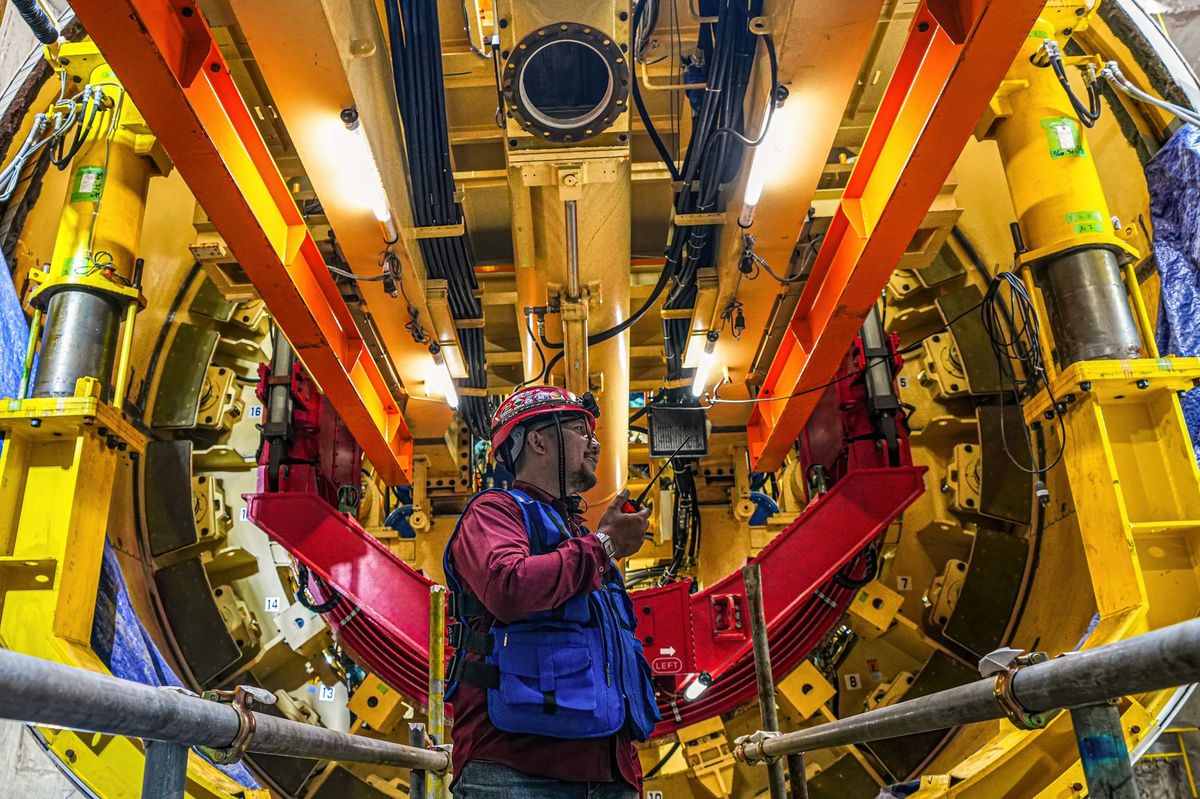
Pipe System Replacement and Upsizing: $2.8 billion. Aging stormwater conveyance systems — concrete pipe, corrugated metal pipe, and brick sewers built between the 1920s and 1960s — are deteriorating structurally and are undersized for current rainfall intensity. Replacement involves trenching and open-cut pipe installation for accessible routes, microtunneling and pipe jacking for deep installations and road crossings, cured-in-place pipe (CIPP) lining for structural rehabilitation of existing pipes, and upsizing from original 24 to 36-inch pipes to 48 to 72-inch or larger to increase hydraulic capacity. Pipe replacement costs range from $150 to $500 per linear foot for 24 to 48-inch pipe and $400 to $1,200 per linear foot for 60 to 96-inch pipe, depending on depth, material, and surface restoration requirements.
Pump Station Construction: $1.8 billion. Coastal cities with flat topography and high water tables require mechanical pumping to move stormwater from low-lying areas to discharge points. Modern stormwater pump stations range from small neighborhood stations pumping 10 to 50 cubic feet per second (CFS) at a cost of $2 to $10 million, to regional pump stations pumping 200 to 1,000+ CFS at $20 to $100 million. Construction involves deep excavation in high-groundwater conditions (often requiring dewatering or slurry wall construction to maintain dry excavation), mass concrete wet well and pump vault construction, installation of large mixed-flow or axial-flow pumps, and electrical power systems including medium-voltage switchgear and backup generation.
Green Infrastructure: $1.4 billion. Cities are increasingly integrating green infrastructure — bioretention systems, permeable pavement, green roofs, tree trenches, and constructed wetlands — into stormwater capital programs. Philadelphia's Green City, Clean Waters program is the national model, committing to manage the first inch of rainfall from 10,000 acres of impervious area through green infrastructure over 25 years at a total investment of $2.4 billion. Green infrastructure construction involves specialized landscape and civil construction techniques including engineered soil media, underdrain systems, overflow connections, and native plant establishment.
Storage Systems: $1.2 billion. Underground stormwater storage — either in large-diameter tunnel systems or distributed underground detention vaults — provides capacity to store peak stormwater flows and release them at controlled rates after storms pass. Tunnel storage systems cost $100 to $300 million per mile of large-diameter tunnel (8 to 20 feet diameter). Underground detention vaults using precast concrete or HDPE chamber systems cost $15 to $40 per cubic foot of storage volume.
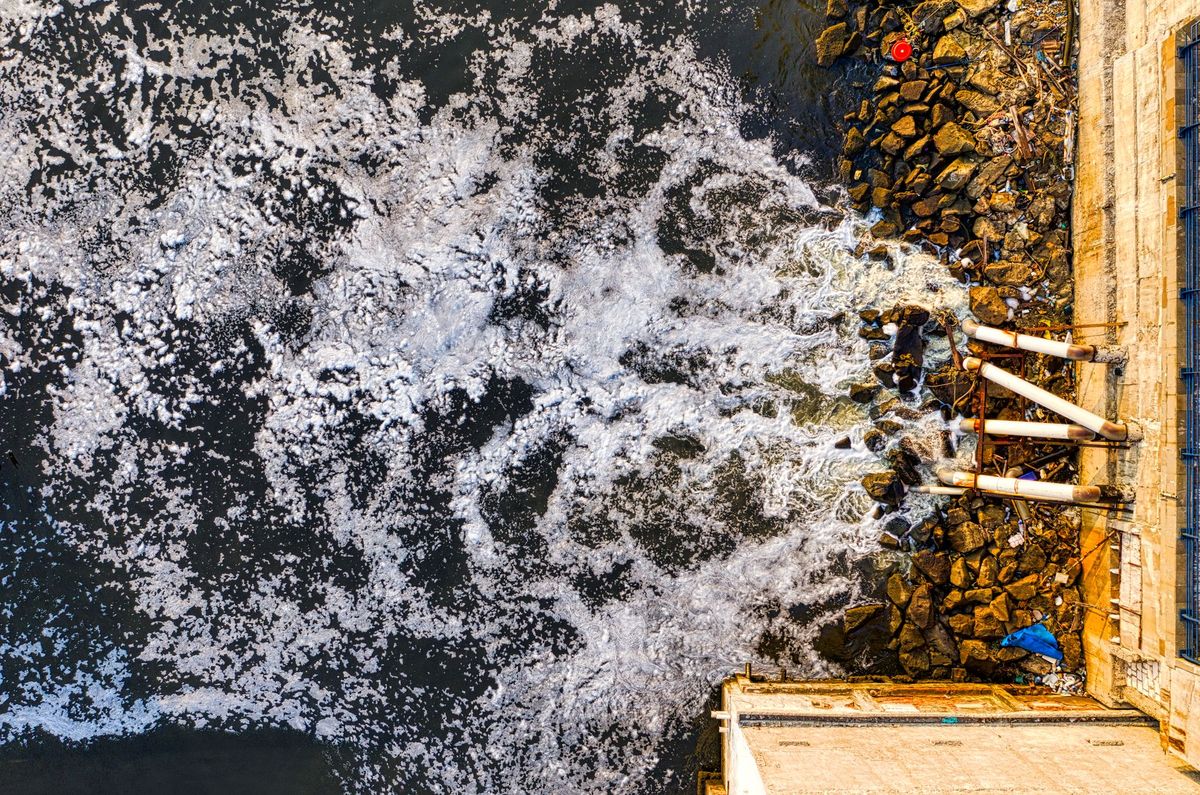
Outfall and Discharge Improvements: $800 million. Upgrading stormwater outfalls — the points where stormwater systems discharge to receiving waters — to include tide gates preventing backflow during high tides, trash capture devices meeting environmental permit requirements, and water quality treatment features.
Construction Workforce and Contractors
Stormwater infrastructure construction employs an estimated 25,000 to 30,000 workers nationally across active projects. The contractor base includes underground utility contractors for pipe installation and replacement, heavy civil contractors for pump station and storage facility construction, marine contractors for outfall and tide gate work, landscape and environmental contractors for green infrastructure, and specialty contractors for microtunneling, CIPP lining, and dewatering.
Funding Sources
Stormwater infrastructure is funded through stormwater utility fees (enterprise fund approach used by over 1,600 US communities), municipal general obligation and revenue bonds, FEMA hazard mitigation grants (HMGP and BRIC for flood-related stormwater projects), EPA Clean Water State Revolving Fund loans, and Community Development Block Grant (CDBG) disaster recovery funds. The IIJA provided additional funding through the Clean Water SRF, but stormwater competes with wastewater for these dollars.
The primary challenge is that stormwater remains the least well-funded category of water infrastructure. While water and sewer utilities can charge volumetric rates tied to consumption, stormwater fees are typically flat monthly charges of $3 to $15 per household — generating limited revenue relative to the scale of construction needs. Several cities are implementing tiered stormwater fees based on impervious area, which can generate 2 to 3x the revenue of flat-fee systems.
Market Outlook
The stormwater infrastructure gap is structural and growing. Climate projections indicate increasing rainfall intensity across most of the eastern United States, with the 100-year rainfall event expected to increase by 10 to 40% by mid-century depending on location. Sea level rise will further reduce gravity drainage capacity in coastal cities, increasing pump station requirements. And continued urbanization will add impervious area, increasing runoff volumes.
For construction firms, stormwater infrastructure represents an expanding market with strong regulatory drivers. MS4 permit requirements ensure that cities must continue investing in stormwater systems regardless of budget pressures. The growing integration of green infrastructure creates opportunities for firms with both civil construction and landscape/environmental capabilities. And the technical complexity of coastal stormwater construction — working in saturated soils, managing dewatering, coordinating with tidal cycles — provides meaningful barriers to entry that support contractor margins.
Philadelphia's Green City Clean Waters: A National Model
Philadelphia's Green City, Clean Waters program deserves detailed examination as the most ambitious green stormwater infrastructure program in the country. Launched in 2011, the 25-year program commits to managing the first inch of rainfall from 10,000 acres of impervious area through green infrastructure, at a total investment of approximately $2.4 billion in green infrastructure construction plus $1.6 billion in traditional gray infrastructure improvements.
Construction activity under the program includes over 3,500 individual green infrastructure projects completed or in construction as of 2026, spanning tree trenches along city streets (excavating existing sidewalk areas, installing engineered soil media and underdrain systems, planting street trees, and restoring sidewalks), rain gardens and bioretention basins in parks, schoolyards, and vacant lots, permeable pavement installations in parking areas and low-traffic streets, green roofs on public buildings (covering over 1 million SF), and stormwater bump-outs (curb extensions with bioretention planters) at intersections.
The program generates approximately $200 to $300 million per year in construction spending, supporting a dedicated workforce of green infrastructure contractors. Philadelphia has developed a certified Green Stormwater Infrastructure contractor list with over 40 firms qualified to perform GSI construction, creating a specialized local market for this work.
Key lessons from Philadelphia's program for other cities and for construction contractors include the importance of standardized designs that can be repeated across hundreds of sites to reduce engineering costs and improve construction efficiency, the value of a dedicated contractor qualification program that ensures construction quality while building local workforce capacity, the challenge of maintaining green infrastructure after construction (vegetation management, sediment removal, inlet cleaning) which requires ongoing maintenance contracts that can supplement construction revenue, and the benefit of programmatic procurement (multi-year, multi-site contracts) rather than individual project bidding.
Coastal Resilience Infrastructure Integration
In many coastal cities, stormwater infrastructure construction is being integrated with broader coastal resilience programs that address sea level rise, erosion, and storm surge in addition to rainfall-driven flooding. This integration creates larger, more complex construction programs that combine traditional stormwater elements (pipes, inlets, pump stations) with coastal protection infrastructure (seawalls, living shorelines, dune restoration).
Miami-Dade County's Stormwater Master Plan illustrates this integrated approach. The county's $3.5 billion, 50-year capital plan combines pump station construction for gravity drainage systems that can no longer function due to rising sea levels, installation of one-way backflow preventers on all ocean-connected outfalls to prevent tidal inflow, raising of seawalls and coastal barriers by 2 to 4 feet throughout the county, construction of underground injection wells for stormwater disposal when surface discharge is infeasible, and green infrastructure retrofit of 5,000 acres of impervious area to reduce runoff volumes entering the collection system.
The construction workforce required for integrated coastal resilience programs spans traditional stormwater construction trades plus marine construction capabilities (seawall construction, coastal armoring, shoreline restoration) and specialized environmental construction skills (mangrove restoration, living shoreline installation, wetland construction). Contractors who develop capabilities across this full spectrum of coastal resilience construction will be best positioned for the growing market in flood-vulnerable coastal communities.
Smart Stormwater Infrastructure
Emerging technology is creating a new category of stormwater construction: smart infrastructure that uses real-time monitoring and automated control to optimize system performance. Smart stormwater technologies include real-time water level sensors in stormwater pipes, manholes, and storage facilities that provide continuous monitoring of system capacity and performance, automated gate and valve controls that can redirect stormwater flows based on real-time conditions — routing water to storage facilities with available capacity or diverting flows away from areas experiencing localized flooding, weather-linked predictive control systems that pre-position the stormwater system based on forecast rainfall — for example, draining storage facilities in advance of predicted storms to maximize available capacity, and water quality sensors at outfalls and treatment facilities that monitor compliance with discharge permits in real-time.
Smart stormwater infrastructure adds 5 to 15% to construction costs compared to conventional systems but can improve system performance by 20 to 40% — effectively increasing capacity without building larger pipes. For construction firms, smart stormwater creates additional scope in electrical, communication, and instrumentation trades that complement traditional civil construction work.
Asset Management and Condition Assessment
Many coastal cities are discovering that their stormwater infrastructure is in worse condition than assumed because comprehensive inspection and condition assessment programs have historically been underfunded. Unlike water and wastewater systems that are regularly inspected through CCTV pipe inspection and condition assessment programs, stormwater pipe systems have often gone decades without systematic inspection.
Modern stormwater condition assessment programs use CCTV inspection robots that traverse pipes and record video of interior conditions, coded according to the NASSCO PACP (Pipeline Assessment Certification Program) standard. Defects including cracks, joint separations, root intrusion, corrosion, and structural deformation are documented and scored, generating a prioritized rehabilitation and replacement program.
The construction implications of comprehensive stormwater inspection are significant. Cities that complete their first thorough assessment of stormwater pipe condition typically discover that 15 to 30% of pipes are in condition grades 4 or 5 (the two worst categories), requiring near-term rehabilitation or replacement. This discovery process is one reason the stormwater infrastructure gap continues to grow — each round of inspection reveals more deficiencies than previously estimated.
For construction contractors, stormwater condition assessment programs create a two-phase market opportunity: first, the inspection and assessment phase (typically $3 to $8 per linear foot of pipe inspected, performed by specialized CCTV inspection firms); and second, the rehabilitation and replacement construction phase that follows assessment. Firms that offer both inspection and construction services can capture work across both phases.
Frequently Asked Questions
How much federal funding goes to stormwater infrastructure construction?
According to the latest industry data, stormwater infrastructure construction is showing notable trends in 2026. Current figures indicate $8 billion, which represents a significant benchmark for contractors and developers planning projects this year. Regional variations apply, so checking local market conditions remains essential for accurate budgeting.
Which states benefit most from stormwater infrastructure construction?
Regional analysis of stormwater infrastructure construction reveals uneven distribution across U.S. markets. The data point of $800 million highlights the scale of activity, with Sun Belt and high-growth metro areas generally leading in volume. Contractors expanding into new territories should evaluate local demand indicators before committing resources.
What is the timeline for stormwater infrastructure construction projects?
Year-over-year comparisons for stormwater infrastructure construction show meaningful change. The figure of $3.2 billion from current data represents a shift that contractors need to account for in their planning and bidding strategies. Historical trend analysis suggests this trajectory may continue through the end of the year.