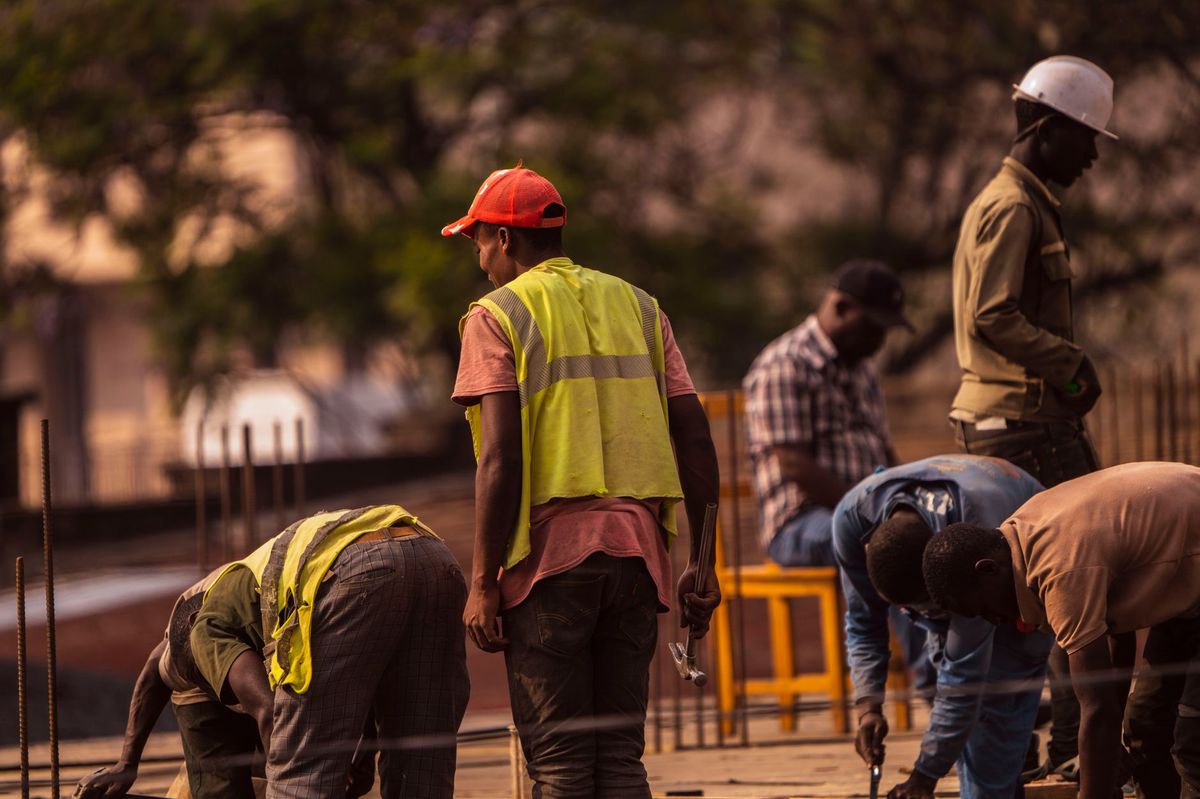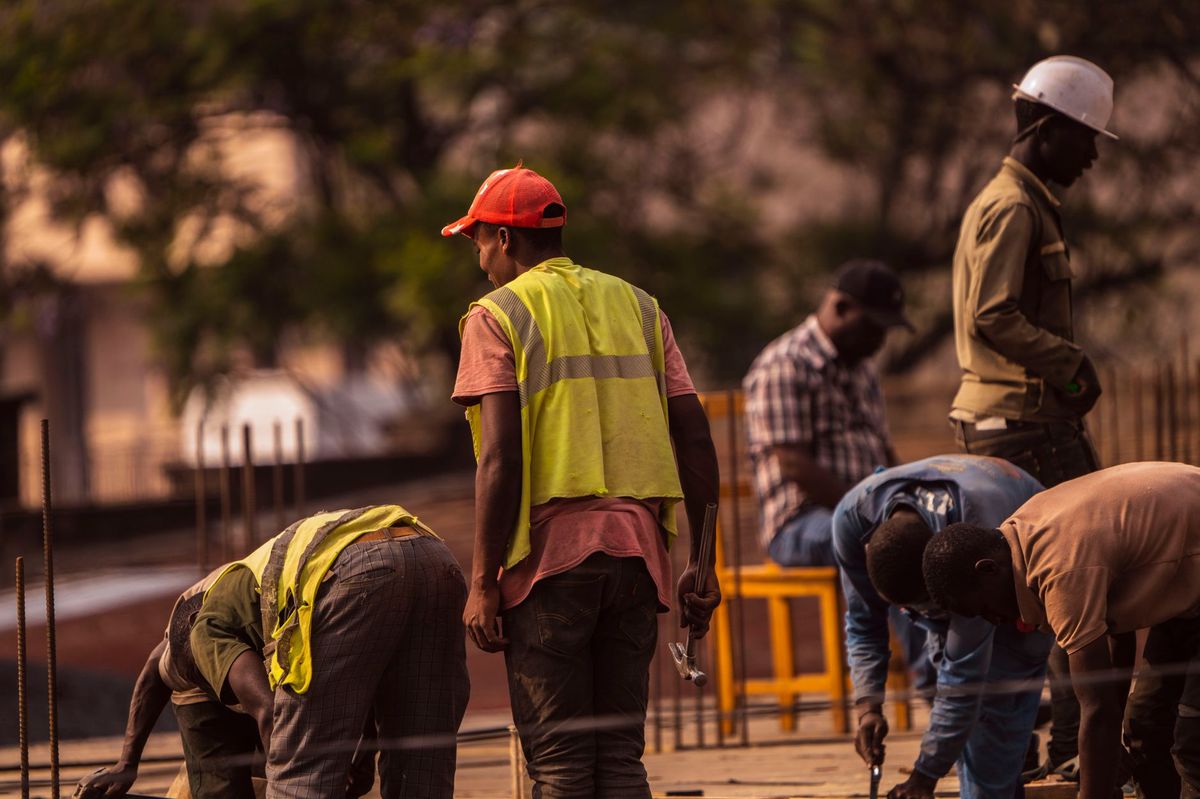
The Bureau of Labor Statistics Current Population Survey for 2025 contains a number that frames every workforce discussion in the construction industry: 2.84 million foreign-born workers are employed in construction, representing 29.1% of the total construction workforce. In the specialty trade contractor sector — the electricians, plumbers, HVAC technicians, roofers, framers, and concrete finishers who do the hands-on work — the foreign-born share is even higher at 33.7%.
These are not undocumented workers hiding in the margins of the industry. The vast majority — approximately 68% according to the Migration Policy Institute's analysis of Census Bureau data — are lawful permanent residents, naturalized citizens, or holders of work authorization. The remaining 32%, approximately 908,000 workers, are estimated to be unauthorized, though this figure carries significant uncertainty because of the inherent challenges of measuring an undocumented population.
Immigration policy is reshaping the construction workforce in real time. Visa rule changes, enforcement actions, border policy shifts, and legislative proposals all have direct, measurable effects on the supply of construction labor — and therefore on project costs, timelines, and the industry's ability to meet the largest infrastructure investment in American history.
This article presents the numbers: who these workers are, where they work, what they earn, and how current and proposed immigration policies affect the construction labor market.
The Demographic Picture
Country of origin
According to the Migration Policy Institute's analysis of the 2025 American Community Survey:
- Mexico: 48.2% of foreign-born construction workers (approximately 1.37 million)
- Central America (Guatemala, El Salvador, Honduras): 19.8% (approximately 562,000)
- South America: 6.3% (approximately 179,000)
- Caribbean: 5.1% (approximately 145,000)
- Asia (primarily India, Philippines, South Korea): 7.4% (approximately 210,000)
- Europe and Canada: 6.8% (approximately 193,000)
- Africa and other: 6.4% (approximately 182,000)
The Latin American concentration is significant because it means that immigration policies specifically affecting Mexico and Central America — border enforcement, TPS designations, asylum policy, and bilateral labor agreements — have an outsized impact on construction labor supply.
Geographic concentration
Foreign-born construction workers are concentrated in specific markets:
- Texas: 432,000 foreign-born construction workers (42.3% of the state's construction workforce)
- California: 398,000 (46.1%)
- Florida: 287,000 (39.8%)
- New York/New Jersey metro: 218,000 (38.2%)
- Georgia: 98,000 (34.7%)
- North Carolina: 82,000 (31.2%)
- Nevada: 47,000 (44.8%)
- Arizona: 68,000 (36.9%)
In these markets, the foreign-born workforce is not supplemental — it is foundational. A policy change that removes 10% of the foreign-born construction workforce in Texas would eliminate 43,200 workers in a state that already has approximately 68,000 unfilled construction positions.
Trade distribution
Foreign-born workers are not evenly distributed across construction trades. Based on CPS and American Community Survey data:
Trades with highest foreign-born share:
- Drywall installation: 63.2% foreign-born
- Roofing: 54.7%
- Concrete and masonry: 51.3%
- Painting and wall covering: 49.8%
- Framing (carpentry): 44.1%
- Tile and flooring installation: 42.6%
Trades with lowest foreign-born share:
- Electrical: 18.4%
- Plumbing and pipefitting: 21.7%
- HVAC: 19.2%
- Elevator installation: 11.3%
- Sheet metal: 16.8%
- Operating engineers: 14.9%
The pattern is clear: trades that require state licensing and union apprenticeship have lower foreign-born shares, while trades that rely more on skill-based hiring without formal licensing have higher shares. This does not mean foreign-born workers in high-share trades are less skilled — many are highly skilled craftspeople. It means that the licensing and apprenticeship pipeline has historically been less accessible to foreign-born workers.
Safety note: Foreign-born construction workers have a fatality rate 14% higher than native-born workers, according to CPWR analysis of BLS Census of Fatal Occupational Injuries data. Language barriers in safety training, lower rates of OSHA 10/30 certification, and reduced likelihood of reporting unsafe conditions all contribute to this disparity. Any immigration policy discussion that ignores the safety dimension is incomplete. These workers deserve the same protection as every other person on a construction site — and OSHA standards apply regardless of immigration status.
The Wage Picture
The wage dynamics of immigrant construction workers defy simple narratives. Based on BLS and CPS data:
Overall averages (2025):
- Native-born construction workers, median hourly wage: $28.40
- Foreign-born construction workers, median hourly wage: $22.70
- Gap: $5.70 (20.1%)
However, this gap is largely explained by trade distribution, experience levels, and geographic concentration rather than by immigration status per se. When you control for trade and geography:
Electricians:
- Native-born median: $34.80
- Foreign-born median: $32.40
- Gap: 6.9%
Concrete finishers:
- Native-born median: $24.60
- Foreign-born median: $23.10
- Gap: 6.1%
Roofers:
- Native-born median: $22.40
- Foreign-born median: $20.80
- Gap: 7.1%
The within-trade gaps are smaller — 6-8% rather than 20% — because much of the aggregate gap is driven by the concentration of foreign-born workers in lower-paying trades (roofing, drywall, painting) rather than higher-paying trades (electrical, plumbing, HVAC).
Wage research by the Economic Policy Institute suggests that the remaining within-trade gap is partly attributable to immigration status itself. Workers without legal authorization have less bargaining power, are less likely to report wage theft, and are less likely to demand safety protections — all of which depress wages. Legalization programs that provide work authorization tend to increase wages for affected workers by 8-12% within three years, according to studies of the 1986 IRCA legalization.
Current Immigration Policy and Construction
Several active and proposed policies are directly affecting the construction labor market in 2026:
H-2B Visa Program
The H-2B temporary nonagricultural worker visa is the primary legal pathway for construction employers to hire foreign workers for seasonal or peak-load work. Key facts for 2026:
- Annual cap: 66,000 visas (33,000 per half-year), with an additional 64,716 supplemental visas authorized by DHS for FY2026
- Construction usage: Approximately 18,400 H-2B visas were used by construction employers in FY2025 — roughly 14% of total H-2B issuances
- Typical uses: Landscaping contractors (the largest H-2B construction user), concrete contractors, roofing contractors, and general contractors for seasonal residential construction
The H-2B program is widely criticized by both labor advocates and employers. Labor advocates argue it creates a workforce with limited bargaining power and depresses wages. Employers argue the cap is far too low to meet demand, the application process is burdensome and slow, and the seasonal restriction does not match construction's actual labor patterns.
Several legislative proposals would reform the H-2B program:
- The H-2B Returning Worker Exception Act would exempt returning H-2B workers who have been in the program for at least three consecutive years from the annual cap, effectively expanding available slots.
- The Workforce for an Expanding Economy Act would create a new visa category (W visa) for year-round essential workers in labor-shortage industries, including construction, with an annual cap of 100,000 and a pathway to permanent residence after five years of continuous employment.
Temporary Protected Status (TPS)
TPS provides work authorization to nationals of designated countries experiencing armed conflict, environmental disasters, or other extraordinary conditions. As of 2026, several TPS designations affect significant numbers of construction workers:
- El Salvador: Approximately 194,000 TPS holders, an estimated 42,000 of whom work in construction
- Honduras: Approximately 77,000 TPS holders, an estimated 18,000 in construction
- Guatemala: Approximately 46,000 TPS holders, an estimated 11,000 in construction
- Haiti: Approximately 168,000 TPS holders, an estimated 22,000 in construction
- Venezuela: Approximately 472,000 TPS holders, an estimated 58,000 in construction
TPS designations are periodically reviewed, and their extension or termination is one of the most consequential immigration decisions for the construction labor market. The termination of Salvadoran TPS alone would remove an estimated 42,000 construction workers from the legal workforce — workers who, on average, have been in the United States for over 20 years and are deeply embedded in their local construction labor markets.
DACA
Approximately 580,000 DACA recipients hold active work authorization, with an estimated 68,000 working in construction. DACA remains in legal limbo following court challenges, and any termination of the program would affect the construction workforce disproportionately in Texas, California, and the Southwest.
Enforcement and E-Verify
Workplace enforcement actions — I-9 audits, worksite raids, and expanded E-Verify requirements — directly reduce the available construction workforce. Twenty-four states now require E-Verify for some or all employers, up from 20 in 2023. Federal legislation to mandate universal E-Verify has been introduced in multiple sessions of Congress and remains under active consideration.
The construction industry's response to E-Verify expansion has been mixed. Compliance-focused employers support universal E-Verify because it levels the competitive playing field — contractors who use unauthorized labor currently have a labor cost advantage over those who do not. But the practical effect of universal E-Verify without a corresponding expansion of legal immigration pathways would be to reduce the construction labor supply by an estimated 700,000-900,000 workers, according to the American Immigration Council's analysis.
The Infrastructure Investment Paradox
The federal government has simultaneously enacted the largest infrastructure investment program in American history (the IIJA, CHIPS Act, and IRA, totaling over $1.6 trillion in construction spending) and maintained immigration policies that constrain the labor supply needed to build those projects.
The numbers illustrate the paradox:
- Estimated additional construction workers needed to deliver federal infrastructure spending on schedule: 350,000-500,000 (AGC estimate)
- Current construction workforce gap (unfilled positions): 501,000
- Net effect of current immigration enforcement on construction labor supply: negative 30,000-50,000 workers per year (Migration Policy Institute estimate)
Contractors bidding on IIJA-funded projects are encountering a labor market that cannot supply the workers the projects require. The result is predictable: project delays, cost overruns, and intense wage competition that drives up construction costs for public and private projects alike.
Safety note: Labor scarcity creates safety risks that are rarely discussed in policy debates. When contractors cannot find enough workers, they stretch existing crews with overtime, hire less experienced workers, accelerate schedules to fit available labor windows, and reduce safety staffing. All of these responses increase injury rates. The relationship between labor supply and jobsite safety is direct and measurable — CPWR data shows that injury rates increase on projects where staffing falls below planned levels.
What the Industry Needs from Immigration Policy
Regardless of political positioning, the construction industry's workforce needs from immigration policy are relatively straightforward:
1. Legal pathways for construction workers
The current system does not provide adequate legal pathways for construction workers. The H-2B cap is too small, the process is too slow, and the seasonal restriction does not match construction work patterns. The industry needs either a significantly expanded H-2B program, a new construction-specific visa category, or a general essential-worker visa program with construction eligibility.
2. Stability for current workers
Approximately 2.84 million foreign-born workers are already in the construction workforce. Policies that destabilize their legal status — TPS terminations, DACA uncertainty, expanded workplace enforcement without corresponding legal pathways — remove experienced workers from the industry and create disruption that affects project delivery across the economy.
3. Portable credentials
Foreign-born workers who hold trade licenses, journeyperson certificates, or professional credentials from their home countries face significant barriers to having those credentials recognized in the United States. A foreign-trained electrician who must start a four-year apprenticeship from scratch represents an enormous waste of human capital. Credential evaluation and bridge programs that assess existing skills and provide targeted training to meet U.S. standards would help integrate skilled workers more efficiently.
4. Safety training in multiple languages
OSHA standards apply to all workers regardless of immigration status, but enforcement and training delivery have not kept pace with the workforce's linguistic diversity. OSHA 10 and OSHA 30 courses are available in Spanish, but many workers speak indigenous languages (Mixtec, K'iche', Mam) for which no training materials exist. Employers must provide training in a language workers understand — this is an OSHA requirement, not a suggestion.
For context on how the growing number of women in construction represents another strategy for addressing the workforce gap, and how construction wages are rising in response to labor scarcity, see our related coverage.
The Economic Impact
Economists have studied the relationship between immigration and construction costs extensively. Key findings from recent research:
Construction cost effects: A 2025 study by the National Bureau of Economic Research found that a 10% reduction in foreign-born construction workers in a metropolitan area is associated with a 3.2% increase in construction costs and a 2.1% increase in new housing prices. The effect is larger in markets with higher foreign-born worker concentration.
Complementarity versus substitution: The economic evidence strongly supports a complementary relationship between native-born and foreign-born construction workers rather than a substitutive one. Foreign-born workers are concentrated in different trades than native-born workers, and their presence in the workforce enables native-born workers to specialize in higher-skill, higher-wage tasks. Reducing the foreign-born workforce does not proportionally increase native-born employment — it reduces total construction output.
Fiscal impact: The Congressional Budget Office estimated in 2024 that foreign-born construction workers contribute approximately $28 billion annually in federal, state, and local tax revenue, including FICA contributions by unauthorized workers who file taxes using Individual Taxpayer Identification Numbers (ITINs).
Housing supply: In markets with significant foreign-born construction workforces, immigration restrictions correlate with reduced housing starts. A 2025 Federal Reserve Bank of Dallas study found that enforcement actions reducing the construction workforce by 5% in Texas metro areas were associated with a 7.8% decline in single-family housing permits in the subsequent 12 months.
The Path Forward
The construction industry cannot solve its workforce crisis through immigration alone. Expanding apprenticeship, improving retention, attracting more women and underrepresented groups, and investing in technology and productivity are all necessary strategies.
But neither can the industry solve its workforce crisis while ignoring immigration. Nearly a third of the construction workforce is foreign-born. The trades that build the physical infrastructure of the country — the concrete, the framing, the roofing, the drywall — are 40-60% foreign-born. No realistic domestic workforce development strategy can replace 2.84 million workers in the timeframe demanded by the current infrastructure spending cycle.
The numbers demand a pragmatic approach: legal pathways for construction workers, stability for those already here, safety protections regardless of status, and a recognition that immigration policy is construction workforce policy, whether or not anyone intended it to be.
Frequently Asked Questions
What percentage of construction workers are immigrants?
Foreign-born workers represent 29.1% of the total U.S. construction workforce, according to the 2025 Bureau of Labor Statistics Current Population Survey — approximately 2.84 million workers. In the specialty trade contractor sector, the foreign-born share is 33.7%. The share varies dramatically by trade: drywall installation (63.2% foreign-born), roofing (54.7%), and concrete/masonry (51.3%) have the highest shares, while electrical (18.4%), HVAC (19.2%), and elevator installation (11.3%) have the lowest.
How does immigration policy affect construction costs?
Research by the National Bureau of Economic Research found that a 10% reduction in foreign-born construction workers in a metropolitan area is associated with a 3.2% increase in construction costs and a 2.1% increase in new housing prices. The effect is amplified in markets with higher foreign-born worker concentration. Additionally, a Federal Reserve Bank of Dallas study found that enforcement actions reducing the construction workforce by 5% in Texas metro areas correlated with a 7.8% decline in single-family housing permits in the following 12 months.
Do immigrant construction workers earn less than native-born workers?
The aggregate wage gap between native-born and foreign-born construction workers is 20.1% ($28.40 vs. $22.70 median hourly wage). However, this gap is largely explained by trade distribution — foreign-born workers are concentrated in lower-paying trades like roofing, drywall, and painting. Within the same trade and geography, the gap narrows to 6-8%. Research suggests that work authorization status accounts for a significant portion of the remaining within-trade gap, as workers without legal status have less bargaining power and are less likely to report wage theft.
What visa programs allow construction companies to hire foreign workers?
The primary visa program for construction employers is the H-2B temporary nonagricultural worker visa, which provides seasonal or peak-load labor. The H-2B cap is 66,000 per year with supplemental allocations. Approximately 18,400 H-2B visas were used by construction employers in FY2025. Other pathways include employer-sponsored green cards (EB-3 category for skilled workers), Temporary Protected Status (TPS) work authorization for nationals of designated countries, and DACA work authorization. Several legislative proposals would create new visa categories specifically designed for essential workers in labor-shortage industries including construction.