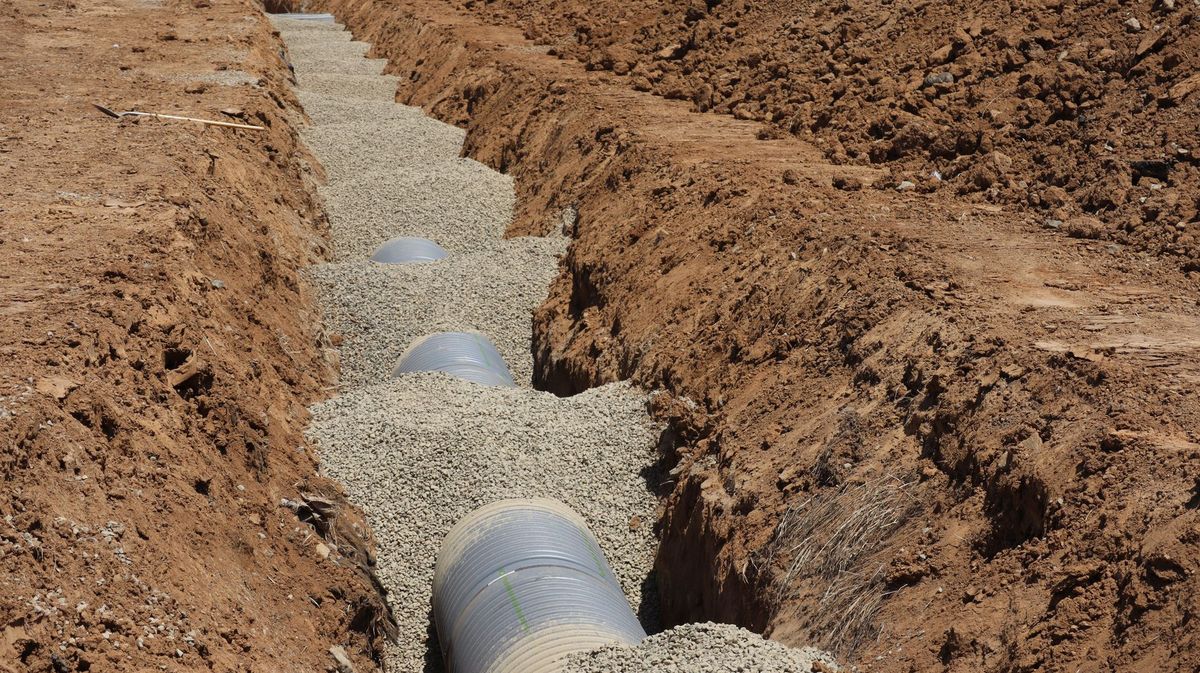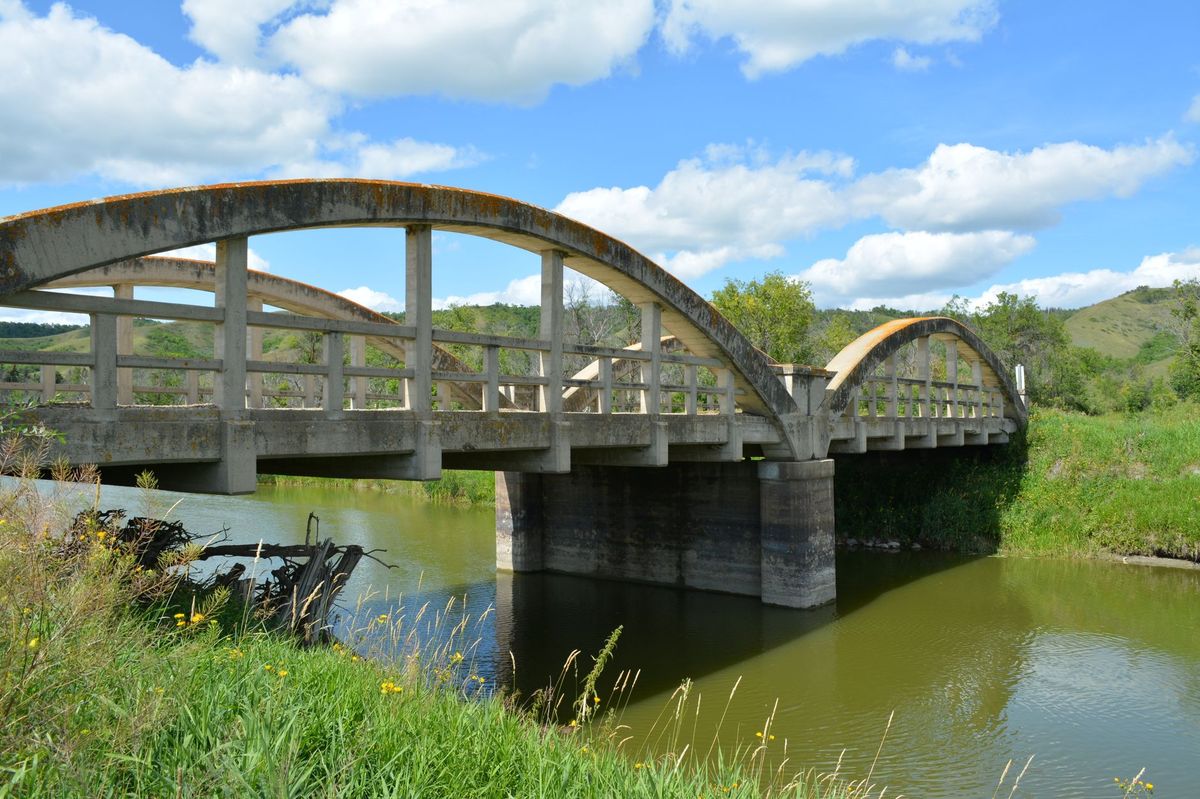
The federal Bridge Formula Program, funded at $27.5 billion through the IIJA, is driving the most aggressive bridge replacement cycle in decades. Within this program, the rural bridge component targets an estimated 15,000 bridges classified as structurally deficient or functionally obsolete on off-system (locally maintained) roads. These bridges — typically spanning 20 to 100 feet over creeks, streams, and small rivers on county roads — represent the largest single category of deficient bridges in the country and carry average replacement costs of $500,000 to $3 million each.
The numbers tell a different story than the dramatic images of crumbling interstate bridges that dominate news coverage. The majority of America's bridge problem is not on major highways — it's on rural county roads where thousands of small bridges have been neglected for decades due to limited local funding, competing maintenance priorities, and the difficulty of securing federal aid for projects that individually seem too small to matter.
The Scale of Rural Bridge Deficiency
According to the Federal Highway Administration's National Bridge Inventory (NBI), the United States has approximately 617,000 bridges on public roads. Of these, 42,966 are classified as structurally deficient — meaning they have a condition rating of 4 or below (on a 0 to 9 scale) for deck, superstructure, or substructure condition. An additional 79,000+ bridges are classified as functionally obsolete — structurally adequate but no longer meeting current design standards for lane width, load capacity, or hydraulic clearance.
The geographic and jurisdictional distribution of deficient bridges reveals where construction demand is concentrated. Approximately 55% of structurally deficient bridges are on locally maintained roads (county, township, and city roads) rather than state highways or interstates. These off-system bridges are typically owned and maintained by county highway departments or township road commissioners with limited engineering staff and constrained budgets. The states with the largest numbers of deficient bridges include Iowa (4,571), Pennsylvania (3,353), Oklahoma (2,340), Missouri (2,186), Illinois (2,043), Nebraska (1,892), Kansas (1,876), Mississippi (1,654), Louisiana (1,532), and North Carolina (1,487).
These ten states account for approximately 52% of all structurally deficient bridges in the country, creating concentrated markets for bridge replacement contractors.
Bridge Formula Program Funding
The IIJA's Bridge Formula Program distributes $27.5 billion to states based on a formula reflecting each state's share of total bridge replacement and rehabilitation costs. The funding is distributed over five federal fiscal years (2022-2026), with states required to obligate funds within established timelines.
States are required to dedicate a minimum of 15% of their Bridge Formula allocation to off-system bridges — the locally maintained rural bridges that have historically received the least investment. This minimum set-aside alone represents approximately $4.1 billion in dedicated rural bridge construction funding. Many states are allocating significantly more than the 15% minimum, recognizing the scale of rural bridge deficiency.
The top 10 state Bridge Formula allocations are California at $4.2 billion, Pennsylvania at $2.8 billion, Illinois at $2.0 billion, New York at $1.9 billion, Missouri at $1.1 billion, New Jersey at $1.1 billion, Ohio at $1.0 billion, Louisiana at $980 million, Iowa at $920 million, and Oklahoma at $870 million.
Rural Bridge Construction: Costs and Methods
Rural bridge replacement projects are characterized by relatively small individual costs but significant aggregate volume. The typical rural bridge replacement involves demolishing the existing structure (often a timber or concrete bridge built in the 1940s to 1960s), constructing new abutments and wingwalls on driven piles or spread footings, installing a new superstructure (concrete slab, prestressed concrete beams, or steel beams with concrete deck), constructing approach roadway transitions, and installing guardrail, signage, and pavement markings.
Cost ranges by span length:
- 20 to 40 foot spans: $300,000 to $800,000
- 40 to 80 foot spans: $600,000 to $1.5 million
- 80 to 120 foot spans: $1 million to $3 million
- Multi-span bridges (120+ feet total): $2 million to $5 million+
Prefabricated Bridge Systems are increasingly used for rural bridge replacement, offering several advantages for county highway departments. Prefabricated bridge elements include precast concrete abutments and wingwalls that can be set in a single day, prefabricated bridge spans (precast concrete slabs, prestressed beams, steel girders) delivered to the site ready for installation, and complete bridge systems (press-formed or corrugated steel superstructures, precast arch systems, and modular concrete bridges) that can be installed in days rather than weeks.
The Federal Highway Administration's Everyday Counts initiative promotes prefabricated bridge elements and systems (PBES) for rural bridges, and several states — Iowa, Oregon, Utah, and Oklahoma — have established standardized bridge designs and statewide procurement programs to achieve economies of scale across dozens or hundreds of similar bridge replacements.
Iowa's county bridge program is a model for rural bridge replacement efficiency. The Iowa DOT manages a statewide pool of Bridge Formula funds allocated to county bridges, using standardized designs and pre-qualified contractor lists to streamline procurement. The program targets replacement of 200+ county bridges per year at an average cost of $700,000 per bridge, maintaining a construction pipeline that allows contractors to schedule crews efficiently across multiple bridge sites.
Contractor Opportunities
The rural bridge replacement market is particularly well-suited for small to mid-size bridge contractors — firms with 15 to 75 employees operating regionally with the equipment and expertise to handle $500,000 to $3 million bridge projects. These firms typically operate 1 to 4 bridge crews, each capable of completing 6 to 12 bridge replacements per construction season.
Equipment requirements for a typical rural bridge crew include a crawler crane (50 to 100 ton capacity) for pile driving and beam setting, an excavator for demolition and earthwork, a concrete pump or conveyor for deck and abutment placement, a pile driving hammer (diesel, hydraulic, or vibratory), and flatbed trucks for beam and precast element delivery.
Workforce requirements per crew include 8 to 15 workers: crane operator, pile driving crew (2 to 3 workers), concrete crew (4 to 6 workers), ironworkers for reinforcing steel (2 to 3 workers), and a project superintendent. Skilled bridge workers are in high demand — experienced pile driving and beam setting crews are the scarcest labor category in rural bridge construction.
The programmatic nature of rural bridge replacement — states and counties letting multiple similar bridges per year — creates opportunities for contractors to bid packages of 3 to 10 bridges, reducing mobilization costs and improving crew utilization. Several states have adopted bundled bridge procurement specifically to attract efficient contractors and reduce per-bridge costs by 10 to 20%.
Challenges
Despite increased funding, rural bridge replacement faces several constraints. County highway departments often lack the engineering staff to manage large numbers of bridge projects simultaneously, creating a project development bottleneck. Environmental permitting for bridges over waterways requires coordination with the US Army Corps of Engineers (Section 404 permits), state environmental agencies, and potentially the US Fish and Wildlife Service for bridges in endangered species habitats. Construction season limitations in northern states restrict bridge work to 5 to 7 months per year, compressed timelines that drive up per-bridge costs and limit annual completion volumes.
Material supply is generally adequate for rural bridge construction, though prestressed concrete beam availability can be a constraint. Precast concrete producers serving the bridge market report lead times of 8 to 16 weeks for standard beam shapes, with longer lead times for non-standard or large-dimension beams. Steel beam availability is generally better, with 4 to 8 week lead times from structural steel fabricators.
Market Outlook
The Bridge Formula Program's $27.5 billion allocation will sustain elevated bridge construction volumes through at least 2030, with the rural bridge component representing $4+ billion in dedicated funding. Beyond the IIJA, ongoing federal bridge programs and state bridge inspection mandates will continue to identify deficient bridges requiring replacement. The number of structurally deficient bridges actually increases each year as existing bridges age faster than replacements can be completed — 1,200 to 1,500 bridges cross the deficiency threshold annually while only 800 to 1,000 are replaced.
For bridge contractors, the rural replacement market offers predictable multi-year demand, manageable project sizes, limited bonding requirements, and the opportunity to build specialized expertise in a niche that larger highway contractors often overlook. Firms that invest in prefabricated bridge capabilities, bundle-bidding strategies, and efficient multi-bridge crew operations will be the primary beneficiaries of this historic bridge construction investment.
Accelerated Bridge Construction Techniques
The Federal Highway Administration's Every Day Counts initiative has promoted several accelerated bridge construction (ABC) techniques that are particularly effective for rural bridge replacement:
Prefabricated Bridge Elements and Systems (PBES) allow bridge components to be manufactured off-site and installed rapidly, reducing on-site construction time from weeks to days. Precast abutments can be set in a single day using a crane, eliminating 2 to 3 weeks of cast-in-place concrete construction, curing, and backfill. Prefabricated superstructures — including full-width precast deck panels and total precast bridge solutions — can be installed in a single weekend closure.
Geosynthetic Reinforced Soil Integrated Bridge System (GRS-IBS) uses alternating layers of compacted granular fill and geosynthetic reinforcement to construct abutments without the need for deep foundations. GRS-IBS abutments cost 25 to 60% less than conventional pile-supported abutments and can be constructed by crews without pile driving equipment or expertise. The FHWA has promoted GRS-IBS specifically for rural bridge replacement, and over 500 GRS-IBS bridges have been constructed nationwide since the technology's introduction.
Slide-In Bridge Construction (SIBC) involves constructing a new bridge on temporary supports adjacent to the existing bridge, then sliding the new bridge into position after demolishing the old bridge — all within a single weekend closure. This technique eliminates the need for long-term detours on rural roads where alternative routes may add 20 to 50 miles of travel distance.
These ABC techniques are transforming rural bridge replacement from a 3 to 6 month construction project per bridge to a 2 to 4 week project, dramatically increasing the number of bridges that a single contractor crew can replace per construction season. Iowa's bridge program reports that ABC-equipped crews can complete 15 to 20 bridge replacements per season, compared to 6 to 10 using conventional methods.
Economic Impact of Rural Bridge Deficiency
The economic cost of rural bridge deficiency extends far beyond the direct cost of bridge replacement. When a rural bridge is posted with weight restrictions or closed entirely, the effects ripple through the local economy. Agricultural operations that depend on county road bridge crossings for equipment movement and crop transport face detour costs of $2,000 to $10,000 per year per affected farm operation. Emergency response times increase by 5 to 20 minutes when bridges are closed, as fire trucks, ambulances, and law enforcement must use longer alternate routes. School bus routes lengthen, increasing transportation costs for rural school districts by $5,000 to $20,000 per year per closed bridge. And property values within the affected road network decline by 2 to 8%, reflecting reduced access and longer travel times.
The cumulative economic impact of the nation's 42,966 structurally deficient bridges has been estimated at $2.5 to $3.5 billion per year in increased vehicle operating costs, detour time costs, and economic productivity losses. This annual cost represents a compelling economic argument for accelerated bridge replacement: the $27.5 billion Bridge Formula investment will generate economic returns exceeding its cost within a decade through reduced detour costs and improved road network efficiency.
Material Innovation for Rural Bridges
Several material innovations are reducing costs and extending service life for rural bridge replacement:
Ultra-High Performance Concrete (UHPC) with compressive strengths exceeding 22,000 PSI (compared to 4,000 to 6,000 PSI for conventional concrete) allows construction of thinner, lighter bridge decks and connections that are virtually impervious to chloride penetration and freeze-thaw damage. UHPC connections between precast bridge elements eliminate the need for post-tensioning and significantly improve durability. While UHPC material costs are 8 to 15x conventional concrete prices, the total bridge cost premium is only 5 to 15% due to reduced material volumes and faster construction.
Fiber Reinforced Polymer (FRP) Bridge Decks offer a lightweight, corrosion-resistant alternative to concrete bridge decks. FRP decks weigh 75 to 80% less than concrete decks, reducing substructure loads and potentially allowing reuse of existing abutments and piles. FRP deck costs are currently 2 to 3x concrete deck costs on a per-square-foot basis, but the total installed cost premium is reduced to 15 to 30% when substructure savings are included. Over 300 FRP deck bridges have been constructed in the US, primarily in West Virginia, New York, and Ohio.
Weathering Steel (ASTM A588/A709 Grade 50W) eliminates the need for paint on steel bridge girders, developing a protective oxide layer that prevents further corrosion. Weathering steel bridges eliminate the $50,000 to $200,000 lifecycle cost of bridge painting (typically required every 15 to 20 years for painted steel bridges), making them particularly cost-effective for rural bridges where painting access is difficult and painting costs are proportionally higher relative to total bridge value.
Frequently Asked Questions
How much federal funding goes to rural bridge replacement program?
Federal and state data confirm that rural bridge replacement program continues to be a major factor in 2026 construction planning. The latest available figure of $27.5 billion provides a useful baseline, though actual costs vary by region, project scope, and market conditions. Contractors should request updated quotes from suppliers and subcontractors before finalizing bids.
Which states benefit most from rural bridge replacement program?
Market research on rural bridge replacement program shows that geographic concentration matters significantly. With figures reaching 15,000 in key markets, the opportunities are substantial but location-dependent. States with strong population growth and infrastructure investment tend to see the highest activity levels.
What is the timeline for rural bridge replacement program projects?
Compared to prior periods, rural bridge replacement program has moved significantly. Current data showing $500,000 indicates the direction of the market, and contractors who adjust their strategies accordingly will be better positioned for profitability. Monitoring monthly updates from BLS and Census Bureau data releases is recommended.