Distribution substations now run $10 million to $30 million per installation, while transmission substations command $50 million to $200 million or more—and lead times for large power transformers have exploded to 24 to 48 months as utilities race to expand generation capacity. The US electrical grid is experiencing its most intense build-out in decades, driven by 2,600 gigawatts of interconnection queue backlog (per Lawrence Berkeley National Laboratory), hyperscale data-center power demand, and aging infrastructure replacement cycles. Utilities across North America are spending record sums on substation construction, yet the market remains constrained by transformer manufacturing bottlenecks, specialized skilled labor shortages, and volatile commodity pricing for core materials like copper and steel.
Understanding Substation Types and Cost Drivers
Distribution Substations: The $10M–$30M Standard Build
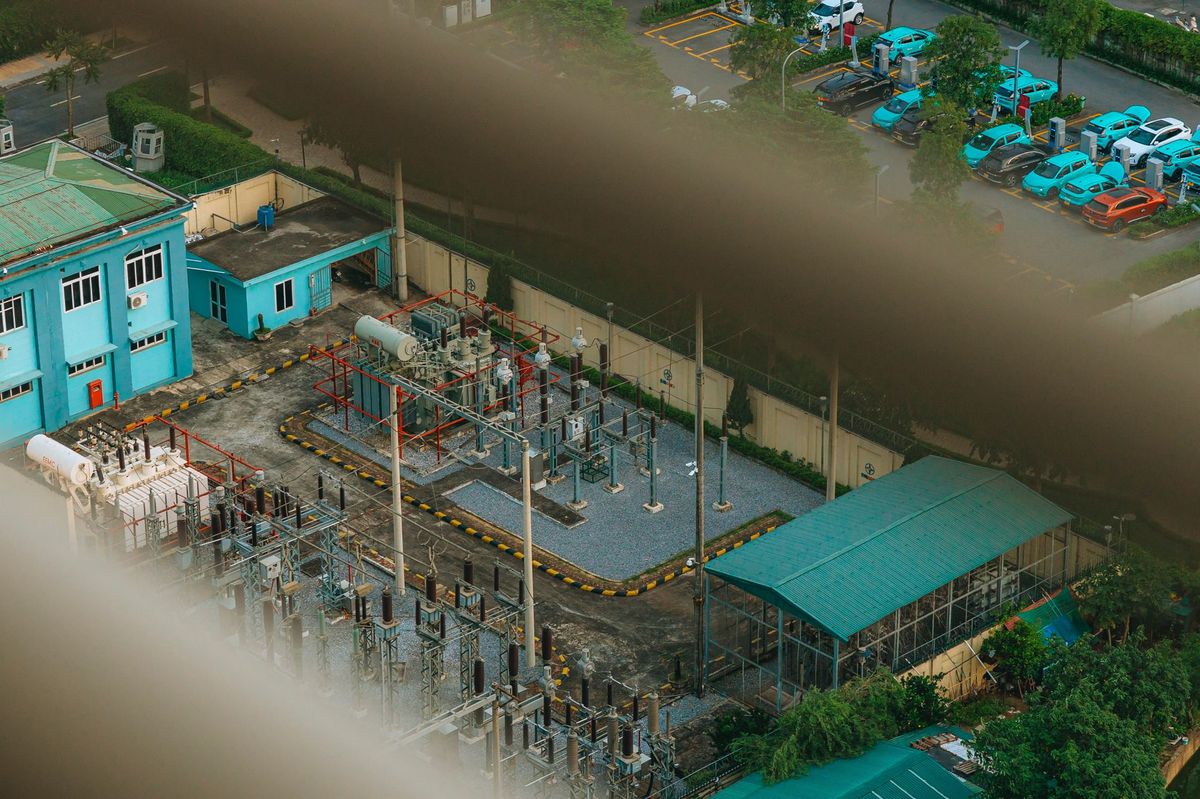
A distribution substation—the facility that steps down voltage from transmission lines (115 kV to 765 kV) to medium voltage for neighborhood delivery (4 kV to 35 kV)—requires substantial civil, electrical, and control infrastructure. Site acquisition alone consumes 3% to 8% of total project budget ($300K–$2.4M depending on urban density and land scarcity). Foundation and concrete work, including transformer pads, control building, and yard grading, typically represents 12% to 18% of capex ($1.2M–$5.4M). The main transformer—or transformer bank (2–4 units in parallel)—accounts for 25% to 40% of project cost ($2.5M–$12M for units rated 60–200 MVA). Switchyard equipment, circuit breakers, disconnect switches, and protection relays add another 15% to 22% ($1.5M–$6.6M). Control systems, SCADA integration, and cybersecurity hardening now consume 8% to 12% ($800K–$3.6M), a figure that has tripled since 2015 due to grid reliability mandates. Engineering, permitting, and contingency typically total 10% to 15% ($1M–$4.5M). A greenfield distribution substation on a 2- to 3-acre site, built to modern N+1 redundancy standards (two independent source feeds), lands squarely in the $12M–$28M range; retrofits or expansions of existing yards can run $8M–$18M.
Transmission Substations: $50M–$200M+ and Beyond
Transmission substations operate at voltages of 115 kV and above (often 345 kV, 500 kV, or 765 kV) and serve as critical grid interconnection points. These facilities are orders of magnitude more complex and expensive. A 345 kV transmission substation requires transformer units rated 300–600 MVA, each costing $4M–$12M; a 500 kV facility may deploy 600–1,200 MVA transformers at $8M–$20M per unit. Land requirements expand to 5–15 acres for proper clearance and future expansion, adding $500K–$3M in acquisition alone. Concrete and foundation work demands specialized geological surveys and often deep pilings, consuming 15% to 25% of capex ($7.5M–$50M). Switchyard complexity—multiple voltage levels, bus sections, breakers rated for fault currents exceeding 50,000 amps—doubles labor and material costs compared to distribution yards. Control and protection systems integrate with independent system operator (ISO) and regional transmission organization (RTO) protocols (NERC Critical Infrastructure Protection standards, CIP-005 through CIP-009), adding 10% to 15% to electrical scope. A representative 345 kV transmission substation lands in the $50M–$120M range; a large 765 kV facility anchoring a major load center (such as those built to support metropolitan electrification or hyperscale data-center hubs) regularly exceeds $150M–$200M.
Voltage Class and Economics of Scale
A 69 kV substation (common in suburban and rural areas) costs $6M–$15M because smaller transformers (40–100 MVA) and reduced fault duty switchgear lower material and engineering overhead. A 138 kV facility runs $10M–$25M. The jump to 230 kV or 345 kV introduces nonlinear cost scaling; each voltage class increase multiplies transformer price by 1.3× to 1.8× and switchyard complexity by 1.5× to 2.2×. Transmission voltages of 500 kV and 765 kV command 2.5× to 4× the cost per megavolt-amp installed compared to distribution classes, because fault duty, insulation coordination, and clearance requirements become extreme.
The Power Transformer Shortage and Lead-Time Shock
24–48 Month Lead Times Eating Project Schedules
Power transformers are the critical path item in any substation project. A medium-sized generator step-up transformer (GSU) rated 200–500 MVA, custom-wound for a specific interconnection point and voltage combination, now carries a factory lead time of 24 to 36 months as of Q2 2026. Large autotransformers (600+ MVA) used in transmission networks face wait times of 30 to 48 months. This represents a 400% to 600% increase versus the 4–8 month baseline that prevailed from 2010 to 2019. Utilities are now placing orders 3 to 4 years before a substation is needed operationally—a cost-of-capital and interest burden that adds $2M–$8M to project NPV depending on financing structure. Many US utilities have begun pre-ordering transformers for anticipated hyperscale data-center interconnections, even before customer offtake agreements are signed, because missing the manufacturing queue can delay a $50M+ substation by 18 months or more.
Transformer Manufacturing Bottleneck: Capacity and Supply Chain
ABB, Siemens, GE Power, and Mitsubishi Electric—the four dominant global manufacturers of large power transformers—have a combined annual production capacity of approximately 900 to 1,100 large units (>100 MVA) globally, but North American demand now exceeds 400–500 units per year, up from 180–220 in 2019. Copper and silicon-steel core material costs have increased 65% to 85% since 2021, and supply is constrained by mines in Chile, Peru, and Indonesia operating at 85% to 95% capacity. Shipping delays for transformer units from European or Asian factories add 60 to 90 days to on-site availability. The result: transformer prices have risen 40% to 55% in nominal dollars since 2022, and real-dollar capex inflation (after controlling for general construction cost escalation) stands at 35% to 50% for transformer-heavy projects.
Data-Center Load Driving the Queue
Data-center construction now accounts for approximately 280 to 320 gigawatts of the 2,600 GW interconnection queue tracked by LBNL (as of April 2026), or roughly 11% to 12% of all pending generation and load. A single hyperscale data center (such as Meta's Prineville OR campus or Google's Mesa AZ facility) requires 100–400 MW of dedicated power, necessitating either a new transmission substation or a multi-transformer upgrade to an existing facility. As covered in data-center power demand analysis, this surge is reshaping grid infrastructure priorities nationwide. Each such project accelerates the transformer procurement cycle and consumes 6 to 12 months of factory floor capacity. Amazon, Microsoft, Google, and Meta have collectively filed interconnection requests totaling over 180 GW; each approved project pushes further demand into an already strained manufacturing base. This data-center surge has compressed the transformer lead time from the historical 6–8 month routine to the current 24–48 month emergency norm.
Substation Design: Gas-Insulated vs. Air-Insulated Yards
Gas-Insulated Substations (GIS): Higher Capex, Lower Footprint
A gas-insulated substation (GIS)—in which all high-voltage equipment (circuit breakers, disconnects, instrument transformers, buses) is sealed within SF₆ gas at elevated pressure inside metal enclosures—costs 20% to 35% more than a comparable air-insulated substation (AIS) because of the cost of SF₆ gas, precision manufacturing, and specialized commissioning. A 200 MVA GIS installation might add $3M–$6M to capex versus an AIS equivalent. However, GIS substations require only 0.3 to 0.5 acres of land (versus 2–3 acres for AIS), a critical advantage in urban areas or space-constrained sites. A city substation feeding downtown office and residential load, where land costs exceed $500K per acre, may save $1.2M–$2.0M in land and permitting by choosing GIS, offsetting the equipment premium. GIS also eliminates air pollution from corona discharge, reducing ozone formation by 2–4 tons per year, and operates with higher reliability—NERC data show GIS units have 0.8% to 1.2% failure rates annually versus 2.5% to 3.5% for AIS yards. Utilities in California, New York, and Massachusetts increasingly favor GIS for new construction, accounting for 55% to 65% of new urban substations versus 25% to 35% nationally.
Air-Insulated Substations (AIS): Traditional, Lower Capex, Familiar Operations
Air-insulated substations remain the dominant design for distribution and many transmission projects because of lower capital cost, simpler maintenance procedures, and fewer cybersecurity attack surfaces (no pressure-relief monitoring or gas-purity sensors to hack). A typical AIS 200 MVA substation costs $2.2M–$3.8M less than a GIS equivalent because transformers, breakers, and disconnects are open-air and rely on proven mechanical designs dating back decades. Utilities with established AIS maintenance workflows—trained technicians, spare parts inventory, predictive oil-analysis protocols—prefer AIS to minimize operational disruption. Approximately 78% of US distribution substations and 62% of transmission facilities use AIS design as of 2026, though the GIS share is growing 8% to 12% annually in urban and coastal regions.
Utility Capex Surge and 2026 Grid Expansion Reality
Record Capital Spending on Transmission and Distribution
US electric utilities are forecast to spend $187 billion on transmission and distribution infrastructure in 2026 (per American Public Power Association and Edison Electric Institute data), a 14% year-over-year increase from 2025's $164 billion. Substation construction and upgrades represent approximately 28% to 32% of this T&D capex ($52B–$60B annually), making substation availability the binding constraint for grid expansion. This multi-billion capex surge reflects the ongoing transformation of the US electric grid as utilities modernize aging assets and accommodate renewable integration. From 2015 to 2019, US utilities added 150–180 new transmission substations per year; from 2020 to 2023, that rate dropped to 95–120 per year due to transformer delays and labor shortages. In 2024 and 2025, utilities pre-ordered aggressively, and construction site activity increased to 160–190 substations per year. However, utilities report that 65% to 70% of projects are now behind schedule by 6 to 18 months solely due to transformer procurement delays, consuming budget flexibility and deferring retirement of aging 40–50 year-old equipment.
Interconnection Queue Backlog and Cost Cascades
The 2,600 GW interconnection queue tracked by LBNL—a 67% increase from 2021's 1,600 GW—includes 1,850 GW of solar and 520 GW of wind, plus 280–320 GW of data-center and AI compute load. To absorb this generation and load, transmission operators estimate the need for 4,200–5,100 new or upgraded substations in the continental US by 2035 (per NERC and the National Renewable Energy Laboratory). If the 2026 substation build rate of $52B–$60B is sustained, annual capex must increase to $68B–$75B by 2030 to meet that schedule—a 30% to 40% capex increase beyond current utility budgets. Most utilities are operating under rate-base constraints (state PUCs cap allowed returns on equity at 9% to 10.5%), leaving no room for capex overruns. Utilities are deferring non-essential projects and applying for federal grants under the Bipartisan Infrastructure Law (IIJA), which includes $65 billion in grid modernization funding. The Grid Modernization and Resilience Program (IIJA § 40101) offers competitive grants to bridge the funding gap.
Internal Interconnection and Equipment Standards
NERC Reliability Standards and Design Multipliers
Every transmission substation must conform to NERC Reliability Standards—specifically EOP-005 (System Personnel Communication), EOP-008 (Transmission Operations), and the Critical Infrastructure Protection suite (CIP-005 through CIP-009). These standards mandate N+1 redundancy (two independent source feeds), separate control buildings with physical security, cyber-hardened SCADA interfaces, and distributed denial-of-service (DDoS) mitigation. Compliance adds 8% to 15% to overall project capex ($4M–$30M depending on facility size) and extends design and engineering timelines by 6–12 months. Distribution substations serving critical loads (hospitals, water treatment, emergency services) increasingly adopt similar hardening, adding 6% to 10% to capex. Utilities not meeting NERC standards face penalties of $40,000 to $900,000 per violation.
Material Standards: IEEE C57 (Transformers), ANSI C37 (Switchgear)
Transformers must meet IEEE C57.12.00 (General Requirements for Liquid-Immersed Distribution, Power, and Regulating Transformers) and C57.91 (Test Code for Dry-Type Distribution and Power Transformers). Switchgear must conform to ANSI/IEEE C37.013 (Standard for High-Voltage Power Circuit Breakers Rated on a Symmetrical Current Basis). These standards mandate 99.5%+ quality assurance in manufacturing and impose 8–12 week factory testing windows before shipment, further compressing factory capacity. A single transformer model failure (e.g., a batch with insulation voids discovered during factory hi-pot testing) delays 15–25 units by 3–6 months, cascading across 8–12 customer projects.
Before you commit to a budget, run your own numbers with our free construction cost estimator and check quantities with the electrical load calculator.
Frequently Asked Questions
What is the single largest cost component in a distribution substation budget?
The main power transformer (or transformer bank) typically represents 25% to 40% of total capex. A single 100 MVA transformer costs $2.5M–$4.5M; a 200 MVA unit costs $5M–$9M. Site acquisition and foundation work are the second-largest items at 12% to 18% combined. Control systems and SCADA are the fastest-growing cost segment, increasing at 8% to 10% annually due to cybersecurity mandates.
Why do power transformer lead times keep expanding?
Global manufacturing capacity for large transformers (>100 MVA) stands at 900–1,100 units annually, but North American demand has jumped to 400–500 units per year. Copper and silicon-steel core materials face supply constraints from mines operating at near-maximum capacity. Data-center interconnection requests now consume 280–320 GW of the 2,600 GW queue, reserving factory floor space 3–4 years into the future. Shipping delays from Asia or Europe add 60–90 days. The result is a manufacturing bottleneck that will likely persist until 2027–2028.
How much does a gas-insulated substation cost versus an air-insulated one?
GIS adds 20% to 35% to capital cost because of SF₆ gas, precision machining, and specialized commissioning—roughly $3M–$6M on a 200 MVA project. However, GIS requires only 0.3–0.5 acres versus 2–3 acres for AIS, saving $1.2M–$2.0M in land costs in urban areas. Net GIS premium in cities is 5% to 15%; in suburban or rural settings with cheap land, AIS remains more economical.
Are substations covered by IIJA grants?
Yes. The Bipartisan Infrastructure Law allocates $65 billion to grid modernization and resilience (Title 40, Part 1, Subtitle A, § 40101). The Department of Energy administers competitive grants favoring T&D projects with 10%+ efficiency gains, renewable integration, or resilience hardening. Utilities typically receive 20% to 40% of project capex as IIJA grant funding, with the remainder financed through rate-base recovery or municipal bonds (in the case of public power utilities). Applications are rolling-wave; 2026 deadline is December 15th.
How long does it take to site and permit a new substation?
Site selection and preliminary design: 4–6 months. Environmental review and permitting (state and local): 6–12 months (longer if state environmental review is triggered). Detailed engineering and equipment procurement: 12–24 months. Construction: 12–18 months for transmission; 8–12 months for distribution. Total: 34–60 months from conception to operation. Utilities now report that 18–24 months of this timeline is consumed by equipment procurement and manufacturing delays alone.
What skills do substation construction contractors need?
Electrical contractors managing substation builds must hold state electrical licenses (Class A or B depending on project voltage), NFPA 70 (National Electrical Code) certification, and often voltage-specific training (e.g., high-voltage arc flash awareness per OSHA 1910.269). Crew foremen should hold OSHA 10-hour or 30-hour cards. Welders must be certified to AWS D1.1 (Structural Steel Welding Code) if performing foundations or structural steel. Operator training and SCADA commissioning often require manufacturer certification (ABB, Siemens, GE). Typical large substation crews include 8–15 trade workers, 2–3 engineers, and 1 full-time project manager, deployed for 12–18 months. Labor costs alone run $1.8M–$4M on a $25M–$50M transmission project.
Your Action Item for This Week
If you own or manage a construction or electrical contracting firm, request a detailed substation forecast from the Regional Transmission Organization (RTO) or Independent System Operator serving your region—whether NERC, PJM, MISO, ERCOT, or WECC. Cross-reference the 2,600 GW interconnection queue at LBNLs Queue Dashboard (queues.LBNL.gov) and identify projects within 200 miles of your home market. Filter by voltage class (distribution vs. transmission) and estimated online date. Then contact utilities directly—ask their infrastructure or capital planning departments which 5–10 substations are authorized for 2027–2028 online dates and currently awaiting transformer procurement. Position your firm as a qualified substation construction partner early, before the Request for Bid phase. Utilities that are certain of transformer arrival dates will accelerate bidding; early commitment signals reduce financing risk and often result in 8% to 12% margin premiums versus late-cycle bids.