Civil contractors with directional drills and bucket trucks are turning down work right now. Not because broadband construction is slow — the opposite. 18 months of backlog is the number I'm hearing from experienced broadband civil contractors in rural markets across the South and Midwest. The work is there. The constraint is qualified capacity.
That backlog is being driven by $42.5 billion from the NTIA's Broadband Equity, Access, and Deployment (BEAD) program, which was authorized under the Infrastructure Investment and Jobs Act and is now, as of Q1 2026, generating actual construction contracts in 12 states — with 31 states having published ISP selection notices that signal construction contracts are imminent. The remaining pool of contractors with the right equipment, right certifications, and right Davis-Bacon compliance infrastructure to capture this work is smaller than the opportunity.
I've watched contractors overthink the entry decision. The skills transfer from underground utility and civil work is more direct than most contractors assume. The margin profile is better than highway work. The funding is secured, the timeline is concrete (all projects must complete by 2030), and the ISP primes you'll be working for are motivated to move fast because their subgrant agreements have performance milestones. This is not a speculative market. The question is whether you move now or wait until the field is crowded.
The $42.5 Billion Pipeline: How the Money Flows to Contractors
BEAD was not designed as a direct-to-contractor program. Understanding the money flow determines who you need to talk to and how projects actually reach the bid stage.
The NTIA (National Telecommunications and Information Administration) allocated the $42.5 billion to states and territories based on each state's share of unserved locations — defined as locations lacking 25/3 Mbps broadband service according to the FCC's Broadband Data Collection maps. Texas received the largest allocation at $3.31 billion. Louisiana, Virginia, and West Virginia were among the first states to complete the required planning phases and begin active construction.
Each state's broadband office received the NTIA allocation and ran a subgrantee selection process to identify the ISPs, electric cooperatives, and telephone companies that would actually deploy the network. The subgrantee — your ISP prime or electric co-op client — receives the subgrant and is responsible for building out broadband coverage to their assigned territory by 2030.
The subgrantee then has a choice: self-perform construction using their own outside plant crews, or hire construction contractors as subcontractors. In practice, the vast majority of BEAD subgrantees are contracting construction out. Electric cooperatives and rural telephone companies do not have the outside plant construction capacity to absorb billions of dollars in construction deployment. They need civil contractors.
That's where you come in. Average BEAD project size — measured at the county level, which is typically how subgrantees structure construction scopes — is $4.2 million per county. Larger subgrantees covering multi-county territories are packaging work into contracts worth $20 million to $80 million for experienced civil GCs.
The ISP Prime vs. Direct State Contracting Models
Most BEAD construction reaches contractors through the ISP prime model: an ISP or electric co-op holds the subgrant from the state and subcontracts construction to civil contractors. In this model, your contract is with the ISP, not the state. The ISP manages the subgrant compliance, NTIA reporting, and quality acceptance; you execute the outside plant construction.
A smaller subset of states — particularly those with strong existing state broadband offices — have structured programs where state agencies contract construction directly without an ISP intermediary. Maine's ConnectMaine Authority and Virginia's VATI program have both used direct state contracting for portions of their broadband deployment. In this model, you contract directly with the state, which changes the bonding requirements and compliance documentation somewhat, but eliminates the ISP intermediary's margin from the equation.
In my experience, the ISP prime model is where most of the volume is and where contractors need to build relationships first. Identify the BEAD subgrantees in your state — your state's broadband office publishes this list — and contact their construction procurement teams directly before contracts are published for formal bid.
What the Work Actually Involves: Three Construction Disciplines
Broadband construction is not a monolithic work type. Three distinct disciplines make up the construction scope, each with different equipment requirements, productivity rates, and skill demands.
Aerial Construction: Fastest, Most Common
Aerial fiber deployment along existing utility poles accounts for the majority of BEAD routes by length — roughly 55 to 65% of total route miles in states with flat terrain and established pole infrastructure. The basic sequence: pole surveys, make-ready engineering, any required pole replacements or reinforcements, attachment applications with the pole owner (utility or telecom), and then fiber cable installation.
The make-ready step is where civil contractors often underestimate scope. 10 to 20% of poles on a typical BEAD route require some physical work before a new fiber attachment can be added — replacing rotted or overloaded poles, adjusting existing attachments to meet clearance requirements, or adding pole extensions. Make-ready work is billed separately and generates $800 to $2,400 per pole in work scope.
Aerial fiber installation itself requires bucket trucks (45 to 55-foot working height is typical), cable lasher machines, and tension stringing equipment. Crew productivity ranges from 2,000 to 4,000 feet per day depending on pole spacing, terrain, and obstacle density. At the low end of that range — in dense vegetation, hilly terrain with irregular pole spacing, or areas with complicated existing attachment congestion — aerial work is slower and more expensive than it looks in a proposal.
Aerial construction costs run $8,000 to $15,000 per route mile in most markets, though difficult terrain or high pole replacement rates push this higher.
Underground Construction: Higher Margin, More Equipment
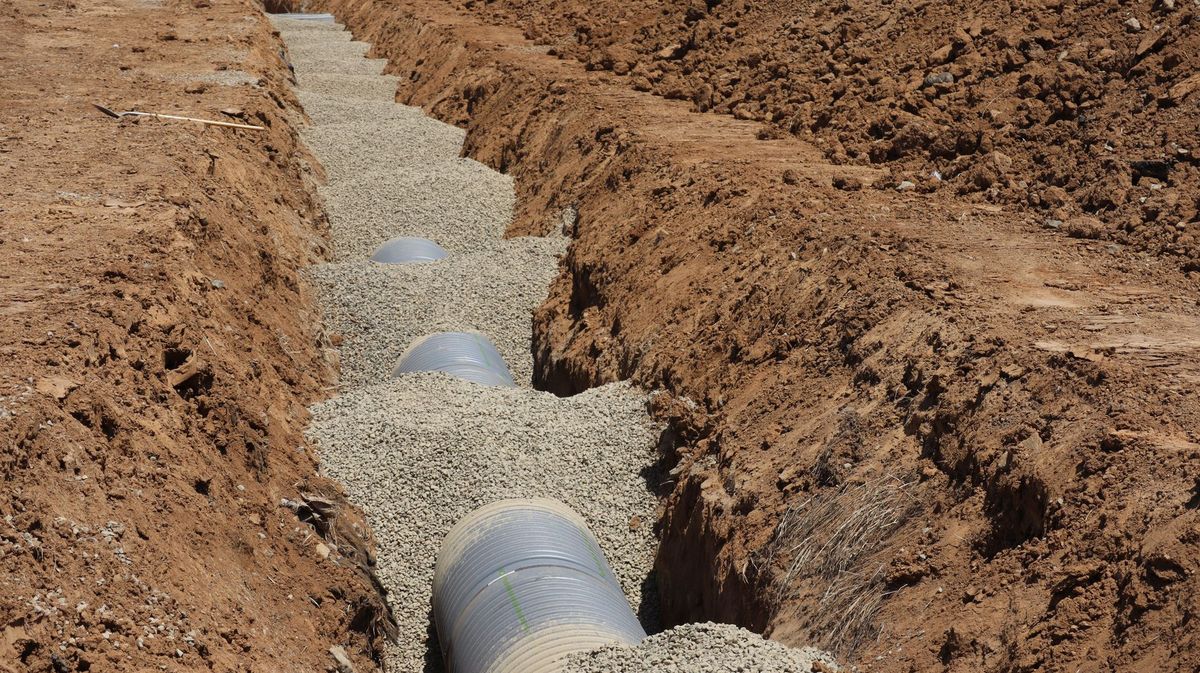
Underground construction using horizontal directional drilling (HDD) is the method of choice for suburban and urban areas where open-cut trenching is impractical. HDD bores a path underground — typically 24 to 48 inches depth — and pulls conduit through the bore. The conduit serves as the permanent pathway; fiber cable is then blown through the conduit using compressed air.
This is where the real equipment investment lies. A production directional drill from Ditch Witch, Vermeer, or American Augers costs $180,000 to $400,000 new; used equipment in good condition runs $60,000 to $120,000. The drill is accompanied by a vacuum excavator (for utility potholing near existing underground utilities — non-negotiable for insurance and utility damage avoidance) and a full set of locating equipment for tracking the drill head.
Crew productivity with HDD varies dramatically with soil conditions. In sandy loam with no rock, a good crew moves 1,500 to 3,000 feet per day. Hit caliche, hardpan, or cobble and that same crew produces 200 to 600 feet per day. Soil borings before estimating are not optional if you want to bid HDD work accurately.
Underground construction costs run $35,000 to $85,000 per mile depending on terrain, soil, and urban density — roughly 4 to 7 times the cost of aerial work. The higher cost is offset by lower permit friction in many markets and requirements from DOTs and municipalities that prohibit aerial construction in certain corridors.
Buried Direct: Fastest in Rural Open Country
Vibratory plow or chain trenching for direct-buried conduit is the lowest-cost method in rural areas with long open routes and minimal existing underground utility density. Productivity rates of 3,000 to 8,000 feet per day are achievable in favorable conditions. Cost runs $12,000 to $28,000 per mile in open country.
The risk with buried construction is depth and documentation. BEAD specifications typically require 36 to 48 inches of cover, and some state specs are strict about depth verification. Shallow installations that fail post-construction depth testing generate expensive remediation. On large rural runs, depth verification using GPS-tagged survey data is becoming standard practice.
The Economics: Why This Market Is Worth Entering
Let me be direct about the margin profile, because this is ultimately a business decision.
Experienced broadband civil contractors in good markets are running 14 to 18% net margins on BEAD work. Highway overlay and reconstruction work — the most comparable civil work category — typically yields 6 to 10% net for competitive bidders. The broadband margin premium exists for three reasons: the skills shortage means there is less price competition; ISP primes are under timeline pressure and accept higher sub prices to secure committed capacity; and the prevailing wage requirement under Davis-Bacon actually helps experienced contractors relative to lower-wage competitors.
That last point requires explanation. Davis-Bacon prevailing wage applies to all BEAD-funded construction. This means labor rates are set by the Department of Labor for each trade in each county — and you cannot use workers paid below those rates. The DOL wage determinations for fiber splicers and outside plant construction workers run $28 to $38 per hour in most rural BEAD markets. Contractors who already pay competitive wages and carry full benefits packages have their labor cost structure largely validated by prevailing wage. Competitors who built their margins on below-market wages are disadvantaged.
Fiber splicers — the workers who join fiber strands using fusion splice machines — are particularly well-compensated because they are genuinely scarce. Fusion splicing requires training on the equipment (Sumitomo, Fujikura, or Furukawa splice machines run $8,000 to $25,000 each), knowledge of proper fiber handling and cleave technique, and the ability to perform OTDR testing to verify splice quality. Qualified splicers on BEAD work are earning $38 per hour in some rural markets, with overtime common on compressed project schedules.
The construction wage environment across all trades has been elevated, and fiber construction has outpaced the broader market. Budget for labor rates at the high end of the Davis-Bacon wage determination, not the midpoint.
Equipment and Certifications: What You Actually Need
The entry requirements for broadband civil work are more achievable than contractors assume. Here is the honest list.
Required equipment for aerial construction: bucket trucks (minimum 45-foot working height, insulated for work near energized conductors), cable lasher, strand wire puller, tension stringing setup, and standard boom truck for pole delivery and pole setting.
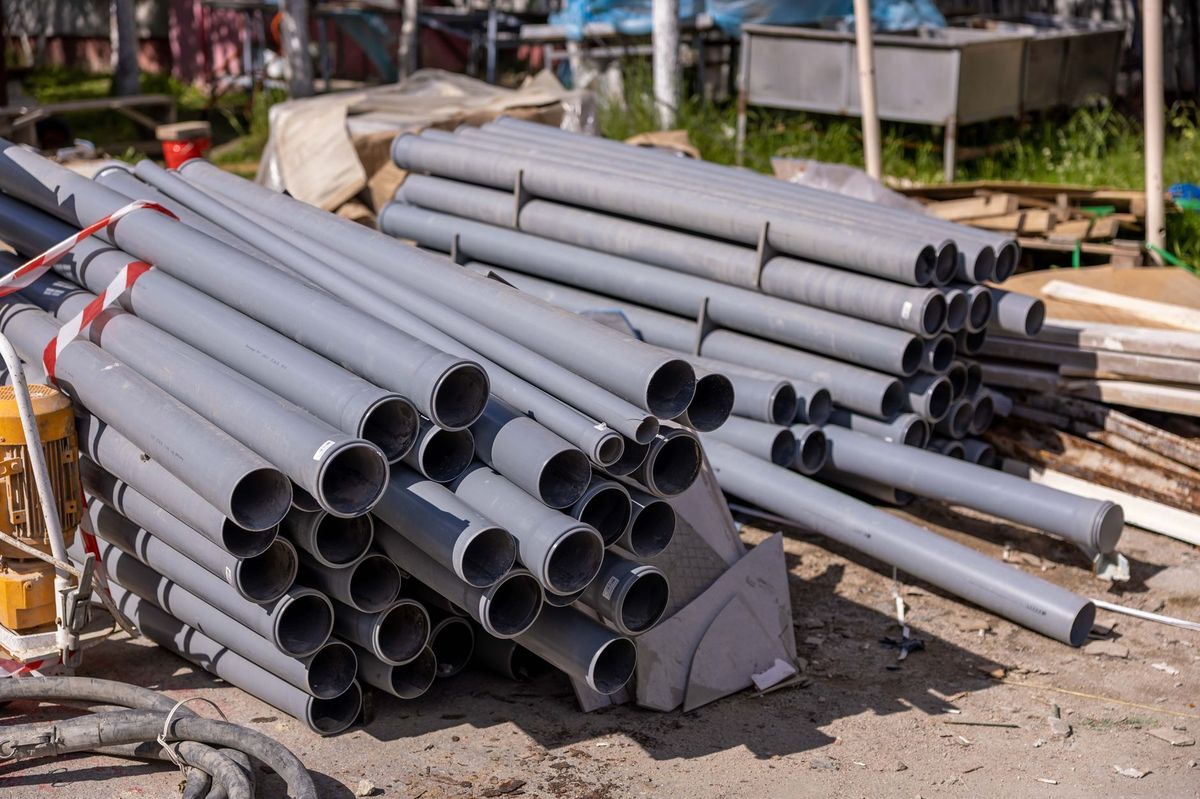
Required equipment for underground construction: directional drill appropriate for your target bore diameter (a 4-inch bore capacity drill is minimum for 1.25-inch conduit), vacuum excavator (non-negotiable — utility damage incidents without a vac truck on-site are your most significant liability exposure), electronic locating equipment, conduit fusion equipment if joining HDPE conduit sections, and GPS equipment for bore path documentation.
Testing equipment: Each project requires OTDR (optical time-domain reflectometer) testing of completed fiber spans at both 1310nm and 1550nm wavelengths. OTDR units run $8,000 to $25,000 depending on dynamic range and features. You can rent OTDRs through specialty test equipment suppliers if you don't want to own initially, but rental costs on a multi-month project add up quickly.
Certifications: There is no single national contractor certification for broadband construction. What matters practically is that your splicers can demonstrate proficiency on the splice equipment required by the ISP prime (most specify a preferred fusion splicer brand), and that your project manager understands fiber handling procedures, OTDR trace interpretation, and the cable handling protocols that prevent fiber damage during installation.
The Fiber Broadband Association and NCTI (National Cable Television Institute) both offer training programs. For a GC coming from utility or civil work, a 40 to 80 hour fiber-specific training for your lead crew covers the discipline differences adequately.
The Key Risks Experienced Contractors Manage
I do not want to undersell the genuine operational challenges in this market, because contractors who enter unprepared hurt their margins and their reputation.
Permitting delays are the biggest schedule risk. Aerial attachments require permits from each pole owner — typically the electric utility and the incumbent telephone company. Permit processing times run 60 to 180 days depending on the jurisdiction and the pole owner's workload. In some rural markets with large electric cooperative territories, permit queues have extended to 8 to 12 months. Contractors who bid aerial projects without accounting for permit timeline risk in their schedule and overhead carry assumptions will find themselves deployed elsewhere while waiting for permits, with no revenue from the permitted project.
ISP project management quality varies enormously. Unlike a state DOT with 50 years of construction contract management experience, many BEAD subgrantees — small ISPs, electric cooperatives — are managing multi-million dollar construction programs for the first time. Change order processing, RFI response times, and inspection scheduling can be chaotic. Contractors who have managed their own documentation diligently — daily production logs, change event notices issued promptly, RFI log maintained current — protect their margin when the inevitable scope creep and schedule disruptions occur.
Rural terrain challenges are real, particularly in Appalachian, Great Plains, and mountain West markets where a significant share of BEAD funding is concentrated. Rocky soil that increases HDD costs by 300%, stream crossings that require USACE permits, and road crossings that require DOT encroachment permits all affect productivity and cost. Soil borings and permitting pre-investigation before final bid submission are investments worth making on any project over $1 million.
The BEAD program's $42.5 billion scale has already been documented extensively, but for contractors focused on business entry timing, the relevant figure is that only 12 states are actively awarding construction contracts as of Q1 2026. The remaining states will follow over the next 18 to 30 months. Entering now, while competition for subcontractor capacity is not yet at peak, is the most favorable timing window.
How to Enter the Market: A Practical Sequence
For a civil GC with underground utility or highway experience looking to enter broadband construction, the sequence that minimizes risk and accelerates first revenue looks like this.
Step 1: Identify BEAD subgrantees in your state. Your state's broadband office website publishes the list of approved subgrantees — the ISPs and electric cooperatives that received subgrants. These are your target clients. Contact their engineering or construction procurement teams directly, before contracts are publicly advertised.
Step 2: Subcontract first. The fastest path to first project experience is subcontracting to a larger broadband construction prime — a MasTec, Dycom subsidiary, or regional fiber GC — for 6 to 12 months. You get fiber construction experience, references, and OTDR equipment familiarity without prime contractor documentation responsibility. The margin is thinner as a sub, but the education value is significant.
Step 3: Obtain Davis-Bacon compliance infrastructure. Prevailing wage compliance is not optional and is audited aggressively on NTIA-funded work. At minimum, you need certified payroll processing capability (software like LCPtracker or Procore's prevailing wage module), subcontractor compliance monitoring processes, and a responsible person who understands how to read DOL wage determinations.
Step 4: Invest in splice training and OTDR. Your first owned OTDR and your first two trained fiber splicers are the core capability investment. Budget $15,000 to $35,000 for equipment and training combined. Without this capability, you are a conduit-burying sub at low margin; with it, you self-perform the highest-value scope on every project.
Material costs in broadband construction are affected by broader supply chain conditions. Tariff impacts on conduit, steel strand, and electronic components have added 8 to 14% to outside plant material costs in 2026 versus 2024. Factor current material pricing into every BEAD bid — do not rely on historical job cost data from 2023 or 2024 for material unit prices.
Frequently Asked Questions
How does a civil contractor get subcontracting work on a BEAD project?
Contact the ISP subgrantees in your state directly — your state's broadband office publishes the list. Most BEAD subgrantees are actively looking for qualified civil construction firms and are not exclusively relying on formal bid advertising. Introduce yourself to their construction procurement contact, describe your equipment and experience (HDD footage, aerial construction, underground utility background), and ask to be added to their subcontractor list. Getting on the list before contracts are finalized is far more effective than responding to public solicitations after decisions have been made.
What does Davis-Bacon prevailing wage mean for my labor costs?
Davis-Bacon requires that workers on BEAD-funded construction projects be paid at least the locally prevailing wage rate as determined by the Department of Labor for each trade classification. For outside plant construction in most rural BEAD markets, the relevant wage determinations cover laborers, equipment operators, and telecommunications workers. Look up your county's wage determination on the DOL website before you bid. In my experience, prevailing wage adds 10 to 20% to labor costs in low-wage rural markets, and this must be reflected in your bid.
What is the typical margin on broadband civil construction?
Experienced BEAD contractors in active markets are earning 14 to 18% net margins — meaningfully better than competitive highway or underground utility work. Margins at the high end are achieved by contractors who self-perform fiber splicing (rather than subbing it), have established prevailing wage compliance systems that reduce administrative burden, and have invested in efficient HDD equipment that maintains production in difficult soil conditions.
What equipment do I need to start doing broadband construction?
The minimum viable entry for underground broadband construction is a directional drill (used equipment in the $60,000 to $120,000 range is adequate for smaller projects), a vacuum excavator, electronic locating equipment, and an OTDR for testing. For aerial work, bucket trucks and standard cable-lashing equipment are the core. Total initial equipment investment for a 3-person underground crew entering the broadband market runs $120,000 to $250,000 for used equipment in good condition.
When is the deadline for BEAD construction to be completed?
All BEAD-funded construction must be complete by 2030 under NTIA's program rules. Subgrantees face performance milestones in their subgrant agreements before that final deadline. Practically, ISP primes with 2030 deadlines are motivated to get construction contractors mobilized quickly — delayed mobilization puts their NTIA compliance at risk. That schedule pressure is one of the reasons experienced contractors can command premium subcontract pricing.
Your Action Item for This Week
Look up your state's BEAD broadband office website — search "[your state] BEAD broadband program" — and download the list of approved subgrantees. Pick the three ISPs or electric cooperatives covering the geography closest to your current operations. Find a construction or engineering contact at each one (LinkedIn is useful here) and send a direct email this week introducing your firm, describing your HDD footage history or aerial construction experience, and asking whether they have construction contracts being developed that your firm could quote. You are not responding to an RFP — you are having a business development conversation before the formal process begins. That timing advantage is worth more than any equipment investment you could make right now.