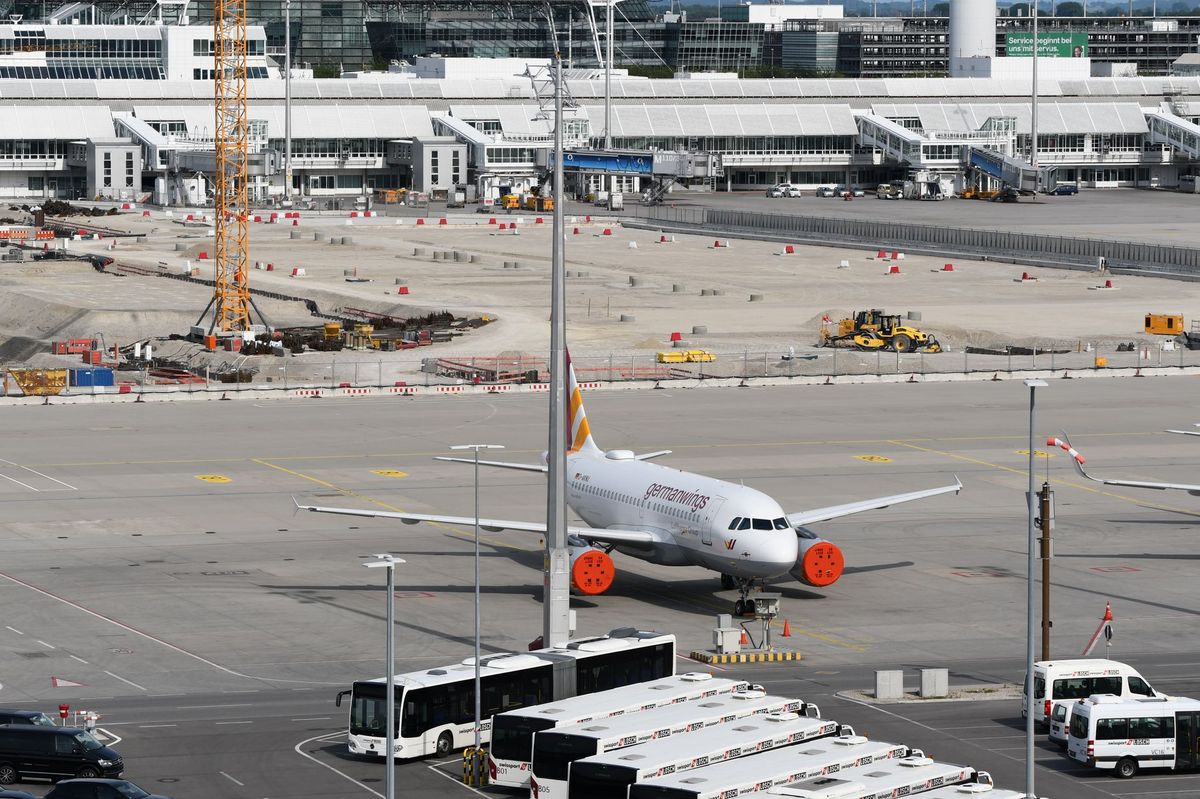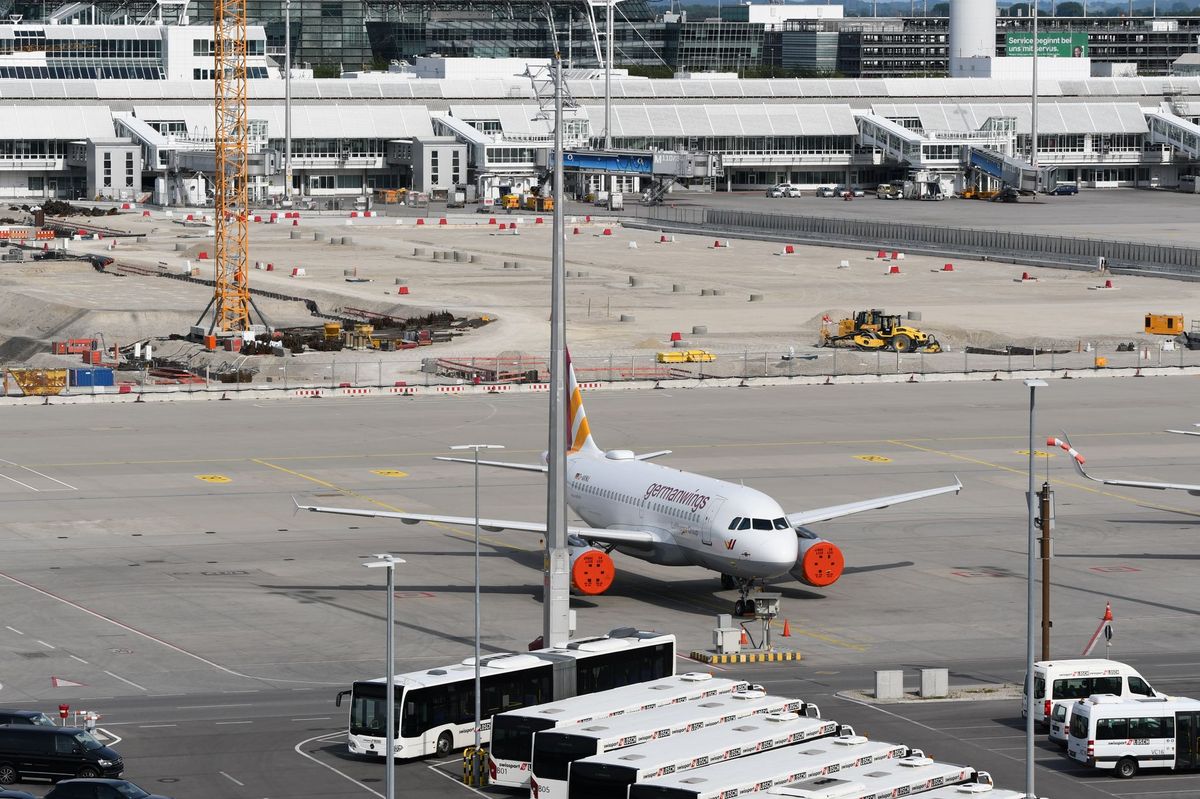
Airport terminal construction in the United States has reached an unprecedented scale, with $28 billion in active terminal construction and modernization projects as of Q1 2026. The numbers tell a different story than the pre-pandemic era — this isn't a cyclical upswing driven by optimistic passenger forecasts. It's a structural reset driven by deferred maintenance, post-COVID design requirements, airline fleet changes, and the transformation of airport terminals from utilitarian transit points to revenue-generating commercial ecosystems.
According to the Airports Council International-North America (ACI-NA) 2026 Capital Development Survey, 92 of the nation's 100 busiest airports have active terminal construction or renovation projects, with aggregate spending of $28.3 billion in 2025-2026 alone. The Airport Cooperative Research Program (ACRP) projects cumulative airport terminal capital expenditures of $115 to $130 billion over the 2025-2035 decade. For general contractors, specialty subcontractors, and construction management firms, airport terminal work represents one of the most reliable and lucrative segments of the commercial construction market.
The Biggest Projects by Spending
The airport terminal construction market is dominated by a handful of mega-projects that consume a disproportionate share of total spending, alongside hundreds of smaller renovation and expansion projects that provide steadier work for regional contractors.
John F. Kennedy International Airport (JFK) — New Terminal One at $9.5 billion is the largest single airport terminal construction project in U.S. history. The project replaces the aging Terminal 1 with a 2.4 million square foot state-of-the-art international terminal featuring 23 gates and capacity for an additional expansion phase. Construction is well underway, with the first gates expected to open in late 2026 and full completion targeted for 2028. The project is being developed by the New Terminal One consortium under a 50-year lease with the Port Authority of New York and New Jersey, with Turner Construction and Skanska serving as the construction joint venture. At peak activity, the project employs approximately 5,000 construction workers daily.
Los Angeles International Airport (LAX) — Midfield Satellite Concourse and Automated People Mover represents a combined investment of approximately $6 billion. The Automated People Mover — a 2.25-mile elevated train system connecting the terminal area to Metro rail, car rental facilities, and a consolidated rental car center — is in the final stages of construction, with revenue service expected to begin in mid-2026. The Midfield Satellite Concourse, a 12-gate facility between the existing north and south terminal complexes, opened in 2021 but Phase 2 expansion construction is ongoing.
Chicago O'Hare International Airport (ORD) — O'Hare 21 is a massive multi-phase terminal modernization program with total investment exceeding $12 billion over the full program timeline. The current active phase includes the $2.2 billion Terminal 5 expansion (adding 9 new international gates and 350,000 square feet of terminal space), the $1.3 billion Terminal 2 satellite concourse, and the O'Hare Global Terminal competition, which will produce a new $4 to $6 billion global terminal designed by Studio Gang Architects. Terminal 5 expansion construction is scheduled for completion in 2027.
Pittsburgh International Airport (PIT) — Terminal Modernization Program is a $1.39 billion landside and airside terminal replacement project that represents a complete transformation of the airport's terminal facilities. The new 700,000-square-foot terminal replaces the existing landside terminal and connects directly to the airside concourses. Construction is advancing toward a 2025-2026 completion date, with Walsh Vinci Lend Lease Joint Venture as the design-build contractor.
Other major terminal projects include Salt Lake City International Airport (completed new terminal Phases 1-2 at $4.1 billion, Phase 3 underway at $1.8 billion), Newark Liberty International Airport Terminal A (new terminal opened 2023, Phase 2 buildout continuing at $2.7 billion), Kansas City International Airport (new single terminal opened 2023 at $1.5 billion, post-occupancy punch list and site work continuing), and the Dallas-Fort Worth International Airport Terminal F (new international terminal at $3.5 billion, in design and early construction).
Why Airports Are Building Now
Several converging factors explain the unprecedented wave of airport terminal construction.
Deferred maintenance and age. Many of the nation's major airport terminals were built or last significantly renovated in the 1960s through 1980s. These facilities were designed for smaller aircraft, fewer passengers, and pre-9/11 security screening processes. Terminal 1 at JFK opened in 1959 and was simply obsolete. The existing O'Hare terminals date primarily to the 1960s expansion. These facilities have reached the end of their useful life and require replacement rather than continued renovation.
Passenger volume recovery and growth. U.S. airline passenger volume has not only recovered from the pandemic downturn but exceeded pre-pandemic levels. The FAA reports that total U.S. airline passenger enplanements reached 931 million in 2025, surpassing the pre-pandemic record of 927 million set in 2019. FAA forecasts project continued growth of 2.2 to 2.5% annually through 2045, which means airports need more gate capacity and terminal square footage to avoid the congestion and delays that drive passenger dissatisfaction and airline operational inefficiency.
Revenue generation. Modern airport terminals are designed as commercial environments that generate non-aeronautical revenue through retail, food and beverage, advertising, and service concessions. Terminal concession revenue per enplanement has increased from an average of $8.50 in 2015 to approximately $14.80 in 2025 at major hub airports, driven by higher-quality dining options, premium lounges, and curated retail experiences. This revenue growth justifies the higher construction costs of modern terminals by creating a self-funding investment cycle.
Security and technology requirements. Post-9/11 security screening areas, which were often retrofitted into terminals not designed for them, are being replaced with purpose-built security processing facilities. TSA's Credential Authentication Technology (CAT) units, CT X-ray baggage screening, and biometric identity verification systems require specific infrastructure that is difficult and expensive to retrofit into existing terminals.
Construction Characteristics of Airport Work
Airport terminal construction has distinct characteristics that differentiate it from other commercial building types and affect contractor selection, project planning, and execution approach.
Construction in an active operational environment is the defining challenge of airport terminal work. Unlike greenfield commercial construction, most airport terminal projects require maintaining flight operations throughout construction. This means phased demolition and construction sequences that keep adjacent gates operational, strict security protocols requiring worker badging, background checks, and TSA coordination, airfield safety compliance including Foreign Object Debris (FOD) management and aircraft clearance zone restrictions, noise and vibration limits during flight operations, and construction logistics that route materials through security screening and designated haul routes.
Extended work hours and schedule pressure. Airport construction contracts typically require nighttime and early morning work during reduced flight activity windows, with premium labor costs for off-shift work. Major airport projects commonly operate 24/7 with staggered shifts to maximize construction progress within operational constraints.
Specialty systems. Airport terminals incorporate specialized systems not found in typical commercial buildings, including baggage handling systems (BHS) with miles of conveyor and sortation equipment, passenger boarding bridges and associated aircraft apron utilities (ground power, pre-conditioned air, potable water, lavatory service), flight information display systems (FIDS), common-use terminal equipment (CUTE) and self-service kiosk infrastructure, and security screening equipment and supporting infrastructure (power, data, HVAC for equipment cooling). These specialty systems require coordination among dozens of specialty subcontractors and create complex commissioning sequences.
Concrete and structural complexity. Airport terminal structures are characterized by long-span column-free spaces (concourse waiting areas and security checkpoints), heavy floor loading for baggage handling equipment, complex foundation systems (particularly at airports built on fill or soft soils), and seismic requirements at West Coast airports. The structural systems — typically steel framing with post-tensioned concrete floor slabs — require high-precision construction with tight tolerance requirements for the installation of automated systems like baggage handling conveyors.
Funding and Financing
Airport terminal construction is funded through a combination of sources that differ significantly from other public infrastructure.
Airport Improvement Program (AIP) grants from the FAA provide approximately $3.3 billion per year in formula and discretionary grants for airport development, but AIP funds are primarily directed toward airfield projects (runways, taxiways, aprons) rather than terminal construction. Terminal projects are typically eligible for AIP funding only when they involve security or safety improvements.
Passenger Facility Charges (PFCs) — the $4.50 per-enplanement fee charged to passengers — generate approximately $3.5 to $4 billion per year industry-wide and are a primary funding source for terminal construction. PFC revenue is pledged to support airport revenue bond debt service, enabling airports to borrow against future PFC collections.
Airport revenue bonds are the dominant financing mechanism for terminal construction, with airports issuing bonds backed by airline rates and charges, PFC revenue, and non-aeronautical revenue (concessions, parking, rental cars). The airport revenue bond market is robust and well-established, with over $30 billion in airport revenue bonds outstanding nationwide.
Private development through long-term lease agreements is an emerging model, exemplified by the JFK New Terminal One project where a private consortium is financing construction through a combination of equity investment and project finance debt, repaid through terminal operating revenue over a 50-year concession period.
The IIJA provided an additional $25 billion in supplemental airport funding through the Airport Terminal Program ($5 billion in competitive grants specifically for terminal projects) and other aviation programs. This IIJA funding at its halfway mark has accelerated terminal projects at small and medium airports that historically struggled to assemble financing for terminal improvements.
What This Means for Your Crew
Airport terminal construction is a premium market — margins are generally higher than standard commercial construction, but the barriers to entry are also higher. Contractors pursuing airport work need to understand the unique requirements.
Badging and security clearances are required for all workers accessing the Airport Operations Area (AOA). The background check process can take 2 to 4 weeks, and workers with certain criminal history disqualifications will not receive badges. This creates workforce planning challenges, as every new hire or replacement worker requires lead time for badging before they can begin productive work.
Specialized insurance requirements at airports typically include aircraft liability coverage, airport operators liability, and higher general liability limits ($5 to $10 million per occurrence) than standard commercial projects.
Labor agreements at many major airports are governed by project labor agreements (PLAs) that require all contractors to use union labor and comply with the terms of the PLA regardless of whether they are signatory to individual trade union agreements. Contractors should verify PLA requirements before pursuing airport work in specific markets.
The data center construction boom hitting $32 billion is competing directly with airport construction for the same pool of electricians, mechanical contractors, and structural steel workers — creating workforce pressure that is driving wages higher in markets where both sectors are active.
Frequently Asked Questions
How much is being spent on airport terminal construction in 2026?
Total airport terminal construction and modernization spending in the United States reached approximately $28.3 billion in the 2025-2026 period, according to Airports Council International-North America. This figure includes new terminal construction, terminal expansion, and major renovation/modernization projects at commercial service airports. The spending level represents a significant increase from the pre-pandemic average of approximately $15 to $18 billion per year, driven by the convergence of deferred maintenance, passenger volume recovery, federal IIJA funding, and the transformation of terminal design philosophy toward revenue-generating commercial environments.
What is the largest airport construction project in the US?
The largest single airport terminal construction project is the New Terminal One at JFK International Airport at approximately $9.5 billion. However, when measured as a complete airport modernization program, the O'Hare 21 program in Chicago exceeds $12 billion in total investment across multiple terminal projects and phases. The LAX modernization program, including the Automated People Mover, Midfield Satellite Concourse, and other terminal improvements, also exceeds $14 billion when all components are included.
How are airport construction projects funded?
Airport terminal construction is funded through multiple sources: Passenger Facility Charges (PFCs) at $4.50 per enplanement generating $3.5 to $4 billion per year industry-wide, airport revenue bonds backed by airline rates, PFC revenue, and non-aeronautical revenue, FAA Airport Improvement Program (AIP) grants at approximately $3.3 billion per year (primarily for airfield projects), IIJA supplemental funding including $5 billion in Airport Terminal Program competitive grants, and increasingly private development financing through long-term concession agreements. Unlike highway and bridge projects, airport construction relies primarily on airport-generated revenue rather than general tax revenue.
What certifications do contractors need for airport work?
Contractors working on airport terminal projects typically need several specific qualifications beyond standard commercial construction licensing. All workers must obtain airport security identification display area (SIDA) badges through the TSA badging process. Contractors must carry specialized aviation insurance including aircraft liability coverage. Many airports require OSHA 30-hour certification for supervisory personnel and OSHA 10-hour for all workers. Contractors working on airfield-adjacent projects must complete airfield safety training specific to each airport. For projects at airports with project labor agreements (PLAs), contractors must be willing to operate under PLA terms regardless of their normal labor affiliations. Additionally, many airport authorities maintain pre-qualified contractor lists requiring firms to demonstrate relevant experience and financial capacity before being eligible to bid on terminal projects.
What to Watch
The airport terminal construction pipeline remains strong through at least 2030, but watch for three factors that could shift the trajectory. First, airline financial health — airlines fund a significant portion of terminal construction through rates and charges, and airline profitability directly affects willingness to support capital investment at hub airports. Second, watch the PFC cap debate — the $4.50 PFC cap has not been increased since 2000, and airports have long advocated for an increase that would unlock additional terminal construction funding. Congressional action on PFC reform would be bullish for terminal construction. Third, monitor construction cost escalation — ENR's airport construction cost index has increased faster than the general building cost index, rising 8.4% year-over-year in 2025, driven by specialty system costs and the premium labor rates associated with airfield construction logistics.