The Cost of Feeding America Has Never Been Higher
Restaurant construction costs have reached a new benchmark: $380 per square foot as the national average for a full-service restaurant build-out in 2026. That figure has increased 28% since 2022, driven by the same labor and material pressures affecting all commercial construction, compounded by regulatory requirements and design trends specific to the food service industry.
But the $380 headline obscures as much as it reveals. Restaurant construction costs vary enormously by concept type, service model, and market. A fast-casual restaurant in a suburban strip center costs half what a full-service restaurant in an urban mixed-use building costs. A ghost kitchen costs a fraction of either. Understanding the cost structure by restaurant type is essential for operators, developers, and the general contractors who build these spaces.
Let us break down the numbers by restaurant category, examine the cost drivers, and identify where the market is heading.
The Full Breakdown by Restaurant Type
The restaurant construction market encompasses at least seven distinct building types, each with different cost profiles, design requirements, and market dynamics:
Quick-service restaurant (QSR) — ground-up: $280 to $380/SF. The classic drive-through restaurant — McDonald's, Chick-fil-A, Starbucks — requires 2,800 to 4,500 square feet of building area plus drive-through lanes, parking, and site improvements. Total project costs for a ground-up QSR range from $1.2 million to $2.5 million, depending on market and brand standards. Key cost drivers include the drive-through infrastructure (which adds $150,000 to $300,000 including lanes, menu boards, speaker systems, and window equipment), the commercial kitchen equipment package (typically $200,000 to $400,000), and the site work in markets with stringent stormwater and landscaping requirements.
QSR construction has become increasingly standardized, with most major chains using prototype designs that have been value-engineered to minimize construction costs while maintaining brand standards. The prototype approach reduces design costs, allows for volume purchasing of materials and equipment, and enables contractors to develop efficient construction processes through repetition.
Quick-service restaurant — tenant improvement: $200 to $320/SF. When a QSR occupies an existing retail shell rather than a ground-up building, the construction scope is limited to interior build-out, kitchen installation, and minimal exterior modifications. Total project costs range from $500,000 to $1.2 million for a 2,500 to 3,500 square foot space. The savings versus ground-up construction come from avoiding the shell, roof, and most site work costs, but the interior complexity — kitchen systems, ventilation, grease interceptors, and finish work — keeps per-square-foot costs elevated relative to other retail tenant improvements.
Fast-casual restaurant: $250 to $400/SF. The fast-casual segment — Chipotle, Sweetgreen, Shake Shack — occupies a middle ground in both concept and cost. These restaurants typically require 2,200 to 3,500 square feet of space with semi-open kitchens, customer-facing food preparation areas, and dining environments that are more design-intensive than QSR but less elaborate than full-service. Total project costs range from $600,000 to $1.4 million.
The fastest-growing cost component in fast-casual construction is the digital infrastructure: order kiosks, mobile order pickup stations, kitchen display systems, and the electrical and data wiring to support them. A typical fast-casual restaurant now requires $40,000 to $80,000 in technology hardware and installation — up 150% from 2019 — reflecting the sector's rapid digital transformation.
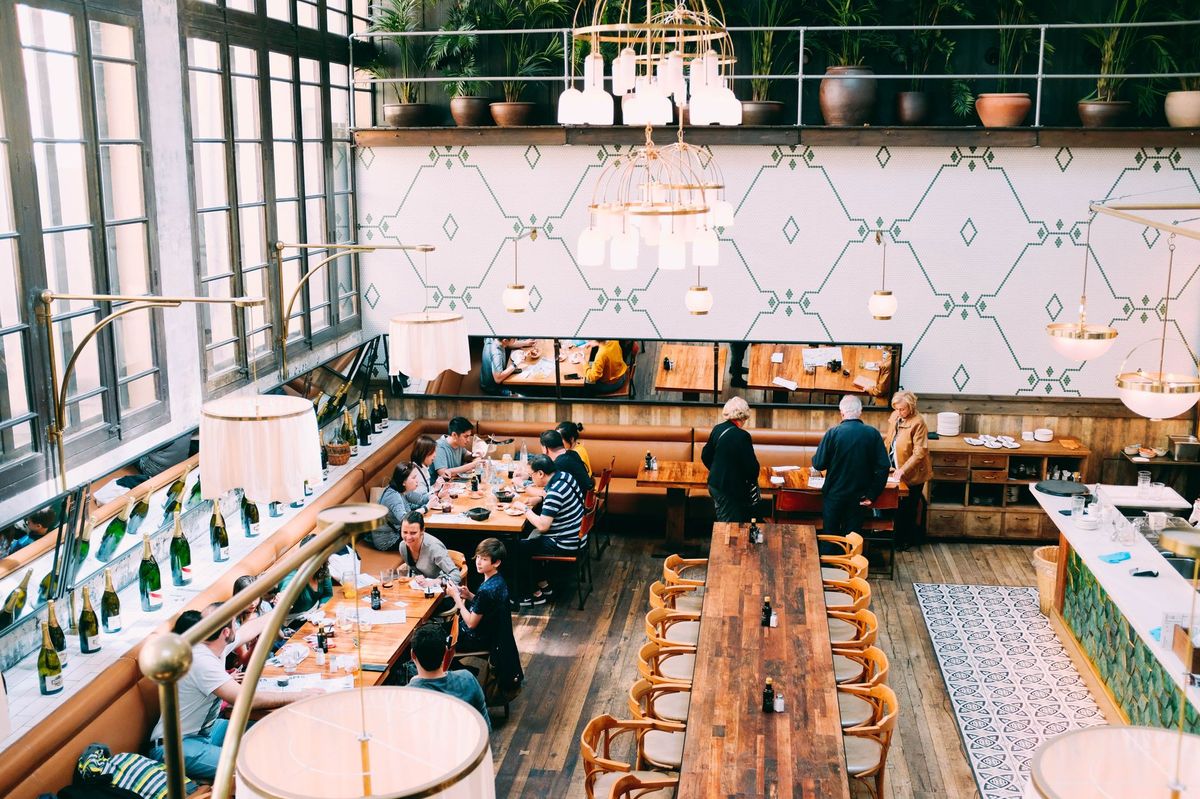
Full-service casual dining: $320 to $450/SF. The Applebee's, Chili's, and Olive Garden segment requires 5,000 to 7,500 square feet with full commercial kitchens, bar areas, and dining rooms designed for table service. Total project costs range from $1.8 million to $3.5 million. The bar component adds significant cost: a fully equipped bar with draft systems, refrigeration, ice machines, glassware storage, and POS stations costs $80,000 to $150,000 to construct.
This segment is seeing the most significant cost pressure because casual dining margins are relatively thin, and operators are reluctant to invest the capital required for new builds or major renovations. Many casual dining chains are focusing on renovation of existing locations rather than new construction, creating a pipeline of $200,000 to $600,000 remodel projects that represent an important revenue stream for restaurant-focused contractors.
Full-service fine dining: $450 to $750/SF. Independent fine dining restaurants and upscale chain concepts invest heavily in design, materials, and kitchen equipment. These projects range from 3,000 to 8,000 square feet with budgets of $1.5 million to $6 million. Kitchen equipment packages for fine dining — including specialized cooking equipment such as wood-fired ovens, charcoal grills, and pastry stations — can reach $500,000 to $800,000. Interior finishes — custom millwork, stone, specialty lighting, acoustical treatments, and designer furnishings — account for 30% to 40% of total project cost, compared to 15% to 20% in casual dining.
Ghost kitchen/commissary kitchen: $180 to $280/SF. Delivery-only kitchen facilities have emerged as a distinct construction category, with approximately 1,500 purpose-built ghost kitchens now operating in the US. These facilities range from 1,000 to 15,000 square feet and are designed purely for food production without customer-facing dining areas. The cost savings versus traditional restaurants come from eliminating the dining room, reducing the finish level, and simplifying the HVAC requirements. Total project costs for a multi-station ghost kitchen range from $300,000 to $1.5 million.
Food hall/multi-vendor: $350 to $550/SF. Food halls — curated collections of food vendors in a shared dining environment — have become a staple of mixed-use developments and urban entertainment districts. These projects range from 8,000 to 40,000 square feet and combine the kitchen complexity of multiple restaurant concepts with the common-area design requirements of a high-end dining destination. Total project costs range from $3 million to $20 million. The infrastructure complexity is significant: each vendor station requires independent utility connections, fire suppression, and ventilation, while the common areas require premium finishes, specialty lighting, and sophisticated HVAC to manage the heat and odor from multiple kitchens.
The Kitchen Equipment Cost Escalation
Commercial kitchen equipment represents 15% to 25% of total restaurant construction cost, and this category has seen particularly aggressive price increases. Key equipment cost benchmarks for 2026 include the following:
Walk-in cooler/freezer combination: $25,000 to $50,000. Commercial range and oven suite: $15,000 to $40,000. Ventilation hood system with fire suppression: $30,000 to $80,000 (depending on hood length and exhaust requirements). Commercial dishwasher: $8,000 to $25,000. Ice machine (high-capacity): $5,000 to $12,000. Grease interceptor: $8,000 to $20,000 (depending on size and local requirements). POS system with kitchen display: $15,000 to $35,000.
The most significant cost escalation has been in ventilation systems. Commercial kitchen ventilation is subject to increasingly stringent requirements for energy efficiency (demand-controlled ventilation mandates in several jurisdictions), air quality (enhanced filtration and odor control requirements in mixed-use buildings), and fire safety (UL 300 wet chemical suppression systems). A comprehensive kitchen ventilation system that met code for $40,000 five years ago now costs $60,000 to $80,000 with the same specifications.
MEP Complexity in Restaurant Construction
Restaurant construction is among the most MEP-intensive commercial building types, rivaling laboratory and healthcare construction in the density of mechanical, electrical, and plumbing systems required per square foot.
Mechanical systems. A restaurant requires significantly more ventilation than other commercial spaces — typically 2.0 to 4.0 CFM per square foot versus 0.15 to 0.25 CFM for office space. The kitchen exhaust system alone may require 3,000 to 8,000 CFM of exhaust capacity, with an equivalent amount of makeup air that must be conditioned (heated or cooled) to maintain comfort in the dining area. The HVAC system for a 5,000-square-foot full-service restaurant typically costs $150,000 to $250,000 — three to four times the cost of an equivalent office space.
Plumbing systems. Restaurant plumbing is complex and heavily regulated. Code requirements include grease interceptors sized to the number of fixture units, three-compartment sinks and hand-washing stations at prescribed locations, hot water capacity sufficient for continuous dishwashing operations, and backflow prevention on the water service. The plumbing rough-in for a full-service restaurant costs $40,000 to $80,000, plus $15,000 to $30,000 for the grease interceptor (which may require excavation and installation in the parking lot or utility area outside the building).
Electrical systems. Commercial kitchens have high electrical loads — a typical full-service restaurant requires 200 to 400-amp electrical service with dedicated circuits for each major piece of equipment. The electrical system, including the service, panel, circuits, and lighting, costs $50,000 to $100,000 for a full-service restaurant.
Permitting and Regulatory Cost Impact
Restaurant construction is subject to regulatory oversight from multiple agencies — building department, health department, fire marshal, liquor control (if applicable), and sometimes environmental agencies for grease and waste management. The cumulative effect of multi-agency regulation is a permitting process that is among the most complex and time-consuming in commercial construction.
Typical permitting timelines for restaurant construction range from 8 to 16 weeks in most jurisdictions, with some urban markets requiring 20 or more weeks for full-service restaurants with liquor licenses. The permitting cost — including plan review fees, health department plan review, fire marshal review, and inspections — typically ranges from $15,000 to $40,000.
The health department plan review is particularly significant because it can require design changes that affect construction scope and cost. Requirements for three-compartment sink configurations, hand-washing station locations, food preparation surface materials, and ventilation adequacy can all trigger design modifications that add cost and delay.
Market Outlook and Trends
Restaurant construction spending is projected to grow 5% to 8% annually through 2028, driven by continued expansion of fast-casual and QSR concepts, renovation of the aging casual dining portfolio, and the integration of restaurants into mixed-use developments.
The key trends shaping restaurant construction in 2026 and beyond include the following: smaller footprints as operators optimize for delivery and takeout alongside dine-in service, increased technology integration requiring more sophisticated electrical and data infrastructure, sustainability features including energy-efficient equipment, water-saving fixtures, and waste reduction systems, and adaptive reuse of non-restaurant spaces — retail, office, and industrial — for restaurant use, which introduces conversion challenges similar to those in other adaptive reuse categories.
For general contractors and specialty subcontractors, restaurant construction remains a reliable and growing market segment. The technical complexity of the work — kitchen equipment integration, ventilation systems, regulatory compliance — creates a meaningful skill barrier that protects experienced contractors from commodity competition. The $380 per square foot average cost reflects the genuine complexity of building spaces where people safely prepare and consume food at scale.
The numbers tell the story: restaurant construction is expensive, complex, and growing. For contractors who can navigate the complexity, the market rewards expertise with consistent demand and competitive margins.
The Supply Chain for Restaurant Equipment
One often-overlooked factor in restaurant construction timelines is the lead time for commercial kitchen equipment. The pandemic-era supply chain disruptions that affected every construction category were particularly severe in commercial kitchen equipment, and while conditions have improved significantly, lead times remain extended for certain categories:
Walk-in cooler and freezer systems: 8 to 14 weeks. Custom ventilation hoods with fire suppression: 10 to 16 weeks. Commercial cooking equipment (ranges, ovens, fryers): 6 to 12 weeks. Custom millwork and cabinetry: 8 to 14 weeks. POS systems with custom configuration: 4 to 8 weeks. Custom bar equipment and draft systems: 8 to 12 weeks.
These lead times mean that equipment procurement must begin during the design phase, not during construction. A restaurant project that waits until the rough-in inspection to order kitchen equipment will add two to four months to the construction timeline — time during which the operator is paying rent, carrying construction loan interest, and generating zero revenue.
Experienced restaurant construction contractors manage equipment procurement as a parallel workstream alongside construction, with equipment orders placed as soon as the kitchen design is finalized. The equipment arrives at the job site during the interior finish phase, ready for installation as soon as the space is prepared.
For general contractors entering the restaurant construction market, equipment coordination is perhaps the most critical differentiator between experienced restaurant builders and those who treat restaurants like any other retail tenant improvement. The cost of mismanaged equipment procurement is measured not in dollars per square foot but in weeks of delayed opening — and every week of delay represents $10,000 to $30,000 in lost revenue and continued carrying costs for the operator.
The $380 per square foot average reflects not just the physical construction but the complex choreography of building, equipping, and commissioning a facility where food is prepared and served under strict regulatory oversight. The contractors who master this choreography are the ones who build the restaurants that open on time and stay open for years.
Before you commit to a budget, run your own numbers with our free construction cost estimator and check quantities with the markup margin calculator.
Frequently Asked Questions
How much does restaurant construction cost per square foot in 2026?
The national average for full-service restaurant construction reached $380 per square foot in 2026, up 28% since 2022. But the range is wide by concept type. Quick-service restaurants (QSRs) and fast-casual formats typically run $200 to $280 per square foot. Full-service restaurants average $320 to $450 per square foot depending on kitchen complexity and finish levels. Fine dining with custom millwork, premium materials, and elaborate kitchen buildouts can exceed $600 per square foot in major markets.
Why did restaurant construction costs rise 28% since 2022?
Restaurant construction absorbed the same labor and material inflation affecting all commercial construction, but compounded by several food service-specific factors. Commercial kitchen equipment prices increased 30% to 45% as supply chain disruptions hit appliance manufacturers. Type 1 hood and fire suppression systems became more expensive as demand from the restaurant boom outpaced equipment supply. Local health department inspection requirements have grown more complex in many jurisdictions, adding time and cost. And the design trend toward open kitchens and chef's counter experiences drove finish costs higher on full-service projects.
What's the most cost-effective restaurant format to build in 2026?
Ghost kitchens — commercial kitchen facilities with no dining room, built for delivery-only operations — are the most capital-efficient restaurant construction at $80 to $150 per square foot for the kitchen space. Fast-casual prototypes in second-generation retail spaces (taking over a former tenant's buildout) offer significant cost savings over ground-up construction by reusing existing infrastructure. For operators who need ground-up construction, QSR prototypes with standardized kitchen layouts and limited custom design offer the most predictable costs and fastest timelines.