When the Factory Replaces the Job Site
The construction industry's oldest tension — between field-built quality and factory-built efficiency — is playing out in dramatic fashion in the data center sector. Modular and prefabricated data centers, once dismissed as niche solutions for edge computing and temporary deployments, are going mainstream. The global modular data center market is projected to reach $36 billion by 2028, driven by the same forces reshaping every other aspect of data center construction: insatiable demand, workforce constraints, and the relentless pressure to compress deployment timelines.
The value proposition is straightforward. A traditional site-built data center takes 18 to 24 months from groundbreaking to IT equipment installation. A modular data center, with major systems pre-assembled in a factory, can be deployed in 6 to 8 months. In an industry where every month of delay represents millions of dollars in foregone revenue, that time savings alone justifies the approach.
But modular construction is not just about speed. It also addresses the skilled labor shortage that is constraining data center construction across the country. Factory assembly requires fewer workers than field construction for equivalent scope, and the workers it does require can be employed in a single location year-round, rather than traveling to dispersed construction sites. For an industry that cannot hire fast enough, this is a significant advantage.
This article examines the modular data center market — who is building them, how they differ from traditional construction, what they cost, and what the shift means for general contractors, subcontractors, and the construction workforce.
What Modular Means
The term "modular data center" covers a range of approaches, from fully self-contained containerized units to partially prefabricated systems that are assembled on-site. Understanding the distinctions is important for construction professionals evaluating the market.
Containerized Data Centers
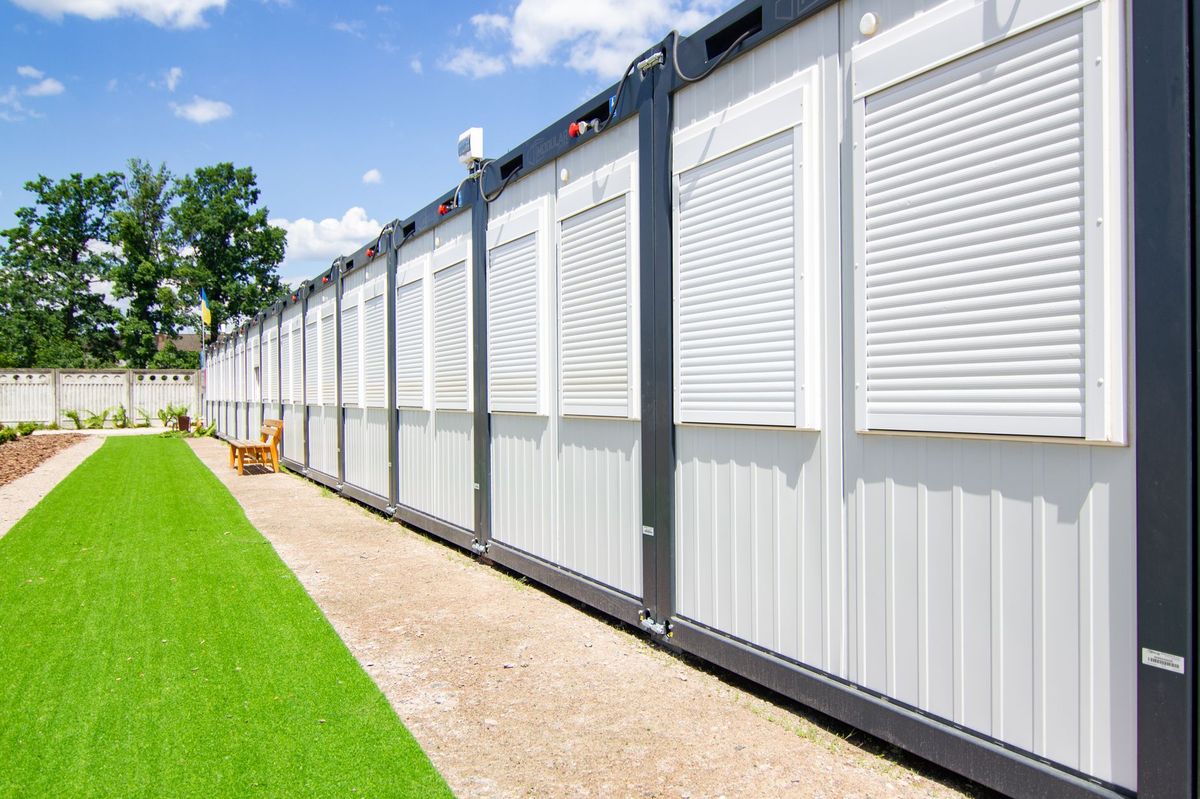
The most extreme form of modular data center is the containerized unit — a fully self-contained computing environment housed in a modified shipping container or purpose-built enclosure. These units typically include IT equipment, power distribution, cooling systems, and fire protection in a package that can be shipped by truck and operational within days of delivery.
Containerized data centers are used primarily for edge computing, disaster recovery, and temporary deployments. They are typically small (100 to 500 kilowatts of IT capacity per container) and are not suitable for hyperscale deployments, though they can be clustered in large numbers to create larger facilities.
The construction implications of containerized data centers are minimal — the units arrive essentially complete, requiring only site preparation (a level concrete pad and utility connections) and interconnection. For traditional construction firms, containerized data centers represent a potential threat (less field construction work) but also an opportunity (site preparation and utility infrastructure for large container deployments can be substantial).
Prefabricated Modules
The more significant modular approach for the construction industry is the use of prefabricated modules — factory-built assemblies that contain major data center subsystems (electrical distribution, cooling equipment, or entire mechanical plants) and are shipped to the construction site for integration into a larger facility.
Prefabricated modules range in size and complexity:
Electrical modules contain switchgear, UPS systems, power distribution units, and associated wiring, pre-assembled and tested in a factory. These modules are typically housed in weatherproof enclosures and connected to the building's electrical infrastructure via standardized interfaces.
Mechanical modules contain cooling equipment — chillers, pumps, heat exchangers, piping — pre-assembled and pressure-tested. These modules are connected to the building's chilled water loop and ready for commissioning.
Power modules contain backup generators, fuel systems, and paralleling switchgear in pre-assembled packages that can be installed and connected much faster than field-built generator installations.
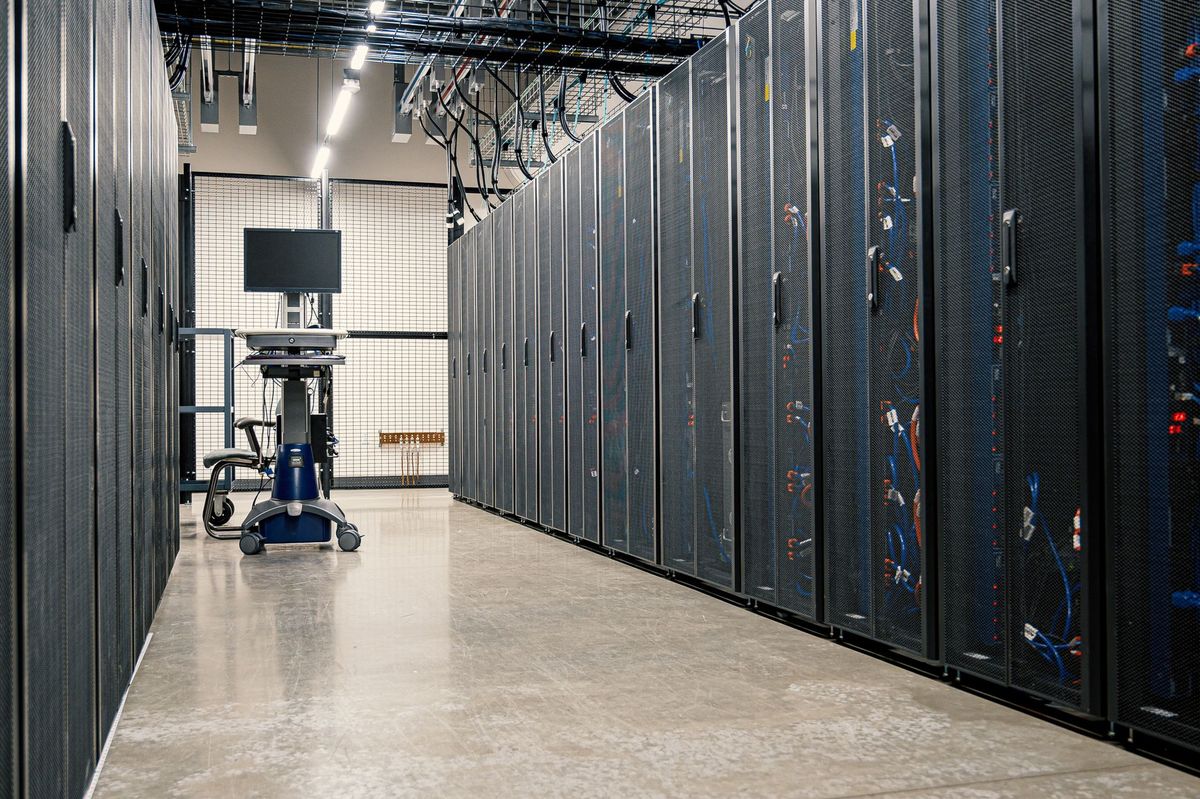
Integrated data hall modules contain a complete data hall section — structure, cooling, power distribution, fire protection, and cable management — in a factory-built unit that is shipped to the site and set in place by crane.
Hybrid Approaches
Most large-scale modular data center projects use a hybrid approach, combining factory-built modules for the most complex and repeatable systems with conventional site-built construction for the building shell, site work, and custom elements. This hybrid approach captures much of the time and quality advantages of modular construction while maintaining the flexibility needed for site-specific conditions.
The Economics
The economics of modular data center construction are compelling, though they require careful analysis to understand fully.
Cost Comparison
On a per-megawatt basis, modular data centers are not always cheaper than site-built facilities. The cost of factory fabrication, transportation, and on-site integration can offset some of the labor savings. However, several factors tilt the economics in favor of modular approaches:
Reduced field labor. Factory assembly requires 20 to 40 percent fewer labor hours than equivalent field construction, because factory environments offer better working conditions, better tool access, and the ability to work in parallel on multiple modules simultaneously. This labor reduction is particularly valuable in markets with tight construction labor supply.
Compressed schedule. A modular data center that deploys in 6 to 8 months instead of 18 to 24 months generates revenue 12 to 18 months sooner. For a 50-megawatt facility generating $5 million to $10 million per month in revenue, the value of early deployment can exceed $60 million to $180 million — far more than any incremental construction cost.
Quality consistency. Factory-built modules benefit from controlled environments, standardized processes, and repeatable quality assurance. This consistency reduces the cost of rework and warranty claims, which can be significant on field-built projects.
Reduced site impact. Modular construction reduces the duration and intensity of on-site construction activity, which reduces general conditions costs, minimizes disruption to adjacent facilities (important on campuses where operational data centers are already running), and reduces the environmental impact of construction.
Where Modular Costs More
Modular construction incurs costs that site-built construction does not:
Transportation. Shipping large modules from factory to job site can be expensive, particularly for oversize loads requiring special permits and escort vehicles. Transportation costs increase with distance and can become prohibitive for very large modules shipped across the country.
Factory overhead. The factory facility itself represents a fixed cost that must be amortized across production volumes. If volumes are insufficient, factory overhead can make modular units more expensive than field-built equivalents.
Standardization constraints. Modular construction works best with standardized designs. Customization adds cost and reduces the efficiency advantages of factory production. Operators who require highly customized facilities may find modular approaches less cost-effective.
Who Is Building Modular
Several companies have emerged as leaders in the modular data center market, spanning the range from containerized solutions to large-scale prefabricated modules.
Compass Datacenters
Compass has been one of the most aggressive adopters of modular construction in the data center industry. The company operates a dedicated fabrication facility where it pre-assembles major electrical and mechanical systems for its data center projects. Compass's modular approach has enabled it to deliver hyperscale facilities significantly faster than traditional construction timelines.
Vantage Data Centers
Vantage has incorporated prefabricated modules into its construction program, particularly for electrical and mechanical systems. The company's approach focuses on factory-assembled electrical rooms and mechanical skids that can be installed and connected on-site with minimal field labor.
EdgeConneX
EdgeConneX has been a pioneer in modular and containerized data center deployment, using factory-built units for edge computing facilities that can be deployed in locations too small or too remote for traditional data center construction.
Microsoft and Google
Both Microsoft and Google have invested heavily in modular construction for their hyperscale data center programs. Microsoft's "datacenter in a box" initiative has produced standardized modular units that can be deployed across the company's global construction program, reducing design time and enabling factory production at scale.
Google's approach emphasizes prefabricated mechanical and electrical systems that are integrated into site-built building shells. The company's investment in modular construction has been driven by the sheer volume of its construction program — when you are building data centers on every continent, standardization and factory production become essential to maintaining quality and schedule.
Specialized Module Manufacturers
A growing ecosystem of specialized manufacturers produces data center modules for integration by GCs and developers. Companies like Vertiv (formerly Emerson Network Power), Schneider Electric, and ABB offer factory-built power and cooling modules designed specifically for data center applications. These manufacturers represent both competitors and partners for traditional construction firms.
Impact on General Contractors
The modular trend creates both challenges and opportunities for general contractors serving the data center market.
The Challenge
The most obvious challenge is scope reduction. If major electrical and mechanical systems are factory-built rather than field-installed, the scope of work available to on-site contractors shrinks. A GC managing a traditional data center might oversee the installation of switchgear, UPS systems, generators, chillers, and cooling towers. On a modular project, those systems arrive pre-assembled, and the GC's scope is limited to receiving, setting, and connecting the modules.
This scope reduction affects not just the GC but also the MEP subcontractors who traditionally install these systems. Electrical and mechanical contractors who derive significant revenue from data center installation work may see that revenue decline as modular adoption increases.
The Opportunity
The opportunity lies in the integration of factory-built modules with site-built infrastructure. Modular data centers still require substantial site construction — foundations, utilities, building shells, generator yards, cooling tower installations — and the integration of modules with this infrastructure requires skilled general contracting.
Additionally, some GCs are moving upstream by establishing their own prefabrication capabilities. Rather than ceding the factory-built scope to module manufacturers, these GCs are investing in fabrication shops where they can pre-assemble electrical and mechanical systems for their own projects. This approach captures the efficiency benefits of factory assembly while keeping the work (and the margin) within the GC's scope.
Logistics Expertise
Modular construction shifts the critical path from field installation to logistics — getting the right modules to the right place at the right time. GCs with strong logistics capabilities (transportation management, crane operations, material staging) are well-positioned for modular projects, even if their field installation scope is reduced.
Impact on Subcontractors
For electrical and mechanical subcontractors, the modular trend requires strategic adaptation.
Electrical contractors should evaluate whether their capabilities are better applied in a factory setting or in the field. Some electrical contractors are establishing fabrication shops where they pre-assemble electrical systems for data center projects, capturing value that would otherwise go to module manufacturers. Others are focusing on the field integration work that remains — connecting modules to building infrastructure, commissioning, and testing.
Mechanical contractors face a similar choice. The precision piping and equipment setting skills of experienced pipefitters are valuable in both factory and field settings. Contractors who can offer fabrication services in addition to field installation will have a competitive advantage.
Controls and commissioning work is less affected by the modular trend, because building management system integration and commissioning still occur on-site regardless of whether the systems being commissioned were factory-built or field-built.
Impact on the Workforce
The modular trend has significant implications for the construction workforce.
Factory jobs vs. field jobs. Modular construction shifts employment from dispersed construction sites to centralized factories. For workers, factory employment offers several advantages: consistent location (no travel), controlled working conditions (climate-controlled, well-lit), regular schedules, and year-round employment. These advantages can make factory work more attractive than field construction for some workers, particularly those with family obligations or preferences for stable schedules.
Skill requirements. Factory assembly requires skills that overlap with but differ from field construction skills. Factory workers need precision assembly, testing, and quality assurance capabilities, while field workers need rigging, crane operation, and site integration skills. Workers who can bridge both domains are particularly valuable.
Net employment effect. The net effect of modular construction on total construction employment is debated. Modular approaches require fewer total labor hours per unit of output, which means fewer jobs per megawatt of data center capacity. However, modular construction also enables faster deployment, which could increase the total volume of data center construction and partially offset the per-project labor reduction.
The 6-8 Month Promise
The headline claim of the modular data center industry — deployment in 6 to 8 months versus 18 to 24 months for traditional construction — deserves scrutiny. The claim is accurate under specific conditions:
The timeline applies to the on-site construction phase, starting from when modules arrive at a prepared site and ending when the facility is ready for IT equipment. It does not include the time required for site preparation, utility coordination, and module fabrication, which occur in parallel but can add several months to the overall program timeline.
The 6 to 8 month timeline assumes that modules are available from inventory or are fabricated on a timeline that aligns with site preparation. If module fabrication is on the critical path, the overall timeline can extend to 12 to 15 months — still faster than traditional construction but less dramatic than the headline figure.
Despite these caveats, the time savings are real and significant. And for hyperscale operators who measure the value of their data center investments in millions of dollars per month of revenue, even a modest schedule compression represents enormous financial value.
For more on the broader forces shaping data center construction, including the spending boom and workforce challenges, see our 2026 construction spending forecast and our analysis of the construction workforce gap.
The Bottom Line
Modular and prefabricated data centers are not replacing traditional construction — they are augmenting it. The most likely future is a hybrid model where factory-built modules handle the most complex, repeatable, and time-sensitive systems, while site-built construction handles the building shell, site infrastructure, and custom elements.
For general contractors and subcontractors, this hybrid future requires adaptation. The firms that thrive will be those that can operate effectively in both the factory and the field, managing the integration of pre-assembled modules with site-built infrastructure while maintaining the quality, safety, and schedule performance that data center operators demand.
The $36 billion modular data center market by 2028 represents an enormous opportunity. But it is an opportunity that will be captured by firms that embrace the changing nature of data center construction, not by those that resist it.
READ NEXT: The Concrete Problem — Data Center Foundations Are Getting Massive
FAQ
Q: The 6-8 month deployment claim for modular data centers excludes site preparation and module fabrication time — what is the realistic end-to-end timeline from land acquisition to operational facility? A: Add 3-5 months for site preparation (grading, utilities, foundation), 4-6 months for module fabrication running in parallel, and 2-4 months for commissioning after modules are set. A realistic end-to-end timeline from land acquisition to IT equipment installation is 12-18 months — meaningfully faster than the 24-30 months for a fully site-built facility, but not the 6-8 months that the headline figure implies. The time savings are real; the math just starts from an already-prepared site.
Q: Factory assembly requires 20-40% fewer field labor hours than equivalent site construction — for a GC considering setting up its own prefab shop, what is the minimum annual volume to justify the facility overhead? A: Based on the economics described, a dedicated fabrication shop requires roughly $30-50M in annual prefabricated scope to cover facility costs, tooling amortization, and shop labor overhead. For a GC doing $200M+ in annual data center revenue, the math works — particularly if the shop can also serve other projects. Below $100M in total data center revenue, partnering with an established module manufacturer like Vertiv or Schneider Electric is more economical than building proprietary prefab capacity.
Q: Compass Datacenters runs its own fabrication facility and delivers hyperscale projects faster than traditional timelines — how does a regional GC compete against vertically integrated developers for the same work? A: Regional GCs compete on geography and local relationships, not on factory capacity. Compass and Vantage build the same design repeatedly across the country; a regional GC can offer deeper local knowledge of permitting processes, utility relationships, and subcontractor networks that reduce risk for operators entering a new market. In Texas, the Carolinas, and Midwest markets where Compass doesn't have an established local presence, regional GCs with solid data center credentials on 1-2 completed projects can win work that Compass would otherwise take.
Q: The modular market is projected to reach $36B by 2028 — what share of that is accessible to traditional field construction firms versus going directly to module manufacturers? A: The site-built infrastructure portion — foundations, building shells, utility infrastructure, generator yards, and module integration — represents roughly 40-50% of total modular data center project value. On a $36B market, that's $14-18B in scope that still requires traditional field construction. Module manufacturers capture the factory-built systems, but the GC managing integration, site work, and commissioning controls a significant portion of total project value and the client relationship.