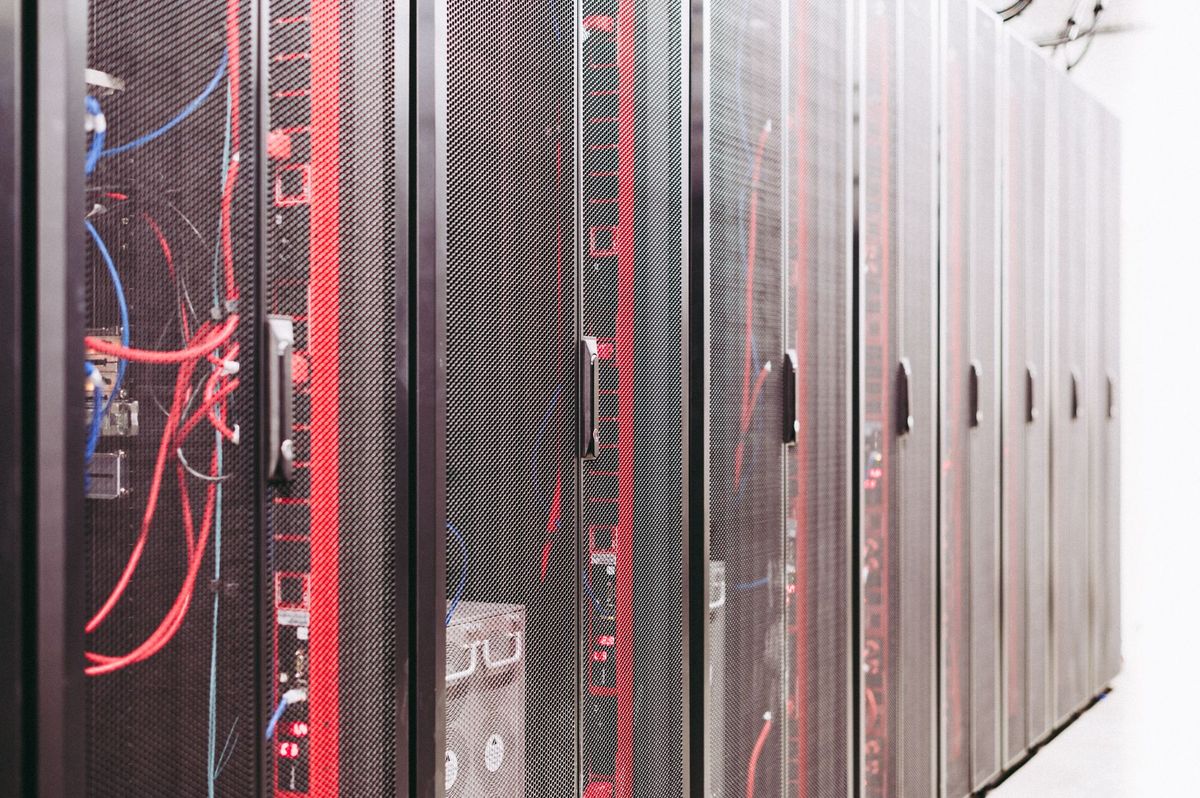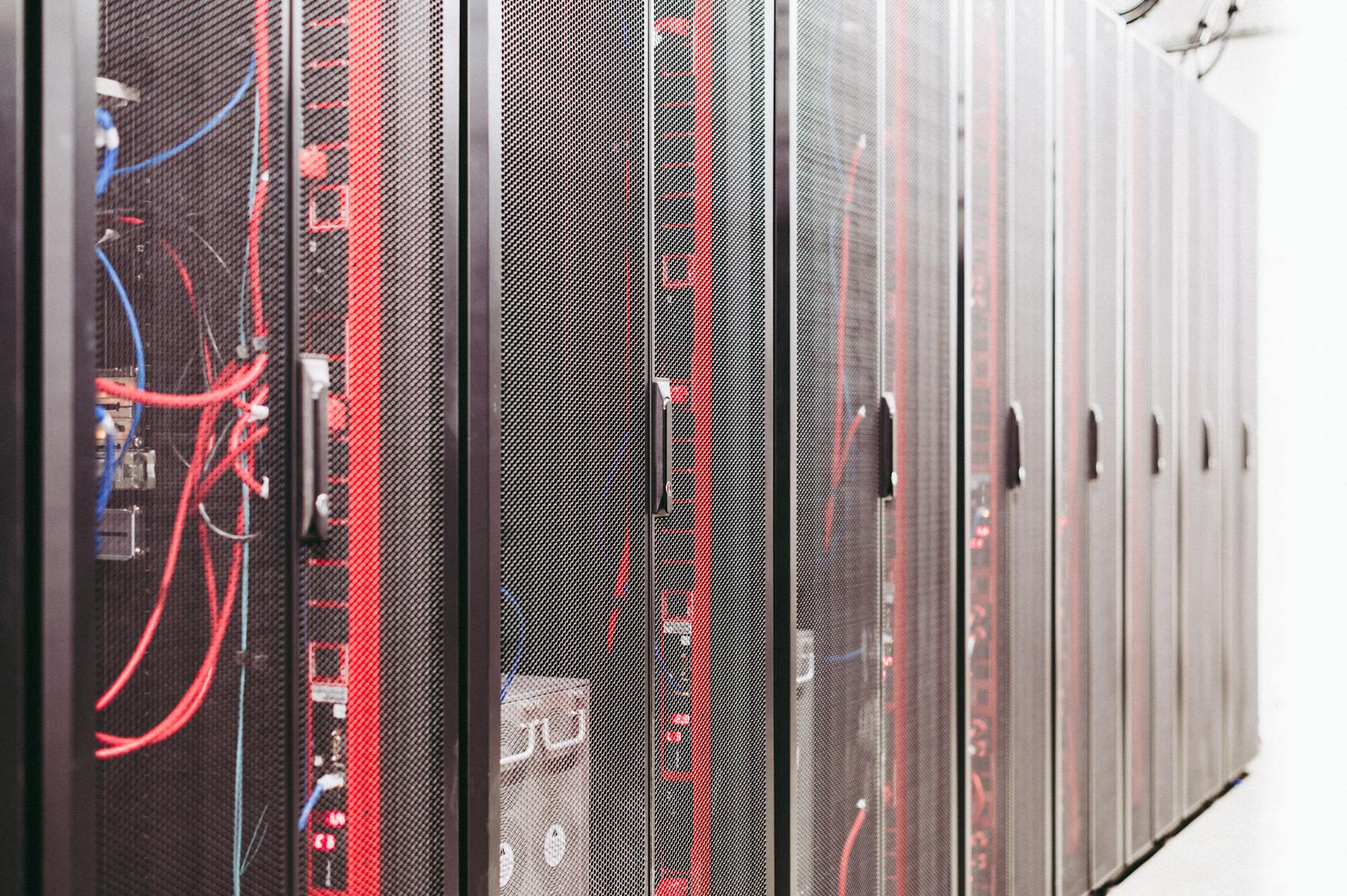
The four largest data center markets in Europe, London, Frankfurt, Paris and Amsterdam, grew their combined inventory by 18.9% year over year in the first quarter of 2026, according to CBRE's Global Data Center Trends 2026 report, published 17 June 2026. Net absorption across those four markets rose 90% to 572.1 MW in the same quarter, and vacancy held at 7.3%. Demand is still running ahead of new supply, and the thing holding supply back is mostly electricity, not money.
FLAP-D is the shorthand the European colocation industry uses for Frankfurt, London, Amsterdam, Paris and Dublin. Dublin has largely dropped out of the new-build conversation because of its grid connection restrictions, and CBRE's 2026 report focuses on the other four. This piece goes market by market with the figures that matter to a contractor, then covers the regulatory layer that US firms bidding European work tend to underprice.
A note on the numbers. Data center capacity figures from different brokers are not directly comparable. "Inventory" can mean commissioned IT load, contracted capacity or built shell, depending on who is counting. Everything below is from CBRE's Q1 2026 data unless another source is named, and where CBRE did not publish a figure for a market, we have left it blank rather than fill it in.
The FLAP-D Markets by the Numbers
| Market | Inventory, Q1 2026 | Vacancy, Q1 2026 | Net absorption, Q1 2026 | Main constraint named by CBRE |
|---|---|---|---|---|
| London | Largest in Europe; up 21% YoY | 8.6% (from 8.0%) | 208.4 MW | West London substation upgrade unlikely before early 2030s |
| Frankfurt | 1,222.5 MW (up 23% YoY) | 5.0% (unchanged) | 218.1 MW | Central-area grid constrained until the 2030s |
| Paris | 666.8 MW (up nearly 15%) | 6.7% (from 7.7%) | not published | — |
| Amsterdam | Fourth largest; added 64.3 MW (about 11%) | 9.4% | not published | Moratorium on projects over 70 MW |
| Dublin | not covered | not covered | not covered | Grid connection restrictions |
| Four-market total | up 18.9% YoY | 7.3% | 572.1 MW | Power |
Source: CBRE, Global Data Center Trends 2026 (Q1 2026 data, published 17 June 2026).
Two things stand out. First, vacancy in single digits across the four markets means there is very little ready space to lease, which is why tenants keep committing to capacity before it is built. Second, CBRE ties each market's constraint to the grid, not to land or capital. Rents tell the same story: CBRE reports rental rates across the four markets rising year over year to a range of $165 to $265 per kW per month, with Frankfurt at the top of that range ($235 to $265) because of limited available inventory. CBRE attributed the increase to limited supply, rising demand and higher build costs.
For the rest of Europe, CBRE's European Real Estate Market Outlook midyear review for 2026 forecasts vacancy across primary and secondary European markets falling to 6% by the end of 2026. Its January forecast had expected more than 750 MW of new data centre capacity across Europe in 2026, and the midyear review trimmed that by 35 MW, about 5%, as projects slipped. CBRE notes that European vacancy first fell below 10% in late 2024.
Frankfurt: Lowest Vacancy, Highest Rents
Frankfurt's inventory reached 1,222.5 MW in Q1 2026, up 23% from a year earlier, and it absorbed 218.1 MW in the quarter, the most of any European market in CBRE's report. Its 5% vacancy was the lowest in the region. CBRE also says grid capacity in Frankfurt's central data center area remains constrained, with upgrades unlikely until the 2030s.
For a contractor, that combination means two things. The work is there, and the schedule-critical item is usually the power connection and substation rather than the building. Projects that do not have a dated grid connection offer are not ready for a realistic program.
London: Biggest Market, Tightest Transmission in the West
CBRE ranks London as Europe's largest data center market, with Frankfurt close behind, and says both added record levels of new inventory in the past year. London's vacancy edged up to 8.6% from 8.0%, and London had the largest increase in available capacity in Q1 (26.5 MW).
The constraint is geographic. The Slough and West London cluster has run into transmission limits. In July 2022 the Greater London Authority warned developers that electricity capacity in Ealing, Hillingdon and Hounslow was constrained, with press reports at the time describing housing schemes in that area being told to wait until 2035 for connections. CBRE's 2026 report says the West London corridor is unlikely to receive a key substation upgrade until the early 2030s.
Policy has tried to help. On 12 September 2024 the UK government designated data centres as Critical National Infrastructure, the first new CNI designation since 2015. That designation is about security and incident response. It does not create grid capacity, so it does not shorten a connection queue on its own.
Paris: Third Largest and Tightening
Paris grew its inventory by nearly 15% (85.0 MW) to 666.8 MW in Q1 2026, and its vacancy, historically the highest of the group, dropped the most, to 6.7% from 7.7%. Available capacity held flat at 44.8 MW.
France has also put a policy spotlight on the sector. Around the February 2025 AI Action Summit in Paris, President Macron announced €109 billion in private AI investment pledges, and TechCrunch reported on 10 February 2025 that most of it was intended for new AI-focused data centers, including €20 billion from Brookfield. Pledges are not construction starts, so treat that number as a pipeline signal rather than committed work.
Amsterdam: Policy Chose the Size for You
CBRE ranks Amsterdam fourth in Europe, ahead of Dublin, with about 64.3 MW of inventory added over the year (around 11% growth) and vacancy at 9.4%. CBRE says a moratorium on projects larger than 70 MW will continue to limit new development. Amsterdam is the clearest case of policy, rather than tenant demand, setting the size and location of what gets built.
Dublin: Restricted
Dublin is the outlier. New data centre connections in the Dublin region have been heavily restricted since the Irish regulator's November 2021 direction, and in December 2025 the regulator replaced those criteria with a policy that requires new data centres to bring their own dispatchable generation or storage. Irish data centres used 22% of the country's metered electricity in 2024, according to the Central Statistics Office. We cover the full history in the Dublin data center moratorium.
Markets Outside FLAP-D
CBRE's midyear review expects most new European schemes in 2026 to be outside the 15 largest metro markets. Milan, Madrid, Warsaw and the Nordic countries are the secondary markets most often named in industry coverage, generally because they can offer power connections sooner than the core markets. We have not found a single public source with consistent capacity figures for those markets, so we are not quoting any here. If you are evaluating work in one of them, ask the developer for the grid connection agreement and the energisation date before you look at anything else.
The Regulatory Layer US Contractors Underprice
European data center construction is governed by energy law in a way US construction mostly is not, and several of the requirements turn into capital cost.
EU Energy Efficiency Directive Reporting
The recast Energy Efficiency Directive, Directive (EU) 2023/1791, created reporting obligations for data centres, and Commission Delegated Regulation (EU) 2024/1364 (adopted 14 March 2024) set up the scheme. It applies to data centres with an installed IT power demand of at least 500 kW. Operators had to report by 15 September 2024, then by 15 May 2025 and every year after that. The required indicators include installed IT power demand, floor areas, total energy consumption with backup generator energy separated out, and IT equipment energy consumption, among others.
For a builder the consequence is metering. You cannot report at that granularity without submetering designed into the electrical distribution. Designing it in is cheap compared with retrofitting it.
Germany's Energy Efficiency Act
Section 11 of the German Energieeffizienzgesetz (EnEfG) sets hard limits:
- Data centres that start operating on or after 1 July 2026 must reach a power usage effectiveness (PUE) of 1.2 or less as an annual average, within two years of commissioning.
- Existing data centres that started before 1 July 2026 must reach PUE 1.5 by 1 July 2027 and 1.3 by 1 July 2030.
- New data centres from 1 July 2026 must reuse at least 10% of their energy (energy reuse factor per DIN EN 50600-4-6), with planned reuse rising to 15% from 1 July 2027 and 20% from 1 July 2028. There are exemptions, including where a nearby heat network operator declines an offer of the heat.
- Data centres must cover 50% of electricity use with renewable electricity from 1 January 2024 and 100% from 1 January 2027, on a balance-sheet basis.
A PUE of 1.2 pushes designs toward free cooling, higher supply temperatures or liquid cooling. The reuse requirement means a heat rejection loop with somewhere to send the heat, which usually means a district heating connection and an offtake agreement. Those are mechanical and civil packages a US cost model will not have unless someone adds them.
What This Means for the Bid
Power is the schedule. On a European data center, the grid connection agreement sets the delivery date, not the structure or the fit-out. A program without a dated connection milestone is not a real program.
Metering and heat recovery are capital costs, not paperwork. Budget submetering to the EU reporting indicators and, in Germany, a heat rejection loop with an offtake path. Carry them as line items in the cost estimator rather than contingency.
Plan on a local partner. Building codes, fire strategy and inspection regimes differ across these countries and from US practice, and design liability is allocated differently. Several of the firms in our top 20 data center construction contractors list are US-based. If you want to see how labor, tax and permitting differ in practice, our US vs UK vs Germany construction cost comparison works through the mechanics.
Frequently Asked Questions
What does FLAP-D stand for in data centers?
Frankfurt, London, Amsterdam, Paris and Dublin, Europe's five traditional core colocation markets. CBRE's 2026 report tracks the four largest (London, Frankfurt, Paris, Amsterdam), whose combined inventory grew 18.9% year over year in Q1 2026.
Which is the biggest data center market in Europe?
London, according to CBRE's Global Data Center Trends 2026, followed closely by Frankfurt. Frankfurt's inventory was 1,222.5 MW in Q1 2026, and Frankfurt absorbed slightly more capacity in the quarter (218.1 MW against London's 208.4 MW).
Why is European data center vacancy so low?
Because new supply is limited by grid connections. CBRE put vacancy across the four largest markets at 7.3% in Q1 2026, with Frankfurt at 5%. CBRE forecasts vacancy across European markets falling to 6% by the end of 2026.
How much does data center space rent for in Europe?
CBRE reported Q1 2026 rents across London, Frankfurt, Paris and Amsterdam ranging from $165 to $265 per kW per month, with Frankfurt highest at $235 to $265.
What is the EU Energy Efficiency Directive requirement for data centers?
Under Directive (EU) 2023/1791 and Delegated Regulation (EU) 2024/1364, data centres with at least 500 kW of installed IT power demand must report energy and sustainability indicators to a European database. The first deadline was 15 September 2024, then 15 May each year from 2025.
Do German data centers really have to hit PUE 1.2?
Yes, if they start operating on or after 1 July 2026. Section 11 of the EnEfG requires PUE of 1.2 or less as an annual average within two years of commissioning, energy reuse of at least 10% (rising to planned 15% and 20% in 2027 and 2028), and 100% renewable electricity from 1 January 2027.
Your Action Item for This Week
Pick the European market you are most likely to see work in and find out what the large-consumer grid connection queue looks like there now: how long it is, what energisation dates are being quoted, and whether new applications are being accepted. That one fact tells you whether a client's schedule is real. Then run a sample facility through the cost estimator with metering and heat recovery as explicit lines, so you learn before tender whether your US cost model carries over.