Not Just Another Box
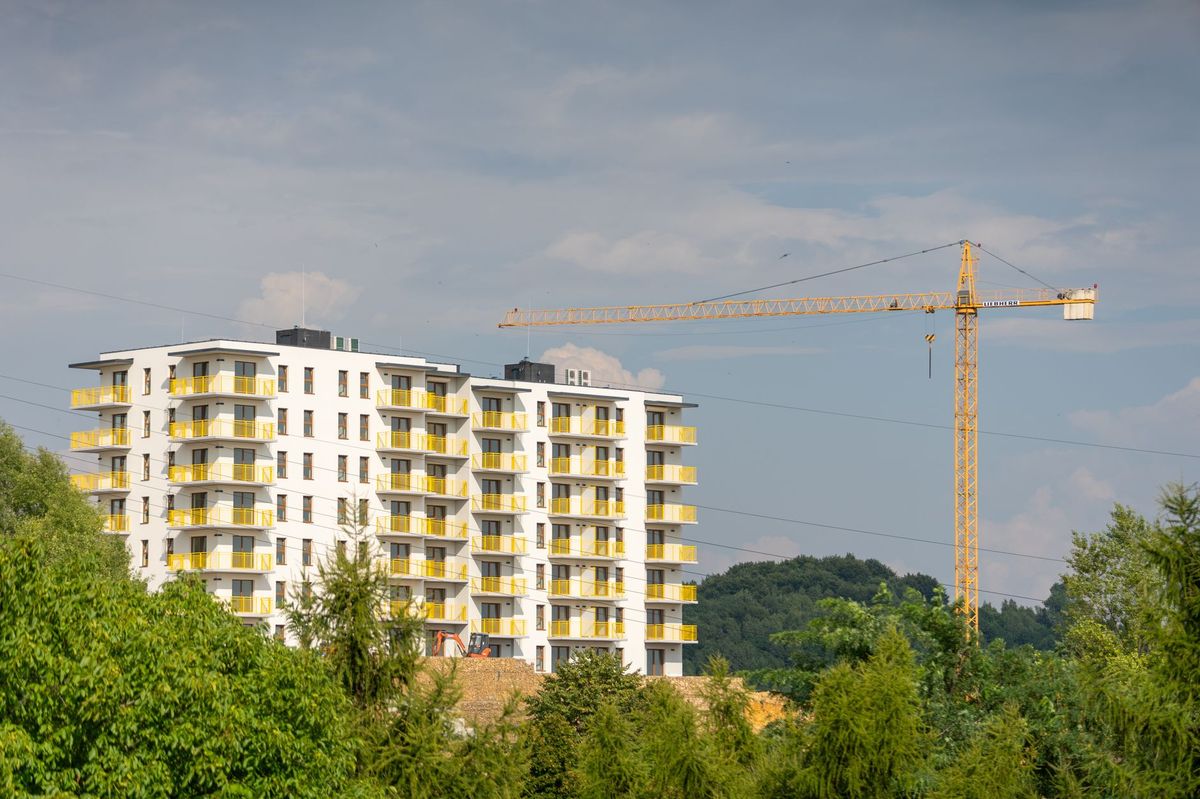
If you have built office buildings, warehouses, hospitals, or retail centers, you might assume that data center construction is just another variation on the commercial building theme. You would be wrong. Data center construction is a fundamentally different discipline that shares some superficial similarities with other commercial projects but diverges dramatically in its engineering requirements, construction sequencing, quality standards, and risk profile.
This article breaks down exactly how data center construction differs from every other type of commercial building, with specific detail on the systems, methods, and standards that make these projects unique. Whether you are a general contractor considering entering the data center market, an MEP subcontractor evaluating whether your capabilities translate, or a project owner trying to understand what you are getting into, this comparison will give you a clear-eyed view of what makes data centers different.
Redundancy — The Defining Concept
The single most important concept in data center design and construction is redundancy, and it permeates every system in the building. In conventional commercial construction, systems are typically designed to handle the expected load with some safety margin. In data center construction, systems are designed to handle the expected load even after one or more components fail.
N+1 Redundancy
The baseline level of redundancy in most data center designs is N+1, meaning that for every N components needed to handle the full load, one additional component is installed as a backup. If a data center needs four chillers to handle its cooling load, an N+1 design would install five. If it needs ten UPS modules, it would install eleven.
N+1 redundancy is considered the minimum acceptable standard for most commercial data centers and is typical of colocation facilities and smaller enterprise deployments. It provides protection against single-component failures but does not allow for maintenance on a component without reducing the facility's ability to handle an additional failure.
2N Redundancy
Hyperscale operators and mission-critical facilities typically require 2N redundancy, which means the entire system is fully duplicated. Two completely independent cooling systems, each capable of handling the full load. Two completely independent electrical distribution paths from utility entrance to server rack. Two independent sets of backup generators.
The construction implications of 2N redundancy are enormous. It effectively doubles the amount of mechanical and electrical equipment that must be installed, the amount of space that must be built to house that equipment, and the amount of piping, conduit, and cabling that must be routed. A 2N data center costs 40 to 60 percent more to build than an equivalent N+1 facility, and the additional systems require more time to install, test, and commission.
For comparison, no other commercial building type routinely requires 2N redundancy. Hospitals come closest, with redundant power systems for critical care areas, but even hospital designs do not approach the comprehensive redundancy of a hyperscale data center.
2N+1 and Beyond
Some ultra-critical facilities go beyond 2N to 2N+1 or even 3N/2 configurations, adding still more backup capacity. These designs are rare but illustrate the extreme end of the redundancy spectrum.
Electrical Systems — A Different World
The electrical systems in a data center bear almost no resemblance to those in a conventional commercial building. The differences start at the utility entrance and extend all the way to the computing equipment.
Utility Power Entrance
A typical commercial building receives power at one voltage from one utility feed and distributes it through a single main switchboard. A data center receives power through multiple utility feeds — often at medium voltage (15 kV to 35 kV) — from redundant utility substations. Each feed enters the building through independent switchgear and is routed through separate electrical distribution paths.
The medium-voltage switchgear in a data center is similar to what you would find in a manufacturing plant or utility substation, not in an office building. It requires specialized installation skills, including termination of medium-voltage cables, testing of protective relaying systems, and coordination with the serving utility on interconnection procedures.
Uninterruptible Power Supply Systems
Between the utility power and the computing equipment sits the uninterruptible power supply system — the heart of a data center's electrical infrastructure. UPS systems provide continuous, conditioned power to the computing equipment and bridge the gap between a utility outage and the startup of backup generators (typically 10 to 15 seconds).
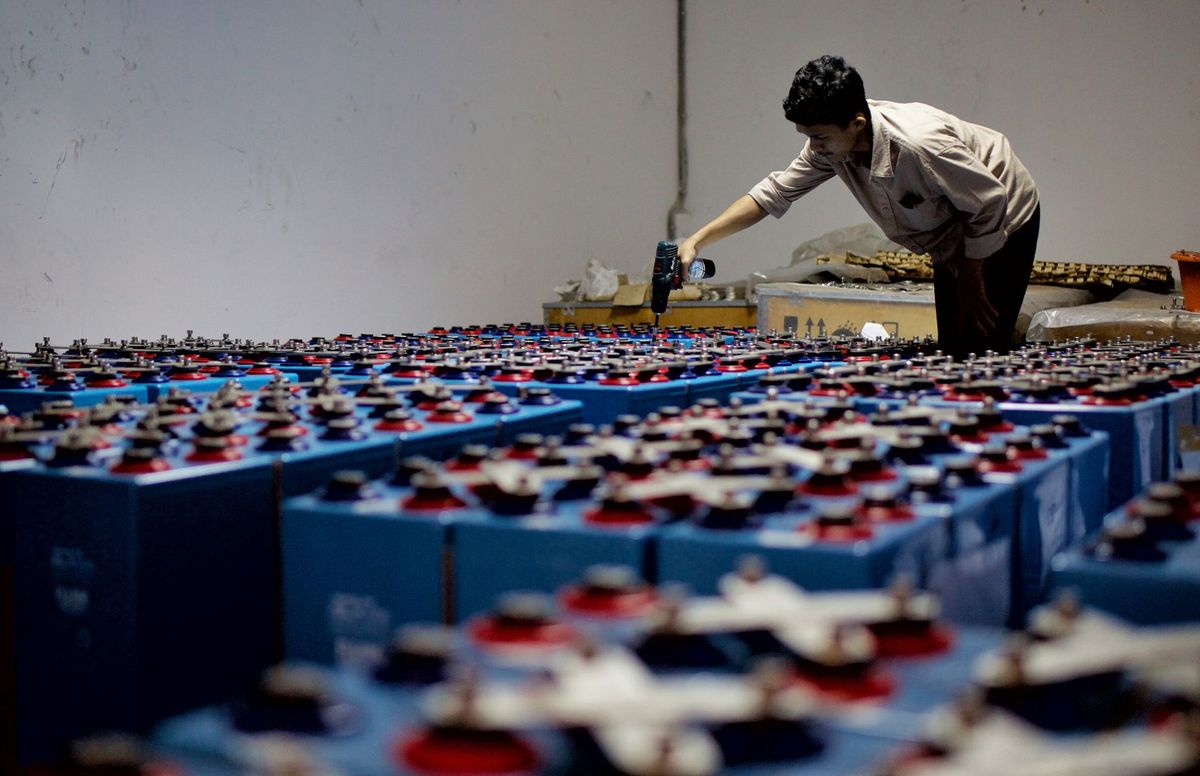
Modern data center UPS systems are massive installations. A 20-megawatt UPS system might consist of 10 to 20 individual UPS modules, each weighing 5,000 to 15,000 pounds, arranged in a dedicated UPS room with specialized flooring, ventilation, and fire suppression. The associated battery rooms — whether lead-acid or lithium-ion — require additional space, structural reinforcement for the enormous weight, and environmental controls to maintain battery life and safety.
Installing UPS systems requires electricians with specific training and experience. The termination of high-amperage bus connections, programming of control systems, and integration with building management systems are not skills that transfer directly from conventional commercial electrical work.
Power Distribution
Below the UPS level, power is distributed through a hierarchy of switchboards, power distribution units (PDUs), remote power panels (RPPs), and ultimately to the server racks via plug-in busway or individual branch circuits. This distribution hierarchy is far more complex than anything found in conventional commercial construction and requires meticulous attention to phasing, balancing, and labeling.
The cable management requirements alone set data center construction apart. A typical data center floor might contain thousands of power cables, each carefully routed through overhead cable tray or underfloor pathways, with specific separation requirements between power and data cabling. The labor hours associated with cable installation in a data center can exceed the total electrical labor for a comparably sized office building.
Backup Generation
While many commercial buildings have emergency generators for life safety systems (elevators, emergency lighting, fire pumps), data center backup generators are designed to power the entire facility indefinitely. A 50-megawatt data center might have 15 to 25 diesel generators, each producing 2 to 3 megawatts, arranged in a generator yard with dedicated fuel storage, paralleling switchgear, and automatic transfer systems.
The construction of generator yards is a significant civil and mechanical undertaking. Each generator requires a reinforced concrete pad with vibration isolation, exhaust stacks (often 40 to 60 feet tall), fuel supply piping, cooling systems, and sound attenuation enclosures. The paralleling switchgear that synchronizes multiple generators is a complex electrical system in its own right.
Cooling Systems — The Other Half of the Equation
If electrical systems are the heart of a data center, cooling systems are the lungs. Computing equipment converts essentially 100 percent of the electricity it consumes into heat, and that heat must be continuously removed to prevent equipment damage. The cooling requirements of data centers create mechanical systems that are vastly more complex and more critical than those in conventional commercial buildings.
Air Cooling — Raised Floor vs. Slab
Traditional data centers use air cooling, with cold air delivered to the computing equipment and hot air returned to cooling units for heat rejection. There are two fundamental architectural approaches:
Raised floor systems deliver cold air through a pressurized plenum beneath a raised access floor, with perforated tiles directing airflow to the server racks. The raised floor is typically 24 to 36 inches above the structural slab, creating a space for air distribution as well as power and data cabling. Raised floor installation is a specialty trade — the floor must be precisely leveled (to tolerances of 1/8 inch or less over large areas), structurally sound enough to support heavy equipment, and sealed to maintain air pressure.
Slab-based designs deliver cooling from overhead units, with hot aisle/cold aisle containment directing airflow through the computing equipment. This approach has become increasingly popular with hyperscale operators because it eliminates the cost and complexity of raised floor installation and allows for higher floor loads.
The choice between raised floor and slab-based designs has significant implications for construction sequencing, cost, and the trades involved. Raised floor systems require a dedicated installation crew and add time to the construction schedule, but they provide flexibility for future changes. Slab-based designs are faster to build but require more precise coordination between the structural, mechanical, and electrical trades.
Chilled Water Systems
Most large data centers use chilled water systems for heat rejection, with central chiller plants producing cold water that is distributed to computer room air handlers (CRAHs) or in-row cooling units on the data center floor. These chiller plants are industrial-scale installations — a 50-megawatt data center might have a chiller plant with 3,000 to 5,000 tons of cooling capacity, comparable to what you would find in a large hospital or university campus.
The piping systems that distribute chilled water throughout a data center are far more extensive and more critical than those in a typical commercial building. Pipe sizes of 12 to 24 inches are common for main distribution headers, and the systems must be designed and installed to allow for maintenance and repair without interrupting cooling to the computing equipment.
Cooling Towers and Heat Rejection
The waste heat removed from data center computing equipment must ultimately be rejected to the atmosphere, typically through evaporative cooling towers. A large data center campus might have dozens of cooling towers consuming millions of gallons of water per day, making water availability an increasingly important site selection factor.
The construction of cooling tower installations involves structural steel support frameworks, large-diameter piping, electrical connections for fans and pumps, and water treatment systems. The scale of these installations often surprises contractors who are accustomed to the relatively modest cooling tower requirements of conventional commercial buildings.
Liquid Cooling — The Future
As power densities increase with AI workloads, air cooling is reaching its physical limits. Liquid cooling — whether direct-to-chip or full immersion — is emerging as the solution, and it is changing the mechanical construction requirements of data centers dramatically. We cover this topic in depth in our dedicated article on liquid cooling and its construction implications.
Commissioning — The Final Exam
Perhaps the most distinctive aspect of data center construction is the commissioning process — the systematic testing and verification of every building system before the facility can accept computing equipment. In conventional commercial construction, commissioning is often a relatively brief process focused on verifying that HVAC systems perform to specification and building controls work properly. In data center construction, commissioning is an exhaustive, multi-week process that tests every system under simulated load conditions, including deliberate failure scenarios.
Integrated Systems Testing
The culmination of data center commissioning is the Integrated Systems Test (IST), in which the entire facility is operated under simulated full load for an extended period — typically 72 to 96 hours. During this test, utility power is intentionally disconnected to verify that backup generators start, synchronize, and assume the load within the specified timeframe. Individual system components are deliberately shut down to verify that redundant systems engage automatically.
The IST is one of the most stressful events in a data center construction project. It requires coordination among all trades, the presence of manufacturer representatives for major equipment, and careful documentation of every test result. Failures during IST can delay facility turnover by weeks or months and can result in significant cost overruns.
Load Banks
Because data centers are commissioned before computing equipment is installed, simulated loads must be created using load banks — essentially large, purpose-built electric heaters that draw power and generate heat at levels that simulate the computing equipment. Load bank installation, connection, and removal is a significant logistics and construction activity.
Quality and Cleanliness Standards
Data center construction imposes quality and cleanliness standards that far exceed those of conventional commercial building. The computing equipment that will eventually occupy the building is sensitive to dust, debris, and airborne contaminants, which means the construction environment must be carefully managed throughout the project.
Many data center projects implement "clean build" protocols that restrict certain activities (grinding, welding, painting) in or near completed computing spaces, require workers to wear booties or dedicated footwear, and mandate regular cleaning and air monitoring. These protocols add cost and complexity to the construction process and require careful coordination among trades.
Construction Sequencing
The construction sequence for a data center differs significantly from conventional commercial projects. In a typical office building, the structural frame goes up first, followed by the building envelope, and then interior mechanical and electrical systems. In a data center, the mechanical and electrical systems are so extensive that they often drive the construction schedule, with the building shell serving primarily as a weather enclosure for the MEP installation.
This MEP-driven sequencing has implications for project management and trade coordination. Mechanical and electrical trades typically have much longer on-site durations relative to structural and architectural trades than in conventional construction, and the coordination requirements between these trades are more demanding.
What Conventional Contractors Need to Know
For general contractors and subcontractors considering entering the data center market, the differences outlined above translate into several practical considerations.
First, you need different people. Data center construction requires electricians experienced with medium-voltage systems, mechanical workers experienced with industrial-scale chilled water systems, and project managers who understand commissioning. These skill sets do not automatically transfer from conventional commercial work.
Second, you need different equipment. The scale and weight of data center MEP equipment requires heavier cranes, larger material handling equipment, and more staging area than comparably sized commercial projects.
Third, you need different risk tolerance. The consequences of construction errors in a data center are severe and expensive. A miswired electrical connection or a poorly installed pipe joint can cause failures that damage millions of dollars in computing equipment. The quality assurance and quality control programs required for data center work are significantly more rigorous than those for conventional construction.
For more on how these unique requirements are affecting labor markets, see our analysis of the construction workforce gap, which shows that data center construction is contributing significantly to the overall shortage of skilled trades workers.
The firms that succeed in data center construction are those that approach it as a distinct discipline, not as a variation on conventional commercial building. The learning curve is real, but so is the opportunity — and the firms that invest in building genuine data center expertise will find themselves in one of the most robust and growing segments of the construction industry.
READ NEXT: The Skilled Trades Shortage Hitting Data Centers Hardest
FAQ
Q: A 2N data center costs 40-60% more to build than an equivalent N+1 facility — what does that mean for a GC's bonding capacity requirements on a $300M data center bid? A: A $300M hyperscale data center is likely 2N, so compared to a $180-210M N+1 equivalent, you're bidding a larger absolute dollar value. If your current bonding capacity tops out at $150M per single project, a $300M 2N facility is out of reach without expanding your balance sheet and surety relationship. Start working with your surety 12-18 months before bidding to document profitability, increase working capital, and build the track record that allows your bonding limit to grow.
Q: A 50MW data center's generator yard can have 15-25 diesel generators weighing 30,000-50,000 pounds each — what crane and rigging capabilities does a GC need to manage that scope? A: Setting 20 generators at 30,000-50,000 pounds each requires a minimum 100-150 ton crawler crane with the reach to work across a generator yard that spans an acre or more. Plan for 3-5 crane days for generator setting alone, plus additional time for exhaust stack installation (40-60 feet tall) and paralleling switchgear alignment. Coordinate generator deliveries so they don't saturate the site access roads — staging 20 generators simultaneously requires significant laydown area that competes with active construction zones.
Q: The Integrated Systems Test runs 72-96 hours with deliberate utility disconnects — who is responsible for ensuring the building is safe during intentional power failures, and how is that scoped in the contract? A: IST responsibility is typically split: the commissioning agent owns the test protocol and documentation, the GC owns site safety and equipment protection during the test, and the owner's operations team participates to validate their standard operating procedures. In your contract, ensure IST support labor is explicitly scoped and compensated — a 96-hour IST with round-the-clock GC supervision can require 20-30 labor days from key personnel. Any failures during IST that require contractor remediation should be addressed through a documented punch list, not ambiguous warranty claims.
Q: Data center electrical rooms now consume 25-30% of building footprint versus the old 15-20% — how does that shift affect a GC's approach to construction sequencing and temporary power? A: Larger electrical rooms mean MEP rough-in in those spaces falls on the critical path earlier than in conventional commercial projects. The switchgear, UPS modules, and battery rooms must be enclosed and environmentally controlled before equipment setting begins, which often means finishing those areas 4-6 months before the data halls they serve. Temporary power for construction also gets more complex because the permanent electrical systems can't be energized until commissioning — plan for a dedicated temporary power infrastructure that can support 500-1,000 amps of construction load across multiple active work fronts simultaneously.