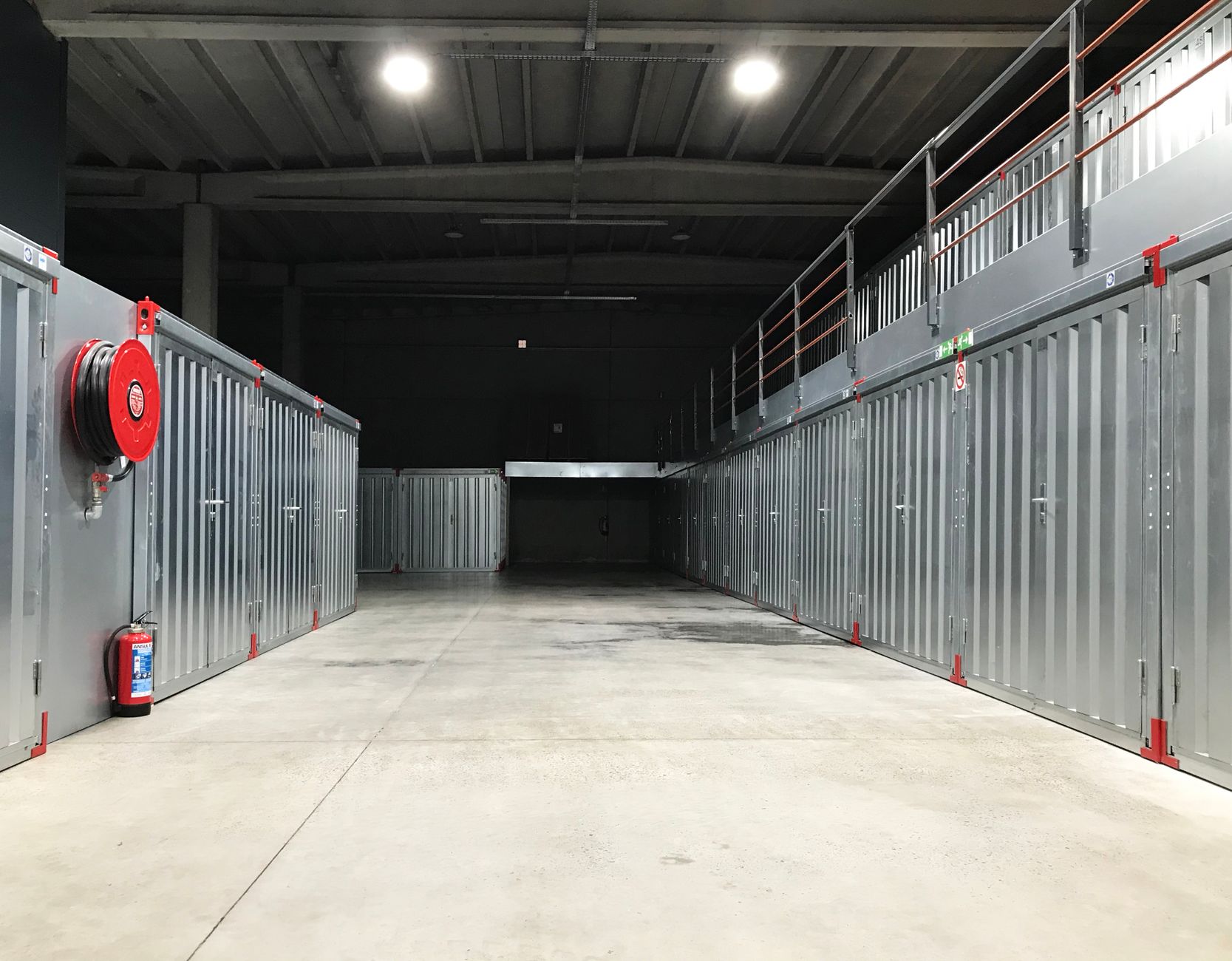
The dry distribution warehouse my shop bid last spring came in at $78 per square foot. The refrigerated facility next to it, same developer, same market, same size, penciled at $265 per square foot. That is a 3.4x multiplier on the same footprint, and the client's first reaction was that we had padded the number. We had not. Cold storage is a fundamentally different building wearing a warehouse-shaped costume, and the delta is all in the systems you cannot see from the parking lot.
The cold storage construction cost per square foot question trips up experienced developers because they anchor on their dry-warehouse instincts. Then they hit the refrigeration plant, the insulated envelope, the under-slab heating loops, and the backup power, and the budget doubles. My estimators quote refrigerated space at $150 to $400 per square foot in 2026, and where you land inside that band depends almost entirely on one question: cooler or freezer.
If you want the dry-warehouse baseline to measure against, I broke that down in warehouse construction cost per square foot. This piece is about why cold storage costs two to three times as much, line by line.
Why Cold Storage Costs 2-3x Dry Warehouse
A dry warehouse is a big steel box with a slab, a roof, and some dock doors. Cold storage is a sealed thermal vessel that has to hold a precise temperature 24/7 for decades, against physics that is constantly trying to equalize the inside with the outside. Every one of those requirements adds cost that a dry box never carries.
The Envelope Is a Continuous Thermal Barrier
Dry warehouse walls are single-skin metal panel or tilt-up concrete, and nobody cares about a little air leakage. Cold storage demands insulated metal panels (IMP) with 4 to 6 inches of foam core on walls and often 6 to 8 inches on the ceiling. Industry cost data puts IMP envelope at $12 to $28 per SF of building area installed, versus $4 to $8 for a dry-warehouse skin. The panels have to seal continuously at every joint, penetration, and corner, because a thermal break is not just an energy leak, it is a condensation and ice-formation failure waiting to happen.
The Vapor Barrier Is Not Optional and Not Cheap
This is the line that separates the contractors who have built cold storage from the ones who are about to learn expensively. Warm, humid outside air wants to migrate through the envelope toward the cold interior, and when it hits the dew point inside the wall assembly, it condenses. In a freezer, it freezes. Uncontrolled vapor drive will pack a wall cavity with ice, rot the assembly, and heave the structure over a few seasons.
A continuous vapor barrier and properly detailed envelope adds $3 to $8 per SF, and the detailing labor is where the real cost lives. My shop prices the vapor barrier and envelope sealing as a controlled scope with dedicated QA, because a warranty callback on a failed freezer envelope can cost more than the original margin on the whole job.
Under-Slab Heating Stops the Ground From Heaving
Here is the one that shocks first-time cold-storage developers. In a freezer held below 32°F, the cold migrates down through the slab and into the soil. Over time the ground freezes, expands, and heaves the slab, cracking it and knocking racking out of plumb. To stop it, freezer slabs get an under-slab heating system, glycol loops or electric grid, plus additional rigid insulation under the slab. That adds $6 to $14 per SF to the foundation package versus a dry-warehouse slab-on-grade.
Coolers held at 34°F to 40°F sometimes skip the heating loops but still carry heavy under-slab insulation. Freezers almost never skip it. If you are checking slab quantities and thickness against your concrete sub, run the numbers through the concrete calculator — cold-storage slabs run thicker and take more control-joint detailing than the dry-box version.
Cost by Temperature Class: Cooler vs Freezer vs Blast
The single biggest cost driver after building size is the temperature you have to hold. Colder means more refrigeration tonnage, more insulation, and more backup. Here is the 2026 tier table my estimators use for hard cost, before land and soft costs.
| Facility type | Temperature range | Hard cost per SF | Vs dry warehouse |
|---|---|---|---|
| Dry warehouse (baseline) | Ambient | $55 - $95 | 1.0x |
| Cooler / refrigerated | 34°F - 55°F | $150 - $230 | ~2.2x - 2.8x |
| Freezer | -10°F - 32°F | $200 - $320 | ~3.0x - 3.6x |
| Blast freezer / IQF | -20°F and below | $300 - $400+ | ~4.0x+ |
Cooler: $150-$230 Per SF
Refrigerated coolers holding produce, dairy, or pharma at 34°F to 55°F sit at the bottom of the cold-storage range. You still carry the full IMP envelope and refrigeration plant, but the tonnage is lower and you can often skip under-slab heating. My shop lands most coolers between $160 and $210 per SF on a clean site.
Freezer: $200-$320 Per SF
Drop to freezer temperatures and everything scales up. More refrigeration tonnage, thicker envelope, under-slab heating, and heavier backup power. This is the workhorse of the cold-storage boom, and I quote it at $200 to $320 per SF depending on ceiling height and automation. The sector's momentum here is real, and I covered the demand side in cold storage as the next warehouse frontier — but demand does not make the freezer slab any cheaper.
Blast Freezer: $300-$400+ Per SF
Blast freezing and individually-quick-frozen (IQF) processing rooms pull temperatures below -20°F with massive air movement. The refrigeration load is enormous, the envelope detailing is unforgiving, and redundancy is mandatory. These specialized rooms push past $400 per SF, and they are a specialist's scope, not something a general dry-warehouse builder should bid cold.
The Refrigeration Plant: 20-35% of the Whole Budget
The mechanical refrigeration system is the line that has no equivalent in a dry warehouse, and it is the largest single component in a cold-storage budget. Depending on temperature class and building size, the plant runs $30 to $90 per SF, or roughly 20% to 35% of hard cost.
Ammonia vs CO2 vs Freon
Large facilities favor ammonia (R-717) refrigeration for efficiency, but ammonia carries strict safety, ventilation, and process-safety-management requirements that add cost and permitting time. CO2 (R-744) systems have grown fast for mid-size facilities. Smaller coolers may run packaged freon-based systems. My shop prices the refrigeration approach with the mechanical engineer before we ever set a per-SF number, because the wrong system choice can swing the mechanical budget by 30%.
Backup Power Is Part of the Refrigeration Scope
A dry warehouse that loses power loses lights. A freezer that loses power for a day loses the entire inventory, and the tenant's insurance company comes looking. Cold storage carries standby generation sized to the refrigeration load, transfer gear, and often redundancy on critical compressors. Budget $8 to $20 per SF for the power and backup package. This is not a place to value-engineer, and any bid that looks cheap here is a bid that skipped it.
For a sense of how these energy-intensive, systems-heavy builds compare to the other high-cost box in the market, look at data center construction cost per square foot — cold storage and data centers are cousins in that both live or die on mechanical and electrical redundancy, not on the shell.
Soft Costs, Automation, and the All-In Number
Everything above is hard cost. Cold-storage soft costs run 20% to 30% on top: refrigeration and mechanical engineering, process-safety documentation for ammonia systems, permitting, financing, and a contingency I never drop below 8% given the mechanical complexity. That pushes an all-in freezer number to $250 to $400-plus per SF before land.
Automation is the wildcard on the high end. Automated storage and retrieval systems (ASRS) in high-bay freezers can add $50 to $150 per SF, but they let you build taller and denser, cutting the conditioned volume per pallet. That trade-off — more capital cost for less cubic feet to freeze — is exactly the kind of thing you model before committing. Build your stack in the cost estimator with temperature class, refrigeration approach, and automation as separate levers, and pressure-test it against the material inputs in the 2026 construction cost index before it goes to your lender.
Frequently Asked Questions
How much does cold storage cost to build per square foot in 2026?
Refrigerated cold storage runs $150 to $400 per square foot in hard cost. Coolers at 34°F to 55°F land at $150 to $230, freezers below 32°F at $200 to $320, and blast freezers past $300 to $400-plus. All-in with soft costs, a freezer typically reaches $250 to $400 per SF before land.
Why does cold storage cost 2 to 3 times more than dry warehouse?
The difference is entirely in systems a dry box never carries: insulated metal panel envelope, continuous vapor barrier, under-slab heating to prevent frost heave, a mechanical refrigeration plant running 20% to 35% of the budget, and standby power sized to protect inventory. The shell is similar; everything inside and around it is not.
What is the most expensive part of a cold storage facility?
The mechanical refrigeration plant, at $30 to $90 per square foot or 20% to 35% of hard cost, is the single largest component. It has no equivalent in a dry warehouse. Backup power and the insulated envelope are the next two largest cold-specific line items.
Do freezers really need under-slab heating?
Yes. A freezer held below 32°F drives cold into the soil, which freezes and heaves, cracking the slab and knocking racking out of plumb over a few seasons. Under-slab heating loops plus rigid insulation add $6 to $14 per SF but prevent a structural failure that costs far more to fix after the building is loaded.
Is a cooler cheaper to build than a freezer?
Meaningfully cheaper. Coolers at 34°F to 55°F need lower refrigeration tonnage, thinner envelope insulation, and can often skip under-slab heating. That drops them to $150 to $230 per SF versus $200 to $320 for freezers. If your product tolerates cooler temperatures, the construction savings are real.
Your Action Item for This Week
Take whatever cold-storage number you are working with and break out the refrigeration plant, the envelope, the under-slab package, and the backup power as four separate line items — not a blended per-SF figure. If any bid in front of you shows a cold-storage cost within 50% of dry warehouse, or lumps the refrigeration into a vague "mechanical" allowance, that bid is missing scope and it will surface as a change order or a warranty failure. Get your mechanical engineer to confirm the temperature class and refrigerant choice before you accept any per-SF number, because those two decisions move the budget more than the building size does.