Data centers cost $1,000–$2,000 per square foot to build in 2026 — roughly 5× conventional commercial construction, and hyperscale facilities push past $2,500/SF. Below is the shell, fit-out, and MEP breakdown, and where contractors capture the premium.
If you want to understand where serious money is moving in construction right now, look at data centers. Not offices. Not multifamily. Data centers.
I've spent the last three months pulling cost data from completed data center projects across Virginia, Texas, Georgia, Ohio, and Nevada. The numbers tell a story that every contractor, estimator, and construction business owner needs to understand — because this market is unlike anything else we build.
The math: a typical commercial office building costs $200-400 per square foot to construct. A data center? $1,000 to $2,000 per square foot. Some hyperscale facilities push past $2,500. That's not a typo. That's 5x the cost of conventional commercial construction, and every dollar of that premium creates opportunity for contractors who know how to capture it.
Let me break down exactly where that money goes.
Shell Construction — $250-400 Per Square Foot
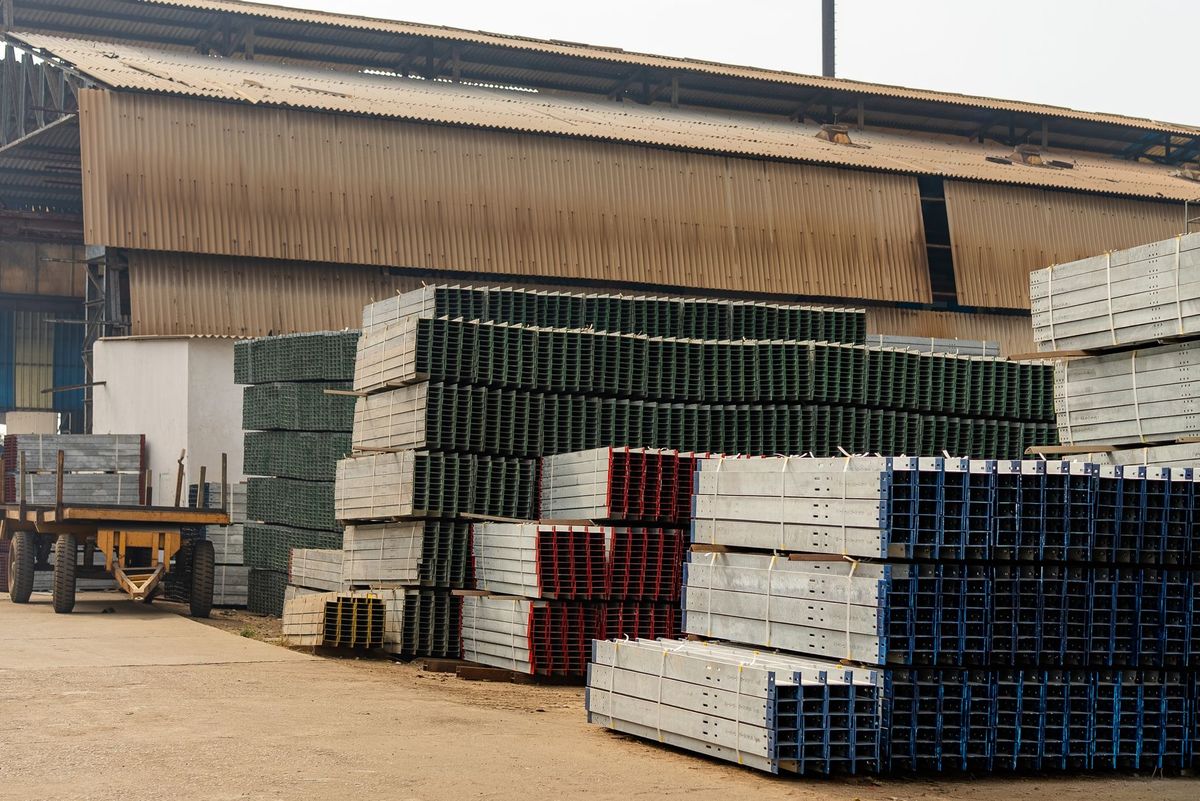
The building envelope of a data center looks deceptively simple from the outside. Most are windowless concrete tilt-up or precast structures. But the shell costs more than a standard warehouse or office for several critical reasons.
Structural requirements drive the first cost premium. Data center floors must support 250-350 pounds per square foot of live load — compared to 50-100 PSF for a typical office. That means thicker slabs (typically 8-12 inches of reinforced concrete versus 4-6 inches), deeper footings, and heavier steel framing. The structural steel package alone can run $45-65 per square foot, compared to $25-35 for commercial office construction.
Ceiling heights add cost. Data center white space typically requires 12-15 foot clear heights under the raised floor structure, with an additional 3-4 feet below the raised floor for cable management and cooling distribution. Total building height often reaches 28-35 feet, requiring more exterior wall material and taller structural columns.
Envelope specifications are also more demanding. While data centers don't need windows, they do need superior vapor barriers, enhanced insulation packages (R-30 or higher), and carefully designed penetration points for the massive electrical and mechanical systems that will be installed later. A single poorly sealed penetration can create condensation problems that take out millions of dollars in equipment.
Foundation systems deserve special attention. In addition to the structural loads, data centers often have complex underground infrastructure — duct banks for electrical conduit, chilled water piping, fuel piping for generators, and drainage systems. The below-grade work on a data center site is significantly more complex than standard commercial construction, adding $20-40 per square foot to the foundation scope alone.
Concrete work is another cost driver. Beyond the thicker structural slabs, data centers require precision flatness standards (typically FF50/FL30 or better) for raised floor installations. They also need extensive housekeeping pads for mechanical and electrical equipment, concrete equipment pads for exterior generators and cooling towers, and retaining walls for the graded generator yards. The concrete package for a 200,000 SF data center commonly runs $8-15M.
The shell phase typically represents only 20-25% of total project cost — a much smaller share than conventional construction where the building envelope might be 40-50% of the budget. That's because the real money in data centers is inside the building.
Mechanical Systems — $200-400 Per Square Foot
Cooling is the second-largest cost category in data center construction, and it's getting more expensive as power densities increase.
Traditional data centers used computer room air conditioning (CRAC) units that pushed cold air under raised floors and up through server racks. That approach works for power densities up to about 8-10 kW per rack. But modern AI training facilities are running 40-80 kW per rack, and some NVIDIA DGX configurations push 120 kW or more per rack.
The cooling plant for a 50MW data center typically includes:
- Chilled water systems: $30-50M for the chiller plant, including centrifugal chillers, cooling towers, pumps, and piping
- Air handling units: $15-25M for precision cooling units throughout the white space
- Rear-door heat exchangers: $8-15M for higher-density deployments
- Direct liquid cooling infrastructure: $20-40M for GPU-intensive facilities requiring liquid-to-chip cooling
- Piping infrastructure: $10-20M for chilled water distribution, including insulated copper or steel piping, valves, and controls throughout the facility
The mechanical scope also includes fire suppression (clean agent systems like FM-200 or Novec 1230 at $15-25 per square foot), humidification and dehumidification systems, and the extensive piping infrastructure connecting everything together. Data center fire suppression is especially costly because the systems must extinguish fires without damaging the IT equipment — water-based sprinklers are only used in non-IT areas.
Cooling efficiency has become a critical design metric. Data center operators measure Power Usage Effectiveness (PUE) — the ratio of total facility power to IT equipment power. A PUE of 1.0 would mean every watt goes to computing. Real-world PUEs range from 1.1 for the most efficient facilities to 1.6+ for older designs. Every tenth of a point in PUE improvement saves $500K-$2M annually in a 50MW facility. That means mechanical contractors who can deliver efficient cooling systems have significant leverage in contract negotiations.
Business tip: Mechanical contractors who can demonstrate experience with chilled water systems above 2,000 tons of cooling capacity are in extreme demand right now. If your firm has that capability, you should be marketing specifically to data center GCs. The backlog of work exceeds the capacity of existing specialized firms by a factor of 3x.
Electrical Systems — $300-500 Per Square Foot
Here's where data center costs really separate from conventional construction. The electrical infrastructure in a data center is staggering in both scale and complexity.
A 50MW data center campus — which is now considered mid-sized — requires electrical infrastructure comparable to a small city. The typical electrical scope includes:
Utility interconnection: $10-30M depending on distance to the substation and voltage requirements. Most hyperscale data centers connect at 138kV or 230kV, requiring dedicated substations with transformers stepping down to 15kV or 34.5kV medium voltage distribution. In Northern Virginia, where utility capacity is severely constrained, interconnection costs have risen to $40-60M for new facilities, and timelines stretch 3-5 years.
Emergency power: 50+ diesel generators, each rated at 2-3MW, at $500K-$2M per unit. That's $25-100M just in generators. Add fuel storage ($2-5M for 48-72 hour runtime), paralleling switchgear ($5-10M), and generator enclosures and exhaust systems ($3-8M). The generator yard alone can cover 2-5 acres on a large campus.
UPS systems: Uninterruptible power supplies bridge the gap between utility failure and generator startup. Rotary or static UPS systems for a 50MW facility run $50-150M, depending on the architecture (2N, N+1, or distributed redundancy). Battery systems — increasingly lithium-ion rather than traditional lead-acid — add another layer of cost and complexity, including specialized ventilation, fire suppression, and thermal management.
Power distribution: Medium voltage switchgear ($3-8M, with lead times now stretching 40-60 weeks), power distribution units ($15-30M), remote power panels, busway, and the miles of copper cabling connecting everything together. A single data hall might have 50+ PDUs, each weighing 3,000-5,000 pounds.
2N redundancy means building two completely independent electrical paths, each capable of supporting the full facility load. In practice, this means buying twice the electrical equipment most buildings would need. When someone asks why data centers cost so much, this is a big part of the answer — you're essentially building the electrical system twice.
The copper alone in a large data center can run $15-25M. At current copper prices of $4.50 per pound, with data centers using 10x more copper per square foot than a commercial office building, the material cost is significant. I covered this in detail in our copper price analysis.
Fit-Out Costs — $800-1,500 Per Square Foot
The fit-out phase is where shell and core transforms into a functioning data center. This includes:
Raised floor systems: $25-50 per square foot for heavy-duty raised floor tiles and pedestals rated for the extreme point loads of fully loaded server racks. Not your average office raised floor — these systems support 2,500-3,500 pounds per tile. The raised floor creates a plenum for cold air distribution and cable routing, with typical heights of 24-48 inches.
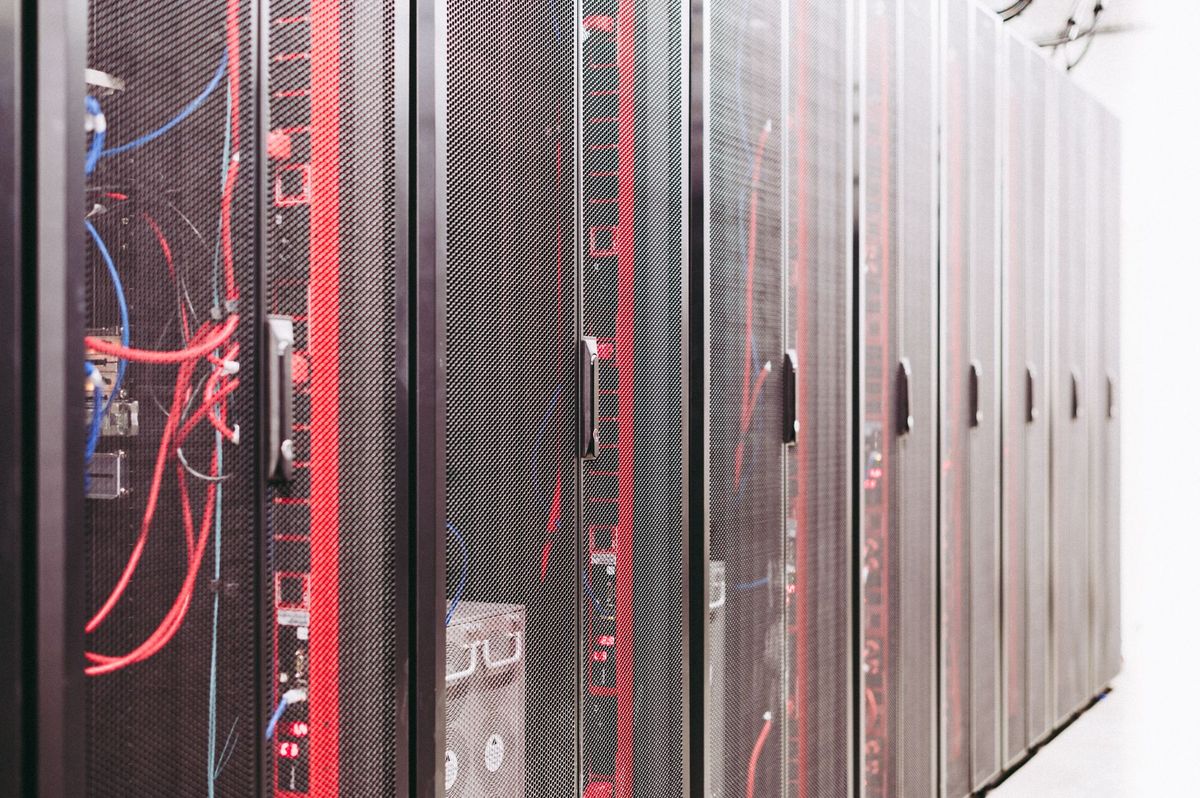
Cable management infrastructure: $15-30 per square foot for overhead cable tray, ladder rack, fiber optic pathways, and structured cabling systems. A single data hall might have 50+ miles of fiber optic cable and 100+ miles of copper cabling.
Security and monitoring systems: $20-40 per square foot for multi-layer physical security (mantrap entries, biometric access, CCTV with 90-day retention), environmental monitoring (temperature, humidity, water leak detection at every row), and building management systems (BMS) that track thousands of data points in real time.
Commissioning: $15-25 per square foot for the extensive testing and validation process. Every electrical path gets tested. Every cooling system gets load-tested. Every failover scenario gets simulated. Integrated systems testing (IST) for a large facility can take 3-6 months and involve 100+ specialized technicians.
IT infrastructure preparation: $10-20 per square foot for the final preparations that enable server installation — including hot/cold aisle containment systems, rack installation, power whip connections, and fiber cross-connects.
Total Cost Comparison — Data Centers vs. Everything Else
Here's how data center costs per square foot compare to other building types in 2026:
| Building Type | Cost Per SF | Ratio to Data Center |
|---|---|---|
| Standard warehouse | $100-150 | 1/10th |
| Commercial office (Class A) | $200-400 | 1/5th |
| Hospital | $400-800 | 1/2 to 1/3 |
| Data center (enterprise) | $1,000-1,500 | Baseline |
| Data center (hyperscale) | $1,500-2,000+ | 1.5-2x |
| Semiconductor fab | $2,000-4,000 | 2-4x |
The only building type that consistently costs more than data centers is semiconductor fabrication facilities, which I covered in our semiconductor fab construction piece. Data centers and fabs share many cost drivers — extreme power requirements, precision environmental controls, and ultra-clean construction standards.
Regional Cost Variations
Data center construction costs vary significantly by geography. Here's what we're seeing in 2026:
Northern Virginia (Loudoun County): $1,200-1,800/SF. The world's largest data center market, with over 3GW of capacity. Land scarcity is pushing costs higher — a buildable acre in Data Center Alley now costs $1.5-3M, up from $400K five years ago. Utility interconnection timelines have stretched to 3-5 years for new substations. Labor rates are the highest in the country for data center trades, with electricians commanding $55-75/hr.
Dallas-Fort Worth, Texas: $1,000-1,500/SF. Strong labor availability, lower land costs, and business-friendly permitting keep costs below Virginia. ERCOT grid concerns have driven higher generator requirements, adding $50-100/SF to electrical costs. Some operators are now requiring 96-hour fuel storage instead of the standard 48-72 hours.
Phoenix, Arizona: $1,100-1,600/SF. Abundant solar energy and low humidity reduce cooling costs by 15-20%. Water availability for evaporative cooling is increasingly restricted, pushing some facilities to air-cooled systems at higher capital cost but lower operating expense.
Columbus, Ohio: $950-1,400/SF. Emerging market with competitive labor costs and strong utility infrastructure. State tax incentives reduce effective cost by 5-10%. AEP Ohio has been aggressive in building new substations to attract data center tenants.
Atlanta, Georgia: $1,000-1,500/SF. Growing market with good utility access and competitive labor. Humidity drives slightly higher cooling system costs compared to arid climates.
Costs outside the US break the per-SF convention entirely — European projects are quoted per megawatt of IT load and priced in €/m², and they land 20-40% above comparable US builds once grid connection and permitting are priced in. The full comparison is in US vs. Europe data center construction costs.
The Hidden Costs Most Estimates Miss
When I review data center cost estimates from contractors new to this market, I consistently see several categories underestimated or missing entirely:
Land preparation: Data center sites require extensive grading, stormwater management, and often soil remediation. Utility easements and right-of-way acquisition can add $5-15M to site costs. Many data centers are built on former agricultural or industrial land that requires environmental remediation before construction begins.
Utility infrastructure: The cost of bringing adequate power to the site — building or upgrading substations, running new transmission lines, or paying utility contribution charges — can run $20-100M+ and is often excluded from per-square-foot calculations. In some markets, the utility will build the infrastructure and amortize the cost through the electricity rate. In others, the data center operator pays the full capital cost upfront.
Permitting and entitlement: Environmental impact studies, zoning applications, community engagement, and the growing wave of local opposition to data center development add time and cost. Some jurisdictions now require noise studies, traffic impact analyses, water usage assessments, and visual impact studies. Loudoun County, Virginia recently implemented a special exception process for new data centers that adds 6-12 months to the entitlement timeline.
Inflation escalation: Data center projects take 18-36 months to build. With construction material costs still volatile, failing to include 3-5% annual escalation in your estimate is a recipe for a margin-destroying surprise. I've seen $200M projects come in $15-20M over budget because the estimator used day-one pricing for equipment delivered 18 months later.
Commissioning contingency: IST failures are common on first-of-kind systems. Budget for at least one re-test cycle on critical systems, or 10-15% contingency on commissioning costs.
Temporary power: During construction, data center sites need significant temporary electrical service for tower cranes, welding, and temporary lighting. The temporary power package for a large data center project can run $1-3M.
What This Means for Contractors
Bottom line: Data center construction is the highest-value commercial work available right now, and the market is expanding at 20-25% annually. But the cost structures are fundamentally different from conventional construction.
If you're bidding your first data center project, your biggest risk is underestimating the electrical scope. In a typical commercial building, electrical might be 15-20% of the total budget. In a data center, it's 35-45%. Your electrical subcontractor isn't just another trade — they're your largest single cost center, and their ability to deliver determines whether you meet schedule.
The second-biggest risk is long-lead equipment. Medium voltage switchgear at 40-60 weeks, generators at 30-45 weeks, UPS systems at 35-50 weeks, and custom air handling units at 25-40 weeks. If you don't have equipment procurement locked in before you break ground, you'll be building a building with nothing to put in it.
The math: a general contractor running $200M in annual data center revenue at 8% margin generates $16M in profit. The same firm doing $200M in conventional commercial work at 4-5% margin generates $8-10M. That's the premium the market is paying for expertise, and it's real.
The contractors who invest in learning this market now — understanding the cost drivers, building relationships with specialized subcontractors, and developing internal expertise in mission-critical construction — will be positioned to capture what is easily the most profitable segment in commercial construction through the rest of this decade.
The spending trajectory is clear: $28.5B in 2025, $35B forecast for 2026, and no signs of slowing as AI infrastructure buildout accelerates. The question isn't whether this market will grow — it's whether your firm will be positioned to capture any of it.
Business tip: Start building your data center knowledge base now. Attend AFCOM and 7x24 Exchange conferences. Get your project managers BICSI-certified. Tour completed facilities if you can arrange it through your supply chain contacts. The learning curve is steep, but the margins reward the climb.
Before you price a data center shell or fit-out package, run your own numbers with our free construction cost estimator and check slab quantities with the concrete calculator. For the full methodology, see our step-by-step guide to estimating construction costs. To see how data centers compare against 40+ other building types, check The 2026 Construction Cost Index.
Frequently Asked Questions
What does a data center cost per square foot in 2026?
Data center construction runs $1,000 to $2,000 per square foot in 2026, with hyperscale facilities pushing past $2,500/sqft. Shell construction is $250-400/sqft, but the fit-out (electrical, mechanical, cooling) adds $800-1,500/sqft — about 5x the cost of conventional commercial construction at $200-400/sqft.
Why is electrical work so expensive in data centers?
Electrical represents 35-45% of total data center budget versus 15-20% for typical commercial buildings. Data centers require 2N redundant power distribution, medium voltage switchgear, and massive UPS capacity — a 50MW facility can need $40-80M in electrical equipment alone. Your electrical subcontractor becomes the largest single cost center on the project.
Which region has the highest data center construction costs?
Northern Virginia leads the country at $1,200-$1,800 per square foot driven by labor shortages, utility connection fees, and competition for specialized subcontractors. Columbus, Ohio and Phoenix, Arizona run 15-20% cheaper thanks to lower labor costs, while Atlanta and Dallas fall in the middle at $1,000-1,400/sqft.
READ NEXT: Data Center Electrical Systems — Why Every Electrician Should Learn This