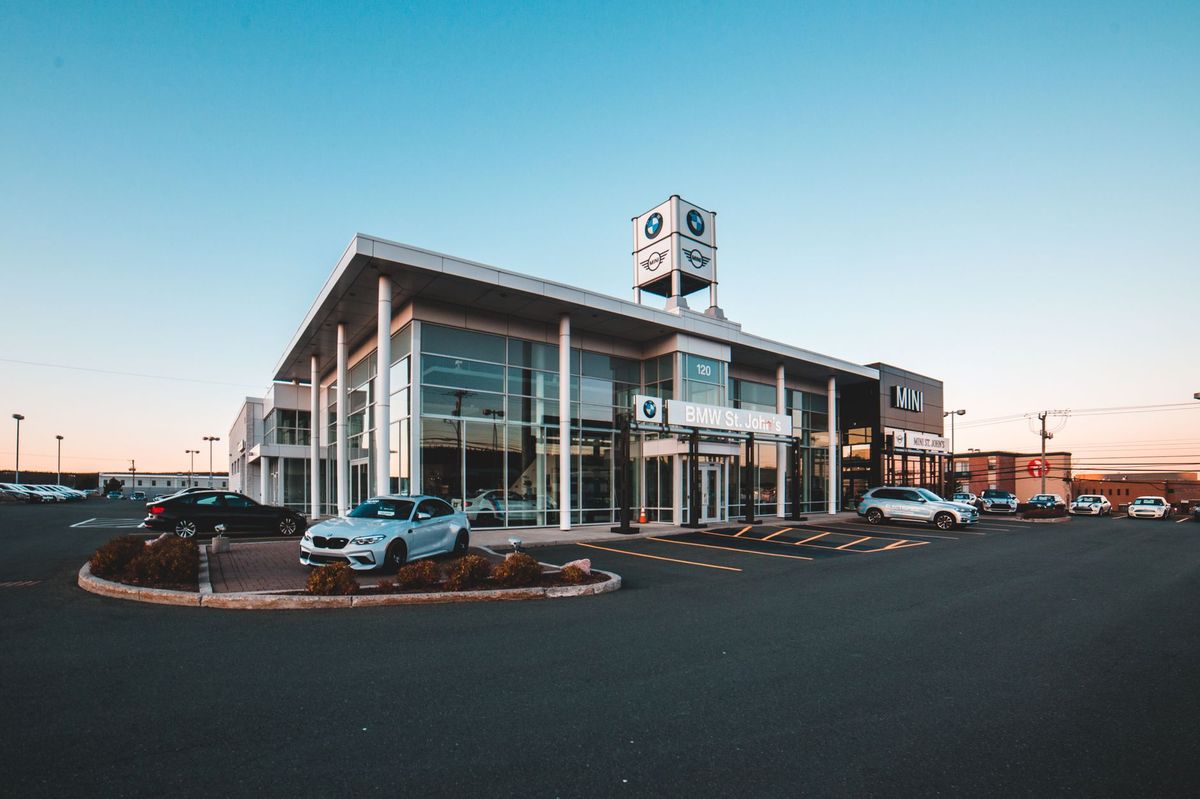
At $350 per square foot, you're looking at a total hard cost of roughly $1.75M to $2.1M for a 5,000 to 6,000 square foot franchise dealership showroom in most continental markets in 2026.
Let me be direct about why I'm writing this: I've built four franchise dealerships in my region over the past five years, and I've watched the cost-per-square-foot climb 18% to 22% each year while dealers still expect the same aggressive timelines and tight budgets they negotiated in 2021. That's a losing math problem, and I want contractors reading this to understand exactly where the money goes so you don't underbid and spend 14 weeks eating margin.
The Dealership Showroom Is Nothing Like a Retail Box
Here's what separates a dealership from a 15,000 SF car-rental return facility or a tire-shop build-out: a dealership is a high-intensity mechanical and electrical installation disguised as retail space.
The Mechanical and Electrical Story
A dealership needs 95-degree ambient conditioning in the showroom year-round. The vehicles themselves shed heat. Lighting costs run high because you're under heavy LED requirements — 75 to 150 foot-candles across the floor to make paint finishes glow under the lights. At 5,000 SF, that's 500,000+ lumens from architectural lighting alone. Add the cost of fixture procurement, 3-phase power, controls, and you're spending $60,000 to $90,000 on lighting infrastructure, not including the fixtures themselves.
The HVAC system for a showroom is oversized to keep up with occupant density and vehicle heat load. A typical 5,000 SF showroom needs a 15-ton to 20-ton system — not the 10 to 12 tons you'd size for an equivalent office space. Equipment cost runs $45,000 to $65,000; installation and ductwork add another $55,000 to $80,000. Ductwork layout through the building can be a nightmare if the structural deck isn't clear — and dealership architectures are rarely kind to mechanical routing.
The electrical service into a dealership showroom is heavy-duty. 400-amp service is baseline. Many franchises want 600 amps to support future expansion of the service area or the charging infrastructure that every dealer is now adding for EV inventory. A 600-amp service upgrade can add $40,000 to $65,000 to hard costs depending on existing utility infrastructure.
The Flooring Is Everything
A dealership floor is a specification that most contractors underestimate. It's not a polished concrete garage floor. It's a finished, cleanable, high-visibility surface that needs to look pristine under showroom lighting.
My standard specification is a closed-cell epoxy system — 3/8-inch thick over shot-blasted and profiled concrete. Cost runs $24 to $35 per square foot installed. For a 3,500 SF showroom floor, that's $84,000 to $122,500 just for the epoxy. Add the concrete prep work (shot blasting, diamond grinding, repair), and you're at $95,000 to $135,000 total.
Some dealers want the ultra-premium: a 100% polyaspartic system with custom color (sometimes a dealer logo or color block) and a glossy topcoat. That pushes the cost to $40 to $55 per SF — $140,000 to $192,500 for the same square footage. The difference in appearance under showroom lighting is night-and-day, and it's worth the premium.
Whatever you specify, do not underbid the concrete preparation. Existing concrete that's thin, poorly bonded, or has active moisture will reject the epoxy coating, and the subsequent remediation is expensive and project-killing on the schedule.
The Finish Out
The rest of the build-out — interior walls, ceilings, paint, fixtures — runs 15-20% more expensive in a dealership than in standard commercial space because of the specification intensity.
Drywall ceilings are suspended at 12 to 14 feet in most showrooms. That height and the fixture density (recessed cans on 4-foot centers for the lighting spec) means your sub is running more wire, more hangers, and managing a complex ceiling plane.
Interior walls are partition stud or solid CMU depending on the partitioning. Showroom walls are painted matte with a 10 to 15% sheen finish — higher than residential drywall but lower than the satin gloss of most retail finishes. That middle ground requires more prep, primer, and finish coats than a spec contractor might budget.
Cost Breakdown: Where the $350/SF Number Lives
Here's what a 5,500 SF dealership showroom breaks down to on a typical mid-Atlantic franchise:
| Cost Category | $ per SF | Total 5,500 SF | Notes |
|---|---|---|---|
| Sitework & Utilities | $18–24 | $99K–132K | Utility tie-ins, parking lot, stormwater |
| Foundation & Structure | $42–56 | $231K–308K | Slab-on-grade prep, footings, frame |
| Exterior (walls, roof, doors) | $38–48 | $209K–264K | Metal or masonry, commercial roofing, entry doors |
| Mechanical (HVAC, plumbing, gas) | $62–78 | $341K–429K | 18-ton system, ductwork, service sink, wash drain |
| Electrical (service, panels, lighting) | $58–72 | $319K–396K | 400–600 amp service, 150+ fixtures, controls |
| Flooring (epoxy system) | $28–36 | $154K–198K | 3/8" closed-cell epoxy, shot-blast prep |
| Interior Walls & Ceilings | $24–32 | $132K–176K | Stud framing, 14-ft suspended ceiling, paint |
| Doors, Windows, Glass | $8–12 | $44K–66K | Storefront framing, interior glass, hardware |
| Contingency (10%) | $28–35 | $154K–192K | Change orders, existing-conditions surprises |
| GC Overhead & Markup (18%) | $63–79 | $347K–434K | Insurance, bonds, labor burden, profit |
| TOTAL | $370–473 | $2.04M–2.60M | Depends on finishing, site conditions |
The $350/SF I started with represents the sweet spot on a greenfield site with standard sitework and a clean existing structure. Push to $370–400/SF if you're on a tight urban infill lot with existing-condition challenges.
The Schedule and Sequencing Risk
This is where I want to save you weeks of lost productivity.
A dealership can't start finish work until the HVAC is tested and commissioned. The HVAC contractor can't finish until the ductwork is confirmed to clear the structural frame. The structural frame can't go up until the concrete slab passes inspection. The slab prep can't start until the utilities (electrical service, water, sewer, gas) are confirmed at the property line.
On a 16-week schedule from permit to substantial completion, four weeks are locked into mechanical commissioning and code enforcement punch-list. That leaves 12 weeks to manage everything else.
Here's the kicker: the utility company's timeline is not your timeline. A new 600-amp service might take 8 to 10 weeks to get scheduled, inspected, and energized. If you haven't submitted the utility request by week 2, you're looking at project delay before you pour concrete.
Start utility coordination in pre-construction planning. Don't wait for permit issuance.
Why Dealership Margins Are Getting Squeezed
Material costs are up 22% since 2024, but dealer budgets haven't moved proportionally. The brands — Toyota, Ford, Chevy — are still quoting specs from 2021 pricing, and they're expecting contractors to absorb the delta.
The trade I'm seeing most stressed is the epoxy flooring. High-end epoxy material costs jumped 16% year-over-year. A $24/SF specification from two years ago is now $32/SF, and you can't value-engineer concrete epoxy. Either it meets the dealer's gloss and durability spec or it doesn't.
My mitigation strategy: I'm locking in flooring quotes earlier in the design phase, and I'm working with dealers to understand that premium flooring is a line item that's moved. I'd rather have one honest conversation about the $40K epoxy upgrade at the 30% design stage than a construction change order that kills trust.
The Franchise Brand Review: Don't Get Surprised
Most major franchise dealers have an approved-brands list for flooring systems, HVAC equipment, lighting fixtures, and interior finishes. The dealer's corporate facility management team reviews these spec before construction starts.
I've seen a subcontractor spec a $8,000 HVAC thermostat system only to be told by the dealer's corporate office that it's not on the approved list, and the approved equivalent is $15,000.
Get a copy of the approved-brands list and cross-check your specification before you finalize subs. This saves weeks of redesign.
Internal Links & Resources
Before you start pricing, use the cost estimator tool to stress-test your number against regional variations. Review the latest concrete pricing data — slab prep and epoxy flooring are concrete-related line items that are moving faster than other categories.
Frequently Asked Questions
What's included in the "mechanical" line item on the cost breakdown?
The $62–78/SF mechanical line includes the HVAC system itself ($45K–65K for the unit), all ductwork and installation ($55K–80K), plumbing for the service sink and wash drain ($12K–18K), gas piping if the dealer has an on-site service area with heaters ($15K–25K), and testing and balancing of the full system ($8K–12K). This does not include EV charging infrastructure, which is now being added as a separate cost category in most new dealership builds.
Can I spec a smaller HVAC system to save money?
Short answer: no. A 15-ton system for a 5,000 SF showroom is not negotiable if you want to maintain 95-degree setpoint with 30+ people on the floor and five vehicles being shown simultaneously. Undersizing gets you a dealer complaint about comfort within the first week of occupancy, and then a retrofit cost of $30K–45K in the first year. Cost-engineer somewhere else.
How much does EV charging add to the build?
Most dealers now want four to eight Level 2 chargers in a customer parking area. Hardware cost is $3K–6K per charger. Installation (trenching, conduit, panel upgrade) adds $8K–15K per charger depending on distance from the electrical service. Budget $40K–80K total for a modest EV charging retrofit. This is separate from the vehicle showroom construction cost but often bundled into the same project.
What's the permitting timeline for a dealership showroom?
Six to ten weeks from permit submission to permit issuance in most jurisdictions. Utility company approval for the electrical service upgrade is often the bottleneck — expect the utility company to take 4–8 weeks for engineering review and approval before the city will even issue the building permit.
Should I include the cost of the service bays in this estimate?
No. This $350/SF spec covers the showroom only. A service area adds $180–220/SF depending on bay count and equipment. If the dealer is building a full 12,000 SF complex with showroom plus eight service bays, the cost per square foot across the entire building is roughly $280–320/SF as a blended rate.
What financing option is best for a dealership owner?
That's a question for a commercial lender, not me. But I'll tell you what I'm seeing: most dealers now finance the real estate separate from the construction cost, and they're using SBA loans for the construction draw. Make sure your contract includes clear trigger dates for each draw — dealership financing is complex and draw timing depends on franchise brand approval as much as construction progress.
Your Action Item for This Week
If you're bidding a dealership, pull the brand's approved-materials list from the dealer's corporate office today. Schedule a pre-construction call with your HVAC sub, your electrical sub, and your flooring sub to confirm that your specification aligns with the approved list. If there are discrepancies, surface them now before you sign a GMP.
Do that, and you'll avoid 90% of the mid-project surprises that blow up dealership margins.