The Solar Mandate Wave Is Here
If you're building new homes and you haven't updated your electrical specs in the last year, stop what you're doing and read this. Fourteen states now require some form of solar-ready construction in new residential buildings, and five more have legislation in committee. This isn't California being California anymore — this is a national trend that's going to hit your bottom line whether you're ready for it or not.
Here's the deal: solar-ready doesn't mean you have to install solar panels. It means you have to build the home so that solar panels can be installed later without ripping apart the roof, upgrading the panel, or running new conduit through finished walls. The concept is simple. The execution — and the cost implications — deserve your full attention.
What Solar-Ready Actually Requires
The requirements vary by state, but most solar-ready mandates are based on the 2021 International Energy Conservation Code (IECC) Appendix RB, which establishes a baseline set of provisions. Here's what you're typically looking at:
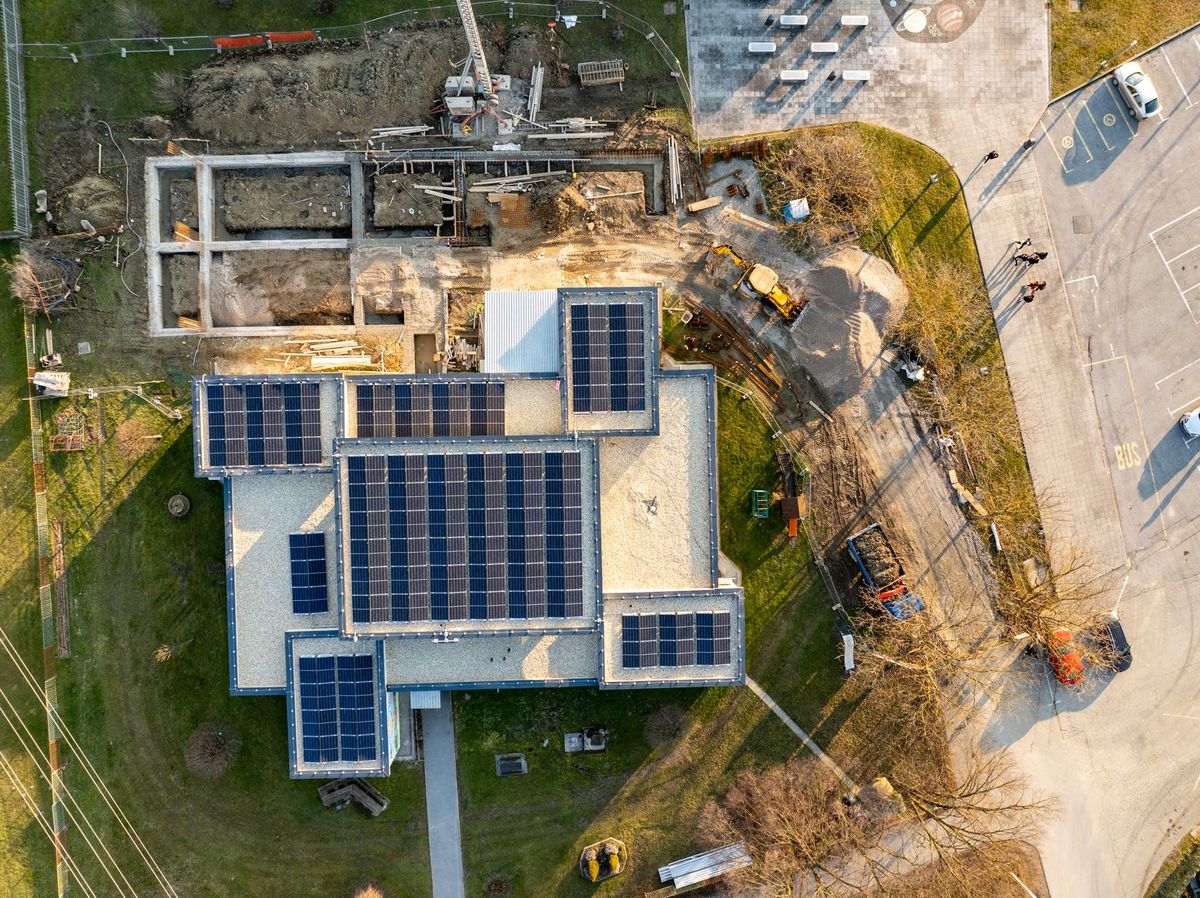
A solar-ready zone on the roof. This is an unobstructed area oriented within 110 to 270 degrees of true north (essentially south-facing) that's at least 300 square feet. The zone must be free of obstructions like vents, pipes, chimneys, and dormers, and it needs to be structurally capable of supporting the additional dead load of solar panels — typically 3 to 5 pounds per square foot.
A designated pathway for conduit. You need a clear route from the solar-ready zone on the roof to the electrical panel, typically through the attic and down an interior wall. Some jurisdictions require you to actually install the conduit; others just require the pathway to be identified and unobstructed on the plans.
An electrical panel with reserved capacity. The electrical panel must have a reserved space for a dual-pole circuit breaker for the future solar inverter connection. This typically means specifying a panel with 2 additional spaces beyond what the home requires, or 200-amp service with dedicated breaker space.
A capped conduit stub. Many jurisdictions require a capped conduit run from the electrical panel area to the designated solar zone on the roof. This is usually a 1-inch EMT or PVC conduit with a pull string installed.
Documentation. Builders must provide the homeowner with documentation identifying the solar-ready zone, the conduit pathway, the reserved electrical capacity, and the structural capacity of the solar-ready roof area. Some jurisdictions require this documentation to be recorded with the certificate of occupancy.
Pro tip: Don't just meet the minimum requirements — slightly exceed them. Install the conduit rather than just reserving the pathway. Use 1.5-inch conduit instead of 1-inch (it costs about $30 more and accommodates larger wire runs for higher-capacity future systems). And while you're at it, run a separate 1-inch conduit for the monitoring and communication cables that every solar system requires. The total additional cost is about $200, and it makes your homes genuinely solar-ready rather than technically compliant but practically difficult to retrofit.
The 14 States and What They Require
Let me break down where the mandates stand as of early 2026:
California has the most aggressive requirements. Since 2020, all new single-family homes must include solar panels (not just be solar-ready), with limited exceptions. The solar-ready provisions apply to multi-family buildings of three stories or fewer.
Washington State adopted solar-ready requirements in its 2021 energy code update, applying to all new residential construction. The state follows the IECC Appendix RB closely but adds a requirement for a labeled dedicated inverter location near the electrical panel.
Oregon requires solar-ready construction for all new homes as of 2023. Oregon's provisions are notable for including a battery-ready requirement — a designated location for a future battery storage system with a dedicated 240V outlet.
Colorado adopted solar-ready provisions statewide in 2024, covering single-family and low-rise multi-family. The state allows local jurisdictions to adopt stricter requirements, and Denver and Boulder have done so.
New Jersey, Maryland, Massachusetts, Vermont, Connecticut, New Mexico, Illinois, Minnesota, Maine, and Hawaii round out the list with varying levels of requirements. Some apply only to certain climate zones within the state, some exempt homes below certain square footage thresholds, and some are phased in over multiple years.
Five additional states — Virginia, Nevada, Pennsylvania, New York, and Rhode Island — have legislation in committee or executive orders directing adoption of solar-ready provisions.
The Cost Impact: Real Numbers
Let's talk about what this costs you, because the numbers are smaller than most builders expect:
Structural reinforcement for the solar-ready zone: $200 to $500. In most cases, standard roof framing with 2x6 or 2x8 rafters at 16-inch on center is already adequate for the 3 to 5 PSF additional dead load. If your roof design requires additional reinforcement, it's typically a matter of adding a few collar ties or increasing rafter size in the solar zone — not a major structural change.
Conduit installation: $300 to $600 for a capped 1-inch EMT run from roof to panel area. If the panel is on an exterior wall directly below the solar zone, costs are on the lower end. If the run requires navigating through interior walls and an attic, it's on the higher end.
Electrical panel upsizing: $100 to $300 additional cost for a panel with 2 to 4 additional breaker spaces. Many builders have already moved to 200-amp, 40-space panels as standard, which typically provides adequate reserved capacity without any additional cost.
Documentation and plan marking: $100 to $200 in additional design and documentation time.
Total additional cost per home: $700 to $1,600. That's it. For context, that's less than the cost of a single upgraded light fixture package that homeowners routinely request.
The reason the cost is so low is that solar-ready construction is fundamentally about planning and documentation, not about expensive construction changes. You're not adding systems — you're ensuring that future systems can be installed efficiently.
Pro tip: Roll the solar-ready costs into your base price rather than listing them as a line item. When buyers see "solar-ready package — $1,200" as a separate charge, they question it. When it's built into the home price, they accept it as part of the value proposition. And frankly, it is part of the value proposition — a solar-ready home is worth more at resale than one that isn't, especially in states with strong solar adoption.
Why This Matters Beyond Compliance
Even in the 36 states that don't currently have solar-ready mandates, smart builders are incorporating these provisions voluntarily. There are three compelling reasons:
Resale value. Homes with solar-ready infrastructure sell for 2% to 4% more than comparable homes without it, according to multiple appraisal studies. In a $400,000 home, that's $8,000 to $16,000 in additional value for a $1,000 investment. Show me another investment in residential construction with that kind of return.
Buyer demand. Surveys consistently show that 60% to 70% of home buyers consider solar capability an important or very important feature. Even if they don't plan to install solar immediately, they want the option. Offering solar-ready construction differentiates your homes in a competitive market.
Future-proofing. The trend toward solar-ready mandates is clearly accelerating. If you start incorporating these provisions now, you'll be ahead of the curve when your state adopts them — avoiding the scramble to update plans, retrain crews, and renegotiate with subcontractors that happens when new codes take effect.
Common Mistakes Builders Make
I've seen every version of solar-ready done wrong. Here are the mistakes to avoid:
Putting the solar zone on the wrong roof face. The solar-ready zone needs to face south (or within 110 to 270 degrees of true north). I've seen plans where the designated zone faces north or is on a steep east-facing slope that would generate minimal solar output. Code officials are starting to check this, and buyers who actually want to install solar will notice.
Running conduit that's too small. The minimum 1-inch conduit is technically compliant but barely adequate for modern solar installations, which often require multiple conductor runs for microinverter systems or battery connections. Spend the extra $30 for 1.5-inch conduit and save the homeowner a headache later.
Failing to coordinate with the roofing plan. If your solar-ready zone is covered in plumbing vents, turbine vents, and satellite dish brackets, it's not actually usable for solar installation. Coordinate the mechanical plan with the solar-ready zone to keep the designated area clear.
Ignoring the documentation requirement. Several builders in Washington State have been flagged during final inspection for failing to provide the required solar-ready documentation package to the homeowner. It's a simple deliverable — don't let it hold up your CO.
Not training your electricians. Your electrical subcontractor needs to know about the reserved panel space and the conduit requirements. A quick pre-construction conversation prevents the panel from being installed with all spaces filled and no room for the future solar breaker.
Pro tip: Create a standard "solar-ready specification sheet" that you include in every set of plans. List the solar zone location and dimensions, the conduit routing, the reserved panel capacity, and the structural capacity of the roof in the solar zone. Hand this to your framer, your roofer, and your electrician at the pre-construction meeting. Five minutes of communication prevents five hours of rework.
The Battery-Ready Addition
Oregon's inclusion of battery-ready requirements is a preview of where other states are heading. Battery storage is the complement to solar that makes the economics work — especially in states with time-of-use electricity rates or limited net metering.
Battery-ready provisions typically require a designated location for a battery system (usually a wall in the garage), a 240V outlet or junction box at that location, and adequate structural support for wall-mounted batteries (which can weigh 200 to 300 pounds).
The cost to include battery-ready provisions is minimal — about $200 to $400 per home — and it further enhances the solar-ready value proposition. If you're already running conduit for solar, adding the battery-ready provisions is a natural extension.
The Bigger Picture: Electrification and the Grid
Solar-ready construction is part of a larger trend toward building electrification and grid decentralization. As more homes generate and store their own electricity, the relationship between residential construction and the power grid is fundamentally changing.
Builders who understand this trend are positioning themselves for a future where homes are energy assets, not just energy consumers. A new home with solar-ready infrastructure, battery-ready provisions, EV charging capability, and a heat pump HVAC system is aligned with where the market — and the mandates — are heading.
The cost to include all of these provisions during initial construction is $3,000 to $5,000. The cost to retrofit them later is $15,000 to $25,000. That math alone should convince every builder to future-proof every home they build.
What to Do Right Now
If you're building in one of the 14 mandate states, compliance is non-negotiable. Review your current plans against the specific requirements in your state, update your specifications, and brief your trades.
If you're building in a non-mandate state, I'd still recommend adopting solar-ready provisions voluntarily. The cost is negligible, the market value is real, and you'll be ready when the mandate arrives in your state — because it's coming. The question isn't whether your state will adopt solar-ready requirements. The question is when.
And when it does, you'll be the builder who was already ahead of the curve, rather than the one scrambling to catch up. In this business, being proactive beats being reactive every single time.
The Installer Perspective
I spoke with three solar installation companies about what makes a home genuinely easy to install solar on versus technically compliant but practically difficult. Their feedback was consistent and actionable:
The number one frustration is conduit that's too small or routed through inaccessible spaces. A 1-inch conduit that runs through a finished attic with blow-in insulation is technically code-compliant but practically useless — the installer can't pull wire through it without disturbing the insulation and potentially damaging the vapor barrier. Running the conduit through accessible spaces, using adequate diameter, and including a pull string makes the difference between a two-hour wire pull and a two-day headache.
The second frustration is roof obstructions in the solar-ready zone. Plumbing vents, exhaust fans, satellite dish brackets, and decorative elements that encroach on the designated solar area reduce the usable space and create shading issues that reduce system performance. Coordinate your mechanical plan to keep the solar zone genuinely clear.
The third frustration is inadequate structural documentation. Solar installers need to know the rafter spacing, rafter size, and roof sheathing thickness to design their mounting system. When the solar-ready documentation includes this structural information, the installer can design the system without a site visit, reducing the sales cycle and the installation cost.
Pro tip: Invite a local solar installer to review your solar-ready specifications before you finalize them. A 30-minute conversation will identify practical issues that code compliance alone won't catch. The installer's feedback will make your homes genuinely solar-ready — not just technically compliant — and that difference matters to the homeowner who actually wants to install solar three years after they move in. A home that's easy to add solar to is worth more than one that merely allows it.
Frequently Asked Questions
How much does solar ready construction requirements cost in 2026?
According to the latest industry data, solar ready construction requirements is showing notable trends in 2026. Current figures indicate $30 m, which represents a significant benchmark for contractors and developers planning projects this year. Regional variations apply, so checking local market conditions remains essential for accurate budgeting.
What states have the most solar ready construction requirements activity?
The geographic landscape for solar ready construction requirements is shifting in 2026. Data indicating $200, underscores the importance of market selection for contractors seeking growth. Western and southeastern states continue to attract disproportionate investment relative to their population share.
How does solar ready construction requirements compare to last year?
Year-over-year comparisons for solar ready construction requirements show meaningful change. The figure of $200 from current data represents a shift that contractors need to account for in their planning and bidding strategies. Historical trend analysis suggests this trajectory may continue through the end of the year.