A single hour of downtime at a Tier III data center costs an average of $740,000 according to the Uptime Institute's 2025 outage analysis, and a fire that trips the power without destroying a single server can still wipe out a quarter-million dollars before the smoke clears. That math is why fire protection inside a hyperscale build now runs $8 to $25 per square foot in protected white-space areas, a line item that didn't exist at that scale a decade ago. I've inspected enough electrical rooms to know that the firefighting strategy inside these buildings has almost nothing to do with the water-and-sprinkler approach you'd see in a warehouse, and the code stack behind it is dense.
Data centers are governed by a stack of NFPA standards that most general contractors never touch: NFPA 75 for information technology equipment, NFPA 76 for telecommunications facilities, NFPA 2001 for clean-agent systems, and the relatively new NFPA 855 for stationary energy storage. Get the interaction between those four documents wrong and you either fail your local AHJ (authority having jurisdiction) inspection or, worse, you build a room where the suppression system can't save the equipment or the people working in it. Roughly 12% of data center insurance claims involve electrical fires per FM Global loss data, so this is not a paper exercise.
Detection Comes First: VESDA and NFPA 76
You cannot suppress a fire you haven't detected, and in a room moving 30,000 cubic feet of air per minute through CRAC units, smoke gets diluted and swept away before a ceiling-mounted spot detector ever sees it. That airflow problem is why standard photoelectric detectors are nearly useless in white space and why aspirating smoke detection is the baseline.
How aspirating smoke detection works
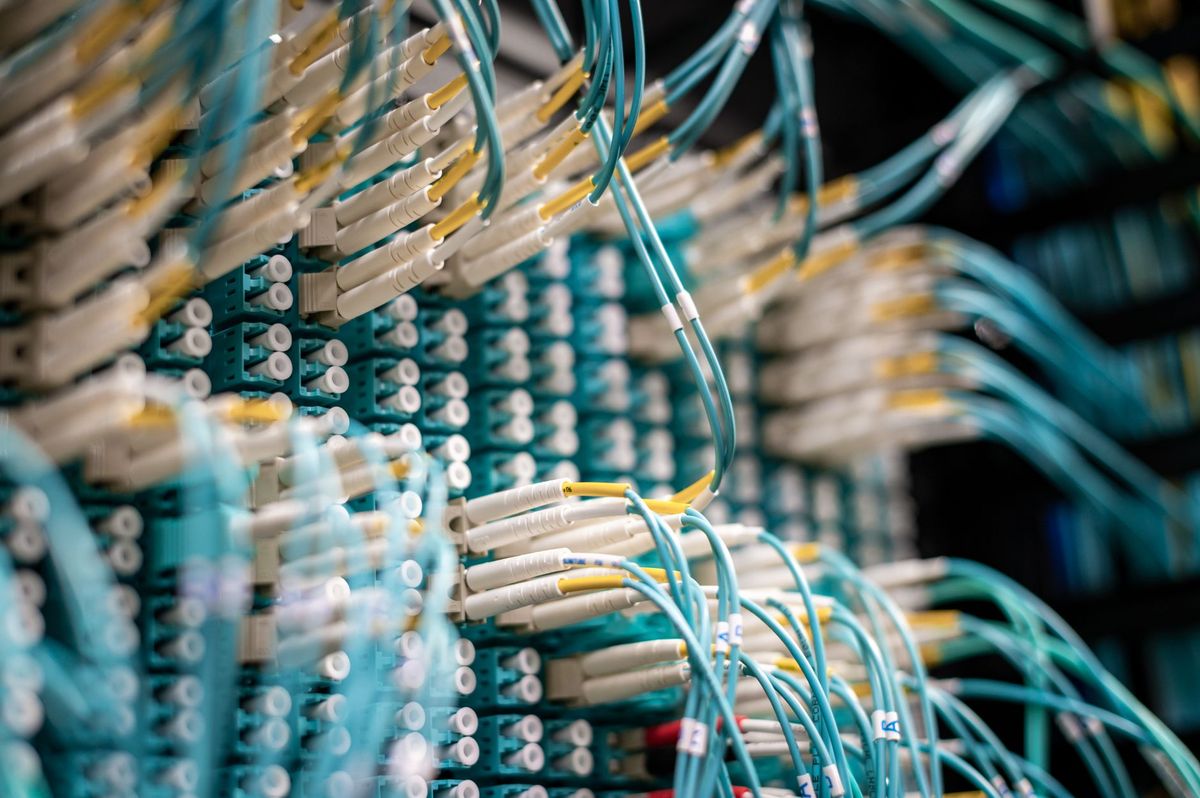
VESDA (Very Early Smoke Detection Apparatus) and competing aspirating systems pull air samples continuously through a network of bored pipes, running that sample past a laser detection chamber that can register smoke at 0.005% obscuration per foot. A spot detector typically alarms at 1.5% to 3% obscuration, so an aspirating system is detecting combustion products roughly 100 to 1,000 times earlier. That early warning window matters because it lets a building operator investigate a hot connector before it ignites, often hours before any suppression agent would need to discharge. A typical aspirating detection install for a 10,000-square-foot data hall runs $40,000 to $90,000 depending on pipe network density.
What NFPA 76 requires
NFPA 76, the standard for fire protection of telecommunications facilities, mandates very early warning fire detection (VEWFD) in critical spaces and sets the sampling-port spacing and sensitivity tiers. NFPA 76 Annex material recommends two-stage detection — an alert stage and an action stage — so that staff respond to the first sign of trouble rather than waiting for a full alarm. NFPA 72, the National Fire Alarm and Signaling Code, governs the wiring, supervision, and notification side. The detection layer is the cheapest insurance in the whole building: it represents maybe 8% to 12% of the total fire-protection budget but prevents the events that trigger the expensive 90% of the system.
If you are trying to get onto one of these jobs, start with the firms that hold most of them: our ranking of the top data center general contractors lists who they are and how they pick subs.
Suppression Agents: FM-200, Novec 1230, and Inert Gas
Once detection confirms a fire in an energized electrical space, you cannot dump water on live servers worth $30,000 to $50,000 per rack. Clean agents — gaseous suppressants that leave no residue and are safe (within limits) for occupied spaces — are the standard answer, and they're governed by NFPA 2001, Standard on Clean Agent Fire Extinguishing Systems.
Chemical agents: FM-200 and Novec 1230
FM-200 (HFC-227ea) has been the workhorse for 25 years. It suppresses fire by absorbing heat at a design concentration of about 7%, discharges in under 10 seconds, and a system protecting a 5,000-square-foot hall costs roughly $5 to $12 per square foot installed. Its problem is environmental: FM-200 has a global warming potential (GWP) of about 3,350, and the EPA's AIM Act phasedown of HFCs is pushing the industry away from it.
Novec 1230 (FK-5-1-12), a fluorinated ketone, was engineered as the replacement. It has a GWP of less than 1, an atmospheric lifetime of about five days versus FM-200's 33 years, and a wide safety margin — its no-observed-adverse-effect level (NOAEL) is 10% against a design concentration around 4.5% to 5.5%. It costs about 15% to 30% more per pound of agent than FM-200, but with HFC restrictions tightening, most 2026 specs I review default to it.
Inert gas systems: IG-541
Inert gas agents like IG-541 (a blend of 52% nitrogen, 40% argon, 8% CO2 sold as Inergen) work differently — they suppress by reducing oxygen from the normal 20.9% down to roughly 12% to 14%, low enough to stop combustion but high enough for a person to safely evacuate within the NFPA 2001 exposure limits. Inert gas has zero GWP and zero ozone-depletion potential, which makes it the long-term-safe choice, but it requires far more storage: an IG-541 system needs 8 to 16 times the cylinder volume of a Novec system, so you're dedicating an entire room to high-pressure bottles at 200 to 300 bar. That footprint penalty pushes installed cost to $10 to $25 per square foot.
| Agent | Installed cost/sq ft | Pros | Cons |
|---|---|---|---|
| FM-200 (HFC-227ea) | $5–$12 | Fast knockdown, small footprint, proven | GWP 3,350, HFC phasedown, being replaced |
| Novec 1230 | $7–$15 | GWP <1, wide safety margin, small footprint | 15–30% pricier agent, fluorinated chemistry scrutiny |
| IG-541 (Inergen) | $10–$25 | Zero GWP, no residue, natural gases | Huge cylinder storage, oxygen drop, higher cost |
One safety note that gets overlooked: NFPA 2001 requires pneumatic discharge alarms and pre-discharge time delays (typically 30 seconds) so personnel can evacuate before the agent dumps, plus lockout/abort stations. Room over-pressurization from rapid agent discharge has cracked walls and blown out doors when the required pressure-relief vents were undersized — calculate those vents to the agent quantity, not by eyeballing.
Where pre-action sprinklers still belong
Clean agent protects the white space, but NFPA 75 still requires water-based protection in many areas of the building, and IBC occupancy rules mandate sprinklers throughout most large structures. The answer in non-IT areas — electrical rooms, mechanical spaces, offices, and as a backup in some data halls — is a double-interlock pre-action sprinkler system. The pipe sits dry, and water only enters after both a detection event and a sprinkler head fusing, which cuts accidental-discharge risk to near zero. This layered approach connects directly to the power-distribution challenges I covered in why every data center electrical system runs hot — the same rooms drawing 50 to 100 megawatts are the rooms with the highest ignition risk.
The Lithium-Ion Problem and NFPA 855
The newest and most dangerous fire problem in data centers isn't in the server racks — it's in the batteries. Facilities have shifted from flooded lead-acid UPS banks to lithium-ion, and increasingly to dedicated battery energy storage systems (BESS) sized at 2 to 20 megawatt-hours. Lithium-ion changes the entire fire equation because of thermal runaway.
Why thermal runaway breaks clean agents
A single lithium-ion cell going into thermal runaway can hit 752°F (400°C) and vents flammable, toxic gases including hydrogen fluoride. Once one cell runs away, it cascades to neighbors, and here's the part that scares fire engineers: clean agents like Novec and FM-200 do not stop thermal runaway. They can knock down the surface flame, but the chemical reaction inside the cell generates its own oxygen, so the cells keep heating and re-igniting. UL 9540A test data shows a single 415-watt-hour cell can produce 30+ liters of flammable gas. This is a fundamentally different threat than an electrical arc fire.
What NFPA 855 demands
NFPA 855, the Standard for the Installation of Stationary Energy Storage Systems, first published in 2020 and updated through the 2023 edition, sets the rules. It caps lithium-ion installations at 50 kWh per unit and 600 kWh total in many indoor configurations without special protection, requires 3-foot spacing between units, mandates explosion control or deflagration venting per NFPA 68/69 to handle the vented gases, and requires gas detection plus an emergency cooling water supply. The big-room takeaway: you cannot protect a BESS with a clean-agent flood alone. You need water for cooling, gas detection for the hydrogen and HF, and mechanical ventilation sized to clear an explosive atmosphere. The International Fire Code (IFC) Section 1207 now incorporates much of NFPA 855 by reference, so it's enforceable code in most jurisdictions, not a recommendation. Cooling-density and battery-room demands tie into the broader thermal shift I described in how liquid cooling is changing data center design.
The Specialty Fire-Protection Trade
All of this gets installed by a narrow trade that's running short-handed. Clean-agent and pre-action systems are not work a general sprinkler fitter can do off the cuff — they require manufacturer certification on the specific agent system (Kidde, Fike, Victaulic, Janus), NICET (National Institute for Certification in Engineering Technologies) certification for the designers, and detailed hydraulic and enclosure-integrity calculations.
Certifications and headcount
Designers typically hold NICET Level III or IV in Special Hazards Suppression Systems, and installers carry manufacturer factory-training cards that must be renewed every 1 to 3 years. The U.S. Bureau of Labor Statistics counts about 152,000 sprinkler fitters and fire-suppression installers nationally, growing roughly 6% through 2032, but the clean-agent specialty subset is far smaller — likely under 15,000 fully qualified technicians. Journeyman special-hazards fitters earn $38 to $62 per hour depending on local and region, with total compensation packages clearing $110,000 in major metros. That wage pressure is a direct symptom of the broader staffing crunch I detailed in the skilled-trades shortage hitting data centers.
Demand and the safety stakes
With hyperscale data center construction spending projected above $40 billion annually in the U.S., and every facility needing detection, clean agent, pre-action, and now BESS protection, demand for this trade outstrips supply by a wide margin. The integrity testing alone — NFPA 2001 requires a door-fan enclosure integrity test on every clean-agent space to confirm the room holds the agent for the required 10-minute retention time — is specialized work that fails on as many as 30% of first attempts due to unsealed cable penetrations and gaps in the floor plenum. OSHA's increased scrutiny of these sites, which I covered in OSHA's new focus on data center construction, now extends to confined-space and atmosphere hazards in agent-protected and battery rooms — a worker servicing an inert-gas room without atmospheric monitoring is exposed to an oxygen-deficient environment that OSHA's permit-required confined space standard, 29 CFR 1910.146, treats as immediately dangerous below 19.5% oxygen.
Frequently Asked Questions
What fire suppression do data centers use?
Data centers use a layered system: aspirating smoke detection (VESDA) for very early warning, clean-agent gaseous suppression (Novec 1230, FM-200, or IG-541 inert gas) in the server white space because it leaves no residue and won't damage live equipment, and double-interlock pre-action water sprinklers in electrical, mechanical, and non-IT areas. Battery rooms additionally require water cooling and gas detection under NFPA 855. Installed costs run $8 to $25 per square foot in protected areas.
Is FM-200 being banned?
FM-200 (HFC-227ea) is not outright banned, but it has a global warming potential of about 3,350 and is being phased down under the EPA's AIM Act, which mandates an 85% reduction in HFC production by 2036. Most 2026 specifications now default to Novec 1230, which has a GWP under 1, or to inert gas systems with zero GWP. Existing FM-200 systems can stay in service, but new installs increasingly avoid it.
Why can't you use clean agent on lithium-ion batteries?
Clean agents suppress fire by absorbing heat or displacing oxygen, but lithium-ion thermal runaway is a self-sustaining chemical reaction that generates its own oxygen and heat inside the cell. The agent can knock down surface flame, but cells keep heating and re-igniting. NFPA 855 requires water-based cooling, gas detection for vented hydrogen and hydrogen fluoride, and deflagration venting per NFPA 68/69 instead of relying on clean agent alone.
What is a door-fan integrity test?
NFPA 2001 requires an enclosure integrity test, performed with a calibrated door fan, on every clean-agent protected room. It pressurizes and depressurizes the space to calculate leakage and confirm the room will hold the suppression agent at design concentration for the required retention time, typically 10 minutes. Roughly 30% of rooms fail the first test because of unsealed cable penetrations, dampers, and floor-plenum gaps that must be sealed and retested.
Are clean agents safe for people in the room?
Within design limits, yes. Novec 1230 has a no-observed-adverse-effect level of 10% against a design concentration around 5%, giving a wide safety margin. Inert gas systems lower oxygen to roughly 12 to 14%, which NFPA 2001 limits to brief, survivable exposure for evacuation. Systems include 30-second pre-discharge alarms and abort stations. Inert-gas rooms are treated as oxygen-deficient confined spaces under OSHA 29 CFR 1910.146 and require atmospheric monitoring before entry.
What certifications do clean-agent installers need?
Designers typically hold NICET Level III or IV certification in Special Hazards Suppression Systems, and installers carry manufacturer factory-training credentials specific to the agent system brand (Kidde, Fike, Janus, Victaulic), renewed every one to three years. The work requires hydraulic flow calculations, enclosure integrity analysis, and coordination with NFPA 72 detection and NFPA 855 battery requirements — well beyond standard sprinkler-fitter scope.
Your Action Item for This Week
Pull the fire-protection spec section (Division 21) on your nearest data center or mission-critical project and confirm three things: that the clean-agent rooms have a scheduled NFPA 2001 door-fan integrity test before turnover, that any battery or UPS room is specified to NFPA 855 with gas detection and cooling water rather than clean agent alone, and that the aspirating detection meets NFPA 76 two-stage VEWFD sensitivity. If any of those three are missing or vague, flag it to the AHJ and the MEP engineer in writing now — fixing a failed integrity test or an under-protected battery room after drywall is closed costs 5 to 10 times what it costs to correct on the spec sheet today.