Quest Diagnostics Drug Testing Index data reveals that the construction industry's overall drug test positivity rate reached 23.4% in the most recent annual report — the highest rate of any major industry sector and nearly double the all-industry average of 12.8%. The most commonly detected substance was marijuana (THC) at 14.2%, followed by amphetamines at 4.8%, opioids at 2.6%, and cocaine at 1.8%.
The data is clear — construction has a drug testing problem, but it may not be the problem that most contractors think it is. The rising positivity rate is driven overwhelmingly by marijuana, which is now legal for recreational use in 24 states plus DC and for medical use in 38 states. The question confronting contractors in 2026 is no longer whether workers use marijuana — it is whether marijuana testing policies designed for a prohibition-era legal framework still make sense when they eliminate nearly one in four potential hires from an industry that cannot fill its positions.
The Numbers: What Drug Tests Are Finding
Quest Diagnostics, which processes approximately 11 million workplace drug tests annually including over 1.2 million in the construction sector, provides the most comprehensive data on positivity rates:
Construction industry drug test positivity by substance (most recent year):
- Marijuana (THC): 14.2% positive — up from 7.8% five years ago
- Amphetamines (including methamphetamine): 4.8% positive — stable over 5 years
- Opioids (prescription and illicit): 2.6% positive — down from 4.1% five years ago
- Cocaine: 1.8% positive — relatively stable
- Benzodiazepines: 0.8% positive — stable
- PCP: 0.2% positive — stable
Key trends:
- Overall positivity: 23.4% (up from 16.6% five years ago)
- The increase is almost entirely attributable to marijuana
- Opioid positivity has actually declined by 37% — a genuine public health success story driven by prescribing reforms and treatment access
- Methamphetamine positivity varies dramatically by region — highest in Western states at 7.2% and lowest in Northeastern states at 2.1%
Testing type matters:
- Pre-employment tests: 26.8% positive — highest rate because applicants have not been screened before
- Random tests: 18.2% positive — lower because current employees know they are subject to testing
- Post-accident tests: 31.4% positive — highest of all, though causation is difficult to establish
- Reasonable suspicion tests: 42.6% positive — these are triggered by observed behavior, so high positivity is expected
Safety note: OSHA does not mandate drug testing, but OSHA 29 CFR 1926.20(a) requires employers to maintain safe working conditions. Post-accident drug testing has come under OSHA scrutiny — in 2016, OSHA issued guidance (later partially withdrawn) suggesting that automatic post-accident testing could constitute retaliation by discouraging injury reporting. The current OSHA position is that blanket post-accident testing must be applied consistently and cannot be used selectively to punish workers who report injuries. Contractors should consult legal counsel on their post-accident testing policies.
The Marijuana Paradox: Legal but Testable
The central tension in construction drug testing is marijuana. Consider these simultaneous realities:
Legal landscape:
- 24 states plus DC have legalized recreational marijuana
- 38 states allow medical marijuana
- No federal legalization — marijuana remains Schedule I under the Controlled Substances Act
- Federal contractors and DOT-regulated employees remain subject to marijuana testing regardless of state law
Workforce impact:
- 14.2% of construction workers test positive for THC
- In states with recreational legalization, the construction positivity rate for THC is 18.6%
- In states without legalization, the rate is 8.4%
- Marijuana is detectable in standard urine tests for 3-30 days after use, meaning positive tests do not indicate current impairment
Recruitment impact:
- In an industry with approximately 500,000 unfilled positions, rejecting 14-18% of applicants for marijuana use represents a significant constraint on talent acquisition
- Industry surveys show that 34% of contractors have had to relax marijuana testing policies to maintain adequate staffing
- 62% of contractors report that marijuana testing is their biggest obstacle to filling entry-level positions
The paradox is clear: construction needs workers, marijuana use is increasingly legal and common, but many contractors are bound by policies — or believe they are bound by policies — that exclude a large and growing pool of potential hires.
Who Must Test: Regulatory Requirements
Understanding which drug testing requirements are mandatory versus voluntary is essential:
DOT-mandated testing (49 CFR Part 40): Applies to employees in safety-sensitive positions regulated by the Department of Transportation. In construction, this primarily covers:
- CDL holders (commercial vehicle drivers) — covered under FMCSA regulations
- Pipeline workers — covered under PHMSA regulations
- Workers on federal transit projects — covered under FTA regulations
DOT testing is a 5-panel test (marijuana, cocaine, amphetamines, opioids, PCP) and cannot be modified by employers. Marijuana testing is mandatory regardless of state law. No exceptions.
Federal contractor requirements: The Drug-Free Workplace Act of 1988 (41 U.S.C. Chapter 81) requires federal contractors to maintain drug-free workplace policies but does not explicitly require drug testing. However, many federal contract specifications include testing requirements, and agencies like the Department of Defense, Department of Energy, and Nuclear Regulatory Commission have specific testing mandates for their contractors.
State requirements:
- Several states (including California, Nevada, and New York) have enacted laws prohibiting pre-employment marijuana testing for most positions, with exceptions for safety-sensitive roles
- Other states (like Texas, Florida, and Indiana) have drug-free workplace programs that provide workers' compensation premium discounts for employers who test
- The patchwork of state laws creates compliance complexity for multi-state contractors
Voluntary testing: Outside of DOT, federal contract, and specific state mandates, most construction drug testing is voluntary — implemented as a matter of company policy, client requirement, or insurance condition. This means many contractors have more flexibility than they realize to modify marijuana policies.
The Shift: How Contractors Are Adapting
Industry surveys reveal a significant evolution in construction drug testing practices:
Policy changes since 2020:
- 34% of contractors have eliminated pre-employment marijuana testing (up from 8% in 2020)
- 22% have moved from urine-based THC testing to oral fluid testing (which detects recent use within 24-48 hours rather than use within the past 30 days)
- 18% have eliminated random marijuana testing while maintaining testing for other substances
- 12% have adopted "impairment-based" policies that focus on observable behavior rather than test results
What contractors are keeping:
- 96% maintain testing for amphetamines, opioids, cocaine, and PCP regardless of any marijuana policy changes
- 94% maintain DOT-required testing for CDL holders and other covered positions
- 88% maintain post-accident testing (though many have narrowed criteria to focus on serious incidents)
- 82% maintain reasonable-suspicion testing triggered by supervisor observation
The insurance factor: Workers' compensation insurers play a significant role in drug testing decisions:
- In states with drug-free workplace programs (like Florida, Georgia, and Tennessee), employers who test receive premium discounts of 5-10%
- Many insurers will deny or reduce claims if a worker tests positive after an on-the-job injury
- Some insurers have begun distinguishing between marijuana and other substances in their policies, but this is not yet widespread
Methamphetamine: The Substance That Actually Impairs
While marijuana dominates the testing debate, methamphetamine represents a more serious safety concern that receives less attention:
Meth positivity in construction:
- Western states: 7.2% — driven by regional availability and price
- Midwest states: 5.4%
- Southern states: 3.8%
- Northeastern states: 2.1%
Unlike marijuana, methamphetamine:
- Directly impairs judgment, coordination, and decision-making during use
- Can cause psychosis, aggression, and hallucinations
- Creates crash periods of extreme fatigue and impaired function
- Is associated with significantly higher accident rates
BLS data shows that construction workers who test positive for methamphetamine are involved in recordable incidents at 3.8x the rate of workers who test negative for all substances. For comparison, workers who test positive only for THC show no statistically significant difference in incident rates compared to workers who test negative.
Safety note: Impairment is the safety concern — not the presence of a metabolite in a urine sample from use that may have occurred weeks ago. Under OSHA 29 CFR 1926.20(b)(4), employers must provide frequent and regular inspections of jobsites for safety compliance. Observant supervisors trained in impairment recognition are more effective at preventing impairment-related incidents than periodic urine tests. Every foreman and superintendent should know the signs of stimulant impairment (hyperactivity, dilated pupils, excessive talking, paranoia) and depressant impairment (slowed reactions, slurred speech, coordination problems, drowsiness).
Oral Fluid Testing: The Emerging Compromise
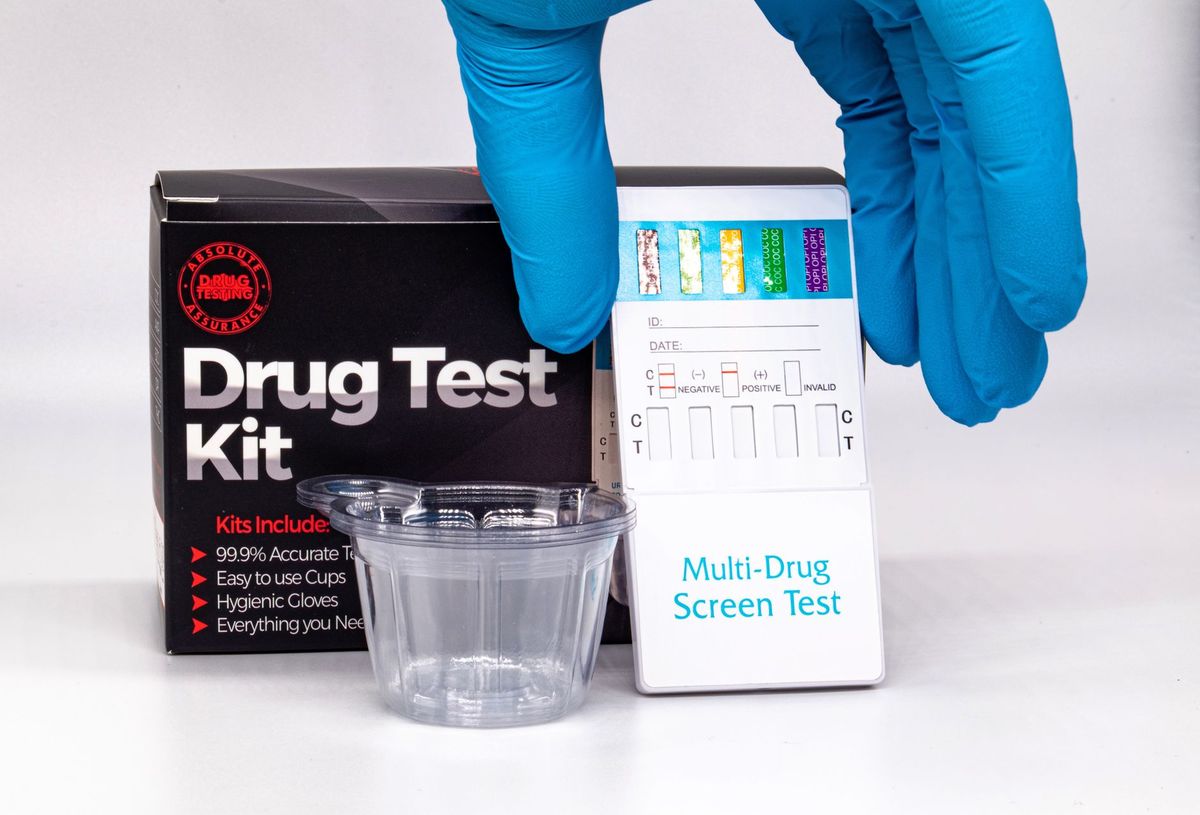
A growing number of construction contractors are switching from urine testing to oral fluid (saliva) testing as a compromise between safety concerns and workforce accessibility:
Oral fluid testing advantages:
- Detects recent use (within 24-48 hours) rather than historical use (up to 30 days for urine THC)
- More closely correlates with potential impairment — if a worker used marijuana Saturday night, they will likely test negative Monday morning
- Harder to cheat — samples are collected under direct observation without the privacy concerns of observed urine collection
- Faster results — point-of-care devices provide preliminary results in 10-15 minutes
Oral fluid testing limitations:
- Not yet accepted for DOT testing (though FMCSA is developing oral fluid testing guidelines)
- Shorter detection window for all substances means some regular users may avoid detection
- Higher cost per test — approximately $55-75 for oral fluid vs. $30-50 for urine
- Less established in case law — some employers are uncertain about legal defensibility
The compromise: oral fluid testing for THC essentially creates a "24-48 hour rule" — workers who use marijuana on their own time but not in the day or two before work will pass the test. This aligns with the concept of off-duty conduct in legal marijuana states while still detecting recent use that could indicate impairment risk.
Building a 2026 Drug Testing Policy
For contractors developing or updating their drug testing policies, consider this framework:
Mandatory elements (non-negotiable):
- DOT-mandated testing for all covered positions (CDL holders, pipeline workers, etc.)
- Federal contract-required testing per project specifications
- Reasonable-suspicion testing with trained supervisors
- Post-accident testing for incidents meeting defined severity thresholds
Recommended elements:
- Pre-employment testing for all substances, with consideration of oral fluid testing for marijuana
- Random testing at industry-standard rates (typically 25-50% of workforce annually)
- Return-to-duty testing after positive results with SAP (Substance Abuse Professional) clearance
Policy decisions requiring legal and insurance review:
- Whether to test for marijuana in recreational-legal states
- Whether to adopt oral fluid testing as the primary method
- Whether to maintain, modify, or eliminate pre-employment marijuana testing
- How to handle medical marijuana cardholders
Employee assistance provisions:
- Partnering with SAPs for evaluation and treatment referrals
- Providing second-chance agreements for non-DOT employees who test positive and complete treatment
- EAP (Employee Assistance Program) access for substance abuse counseling
The data is clear — the 23.4% positivity rate in construction reflects a workforce that includes significant marijuana use, persistent methamphetamine problems in some regions, and declining but still concerning opioid use. Smart contractors will develop nuanced policies that address genuine safety risks while avoiding the elimination of qualified workers for conduct that is legal and does not impair job performance. In an industry with 500,000 unfilled positions, the luxury of zero-tolerance policies that disqualify a quarter of the available workforce is one that fewer and fewer contractors can afford.
Looking Ahead: The Evolving Testing Landscape
The construction drug testing landscape will continue to evolve as marijuana legalization expands, impairment detection technology improves, and workforce demographics shift. Several developments are worth monitoring:
Oral fluid testing standardization: The Substance Abuse and Mental Health Services Administration (SAMHSA) is developing federal workplace oral fluid testing guidelines. Once finalized, these guidelines will provide a standardized framework that may replace urine testing as the default method for non-DOT construction testing. Standardization will increase employer confidence in oral fluid testing and likely accelerate adoption.
Impairment detection technology: Multiple companies are developing technology-based impairment detection tools — cognitive testing apps, eye-tracking devices, and reaction-time measurement systems — that assess current functional capacity rather than past substance use. These tools are in early adoption stages but could fundamentally change the testing paradigm from "what did you use?" to "can you work safely right now?"
Federal marijuana policy: Congressional activity on federal marijuana rescheduling or descheduling could dramatically change the testing landscape. If marijuana is removed from Schedule I, DOT testing requirements may be modified, and employer testing obligations would shift significantly. Contractors should monitor federal legislative activity and prepare contingency policies for rapid implementation if federal marijuana policy changes.
The data is clear — the 23.4% positivity rate reflects a workforce reality that rigid testing policies cannot change. The question for contractors is not whether workers use substances — they do, at rates consistent with the general population — but whether testing policies effectively identify impairment risk while preserving access to the workforce the industry desperately needs.
Related Reading
- Commercial Vacancy Rates Hit 19.4% — How Contractors Are Adapting
- I've Framed 400 Houses — Here's What Changed in the Last 5 Years
Frequently Asked Questions
What is the average salary for construction drug testing rates?
Federal and state data confirm that construction drug testing rates continues to be a major factor in 2026 construction planning. The latest available figure of 23.4% provides a useful baseline, though actual costs vary by region, project scope, and market conditions. Contractors should request updated quotes from suppliers and subcontractors before finalizing bids.
How has construction drug testing rates changed in the last 5 years?
Market research on construction drug testing rates shows that geographic concentration matters significantly. With figures reaching 12.8% in key markets, the opportunities are substantial but location-dependent. States with strong population growth and infrastructure investment tend to see the highest activity levels.
What states have the highest construction drug testing rates?
The trajectory for construction drug testing rates tells an important story when viewed against historical benchmarks. With the latest data showing 14.2%, the trend has clear implications for project feasibility, bidding accuracy, and resource allocation across the construction sector.