America's water infrastructure is failing at an accelerating rate, and the numbers tell a different story than most people realize. According to the American Water Works Association (AWWA), the nation experiences approximately 250,000 water main breaks per year — roughly one every two minutes. The direct cost of emergency repairs, property damage, and water loss from these breaks totals an estimated $2.6 billion annually, and that figure doesn't capture the indirect costs of traffic disruption, boil-water advisories, business interruption, and the long-term economic drag of deferred infrastructure investment.
The replacement backlog is staggering. The AWWA's 2025 State of the Water Industry Report estimates that replacing the nation's aging water distribution infrastructure will cost $1.7 trillion over the next 25 years — roughly $68 billion per year in sustained capital investment. Current spending on water main replacement and rehabilitation runs approximately $18 to $22 billion per year, leaving an annual shortfall of $46 to $50 billion. At the current replacement rate, the average water main in America will be replaced every 200 years — far beyond the 75 to 100-year design life of most pipe materials.
For construction contractors specializing in underground utility work, this backlog represents a generational market opportunity, but one that requires understanding the engineering, regulatory, and funding dynamics that drive municipal water infrastructure investment.
The Aging Pipe Problem
The age profile of America's water distribution system is the root cause of the water main break crisis. Approximately 35% of the nation's 2.2 million miles of water distribution pipe is over 50 years old, and roughly 15% is over 75 years old. The oldest pipes — predominantly cast iron installed between 1880 and 1950 — are well past their expected service life and breaking at rates far exceeding younger pipe vintages.
Break rates by pipe material and age illustrate the escalating problem. Unlined cast iron pipe installed before 1930 has an average break rate of 35 to 50 breaks per 100 miles per year — five to seven times the overall national average. Ductile iron pipe installed in the 1960s through 1980s is now entering its elevated-risk period, with break rates increasing from a baseline of 5 to 7 breaks per 100 miles per year to 12 to 18 breaks per 100 miles as pipe ages past 50 years. Asbestos cement (AC) pipe, which was widely used from the 1940s through the 1970s due to its low cost and corrosion resistance, accounts for an estimated 14% of all water distribution pipe nationally and is now experiencing rapidly increasing failure rates as the cement matrix deteriorates. PVC pipe installed since the 1970s has generally performed well, with break rates of 2 to 4 breaks per 100 miles per year, though early-generation PVC (pre-1980 manufacture) is showing higher-than-expected failure rates in some regions.
The geographic distribution of aging pipe largely follows the history of American urbanization. Cities in the Northeast and Midwest — where water systems were built earliest — face the most severe pipe age challenges. Boston's water distribution system has an average pipe age of 68 years, with some mains dating to the 1850s. Chicago has approximately 4,000 miles of water mains, with an average age exceeding 60 years. Philadelphia's system includes cast iron mains from the 1820s that are still in service — nearly 200 years old.
The Cost of Doing Nothing
The economic case for accelerated water main replacement is compelling when you examine the full cost of the status quo. Emergency water main break repairs cost utilities an average of $5,000 to $15,000 per break for small-diameter pipes (6 to 8 inches) and $50,000 to $200,000 or more for transmission mains (16 inches and larger). But the direct repair cost is just the beginning.
Water loss from aging distribution systems — known as non-revenue water — represents an enormous economic drain. AWWA estimates that American water utilities lose an average of 16% of treated water to leaks, breaks, and unmetered connections, equivalent to approximately 6 billion gallons per day of treated drinking water that is produced but never delivered to customers. At an average production cost of $3.50 to $5.00 per thousand gallons, this lost water represents an economic waste of $7.5 to $11 billion per year in treatment, pumping, and chemical costs alone.
Property damage from water main breaks adds another dimension to the economic cost. The Insurance Information Institute reports that water damage claims from utility infrastructure failures average $12,000 to $15,000 per claim, with thousands of claims filed annually. In dense urban areas, a single transmission main break can cause millions of dollars in property damage — the July 2023 break of a 48-inch transmission main in downtown Baltimore caused an estimated $18 million in property and infrastructure damage.
The public health dimension is equally critical. Every water main break creates a potential pathway for contamination to enter the distribution system. While most breaks don't result in contamination events, the cumulative risk increases as break rates rise. The EPA's most recent Drinking Water Infrastructure Needs Survey and Assessment identified $625 billion in total drinking water infrastructure needs over 20 years, with transmission and distribution pipe replacement accounting for roughly 60% of the total.
Current Replacement Programs and Spending
Despite the enormous backlog, water main replacement activity is accelerating — driven by a combination of federal funding, state revolving fund capitalization, and increasing willingness of local governments to raise water rates to fund infrastructure investment.
Federal funding through the IIJA includes $15 billion in supplemental capitalization for State Drinking Water Revolving Funds and $15 billion for lead service line replacement. The Drinking Water SRF funding is supporting water main replacement projects in every state, with approximately 40% of the supplemental capitalization directed toward distribution system improvements including pipe replacement. The lead service line replacement program, while specifically targeted at service lines rather than water mains, is driving companion water main replacement in many communities — when you're digging up a street to replace lead service lines, it makes economic sense to replace the aging water main in the same trench.
State Drinking Water Revolving Fund (DWSRF) programs provide the primary federal-state funding mechanism for water infrastructure, offering below-market-rate loans and increasingly, principal forgiveness grants for disadvantaged communities. Total annual DWSRF capitalization (federal plus state match) exceeds $6 billion per year through the IIJA supplemental period, with water main replacement projects typically accounting for 35 to 45% of loan volume.
Municipal bond financing remains the largest single source of water main replacement funding. Water utility revenue bonds and general obligation bonds financed approximately $12 to $14 billion in water distribution capital projects in 2025, with the strong municipal bond market enabling utilities to borrow at favorable rates for long-lived infrastructure assets.
Rate-funded capital programs — where water main replacement is funded directly from water rates without borrowing — are growing as utilities recognize the long-term cost advantages of pay-as-you-go capital funding versus debt service. Large utilities like Denver Water, Portland Water Bureau, and the Metropolitan Water District of Southern California have established dedicated rate-funded pipe replacement programs that sustain replacement activity regardless of bond market conditions.
Construction Methods and Technology
Water main replacement construction has evolved significantly from the traditional open-cut-and-replace approach, with trenchless technologies now handling a growing share of replacement work.
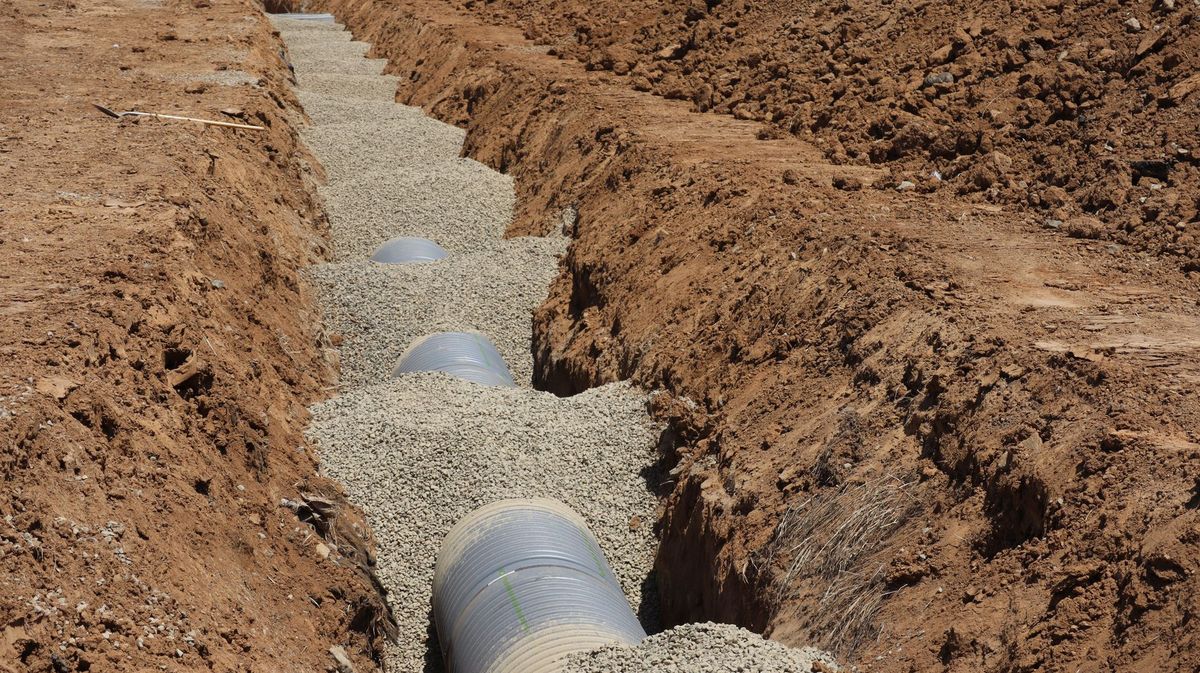
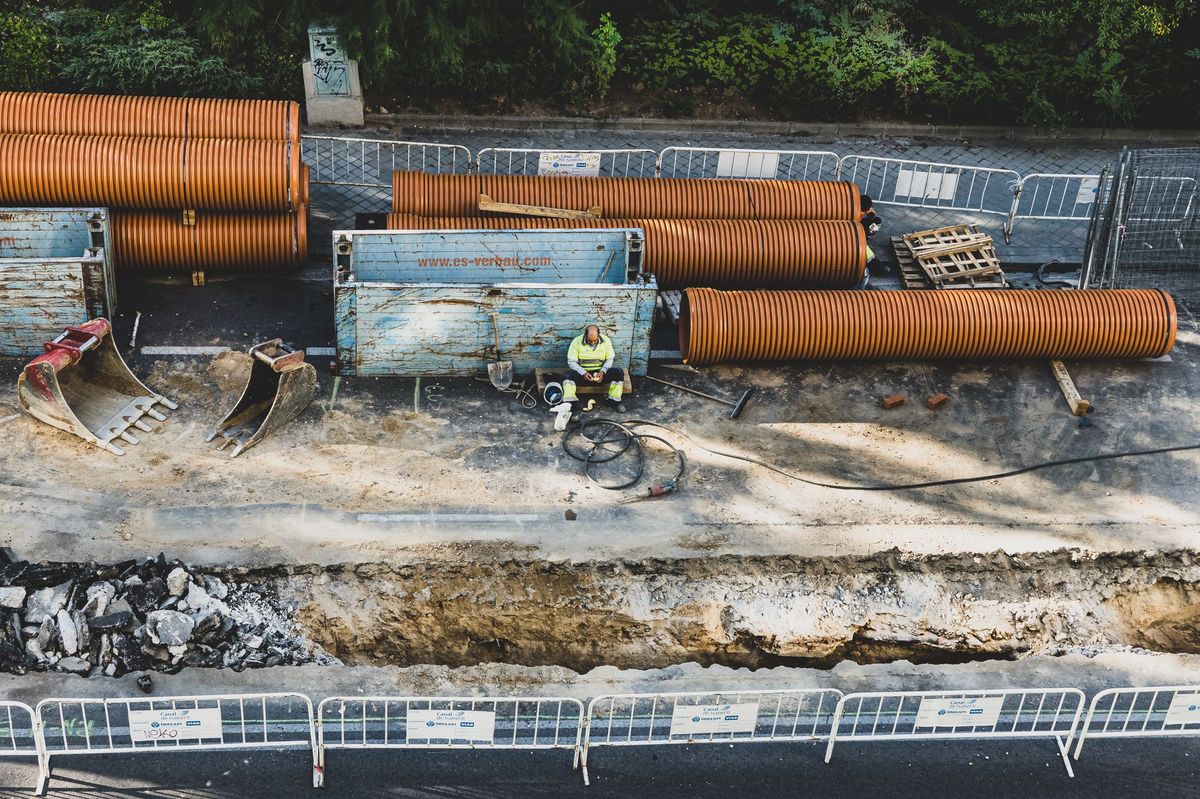
Open-cut replacement remains the dominant method, accounting for approximately 65 to 70% of water main replacement projects by value. The process involves excavating a trench along the pipe alignment, removing the old pipe, installing new pipe (most commonly ductile iron or PVC/PVCO for distribution mains), backfilling with select material and compacting in lifts, and restoring the road surface. Open-cut replacement costs range from $150 to $400 per linear foot for 6 to 12-inch distribution mains in urban areas, depending on depth, soil conditions, traffic control requirements, and surface restoration complexity. Costs increase substantially for larger-diameter transmission mains and for work in congested urban corridors with extensive existing utility conflicts.
Pipe bursting is the leading trenchless replacement method for water mains in the 4 to 16-inch diameter range. The technique uses a pneumatic or hydraulic bursting head pulled through the existing pipe, fragmenting the old pipe outward while simultaneously pulling in a new HDPE or restrained-joint PVC pipe. Pipe bursting costs typically range from $100 to $250 per linear foot — often 20 to 40% less than open-cut replacement — with the additional benefits of minimal surface disruption, shorter construction duration, and reduced traffic control requirements. The method is particularly well-suited for residential streets where minimizing disruption to homeowners and traffic flow is a priority.
Horizontal directional drilling (HDD) is used for water main installation in situations where surface disruption must be avoided entirely — crossing under highways, railroads, rivers, and environmentally sensitive areas. HDD costs for water main installation range from $200 to $500 per linear foot depending on pipe diameter, bore length, and soil conditions.
Cured-in-place pipe (CIPP) lining provides a rehabilitation alternative to full replacement for pipes that are structurally sound but experiencing corrosion or joint deterioration. CIPP lining costs approximately $50 to $150 per linear foot and extends pipe service life by an estimated 50 years. However, CIPP is not suitable for pipes with severe structural deficiencies, significant diameter loss from tuberculation, or alignment defects.
What This Means for Your Crew
The water main replacement market offers several attractive characteristics for underground utility contractors. The work is recession-resistant — water utilities must maintain service regardless of economic conditions, and the consequences of deferred maintenance (breaks, contamination events, regulatory violations) create political pressure to sustain capital programs. The projects are geographically dispersed across thousands of municipalities, reducing concentration risk. And the prevailing wage requirements on federally-funded projects ensure strong compensation for construction workers.
Key competitive factors in the water main replacement market include trenchless technology capability (pipe bursting and CIPP), as municipalities increasingly prefer trenchless methods for their lower social cost and reduced surface disruption. Firms that invest in trenchless equipment and training will have access to a growing share of the market. Additionally, water main replacement work requires adherence to AWWA standards, state plumbing codes, and utility-specific specifications — contractors must invest in understanding these requirements and maintaining certifications.
The state DOT budgets hitting record levels trend is relevant because much water main replacement occurs within highway and road rights-of-way, and DOT coordination requirements add complexity and cost to these projects. Contractors with established DOT relationships and permitting experience have an advantage.
Regional Market Analysis
Water main replacement demand varies significantly by region, driven by pipe age, soil conditions, climate, and local funding capacity.
The Northeast (New England and Mid-Atlantic states) represents the highest-density water main replacement market, with the oldest pipe networks in the country and generally strong utility financial capacity. Cities like Boston, New York, Philadelphia, and Washington, D.C. are all running multi-billion-dollar pipe replacement programs.
The Midwest faces unique challenges from highly corrosive soils and extreme freeze-thaw cycles that accelerate pipe deterioration. Chicago's water system, with over 4,000 miles of mains averaging over 60 years old, represents one of the largest single-utility replacement programs in the country at approximately $400 million per year in pipe replacement spending.
The Sunbelt states face a different challenge — rapid growth that strains systems originally sized for much smaller populations. Cities like Phoenix, Las Vegas, and Houston are simultaneously replacing aging pipe and extending systems into new development areas, creating compounding demand for water infrastructure contractors.
The West Coast faces seismic vulnerability as an additional driver of water main replacement. Los Angeles Department of Water and Power is investing over $800 million in its Water System Replacement Program, with seismic resilience upgrades as a primary driver.
Want project-specific numbers? Our free cost estimator and markup margin calculator do the math in a couple of minutes.
Frequently Asked Questions
How many water main breaks occur in the US each year?
The American Water Works Association estimates that the United States experiences approximately 250,000 water main breaks per year, or roughly one every two minutes. This figure includes both catastrophic pipe failures (full circumferential breaks) and less severe leaks and joint failures that require repair. The break rate has been increasing over time as the pipe network ages, with AWWA projecting that break rates could increase by 30 to 40% over the next decade if replacement rates are not accelerated. The direct cost of repairing these breaks is estimated at $2.6 billion annually, with total economic impact (including property damage, water loss, and disruption costs) estimated at $5 to $8 billion.
What is the most common pipe material used for water main replacement?
Ductile iron pipe (DIP) remains the most widely specified material for water main replacement in the 4 to 24-inch diameter range, accounting for approximately 50% of replacement projects by value. DIP offers high strength, long service life (100+ years expected), and established installation practices. PVC and PVCO (molecularly oriented PVC) pipe is the second most common material, gaining market share particularly in the 4 to 16-inch range due to lower material cost, corrosion resistance, and lighter weight that reduces installation labor. HDPE (high-density polyethylene) pipe is increasingly specified for trenchless installations (pipe bursting and HDD) due to its flexibility and fusion-welded joint system that creates a leak-free monolithic pipeline.
How much does water main replacement cost per foot?
Water main replacement costs vary widely based on pipe diameter, construction method, location, and site conditions. For open-cut replacement of 6 to 12-inch distribution mains in urban areas, costs typically range from $150 to $400 per linear foot, including excavation, pipe installation, backfill, compaction, and surface restoration. Trenchless pipe bursting for the same diameter range typically costs $100 to $250 per linear foot. Large-diameter transmission main replacement (24 to 48 inches) in urban corridors can cost $500 to $1,500 per linear foot or more due to the complexity of working with large pipe sizes, maintaining service during construction, and managing extensive existing utility conflicts.
What federal funding is available for water main replacement?
The primary federal funding source is the Drinking Water State Revolving Fund (DWSRF), which received an additional $15 billion in supplemental capitalization under the IIJA. DWSRF funds are available as below-market-rate loans and, for disadvantaged communities, as principal forgiveness grants (effectively free money). The Water Infrastructure Finance and Innovation Act (WIFIA) program provides low-interest federal loans for large water infrastructure projects (over $20 million), and has financed several major water main replacement programs. The Lead Service Line Replacement program ($15 billion under IIJA) funds service line replacement but often triggers companion water main replacement. The EPA's Emerging Contaminants funding ($5 billion under IIJA) can also be applied to distribution system improvements related to contaminant management. Additionally, the construction spending forecast for 2026 projects continued growth in public water infrastructure spending.
What to Watch
The water main replacement market will grow steadily for decades regardless of federal policy changes, driven by the inescapable physics of pipe deterioration. But several near-term factors will shape the pace. Watch the EPA's next Drinking Water Infrastructure Needs Survey (expected in 2027), which will update the national cost estimate and could provide political ammunition for increased federal funding. Watch municipal water rate trends — communities that raise rates to fund infrastructure will generate more construction demand, while those that defer rate increases will continue to defer maintenance. And watch the lead service line replacement program — the parallel construction activity from lead line replacement is creating both competition for underground utility crews and companion opportunities for water main replacement where streets are already being excavated.