The $42.45 billion Broadband Equity, Access, and Deployment (BEAD) Program has officially moved from planning to construction in 2026, and the numbers tell a different story than the political soundbites suggest. After three years of state planning, challenge processes, and subgrantee selection, BEAD-funded fiber construction is now active in 28 states as of Q1 2026, with another 15 states expected to begin construction by Q3 2026.
This is the largest single infrastructure construction program under the IIJA — larger than the Bridge Formula Program, larger than the airport terminal grants, and larger than any single federal construction initiative since the Interstate Highway System. For construction firms, the broadband construction boom represents a $60+ billion total market when you include state matching funds, private carrier capital expenditures triggered by BEAD, and the parallel USDA ReConnect program. The question is no longer whether BEAD construction will happen — it's whether the construction industry has the workforce, equipment, and supply chain capacity to execute at the required pace.
Where the $42 Billion Is Going
NTIA allocated BEAD funds based on each state's share of unserved and underserved broadband locations as identified by the FCC's Broadband Data Collection maps. The allocation formula produced dramatic variations: Texas received $3.31 billion (the largest allocation), while states like New Jersey received just $263 million and Connecticut $144 million.
The top 15 state allocations accounting for over 60% of total BEAD funding are: Texas at $3.31 billion, California at $1.86 billion, Virginia at $1.48 billion, Louisiana at $1.36 billion, Missouri at $1.31 billion, Michigan at $1.24 billion, Alabama at $1.23 billion, Georgia at $1.16 billion, North Carolina at $1.12 billion, Mississippi at $1.09 billion, Arkansas at $1.02 billion, Tennessee at $813 million, West Virginia at $793 million, Kentucky at $783 million, and Minnesota at $651 million.
The concentration in Southern and rural states reflects where broadband gaps are deepest — and therefore where construction activity will be heaviest. For contractors making market entry decisions, these top 15 states represent the primary opportunity zones.
Construction Scope and Scale
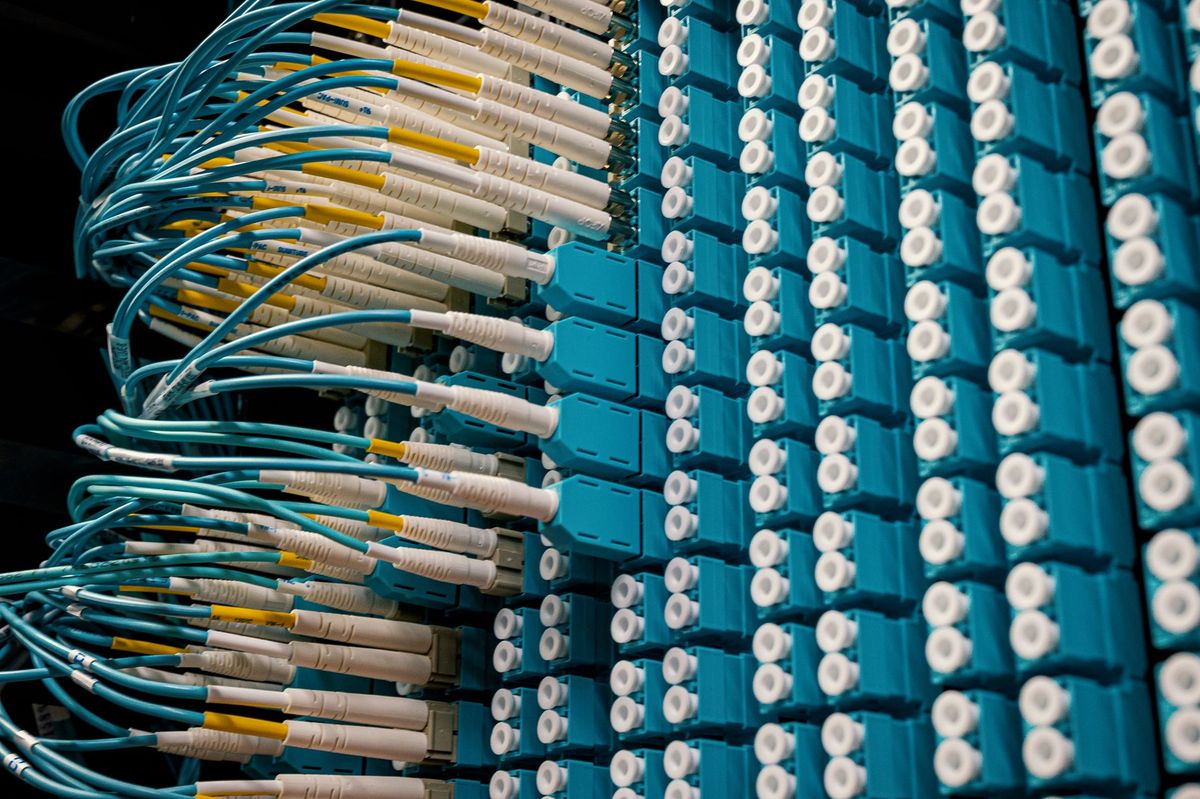
BEAD primarily funds fiber-to-the-premises (FTTP) deployment, with approximately 87% of awarded subgrants specifying fiber as the technology solution. The remaining 13% use fixed wireless access (FWA) or hybrid fiber-wireless architectures, primarily in extremely remote areas where the per-location cost of fiber exceeds NTIA cost thresholds.
Based on subgrantee award data compiled through Q1 2026, the total physical construction scope includes an estimated 8.5 to 10 million miles of fiber cable to be installed, 6 to 7 million premises to receive new fiber service drops, approximately 500,000 miles of new underground conduit through trenching and horizontal directional drilling, 250,000 miles of new aerial fiber on existing utility poles, roughly 12,000 to 15,000 new or upgraded hub locations including central offices, cabinets, and remote terminals, and 3,500 to 4,500 new communications towers or fixed wireless access points.
To put this in perspective, the entire U.S. fiber optic network built over the past 40 years totals approximately 70 million route miles. BEAD will add 12 to 15% to the national fiber plant in just four to five years of peak construction.
Construction Methods: What's Actually Being Built
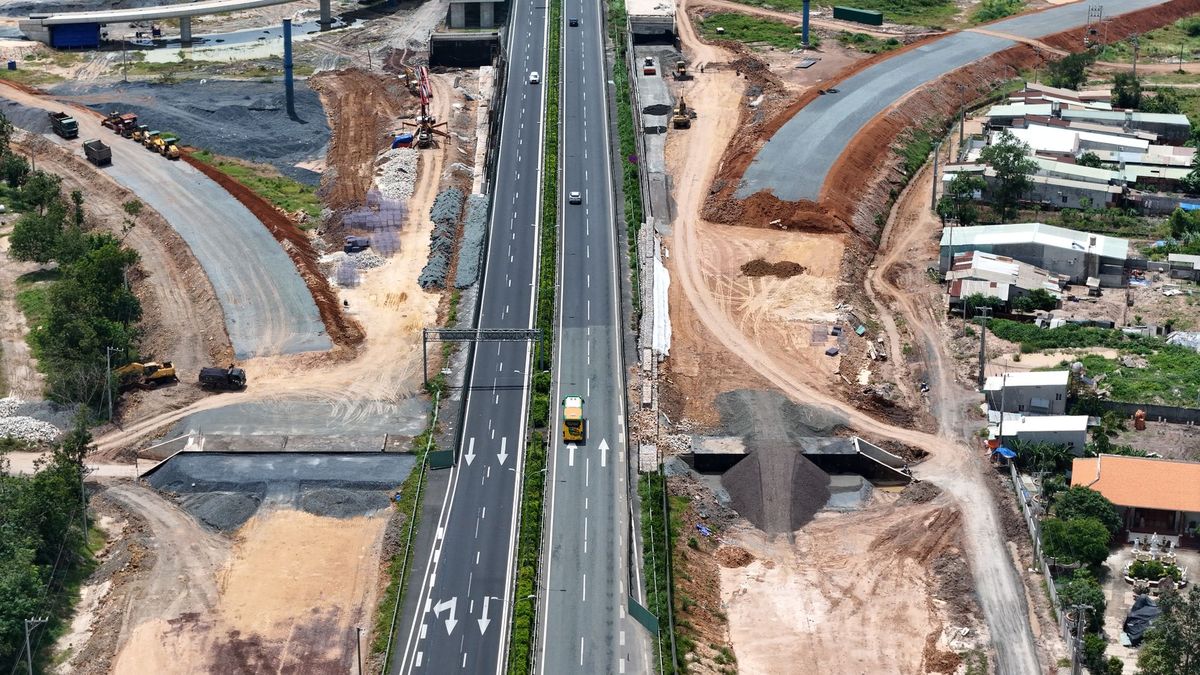
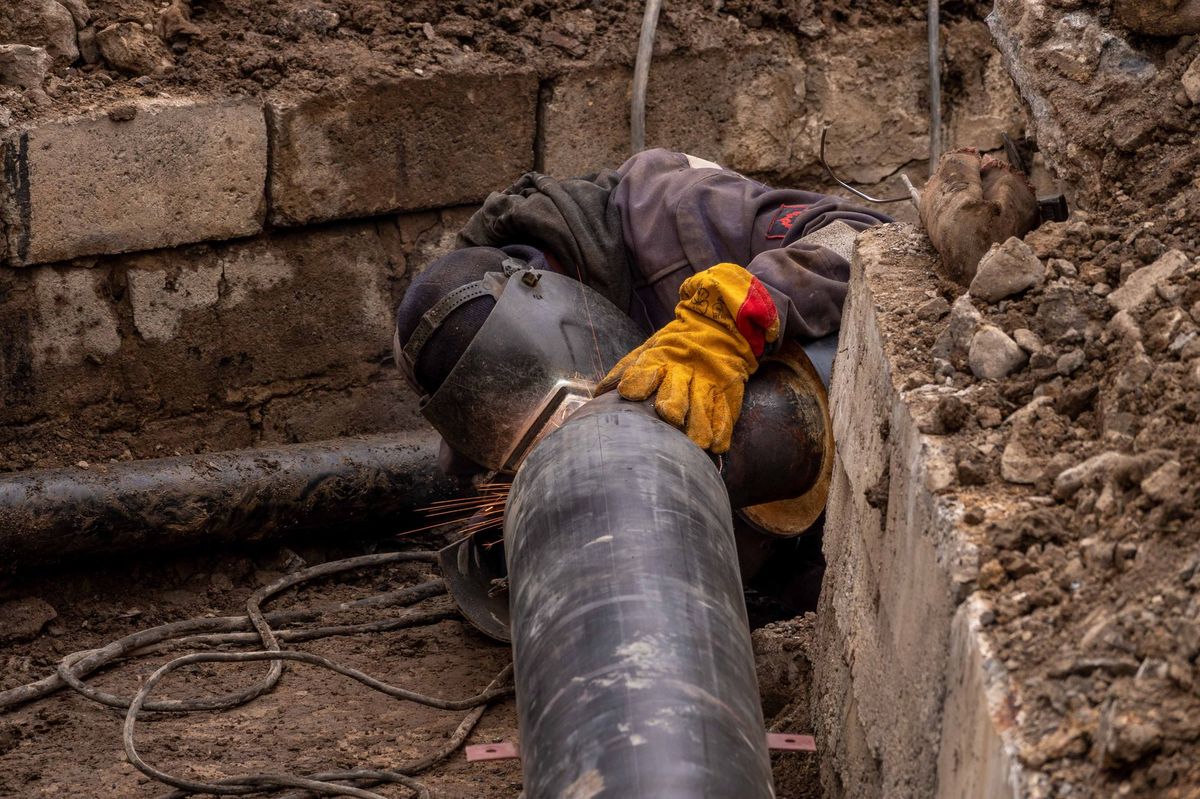
Broadband construction is fundamentally a civil construction activity — it's about moving dirt, hanging cable, and placing equipment in the right locations. The construction methods break down into several distinct work categories.
Aerial Fiber Construction
Aerial construction represents 55 to 65% of BEAD fiber routes nationally, anywhere existing utility pole infrastructure exists. This is the fastest and most cost-effective deployment method, averaging $3,500 to $5,500 per location in rural areas with favorable pole attachment access.
The aerial construction process involves multiple sequential phases. First, pole attachment applications must be filed with the pole owner (typically an electric utility or incumbent telephone company), which triggers a 30 to 90-day review period under FCC pole attachment rules. Next comes make-ready engineering — the physical survey and design of attachments on each pole along the route, including communication space allocation, power clearance verification, and structural loading analysis. Make-ready construction follows, where existing attachments are rearranged and poles that fail structural analysis are replaced. Finally, fiber cable is strung and attached, service drops are installed to individual premises, and splicing connects the fiber segments into a continuous optical path.
Equipment requirements for aerial construction include bucket trucks (45 to 55-foot working height minimum), cable placing equipment, strand and hardware installation tools, and OTDR test equipment. Average crew size is 4 to 6 workers per aerial construction crew, with typical productivity of 2,000 to 4,000 feet per day depending on pole spacing, terrain, and make-ready complexity.
Underground Fiber Construction
Underground construction using horizontal directional drilling (HDD) accounts for 25 to 35% of BEAD routes, primarily in suburban and semi-urban areas. HDD costs range from $6,000 to $12,000 per location depending on soil conditions, bore depth, and existing utility density.
The HDD process involves utility locating through 811 one-call systems and supplemental private locating, potholing at utility crossing points using vacuum excavation, directional bore path planning based on utility conflicts and soil conditions, boring at 24 to 48 inches depth using steerable drill heads, conduit placement (typically 1.25-inch or 2-inch HDPE innerduct), and fiber cable placement and splicing.
Major equipment includes directional drilling rigs from Ditch Witch, Vermeer, and other manufacturers, vacuum excavation trucks, drill rod and reaming equipment, and electronic bore tracking systems. Average crew size is 5 to 7 workers, with typical productivity of 1,500 to 3,000 feet per day in favorable conditions.
Buried Fiber Construction
Vibratory plow and conventional trenching methods handle the remaining 10 to 15% of routes, primarily in rural areas with long distances between premises and minimal existing underground infrastructure. This is the fastest installation method at 3,000 to 8,000 feet per day but is suitable only for open-terrain corridors without extensive existing utility conflicts.
Workforce: The Critical Bottleneck
The broadband construction workforce challenge is the single greatest risk to BEAD construction timelines. The Fiber Broadband Association's 2026 workforce assessment estimates the industry needs 30,000 to 50,000 additional trained workers to meet BEAD construction schedules — a 40 to 60% increase above the current broadband construction workforce of approximately 80,000.
The workforce demand breaks down by specialty: aerial construction technicians and lineworkers (8,000 to 12,000 needed), underground construction operators and laborers (7,000 to 10,000), fiber splicers and testers (5,000 to 8,000), construction supervisors and project managers (3,000 to 5,000), and engineers and designers (2,000 to 3,000).
Training pipeline capacity is a concern. The Wireless Infrastructure Association (WIA) and the Fiber Broadband Association jointly operate the OpTIC fiber technician training program, but total training throughput across all programs is approximately 5,000 to 7,000 new workers per year — well below the annual need.
For established construction firms in adjacent sectors — utility construction, electrical contracting, telecommunications — the BEAD workforce shortage creates an entry opportunity. The skill transfer from electrical utility construction to broadband construction is significant: bucket truck operation, aerial cable placement, underground conduit installation, and equipment operation are directly transferable skills. Firms that can retrain and redeploy existing crews from other infrastructure work into broadband construction will have a competitive advantage.
Equipment and Materials Supply Chain
The broadband construction surge is straining equipment and materials supply chains across multiple categories.
Fiber optic cable demand has increased approximately 35 to 40% since 2023, driven by BEAD, private carrier fiber builds, and data center interconnection growth. Corning, Prysmian, and OFS — the three dominant North American fiber cable suppliers — have all announced capacity expansions, but lead times for standard single-mode loose-tube fiber cable have extended from 4 to 6 weeks to 8 to 14 weeks as of Q1 2026. Specialty cables, including armored direct-buried cable and high-fiber-count ribbon cable, can see lead times of 16 to 20 weeks.
Directional drilling equipment lead times have extended to 6 to 9 months for new rigs as manufacturers ramp production. Used equipment prices have increased 25 to 35% since 2024. Contractors entering the broadband market should plan equipment procurement well in advance of expected construction start dates.
Conduit and innerduct (HDPE pipe) supply has been more reliable, with multiple domestic manufacturers providing adequate capacity. However, regional shortages occur sporadically, particularly for specialty conduit configurations and microduct bundles used in high-density urban deployments.
The Money: Cost Per Location and Contractor Economics
Understanding BEAD construction economics is essential for contractors evaluating market entry. The average cost per location varies dramatically based on technology, terrain, and population density.
Rural aerial fiber deployment averages $3,500 to $5,500 per location in areas with existing pole infrastructure and favorable terrain. Rural underground (HDD) deployment averages $6,000 to $12,000 per location depending on soil conditions and bore distances. Suburban deployment averages $2,000 to $4,000 per location due to shorter service drops and denser premise spacing. Remote or mountainous areas can exceed $15,000 to $25,000 per location — these are the areas most likely to receive fixed wireless solutions rather than fiber.
Subgrantee construction budgets typically allocate 60 to 70% of total grant funding to outside plant construction (the civil and fiber work), with the remainder covering electronics, engineering, project management, and program administration. For a mid-size BEAD subgrant of $50 million, this means $30 to $35 million in construction revenue available to contractors.
Contractor margins in broadband construction have historically ranged from 8 to 15% for prime contractors and 5 to 10% for subcontractors. The current demand environment is pushing margins toward the high end of these ranges, particularly for contractors with established workforces and equipment fleets.
Interaction with Other Federal Programs
BEAD is the largest but not the only federal broadband construction program active in 2026. The USDA's ReConnect Program has awarded over $3.2 billion in grants and loans across six funding rounds, with construction underway on hundreds of projects in rural areas. The FCC's Enhanced Alternative Connect America Cost Model (Enhanced A-CAM) is providing $6 billion over 15 years to support rural broadband deployment by incumbent telephone companies, with significant construction activity beginning in 2025-2026. State broadband programs funded by American Rescue Plan Act (ARPA) capital projects funds add another $8 to $10 billion in broadband construction funding that overlaps with BEAD timelines.
The aggregate effect is a broadband construction market that likely exceeds $60 billion over the 2025-2030 period — the largest broadband construction cycle in American history. The parallel IIJA funding at the halfway mark adds even more construction demand across other infrastructure categories, competing for some of the same workforce and equipment resources.
What This Means for Your Crew
If you're considering entering or expanding in broadband construction, the window is open but narrowing. States are awarding subgrants now, and subgrantees are selecting construction contractors through Q2-Q3 2026 for construction that must be substantially complete by 2029-2030 per BEAD program deadlines.
Key considerations for your crew: First, BEAD subgrantees are required to pay prevailing wages under Davis-Bacon Act requirements, which means higher labor costs but also higher billing rates than many private broadband construction projects. Second, most states require construction contractors to meet workforce diversity and local hiring requirements as a condition of BEAD funding. Third, the insurance and bonding requirements for BEAD construction are typically more stringent than private broadband work — general liability minimums of $2 million per occurrence and $5 million aggregate are common, along with performance and payment bonds on contracts exceeding $250,000.
Frequently Asked Questions
What is the BEAD program and how much funding is available?
The Broadband Equity, Access, and Deployment (BEAD) Program is a $42.45 billion federal grant program established by the Infrastructure Investment and Jobs Act (IIJA) of 2021. Administered by the National Telecommunications and Information Administration (NTIA), BEAD provides funding to states, territories, and the District of Columbia to deploy broadband infrastructure — primarily fiber optic networks — to locations that lack access to minimum broadband speeds. Each state received a minimum allocation of $100 million, with additional funding distributed based on the state's share of unserved (lacking 25/3 Mbps) and underserved (lacking 100/20 Mbps) locations. States distribute BEAD funds through competitive subgrant processes to internet service providers who commit to building broadband networks in eligible areas.
When will BEAD construction peak?
Based on state construction timelines and subgrantee deployment schedules, BEAD construction is expected to peak in 2027-2028. As of Q1 2026, 28 states have active BEAD construction, but most projects are in early mobilization phases. The ramp to peak construction will occur through 2026 as remaining states complete subgrantee selections and issue construction notices to proceed. The BEAD program requires states to ensure that all subgrantees complete their deployments within four years of receiving funds, with most state deadlines falling in the 2029-2030 timeframe. This means construction activity will ramp up sharply through 2027, remain at peak levels through 2028, and begin tapering in 2029 as projects reach completion.
What types of construction companies can work on BEAD projects?
BEAD construction work spans several construction specialties. Telecommunications contractors with fiber optic construction experience are the natural fit, but the scale of BEAD demand far exceeds existing telecom contractor capacity. Electrical utility contractors have highly transferable skills in aerial construction, bucket truck operation, and underground conduit installation. General civil contractors with trenching, boring, and underground utility experience can perform underground fiber construction with relatively modest cross-training. Directional drilling contractors from the oil and gas, water, and sewer industries can adapt their equipment and crews to fiber conduit installation. The key qualification requirements include fiber splicing and testing capabilities (which can be developed through training programs or subcontracted), familiarity with pole attachment and right-of-way permitting processes, and compliance with prevailing wage, safety, and bonding requirements specified by BEAD subgrantees.
How does BEAD interact with private broadband construction?
BEAD is designed to supplement — not replace — private broadband investment. The program targets locations that private carriers have not served and are unlikely to serve without public subsidy. However, BEAD is creating significant interaction effects with private construction activity. The increased demand for construction crews, equipment, and materials is raising costs for private broadband builds. Several major carriers, including AT&T and Lumen Technologies, have cited BEAD-related labor and material cost inflation in earnings calls. Conversely, BEAD is accelerating private construction in some areas where carriers are racing to deploy fiber ahead of BEAD-funded competitors, a phenomenon known as the "BEAD acceleration effect." The construction spending forecast of $2.1 trillion in 2026 reflects this combined public-private broadband construction surge.
What to Watch
The BEAD construction ramp will intensify sharply through the remainder of 2026 and into 2027. Watch for three things: First, labor market indicators in the top BEAD states (Texas, California, Virginia, Louisiana) — broadband construction wages are rising 8 to 12% annually, and the speed of wage escalation will signal how tight the labor market becomes. Second, watch the fiber cable supply chain — if lead times extend beyond 16 weeks for standard loose-tube cable, construction schedules will slip and NTIA may face pressure to extend program deadlines. Third, watch for NTIA program deadline adjustments — the four-year construction completion requirement is aggressive given the late start of many state programs, and schedule extensions would reshape the demand curve from a sharp peak to a more sustained plateau of activity through 2030-2031.